


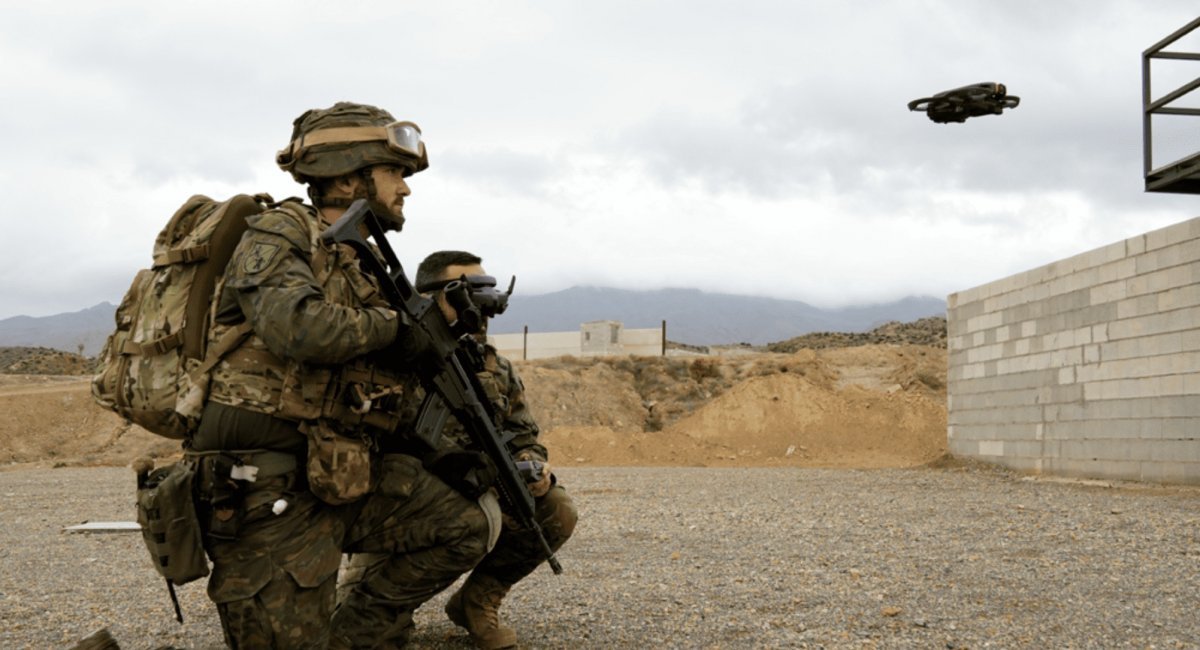
Spain has officially launched the FENIX project under the Ministry of Defense's COINCIDENTE research program, which focuses on identifying and advancing promising defense technologies. The goal is to develop a next-generation swarm-control system capable of coordinating multiple types of unmanned platforms. The project is expected to culminate in a technology demonstrator that will undergo a series of flight tests.
According to reporting by DroneFront, the Spanish effort follows the now well-established swarm concept, in which drones exchange information in real time, autonomously adjust flight paths, reassign targets when necessary, and continue operating even in GPS-denied environments.
Read more: Ukraine to Receive Mass-Produced, Low-Cost 2,000-km Tomahawk Analog Through New Ruta Missile Variant
The GPS-independent aspect is particularly noteworthy because it may involve technologies that have already been tested, or could soon be tested, in combat conditions in Ukraine. The FENIX project will use navigation and control systems developed by Navigation-Grupo Oesía.
That company was previously selected to provide a new navigation and guidance package for the Ruta cruise missile, also described as a missile-drone, developed by the Dutch firm Destinus and supplied to Ukraine's Defense Forces. The system is understood to function similarly to DSMAC (Digital Scene-Matching Area Correlation), comparing images of the terrain below with stored reference imagery to navigate accurately without relying solely on satellite signals.
The project will also employ unmanned platforms developed by Alpha Unmanned Systems, a private company best known for its helicopter-type drones.
From Defense Express' perspective, two broader conclusions can be drawn from this development.
First, swarm technologies are becoming increasingly popular worldwide, and many of the concepts now attracting international interest are based on solutions that have already been tested or refined in Ukraine.
One example is Shield AI's Hivemind artificial intelligence system, which has been tested with the V-BAT reconnaissance drone and Destinus' Hornet strike drone. Such technologies could significantly automate the process of hunting enemy logistics and unmanned systems. Notably, each component of that ecosystem has, in one form or another, benefited from experience gained in Ukraine.
Second, DSMAC-like navigation systems are becoming increasingly common in unmanned platforms. Earlier, we reported that Ukrainian drones had accumulated more than 3,000 km of flight experience using the Western-developed Osiris navigation module. Even two years ago, one of the key advantages of Ukraine's long-range strike drones was identified as the use of a new generation of DSMAC-style navigation technology similar to that employed by modern cruise missiles.
Read more: Ruta Block 2 Gets Folding Wings and Control Surfaces, Far From Only Upgrades in Second Iteration of This Cruise Missile