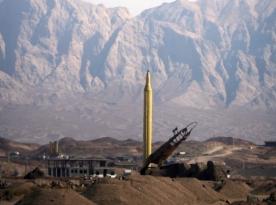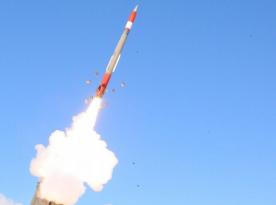
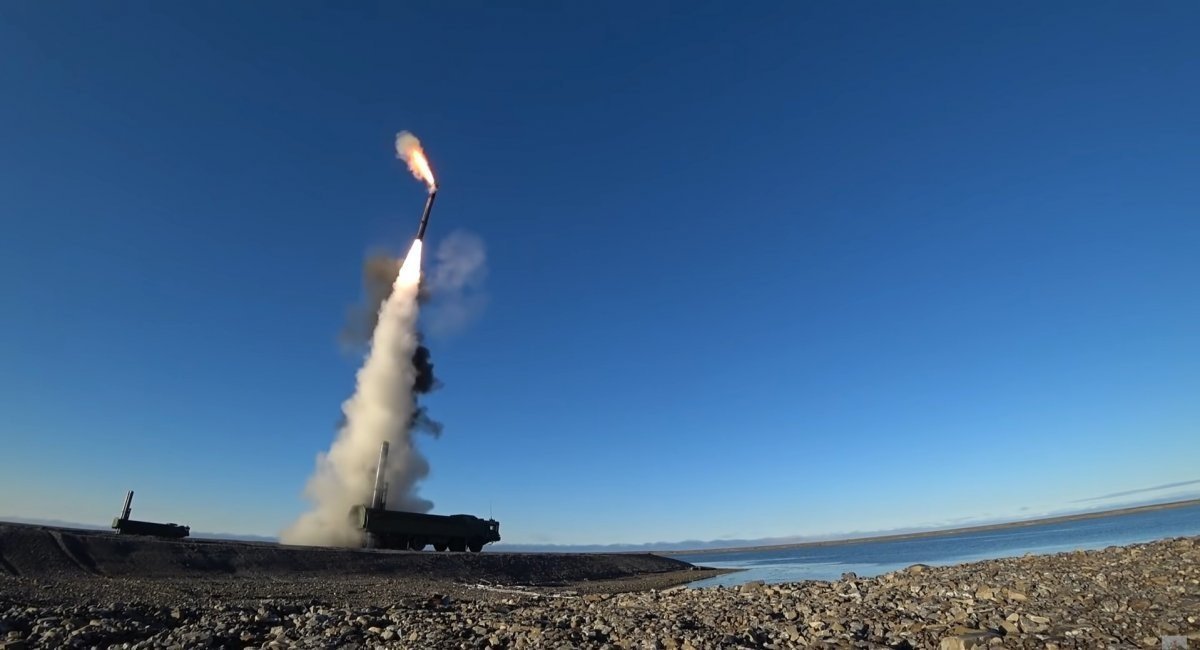
Moscow has already acknowledged moving Pantsir air-defense missile/gun systems and Buk-M2 SAMs to Caracas amid talk of a potential U.S. operation. russian officials also mentioned transfers of cruise missiles and the Oreshnik MRBM. Technically, russia can transport large weapon systems quickly — but doing so leaves an unmistakable signature: heavy missile systems and their support gear are moved intercontinentally mainly by An-124 Ruslan transports. Any An-124s touching down in Caracas would be an obvious indicator.
Putting aside the nuclear scenario (the Cuban-Missile-Crisis model), what conventional systems could russia realistically deploy to create an anti-access/area-denial (A2/AD) threat from Venezuelan soil?
Read more: russia Begins Preparations for Full-Scale Nuclear Tests on Novaya Zemlya: Here's How It Might Happen
Coastal anti-ship systems. Venezuela already fields S-300VM divisions and coastal Bal-E batteries armed with Kh-35 missiles (baseline ~120 km, Kh-35U ~260 km).
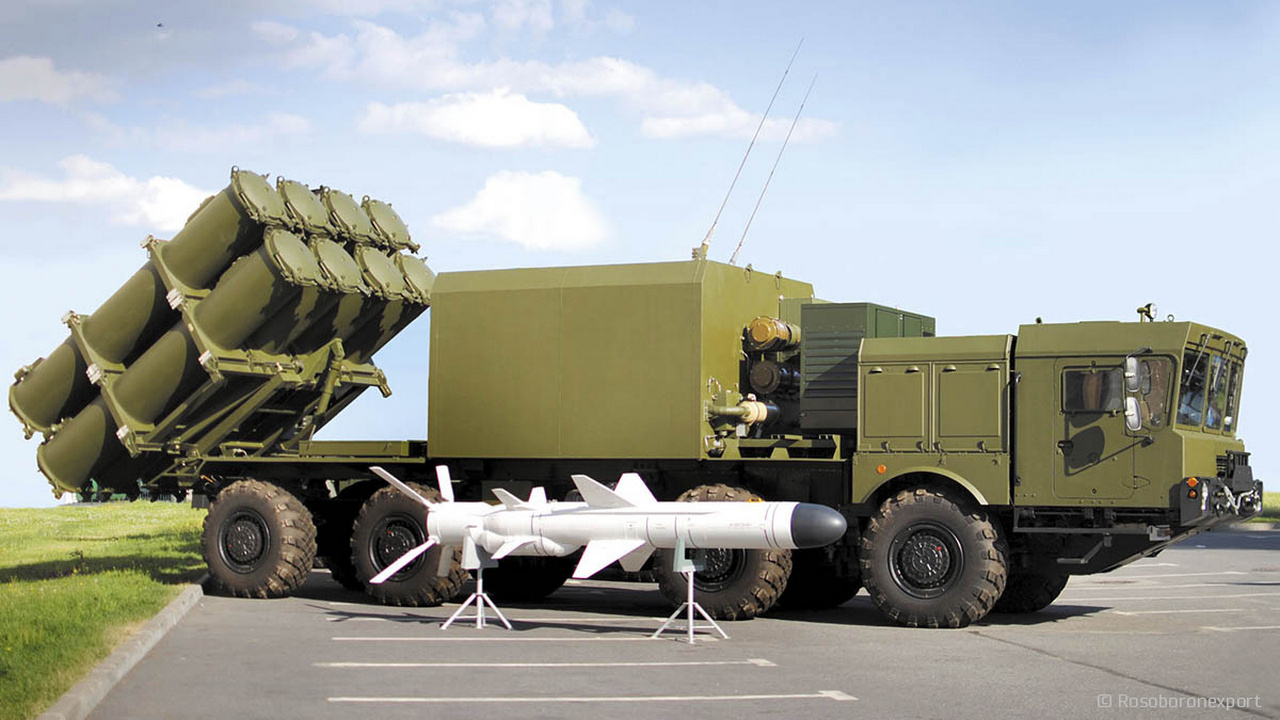
A much more potent step would be delivery of the 3K55M Bastion system with Oniks (Yakhont) missiles. The baseline 3M55 Oniks is quoted at roughly ~300 km range; russian claims for an enlarged 3M86 variant cite ranges up to ~450 km. Bastion/Oniks would let Caracas threaten surface ships, including amphibious/assault groups, at substantial standoff distances, dramatically complicating U.S. naval operations in the Caribbean and off Venezuela's coast.
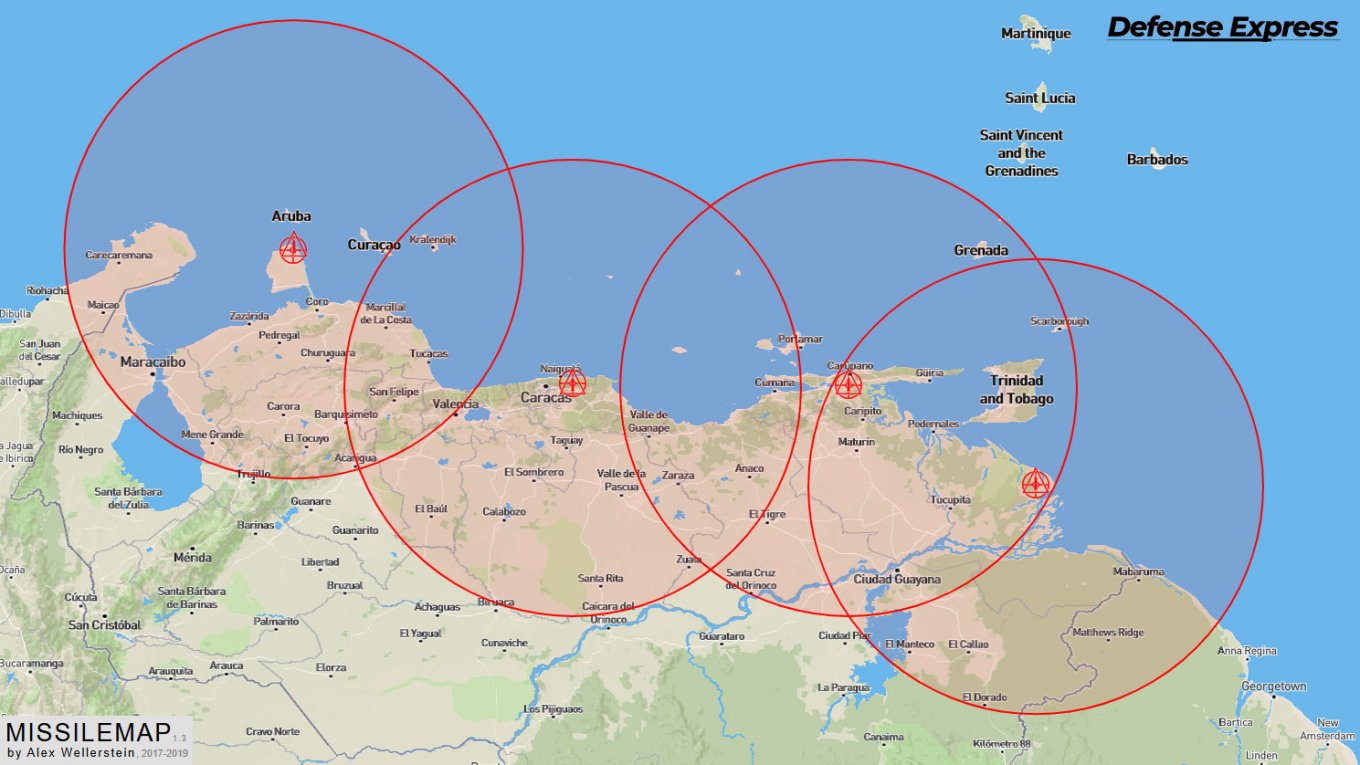
Long-range cruise missiles. Conventional cruise missiles placed in Venezuela would create strategic and political effects by making portions of U.S. territory or nearby U.S. bases appear reachable. If one accepts disputed reports that the 9M729 (Iskander-type cruise variant) can reach ~2,500 km, then a narrow set of targets (for example, Miami) could theoretically be within range from Venezuelan launch points. Even without such extreme ranges, cruise missiles with ~1,000 km reach would put key Caribbean and Atlantic facilities, notably Puerto Rico, at meaningful risk.
Massed strike drones. Long-range loitering munitions (Shahed-type) are a plausible and troubling option. Their combat effectiveness derives from mass and persistence; a handful of airlift sorties would not suffice. Sea shipment (as reportedly used to move Shahed-136 from Iran to russia) would be the most practical method for delivering large quantities to a distant client like Venezuela.
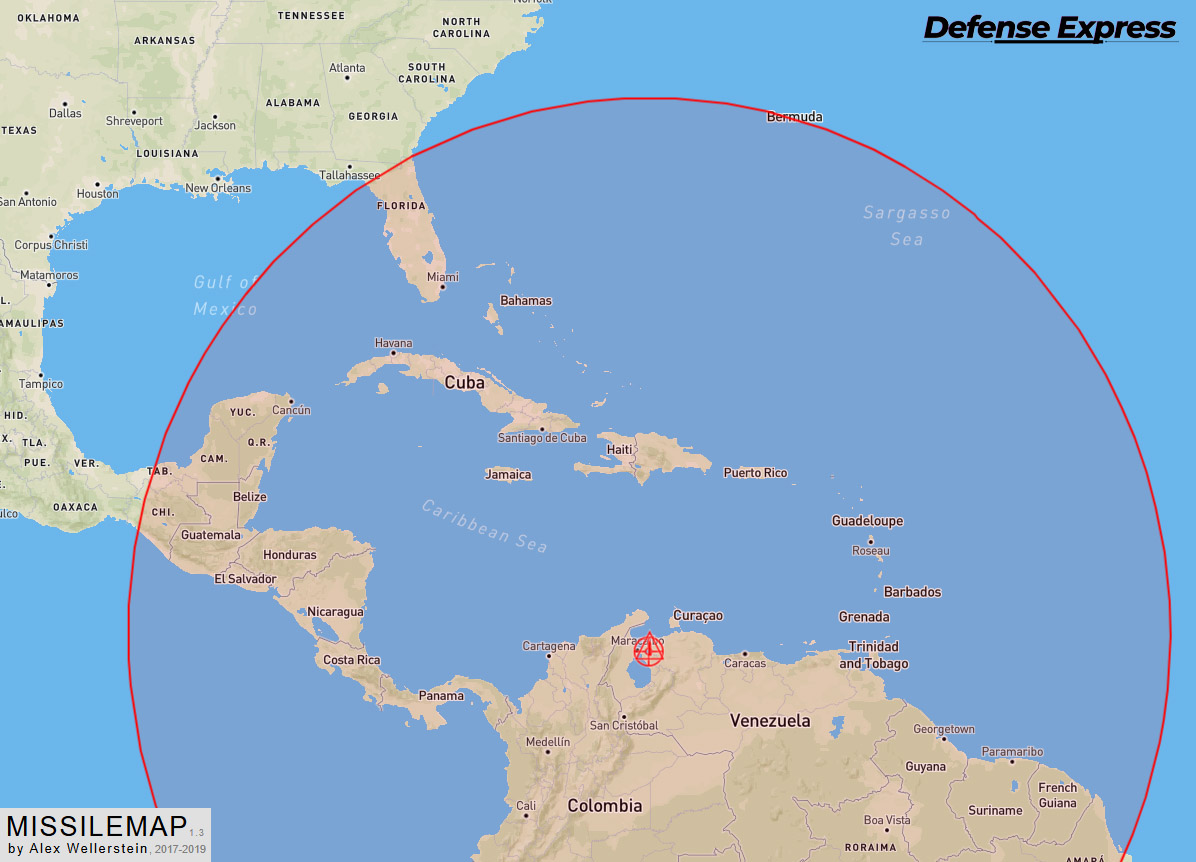
Practical targeting considerations — Puerto Rico and the Caribbean. Puerto Rico, a major U.S. logistical and basing hub in the region, lies much closer to Venezuela than the U.S. mainland. Strike systems with ~1,000 km reach (conventional cruise missiles or suitably ranged drones) would be sufficient to threaten bases there, making such systems particularly attractive to Caracas and politically useful to Moscow.
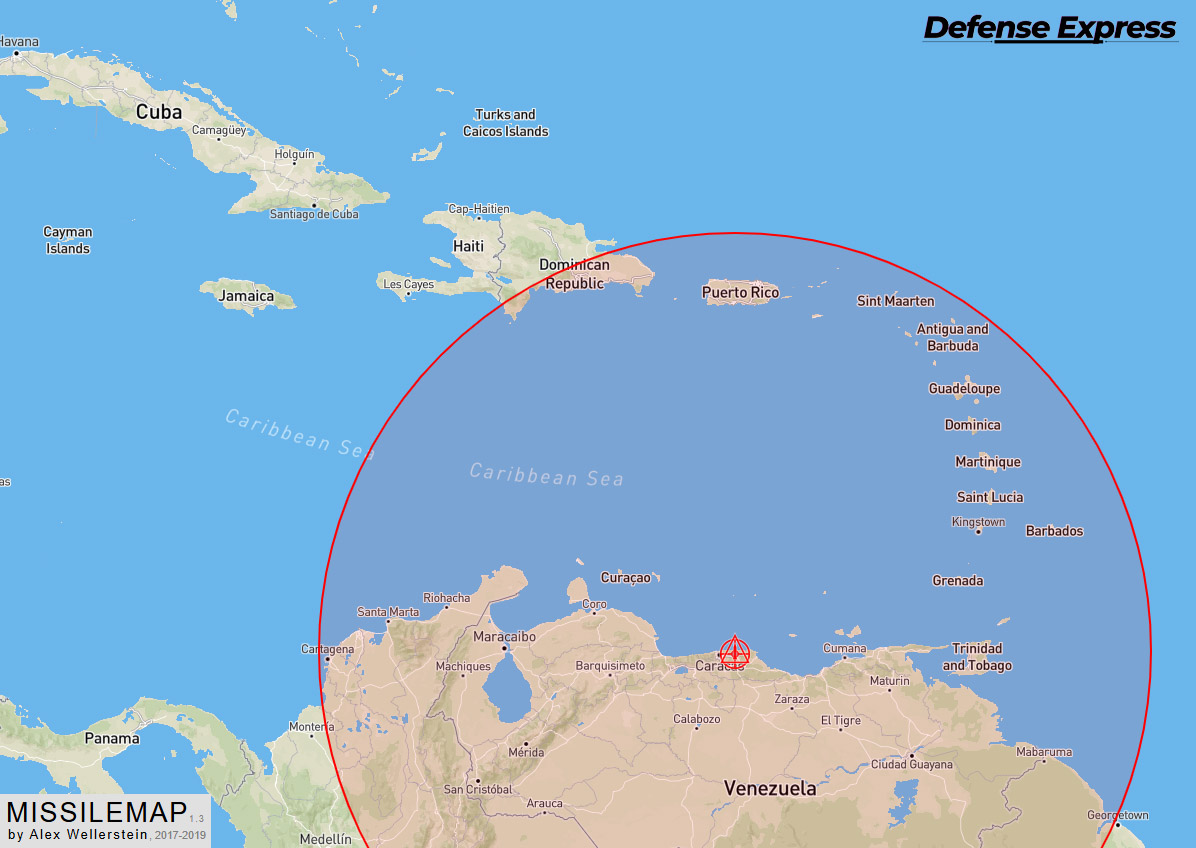
A realistic russian "package" for Caracas, then, is likely to combine:
- Coastal anti-ship systems (Bastion/Oniks),
- Conventional long-range cruise missiles (to extend strike reach into the Caribbean/Atlantic), and
- Massed long-range loitering munitions (Shahed-type), moved primarily by sea.
That mix would create a credible A2/AD umbrella, threaten U.S. regional platforms, and achieve the Kremlin's political objective of raising the costs and risks for U.S. operations — all without the logistical, diplomatic and escalatory obstacles of deploying and basing ballistic MRBMs like Oreshnik.
Read more: What russians Deliver to Venezuela by Il-76TD While U.S. Is Preparing For Possible Invasion