


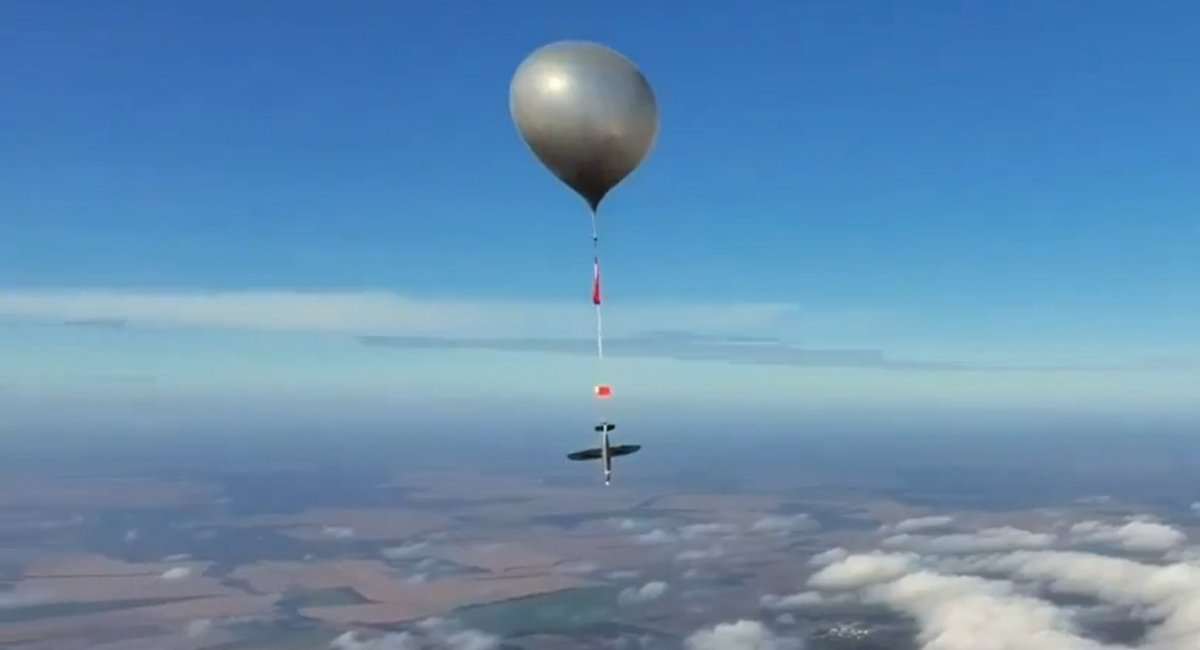
KettleTech Labs has released footage of tests involving a new balloon-launch system designed to deploy Hornet strike drones produced by Swift Beat LLC, a company founded by former Google CEO Eric Schmidt.
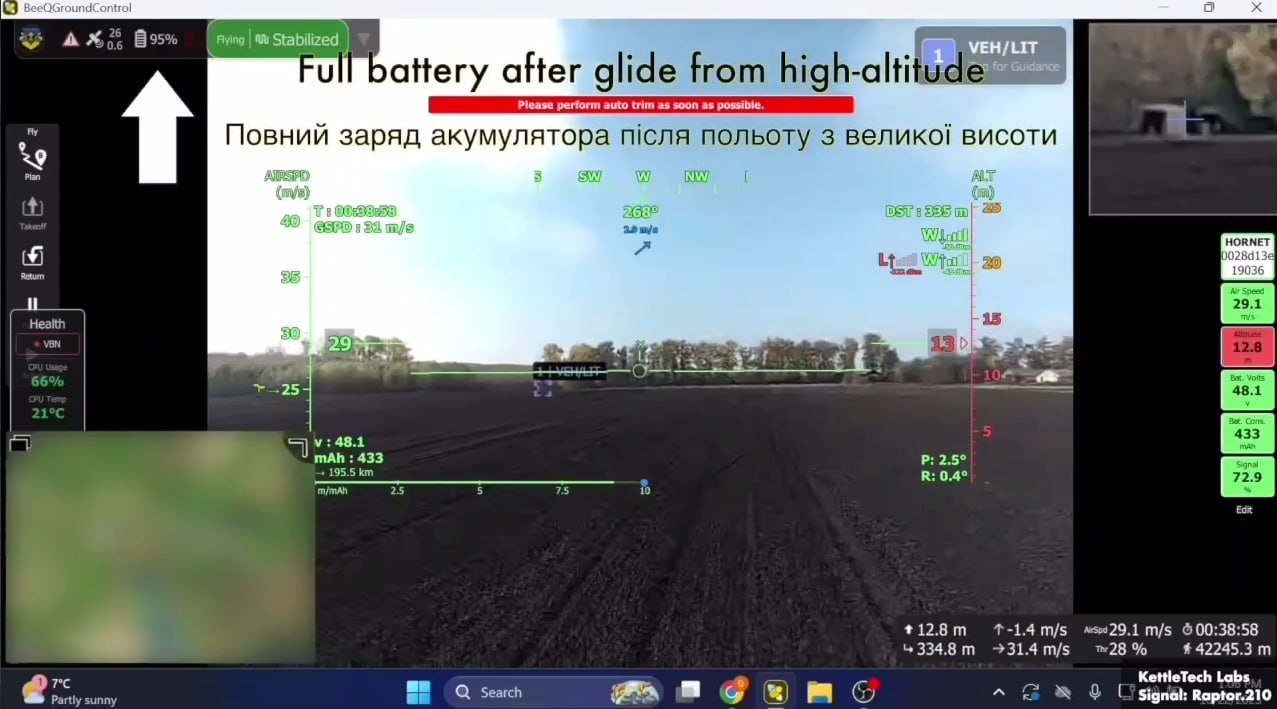
According to the published footage, the balloon carrying the Hornet drone ascended to an altitude of approximately 8,250 meters before automatically releasing the UAV. After separation, the Hornet stabilized itself autonomously and began gliding. The drone eventually landed around 42 kilometers from the launch point.
Read more: Ukrainian Drones Hit russia's Metafrax Chemicals Plant Involved in Explosives Production
What makes the test particularly notable is that the UAV reportedly still retained 95 percent battery charge upon landing. In practice, this means that after gliding for 42 kilometers, the drone could still continue powered flight using its onboard motor.
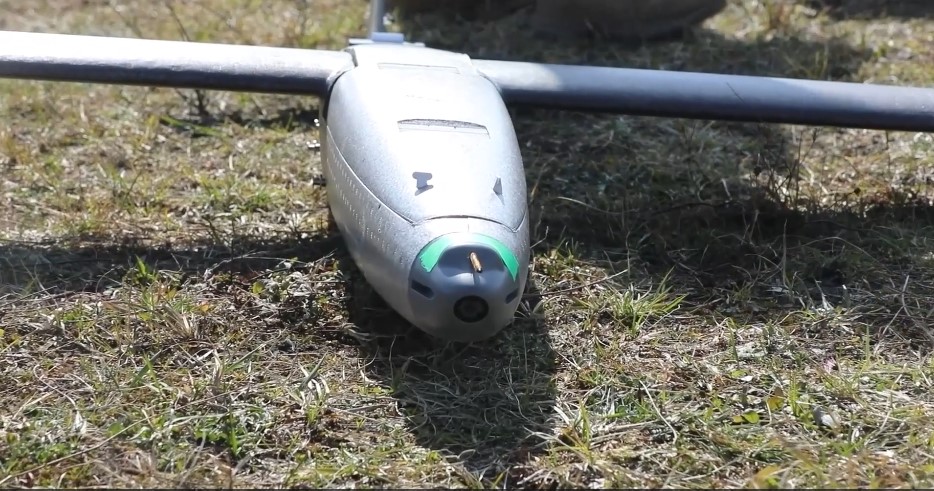
The exact operational range of the Hornet has not been officially disclosed. However, open-source estimates suggest a range of approximately 150 kilometers while carrying a 4–5 kg warhead, with a total launch weight of roughly 15 kg.
When combined with a balloon launch, the drone's effective strike radius could potentially increase to around 190–200 kilometers. At the same time, the balloon itself does not necessarily need to release the UAV near the original launch point. By exploiting wind direction and altitude, the system could drift significantly farther before release. This would only require selecting suitable atmospheric conditions and calculating the correct flight profile.
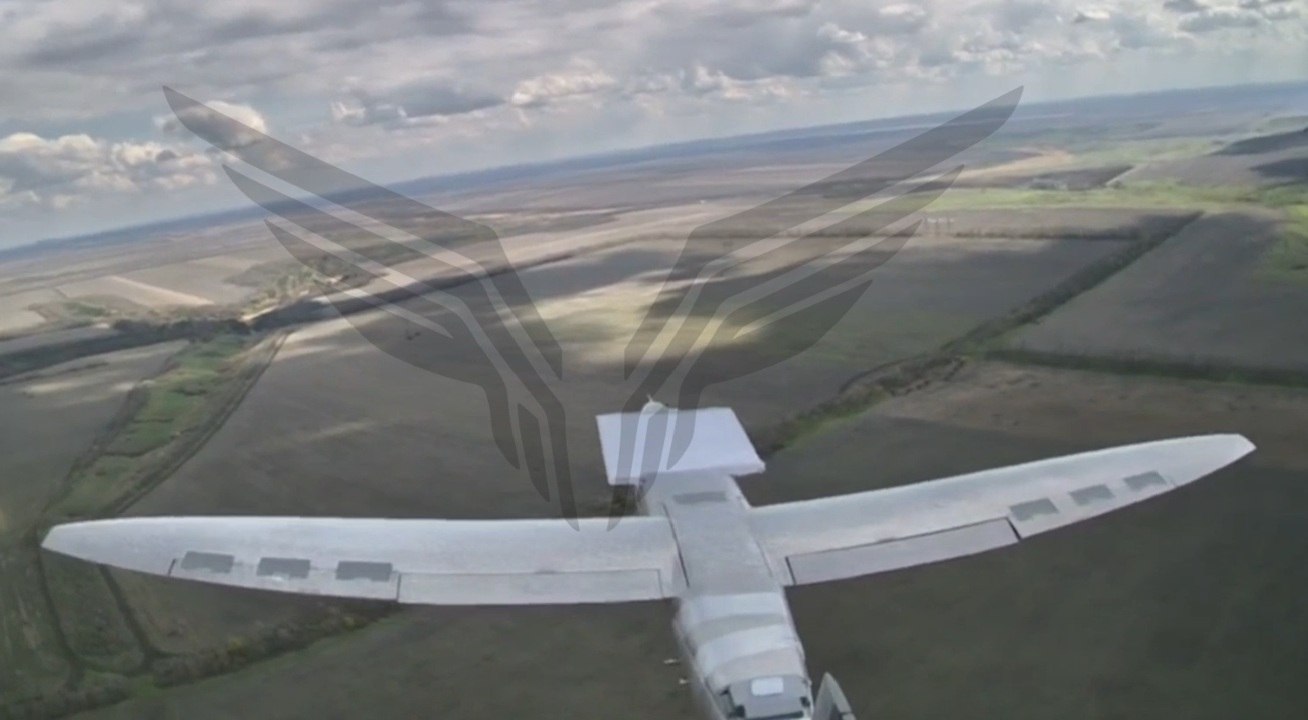
The release process is reportedly automated and can be triggered based on preset altitude, geofencing parameters, or a timer without direct operator involvement.
The concept becomes even more significant when combined with Starlink satellite communication terminals mounted onboard Hornet drones, something already observed on the battlefield.
Under such conditions, the UAV's effective operational range becomes extremely difficult to limit in practical terms and depends primarily on wind direction and Starlink coverage.
The balloon-launch method also provides another important advantage by preserving battery charge.
Because the UAV spends much of its initial flight gliding without engine power, it can conserve energy reserves for aggressive terminal maneuvers or higher attack speeds during the final phase of the strike.
Another key advantage is the increased difficulty of intercepting the drone before it reaches the target area. Both the balloon and the gliding Hornet UAV possess a very small radar cross-section and generate almost no thermal signature while the engine remains switched off. As a result, detecting such targets becomes significantly more difficult.
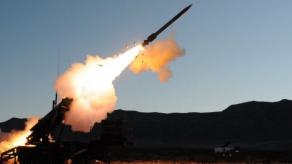
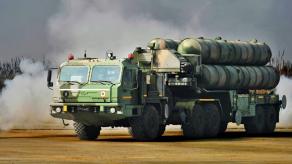
Intercepting them may therefore require the use of expensive surface-to-air missiles that cost substantially more than the UAV itself.
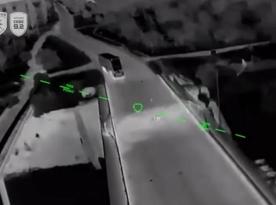
In recent months, Hornet drones have increasingly targeted russian logistics routes deep behind the front line, including areas previously considered relatively safe from Ukrainian strikes.
Confirmed Hornet strikes have been reported in Donetsk, Mariupol, and along transport routes connecting occupied Crimea with occupied parts of the Kherson region.
Read more: Ukrainian Wild Hornets Workshop Reveals How Many russian Drones Downed by Sting Interceptors in Five Months