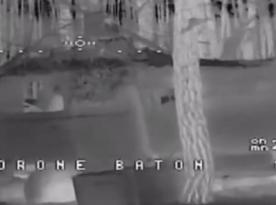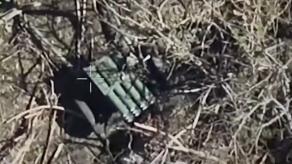
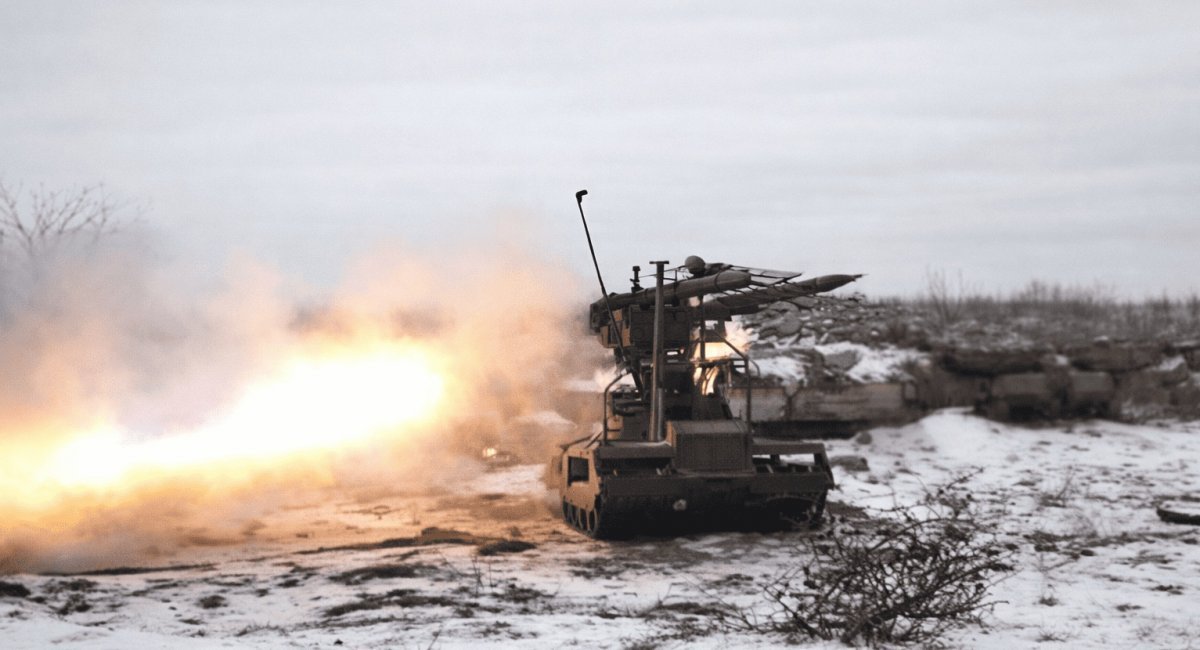
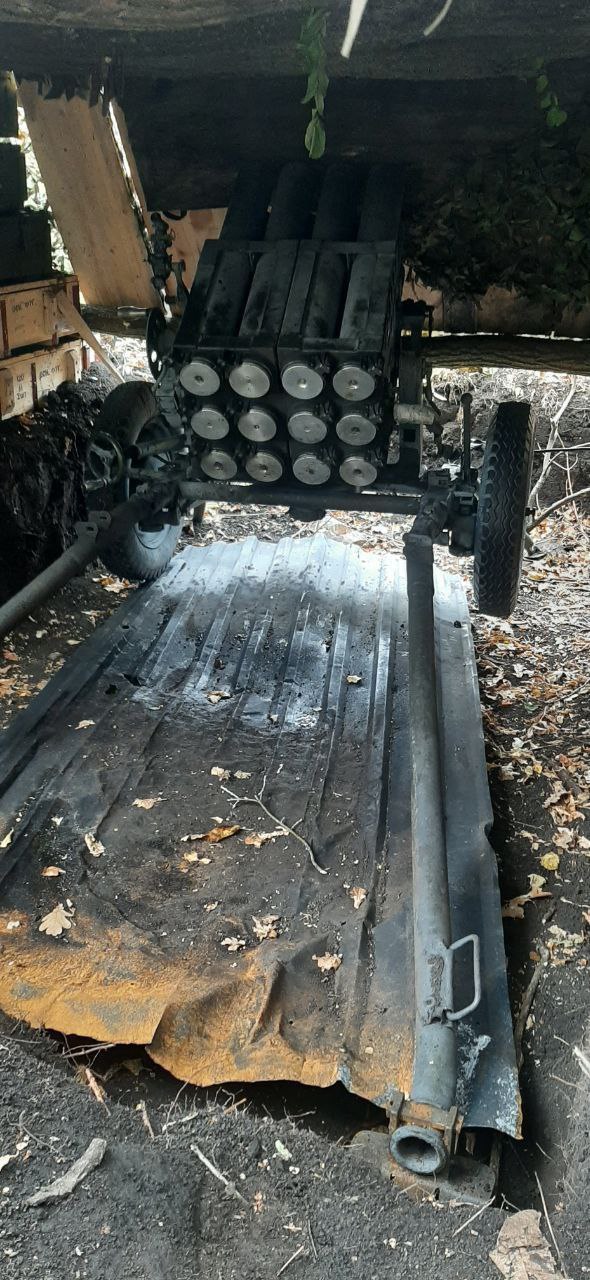
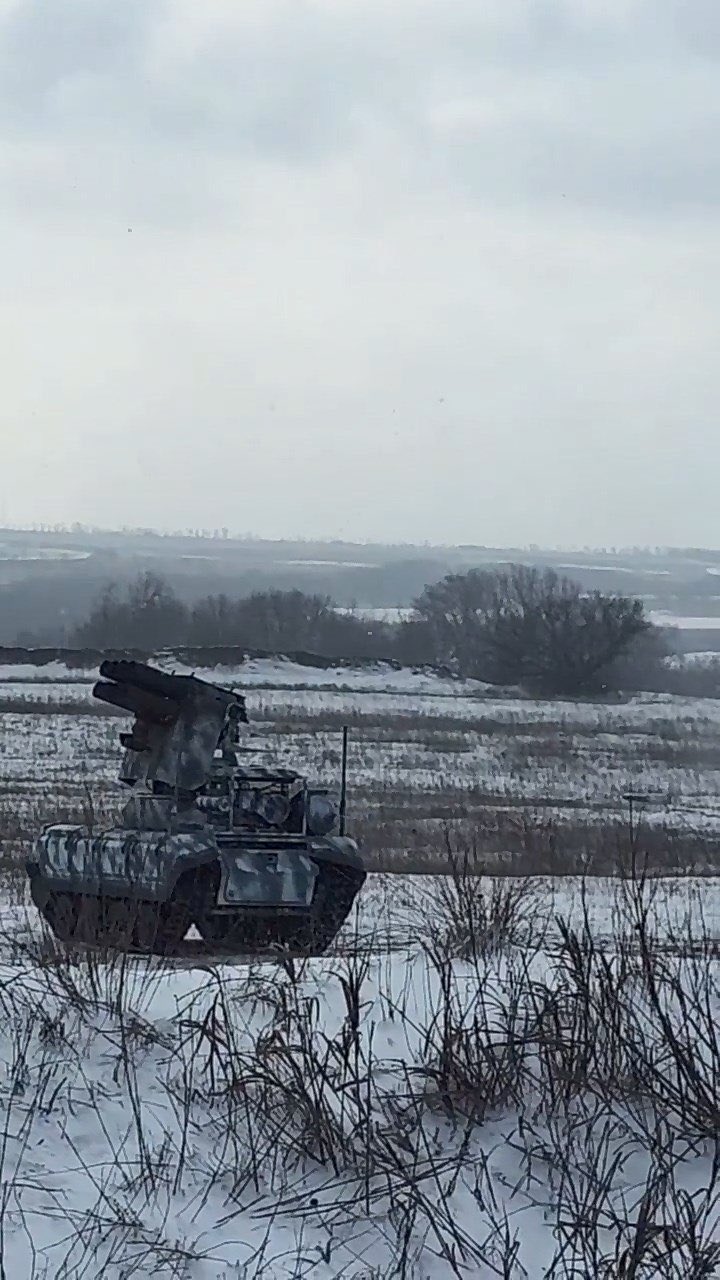
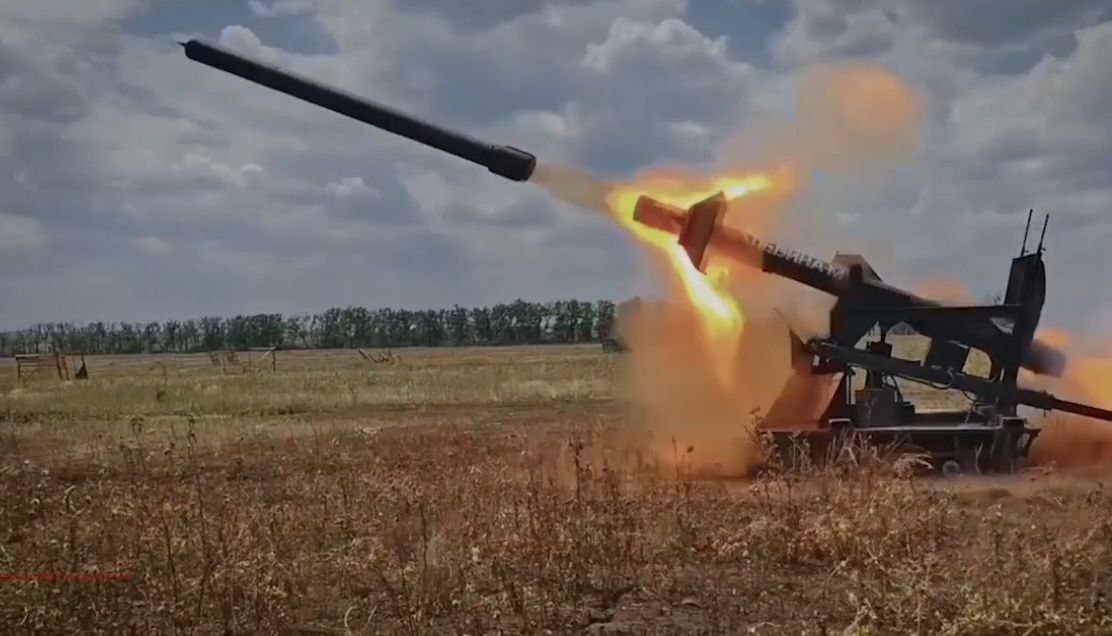
russian sources have released the first images and footage of the north Korean Type-75 multiple launch rocket system in their service, now installed on various unmanned ground vehicles (UGVs), including platforms such as Courier and Impulse.
This marks the first known instance of the Type-75 being mounted directly on a robotic chassis. Previously, footage showed UGVs like Varan used as towing vehicles for the system. The newly published images also indicate that the launcher has been modified.
Read more: russia Deploys Courier UGVs on New Missions After First-Battle Flop
Most notably, the number of launch tubes has been reduced from 12 to 8 by removing the upper row. In addition, based on available footage, the launcher appears to have been fitted with electric drives for aiming. This likely enables remote targeting, effectively turning the system into a fully unmanned MLRS.
russian forces have already encountered difficulties integrating electric drives into artillery systems, such as the D-30 howitzer mounted on a robotic platform. Despite attempts to automate loading, those systems still required human operators for aiming and fire correction. In the case of the Type-75, the launcher is mounted on a rotating platform, allowing adjustment of horizontal targeting angles.
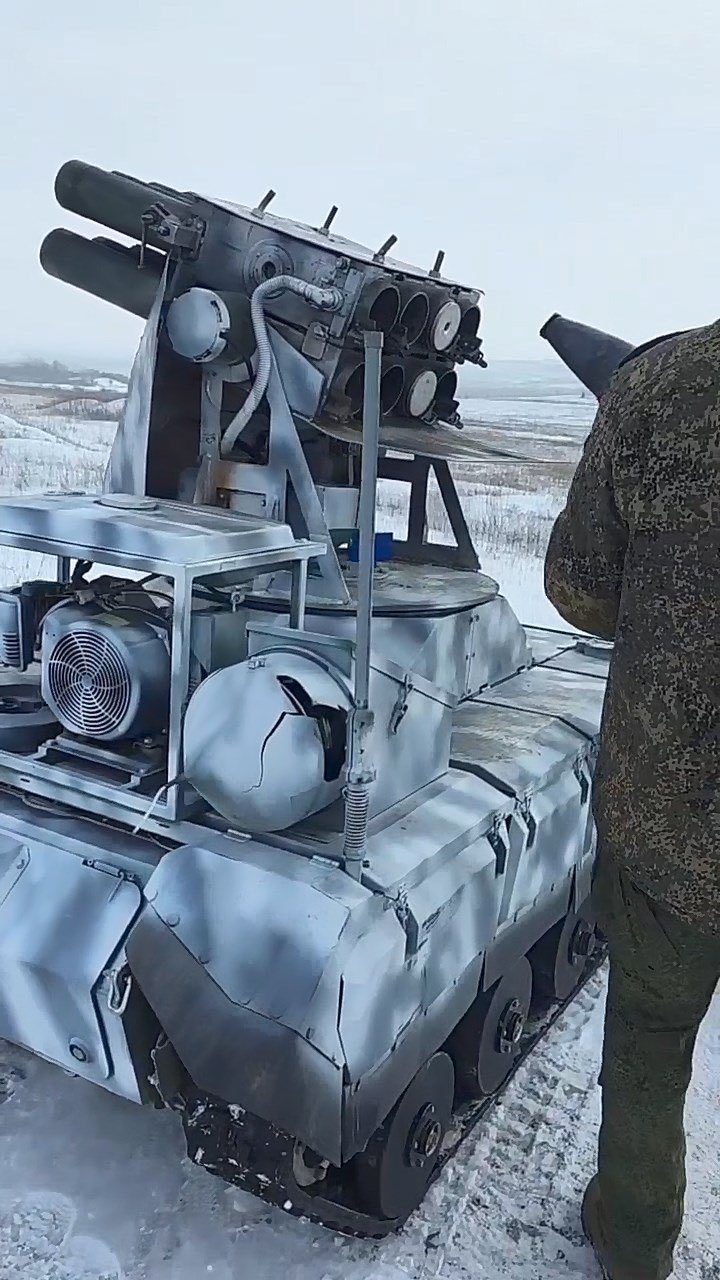
The system's primary drawbacks remain its short range of just 8.5 km and relatively low accuracy. The unmanned chassis is intended to mitigate the range limitation by allowing the system to move autonomously into forward positions in the so-called gray zone, fire, and withdraw without exposing a crew to danger.
However, accuracy has likely deteriorated further in this configuration. Footage shows that after each launch, the system experiences significant recoil, causing the entire platform to sway. The original wheeled chassis of the Type-75 provided greater stability, although even in that configuration accuracy was limited.
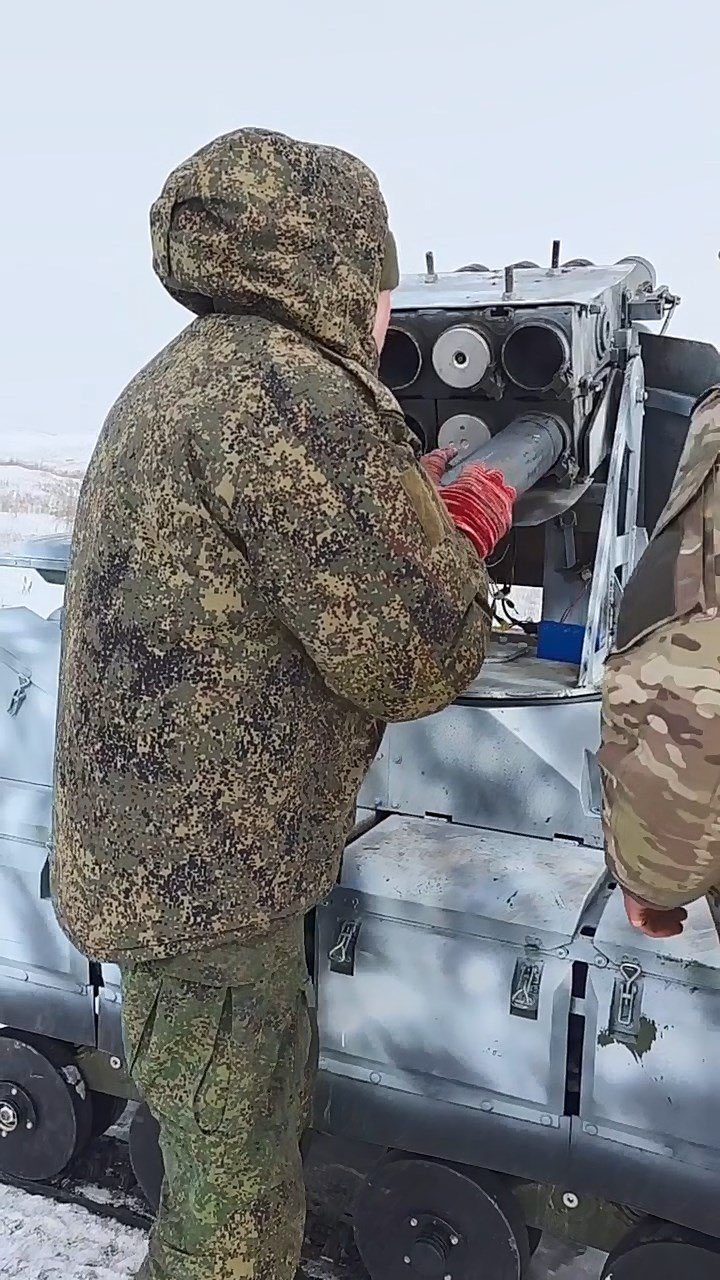
As a result, operators appear forced to fire rockets one at a time, waiting for the system to stabilize between shots. Nevertheless, with only eight rockets in the reduced launcher, the firing sequence still takes relatively little time.
russian forces reportedly use two types of rockets for the Type-75: a standard high-explosive fragmentation round and a cluster munition variant. The latter significantly increases the system's lethality and partially compensates for its poor accuracy.
It is also worth noting that following the strike on the 51st GRAU arsenal in May 2025, russian forces likely lost a substantial portion of the rocket stockpiles intended for these systems.
Overall, despite reduced accuracy, mounting the Type-75 on an unmanned platform increases its operational threat. The system can quickly move into contested areas, including zones heavily patrolled by Ukrainian drones, deliver a strike, and withdraw without risking personnel.
Previously, russian forces experimented with a fully unmanned mini--Solntsepyok. However, that concept suffered from critical flaws that significantly undermined its effectiveness.
Read more: russia Mounts Kornet System on Varan Unmanned Platform and Showcases Missile Launches