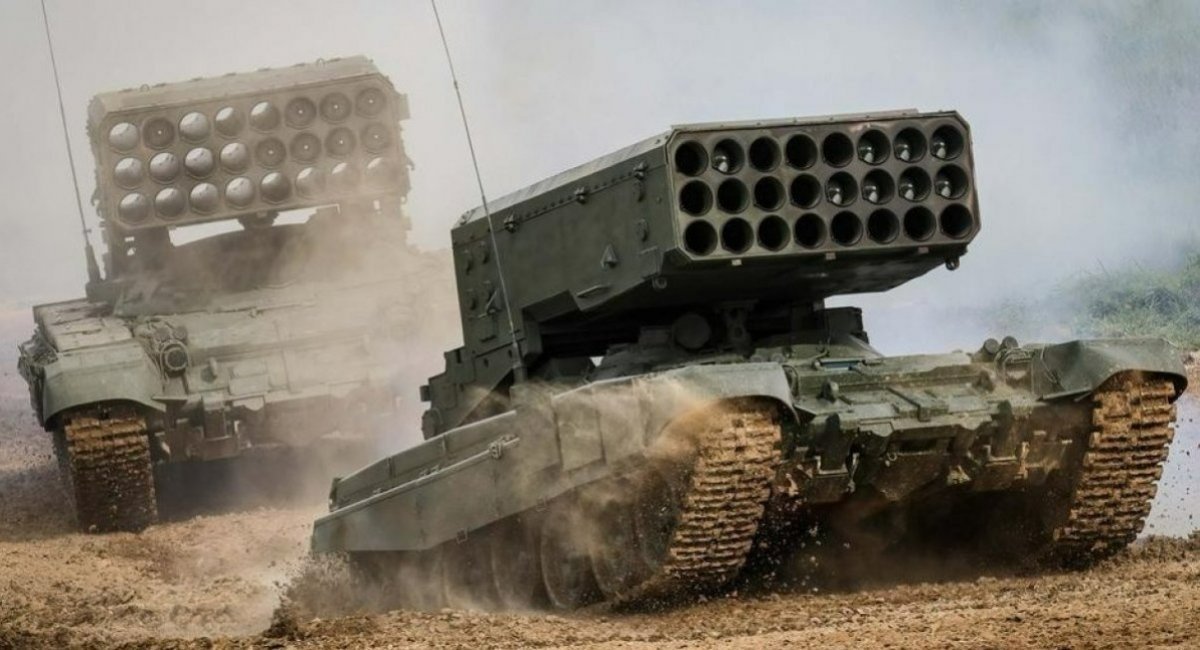
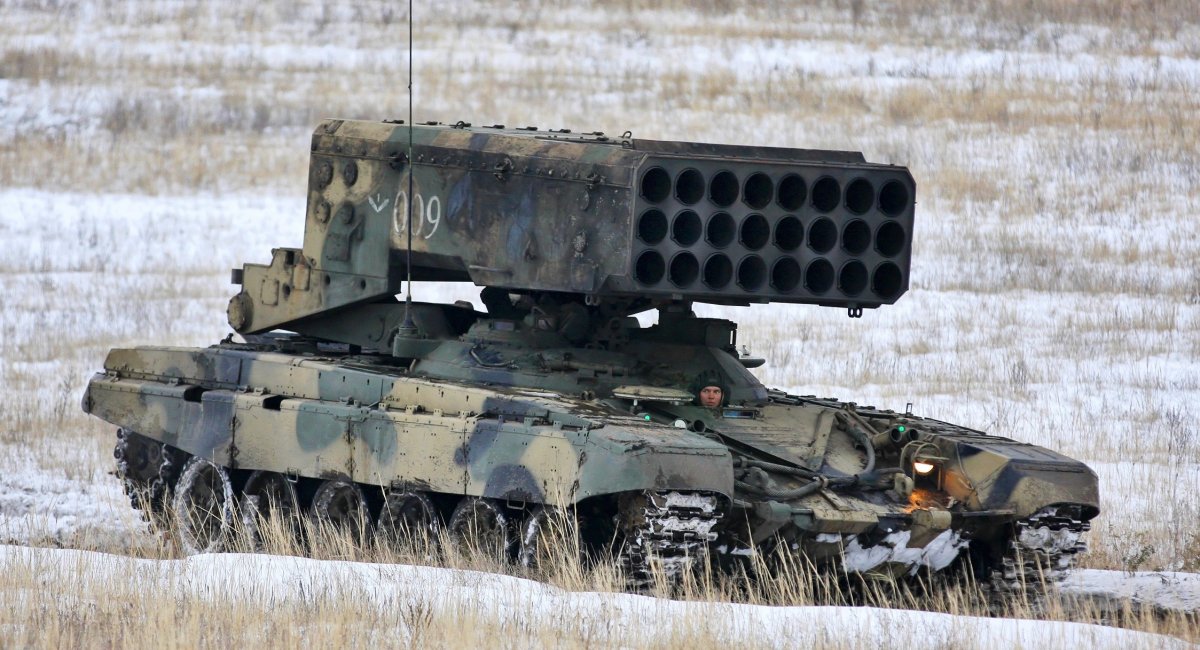
The russians have developed a ground robotic system onto which they mounted launch rails from the TOS-1A Solntsepyok heavy flamethrower system.
This development appears to be driven by the relatively short firing range of the original Solntsepyok, which is only about 4.5–6 km. As a result, the system frequently comes under enemy fire, and with the widespread use of FPV drones, it has almost entirely lost its battlefield relevance. In an attempt to mitigate this vulnerability, the russians decided to mount Solntsepyok launch rails on a ground robotic chassis, which was designated Malvina-M.
Read more: russians Reportedly Send Mini-Solntsepyok to the Front — What's Behind the Name
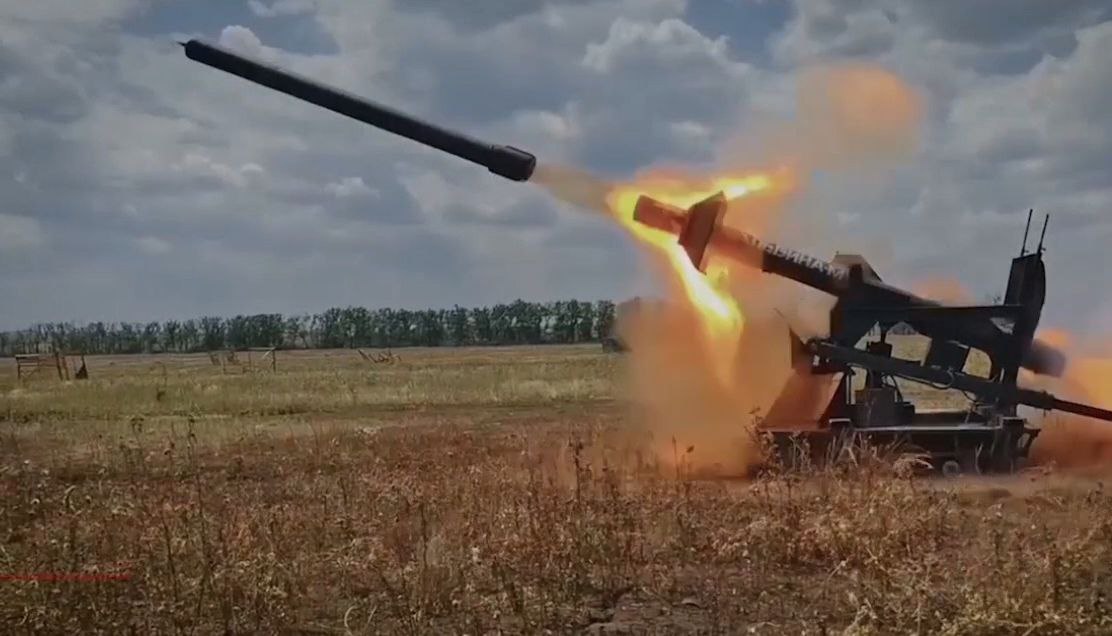
According to the concept, the robotic system is intended to covertly approach a target to a sufficiently close distance and then conduct a rocket launch. However, due to the substantial weight of the 220-mm MO.1.01.04M thermobaric rockets, each weighing 213 kg, the platform is equipped with only two launch rails.
Both the launch rails and the body of the robotic vehicle are fitted with metal shielding designed to protect the system from flames and superheated gases generated by the solid-fuel rocket motors during launch.
In theory, Malvina-M is meant to become a highly dangerous weapon. In practice, however, it suffers from several critical shortcomings that largely negate the rationale behind its development.
The main issue lies in platform stability. The original TOS-1 Solntsepyok is mounted on a T-72 tank chassis weighing several dozen tonnes, with a heavy and rigid launcher assembly that ensures stability during firing. By contrast, on Malvina-M, the launch rails are mounted on a lightweight robotic chassis and secured only by a metal frame.
Footage released by the russians shows that after the very first launch, the robotic vehicle is violently pushed backward and even slightly rotated in place, despite the presence of stabilizing supports. When firing two rockets in sequence, the first round may land roughly in the target area, while the second could impact an entirely different location.
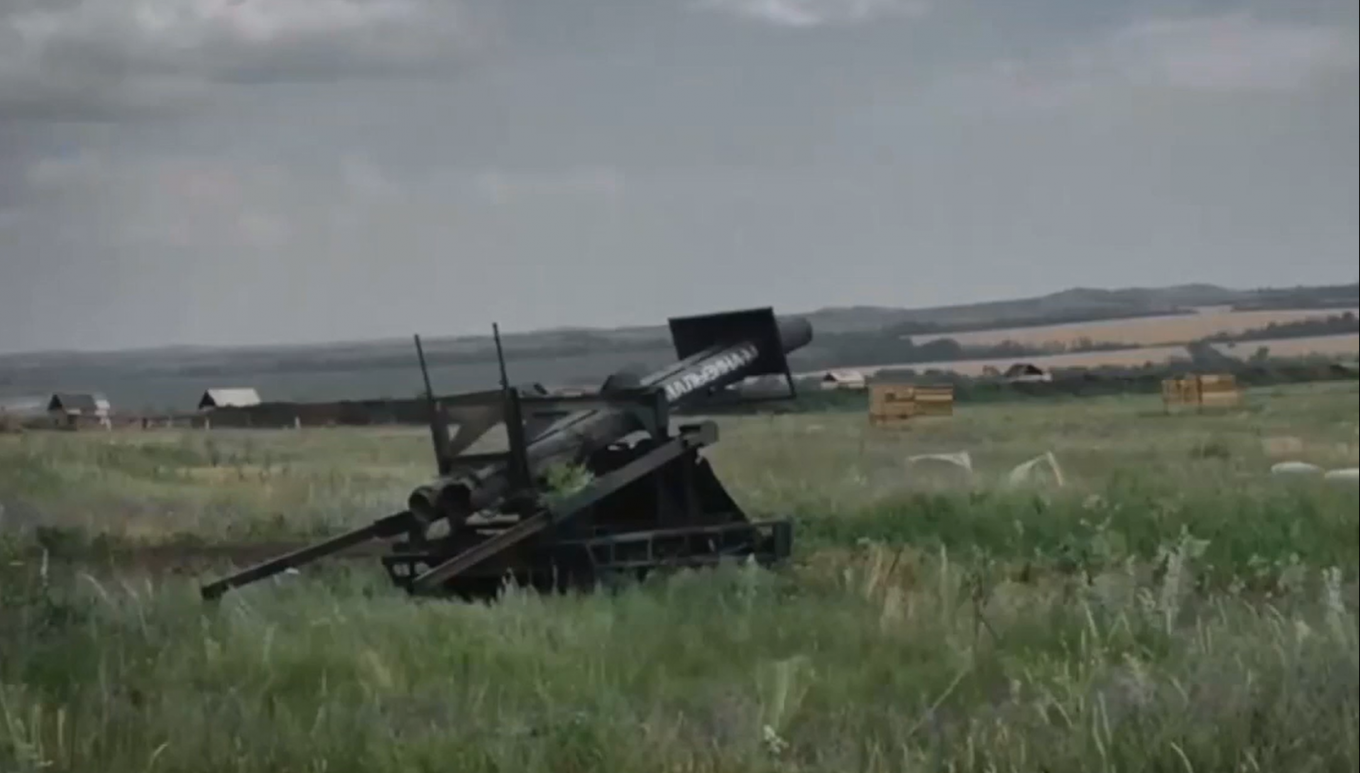
Targeting accuracy raises additional concerns. It is highly doubtful that this crudely assembled robotic system is capable of precisely aligning its launcher. Moreover, the published footage does not clearly show how the aiming process is conducted, or whether the system has a functional guidance mechanism at all.
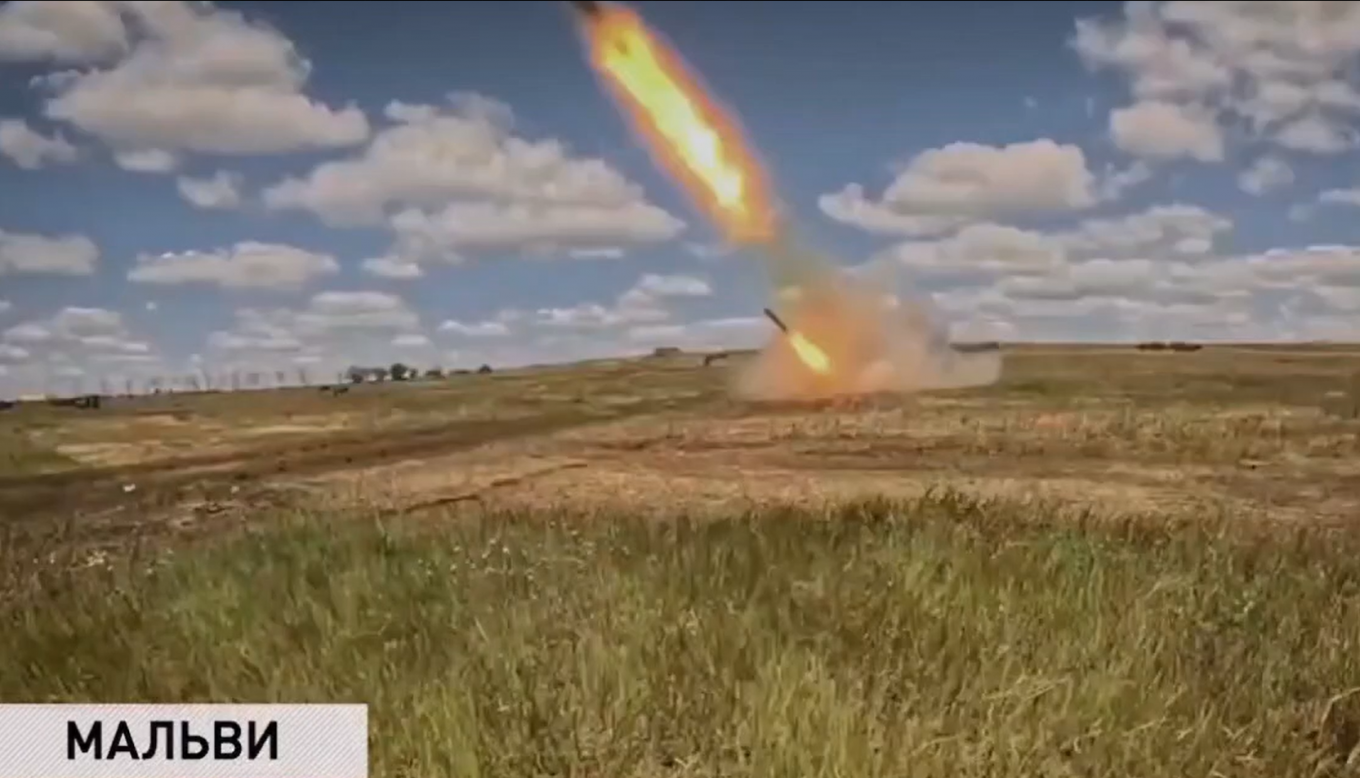
It is worth recalling that in the original Solntsepyok, firing accuracy is ensured by a ballistic computer that receives target distance data from a laser rangefinder. Malvina-M, unsurprisingly, lacks such systems.
In addition, the rockets themselves are inherently inaccurate, with dispersion reportedly reaching several hundred meters, as seen in pre-war training footage. In the original Solntsepyok, this inaccuracy was compensated by volume of fire, as each launcher carried 24 rockets. By contrast, Malvina-M carries only two.
In summary, Malvina-M demonstrates highly questionable accuracy that is not compensated by the number of rockets, placing its overall combat effectiveness under serious doubt. Nevertheless, 220-mm thermobaric rockets remain extremely powerful, and even such an imprecise delivery platform still poses a significant threat.
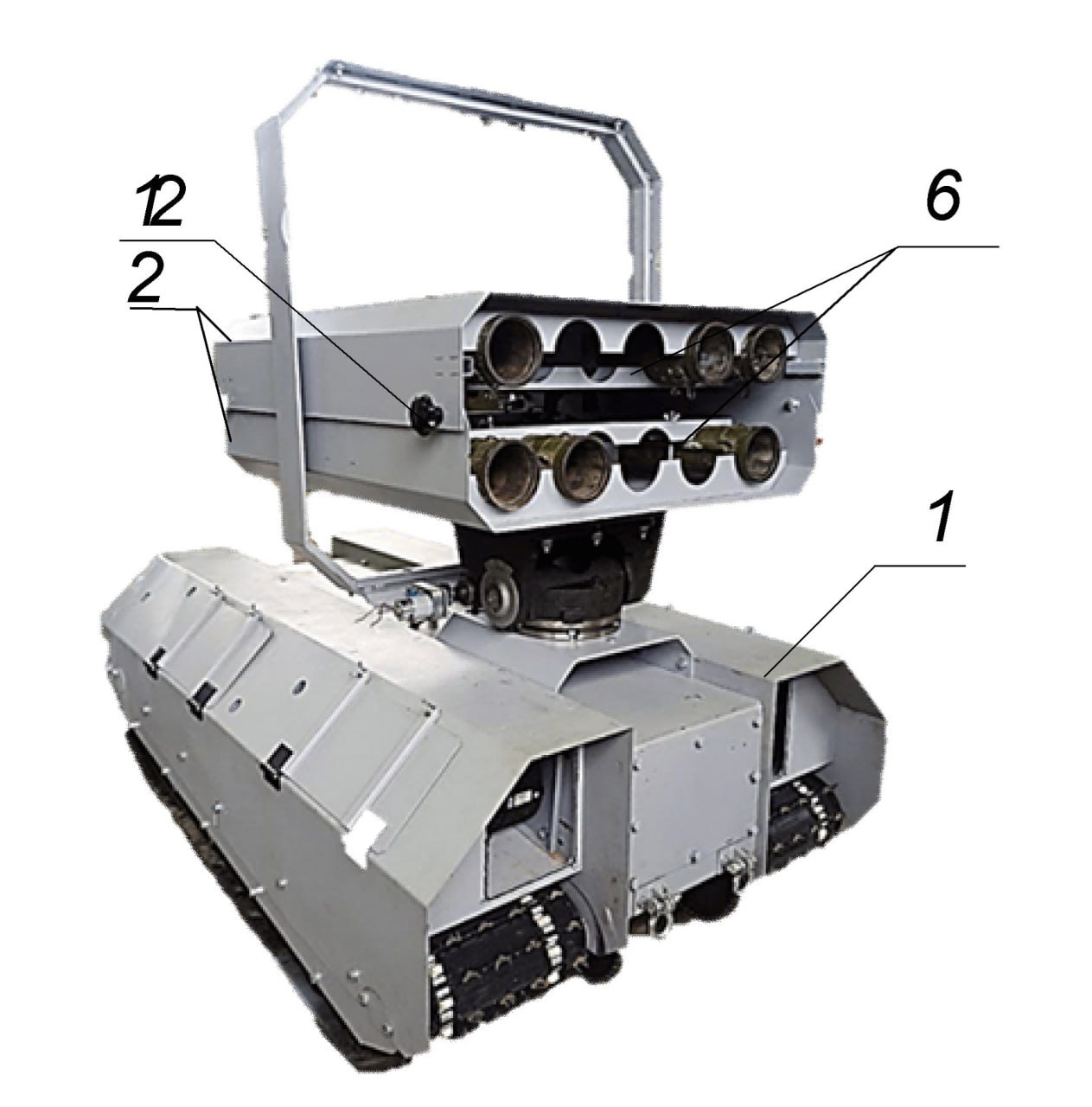
It is also worth recalling that the russians previously showcased another uncrewed system informally dubbed a Mini-Solntsepyok. Despite the nickname, it had nothing in common with the real Solntsepyok and earned its name solely due to the use of Shmel-type rocket-propelled infantry flamethrowers.
Read more: Ukraine Destroys Two russian TOS-1A Solntsepyok Systems Near Kupiansk (Video)