Doctors at a frontline stabilization point encounter every kind of case
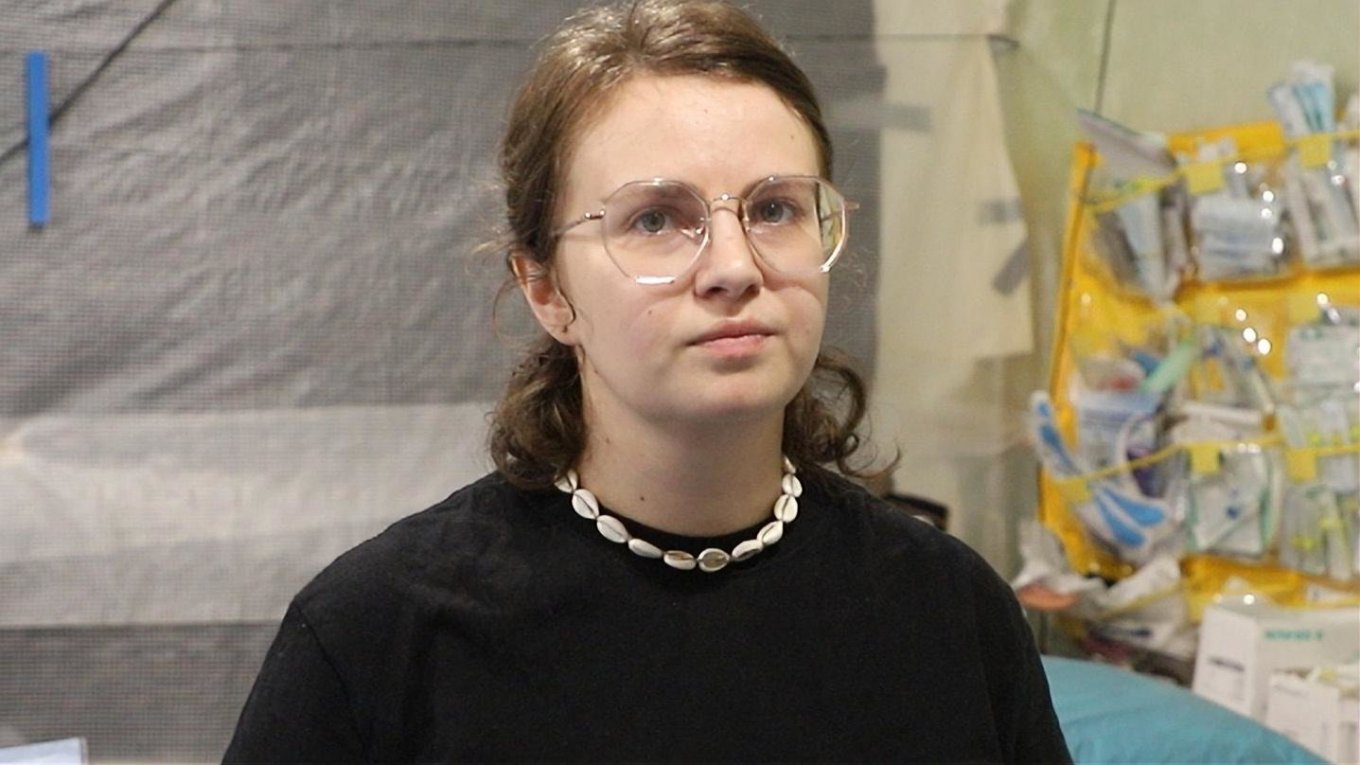
Medical Service Officer Vladyslava is the head of the medical point of the International Legion for the Defense of Ukraine. She is an emergency medicine physician. She completed her internship, passed her exams, and had her diploma recognized in the United Kingdom—but refused to stay and practice there. rfussia’s full-scale war had begun
From a British Internship to the Ukrainian Front
Without hesitation, Vladyslava traded the prospect of a career abroad for the daily reality of a combat unit at war. She understood exactly where she was needed most. Rear-area service never seriously entered her mind: emergency medicine, as she sees it, has nothing to do with safe work hundreds of kilometers from the line of fire.
“For me, there was no other option but to join the Armed Forces of Ukraine and work here, because this is far more necessary right now. Britain can wait a year, two, ten… At this moment, it is irrelevant to me. My entire family, all my close friends, serve in the Armed Forces of Ukraine — I had excellent examples before me, so I never even considered another path.”
Medical Service Officer Vladyslava is the head of the medical point of the International Legion for the Defense of Ukraine
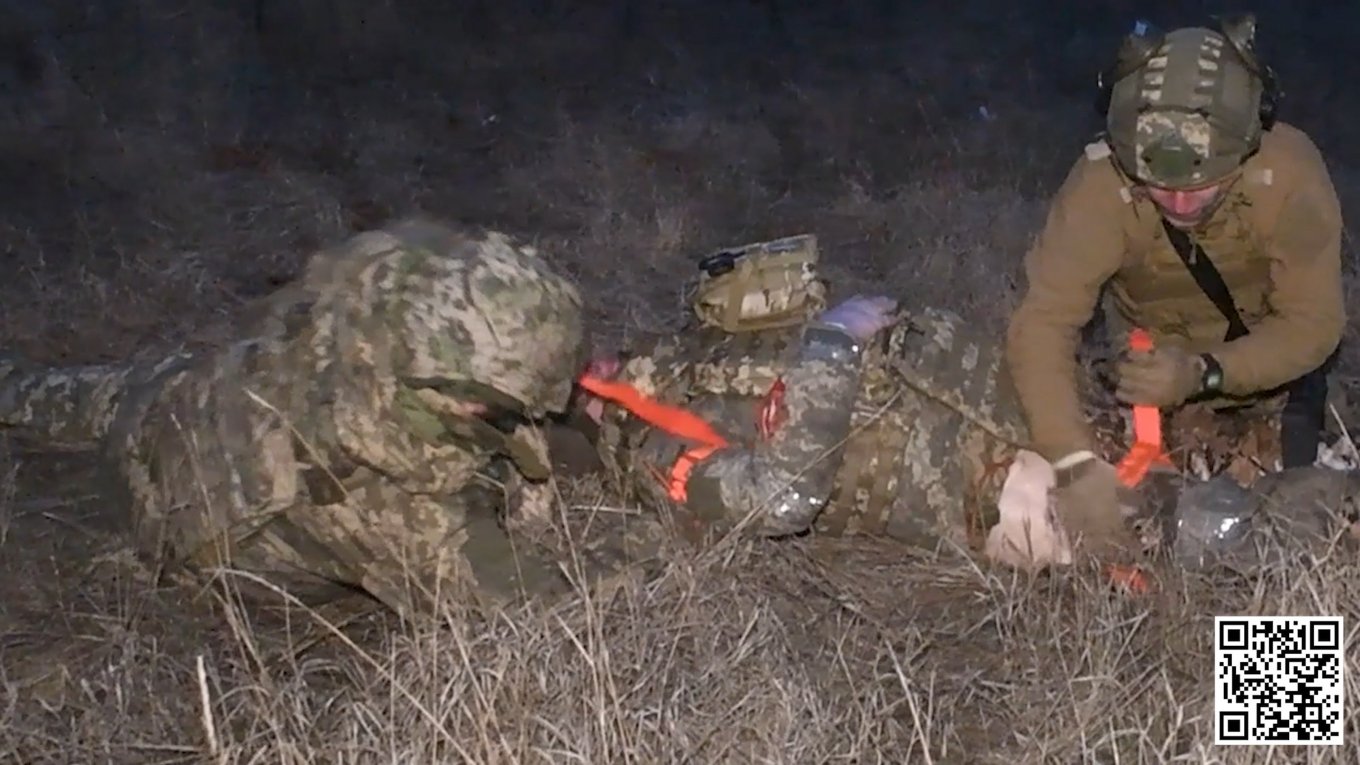
When You Carry Your Own Out on Your Back
When Vladyslava arrived in the International Legion, its medical service consisted of only a handful of people. She immediately plunged into the difficult and dangerous work.
“We were mainly evacuating the wounded from the line of combat and providing medical care at the medical point for somatic patients, as well as for lightly wounded soldiers. Over time, we managed to bring in more doctors, find another paramedic, more drivers—highly experienced and professional people. Together, and with help from volunteers, they made it possible for us to open our own stabilization point and provide care not only during evacuation, but also at our own stabilization point and medical station.”
Despite her youth, Vladyslava already possesses not only top-level training, but substantial wartime experience. We spent nearly a year in the Serebriansky Forest—which now sounds almost like a fairy tale. In those combat conditions, it was possible to organize evacuation almost instantly from the moment a casualty reached the casualty collection point, from where we evacuated our soldiers with our own transport. After the Serebriansky Forest, at the beginning of summer 2024, we spent about two months in Terny, where the tactical situation was no longer so favorable, and organizing medical care became much harder. After that, we ended up on the Pokrovsk axis. We welcomed the new year, 2025, there. We went through Chasiv Yar. And our next rotation is the Kharkiv axis. At the moment, we are working with wounded arriving from that sector.”
Learning Under Any Circumstances
The officer constantly sharpens her skills and is always ready to absorb the knowledge and experience of other physicians. “At present we work together with more experienced colleagues—general surgeons and anesthesiologists—so we are gaining as much experience as possible, learning from them, and we are deeply grateful. We will carry this experience into our future work.”
No matter in what condition a wounded soldier is brought from the battlefield, if he is alive, doctors will do everything possible for him—and more. Vladyslava has seen many kinds of injuries in combat medical practice.
“From a medical standpoint, perhaps the most difficult patients were those arriving at our stabilization point near Pokrovsk. There were many severely wounded who came in literally with blood pressure at 40 over 0, bleeding out. We did everything we could to quickly complete blood transfusion training and ensure access to blood. Within thirty minutes of evacuation from the line of combat, a wounded soldier could already receive blood—which, in such circumstances, might be the only treatment capable of saving him.”
Despite her youth, Vladyslava already possesses not only top-level training, but substantial wartime experience
Not Sparing Their Own Blood
War can shatter any plan, any system. Logistics under enemy fire, sudden changes in the intensity of fighting, countless unpredictable factors. A series of sudden assault actions overloaded the battalion medical service beyond its projected capacity—and the doctors ran out of blood.
Later, this would be taken into account, and through serious effort the necessary infrastructure would be established. But in that moment, there was no time to wait. “The battalion chief of medical service and I decided we would be donors ourselves. At lunchtime we donated two units of blood, and that same evening I transfused my own blood into a wounded soldier who arrived nearly unconscious, with critically low blood pressure. He left us conscious, talking to us. I was profoundly grateful to fate for that. We joked that, like Mowgli, we were now ‘of one blood.’ I was so happy, so full of joy. I still remember his first and last name.”
Even the Unbreakable Have Their Hardest Moments
Doctors at a frontline stabilization point encounter every kind of case. If a soldier has even the slightest chance, they will perform the most difficult interventions and drag him back from the other world. These men and women are not frightened by terrible wounds or technically daunting procedures. In a full-scale war, it seems they have already seen everything. And yet even they have moments when it is hard—and not always because of the injuries themselves.
“From a human point of view, the hardest case was a wounded man who had wandered for a very long time, looking for his own people, waiting for evacuation. When they finally brought him in, his wounds were not severe. Light or moderate. But he had spent a long time in an extremely stressful environment. He thought the russians had found him and he was already at the edge. Then he heard something grunt—and it turned out to be just a pig sneaking up. But in his mind, life had already ended. He was ready to die.
We often received food deliveries there—nothing special, just some soup, porridge. And he ate something hot for the first time in a long while. And that was greater medicine for him than all the drugs we gave him, all the oxygen we could provide. There were tears, fear, happiness. For me, it remains a case I will hardly ever forget—for better or worse…”
Providing emergency care at the front demands exceptional professionalism, iron will, and an unbreakable character. In an international unit, it has additional complexities.
The Greatest Joy: They Got Him to Us
Vladyslava remembers her patients well and follows their further evacuation. “We monitored that they reached the next stage, that everything was alright there, that they moved on further—alive, conscious, stable, in good condition. I hope they are doing well.” For the doctor, the greatest joy is simply the chance to begin her fight for a wounded brother-in-arms. The stabilization point team is highly professional and knows its own capabilities. Once a wounded soldier arrives, there is no time for anxiety, reflection, or doubt. But while the evacuation vehicle is still on the road, everything is different.
“The greatest joy, of course, is when an evacuation succeeds—when for hours or days it couldn’t be organized, and then finally we understand we can bring the wounded out and provide care. Especially difficult situations like that happened in Chasiv Yar. The evacuation logistics there were horrific. And when we finally managed to organize evacuation for our wounded, it was probably one of the happiest days of my life, because I understood: at least seven people we would see again. They were alive. They would be alright.
Whatever their injuries, they would arrive with us alive. Because we are the battalion medical service. We know them all. These are not just names on a roster. These are people we’ve spoken with, trained, treated at the medical point. So when you realize that person will be saved and will make it to the stabilization point—then everything depends on us. And that is already a mountain lifted from your shoulders.”
The battlefield spares no one
Against the Laws of Medicine
The battlefield spares no one. The wounded arrived with blood pressure at 40 over 0, 50 over 0, without oxygen saturation, with pneumothoraxes, penetrating abdominal wounds. There was one case where a patient arrived unconscious with a penetrating head wound. Objectively, by every standard, only a neurosurgeon in an operating room with neuroimaging could treat such a case—resources unavailable close to the line of contact.
“He received medical care, and by the next stage, when our colleagues met him, he was conscious and talking with one of our brothers-in-arms,” Vladyslava recalls. “He is doing remarkably well, given the circumstances. This story ended as well as it possibly could, considering all the alternatives.”
Do Not Plan the Better Life Too Far Ahead
Like many soldiers, Vladyslava is restrained when speaking of the future. “I’ll keep serving in the army. I don’t plan too far ahead. Britain has been postponed to an unknown distance, because honestly I find it hard to imagine myself abroad now. At the very least, I would have to see russians there, and I’m not sure I could bear that morally. Right now I have a wonderful unit, a wonderful team, and I truly like working here. I want to continue, be useful, become more qualified, learn new skills to be more effective. I understand there may be injuries even more difficult than those we have dealt with. I would like everyone who reaches us to leave alive—and remain alive through all subsequent stages.”
The Shared Language of Professionals
Providing emergency care at the front already demands exceptional professionalism, iron will, and an unbreakable character. In an international unit, it has additional complexities. “Language is the main one, really. The people who come to us usually have military or combat experience, so they function more or less on the same level as we do. Their action algorithms are similar. But language was a difficult link in communication at first. Most of our medical service speaks English fluently, but many of our brothers-in-arms speak Portuguese or Spanish, not to mention other languages. We have interpreters, but we need at least the basics of Spanish ourselves—to understand where the patient hurts, where the wound is, when it happened, what hit him. We are trying to learn Spanish so we can communicate in any circumstances, even without an interpreter. And of course there are habits foreign volunteers bring from their own armies, where some things may function differently than in ours. Our task is to explain everything as clearly as possible, help them, guide them, give contact numbers so that if problems arise they can always call me, the chief of medical service, or our doctors in the medical crews. And then we can step in, gather information, help.”
If It Becomes Critical — Faith Allows It
Foreign volunteers come from many corners of the planet. They naturally bring different beliefs, traditions, ways of seeing the world. These things are respected so that a legionnaire can carry out combat tasks as easily as possible, without violating his convictions or being forced into what is alien to him. No one here tries to remake another person into some imposed standard. Most issues are resolved through compromise.
“For example, we have Muslims for whom, unless it is a matter of life and death, injections may only be given by a man. We have men in the medical service, so we can provide that. And if it becomes critical—they understand and allow us to work. It is not a problem.”
Gratitude to Those Standing Beside You in Formation
Though she herself left the possibility of life abroad to come to the front, Vladyslava speaks of foreign volunteers with warmth, respect, and gratitude. “We are deeply grateful that they come, that they fight—even after severe injuries. More than once, more than twice, they say they want to keep serving, that they know who the enemy is, and that they want to stand with us. Even ‘Poltava’—that is one of our foreigners. He simply liked the name of the city and chose it as his callsign. He was wounded twice, seriously both times, but both times he returned to the ranks and worked with us again. Yes, he had long rehabilitation, surgeries—but he came back, kept fighting, became commander of his group. He is remarkable. It is extraordinarily moving to see him alive, healthy, whole. And there are many such stories in the Legion.”
A Wounded Weapon
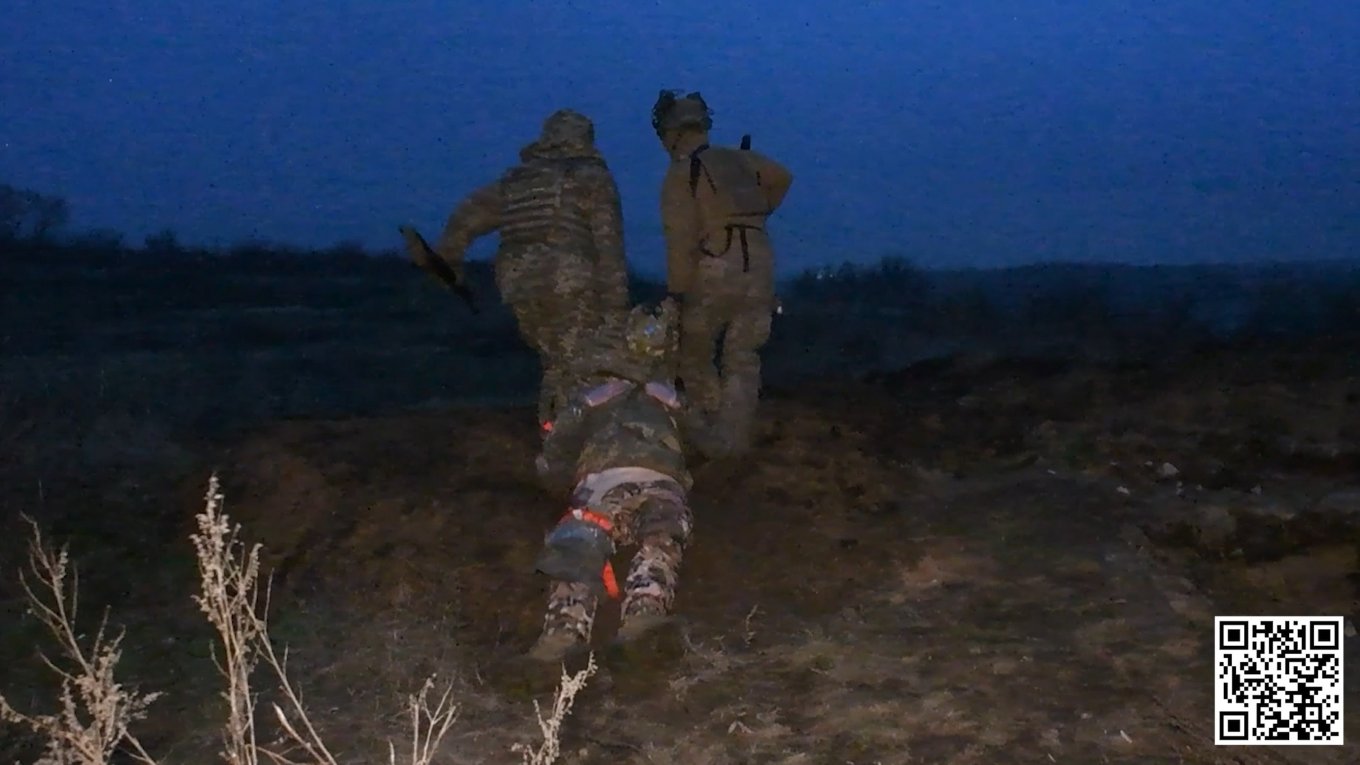
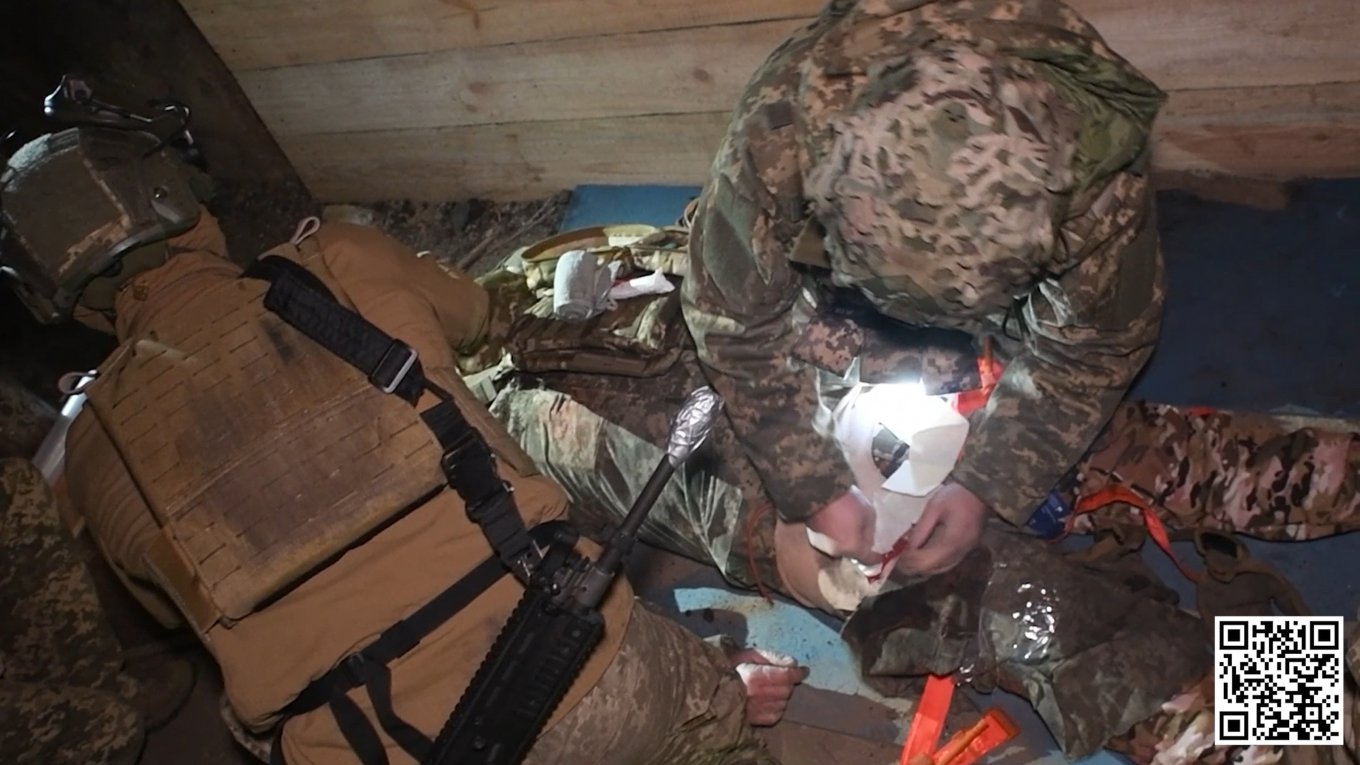
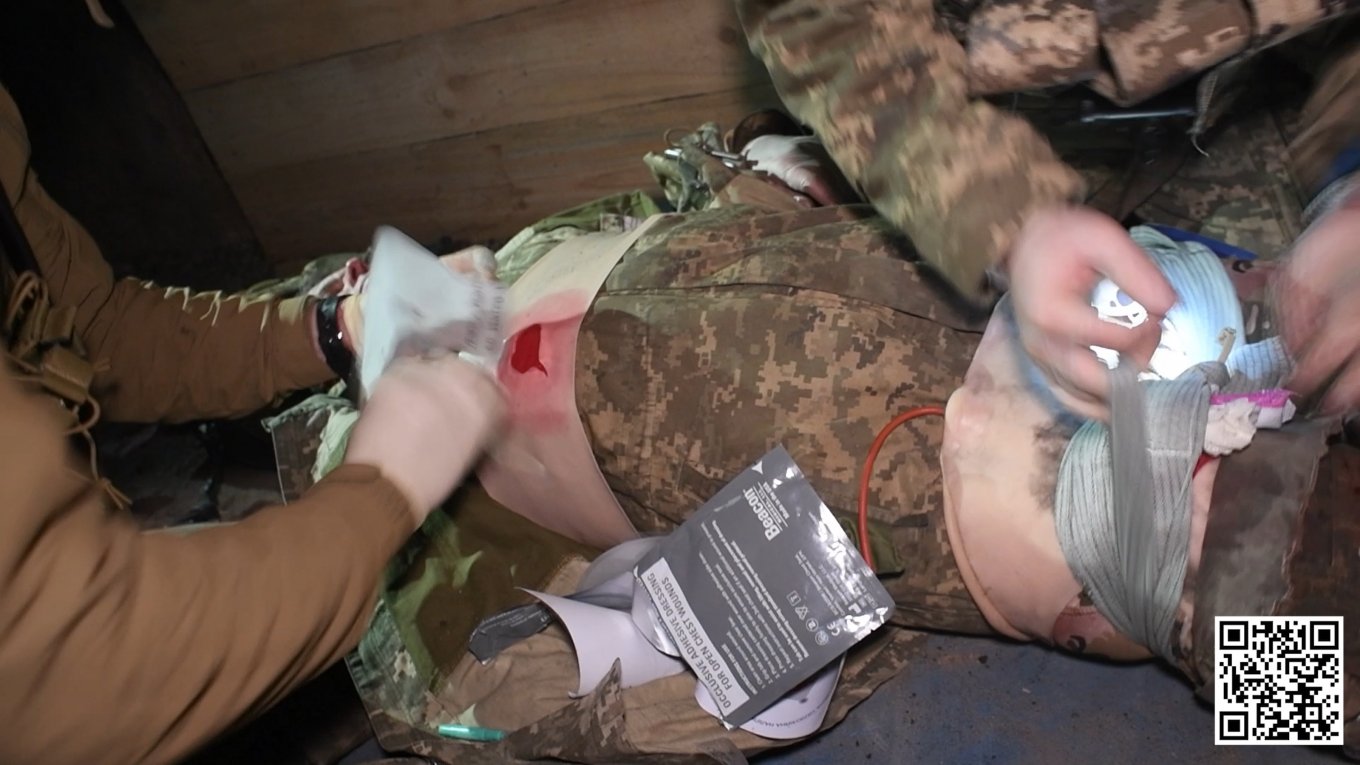
One would have wished this article ended as words alone. But within hours, it became necessary to see with one’s own eyes what had just been spoken of. After our conversation with Vladyslava, the doctors received word: an evacuation vehicle carrying wounded men was moving in from the line of combat. Two of them had fought in the same battle. The first was critical. A mortar round had badly mangled his leg. Enemy fire had made the tourniquet remain in place for hours. The nature of the injuries left no realistic possibility of saving the limb. He arrived unconscious, and his appearance inspired no hope.
The man who had saved his life by stopping catastrophic bleeding arrived himself with a wounded arm. Later, after surgery, he would recount how his unit repelled an enemy assault under drone attacks and mortar fire, how he applied the tourniquet to his wounded comrade, how in the heat of battle he seized that comrade’s rifle and opened fire again.
The weapon—wounded by the same explosion as its owner—could endure no more. The first shot jammed the deformed barrel. At the second pull of the trigger, another blast occurred. Fragments of the shattered wooden handguard of the AK-74 lodged in his palm, leaving deep ragged wounds.
Without Doubt, Error, or Hesitation
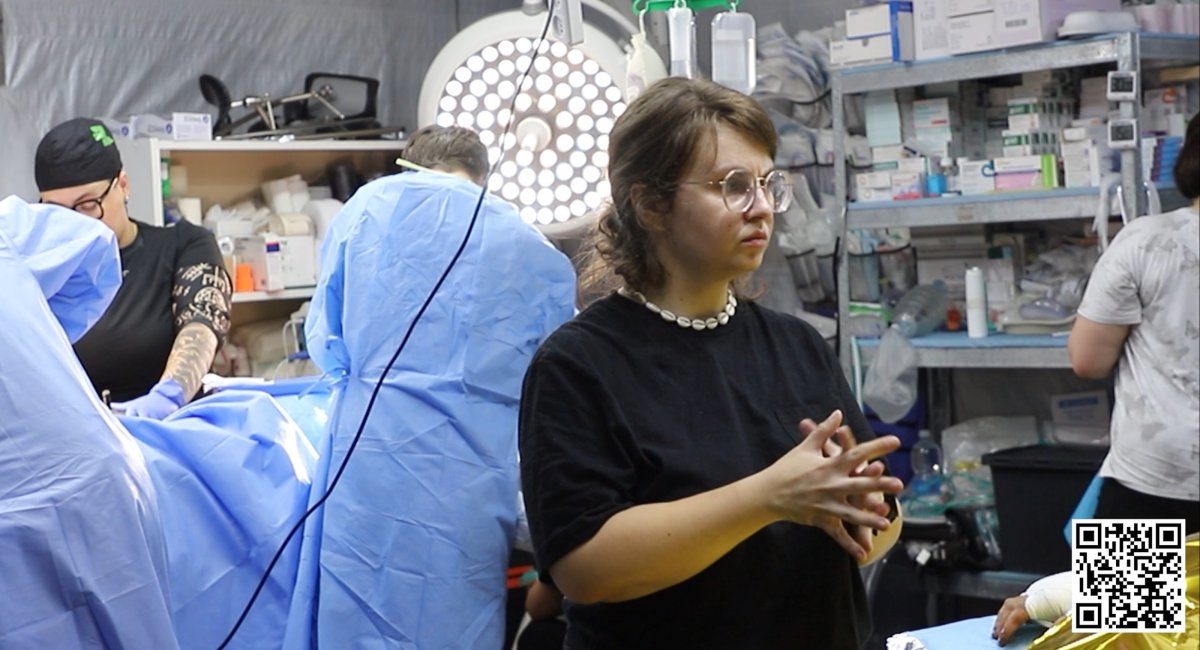
The operating room came alive. Only the sounds of diagnostic equipment could be heard, and the briefest phrases—clarifications of readings, drug dosages. Everything else was practiced motion, understanding at half a glance, speed, certainty, not one superfluous movement, not a trace of panic. No one here paid attention to distant explosions beyond the walls. Nor to nearby impacts that could leave your ears ringing.
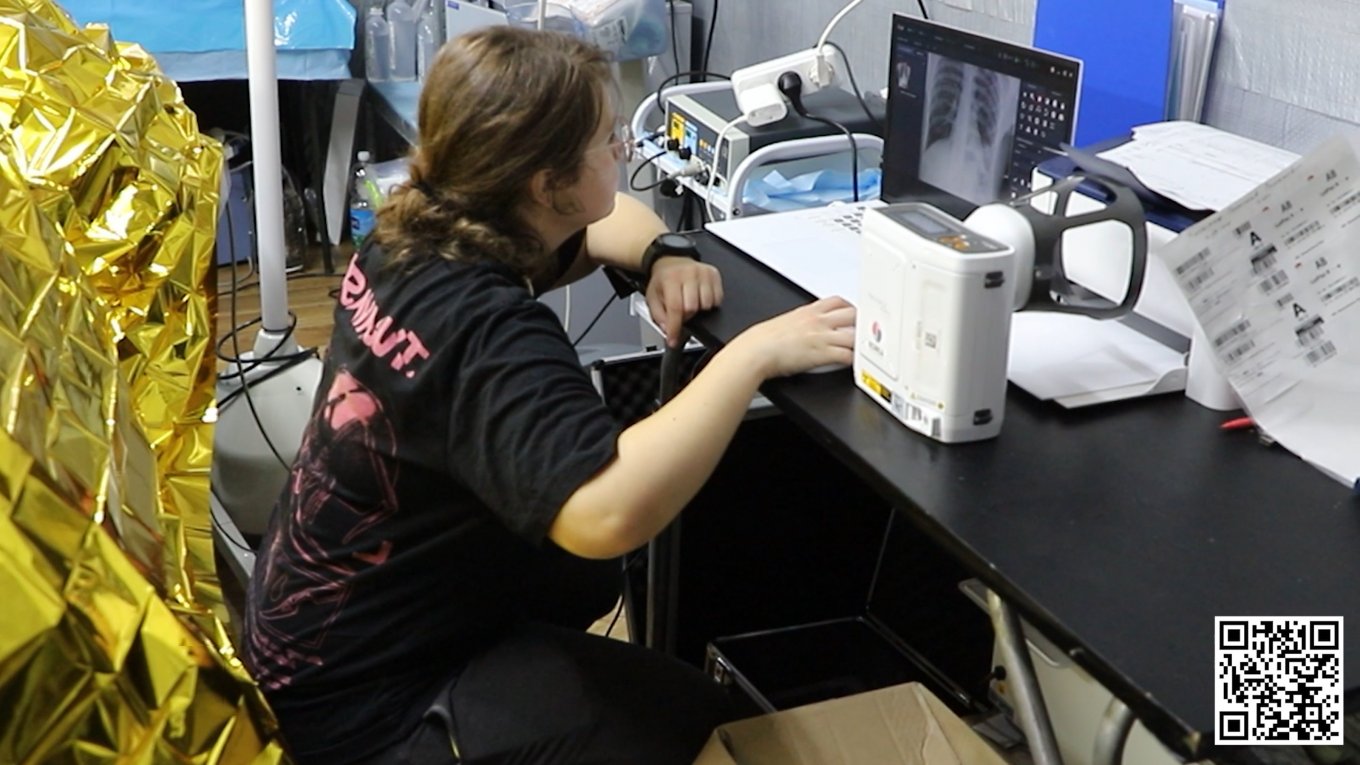
There was no time now to think of personal risk. Vladyslava took the soldier wounded in the hand, the one with wooden fragments invisible to X-ray. The confident and extraordinarily careful actions of the young doctor and her colleagues—even to an outside observer—left no doubt that this time, too, things would turn out well.
A Tradition: Send Them On Alive
Hours later, the exhausted shift of the joint medical detachment scrubbed the operating rooms spotless and handed the wounded over to the hospital evacuation crew. Some of them might manage to doze for a few dozen minutes before dawn—if no message came about the next evacuation.
The soldier with the gravest wound, when they carried him to the vehicle, turned his head and looked at us with fully conscious eyes.There is a tradition here: Even those who at first glance seem almost dead are sent onward fully alive—and always conscious. That hard night was no exception.
Hadn’t Yet Shot Enough Enemies
An older man with a bandaged arm was finishing a cigarette, drawing greedily on it. A few days before being wounded, he had run out of cigarettes at his position. Did he realize he had saved a comrade’s life that night? Did he understand he was a true hero? Was he thinking of the pain his treated wounds would speak with once the anesthesia wore off? Had he called his family? What was he thinking?
The answer to the unspoken question came unexpectedly. “Only ten days at the position. Didn’t even have time to shoot enough of the bastards,” the wounded man said bitterly, more to himself than anyone, before tossing the cigarette butt away and climbing into the ambulance.
His gaze, his intonation, the expression on his face—all made one thing unmistakably clear: He would return at the first opportunity and finish unfinished business. Apparently there is a tradition here too: To return after wounds.
To fight with doubled fury. And that night, once again, nothing changed.
Of Doing the Impossible for the Lives of One’s Own
Beside their Ukrainian brothers-in-a rms, foreign volunteers of the Armed Forces of Ukraine—the Legionnaires of the Free World—risk their lives daily to stop the Muscovite invasion. And yet even the most skillful warriors are not insured against wounds.
But while Medical Service Officer Vladyslava and her colleagues of the joint medical detachment are on duty, they will, for one brief instant before rushing to work, breathe in relief each time a hero has been brought in alive. And almost no matter in what condition. Because this team will do the impossible in the fight for the life of every soldier.
To learn more about the Legionnaires of the Free World and join them.