


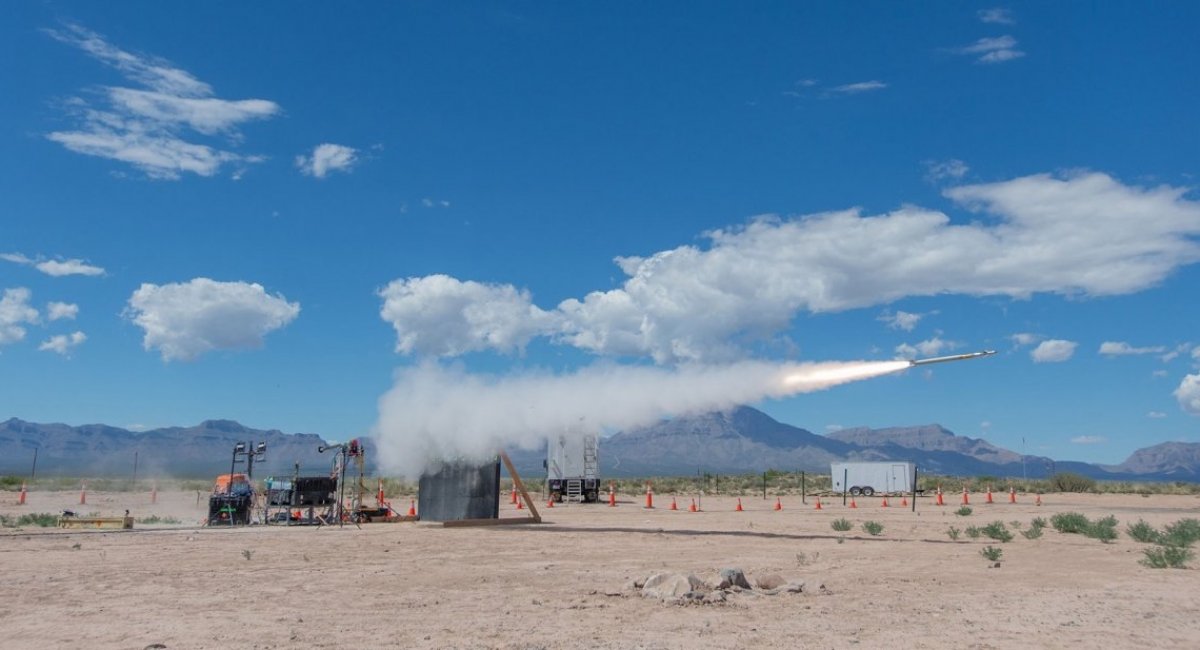
American defense company Lockheed Martin has announced that its QuadStar short-range air defense missile developed as a replacement for the legendary Stinger under the Next Generation Short Range Interceptor (NGSRI) program has successfully completed flight tests evaluating the missile's seeker head performance.
The tests were aimed at verifying the seeker's ability to acquire imagery, process signals, and maintain tracking of a designated target.
Read more: Five European Patriot Operators, Zero Searching for Alternatives — Why That Is Unlikely to Change Soon
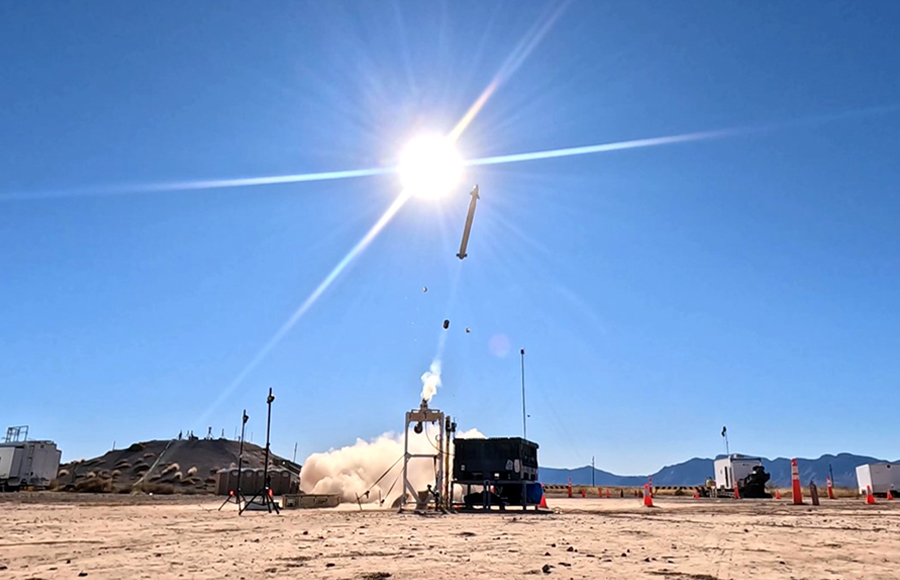
The tests confirmed the effectiveness of the CLA [Command Launch Assembly], the functionality of critical systems, the innovative and affordable guidance technology, and the performance of the QuadStar interceptor, Lockheed Martin stated, adding that the new missile's seeker performance exceeds the capabilities of the legacy system it is intended to replace.
The press release notes that the tests came as the result of a three-month sprint from the QuadStar's first flight in mid-January of this year suggesting the seeker evaluation took place around mid-April and that testing under the NGSRI program is proceeding ahead of schedule overall.

On the QuadStar's seeker, Lockheed Martin emphasizes that its modern architecture and AI-based signal processing deliver an affordable and unique design while ensuring the capability for rapid updates and modular upgrades.
Lockheed Martin's competitor in the NGSRI program is RTX (Raytheon), which has similarly stressed that the Stinger replacement must be cost-effective given that the new missile is expected to engage targets including unmanned aerial vehicles.

Engaging drones with a Stinger is anything but cheap: under a 2022 contract for restocking missiles following transfers to Ukraine, the unit cost of a single Stinger came in at nearly half a million dollars.
Even accounting for the fact that the NGSRI missile is intended to offer a higher probability of kill than the Stinger, if its unit cost remains similarly high, using it against far cheaper strike drones would be, to put it mildly, a suboptimal solution.
At the same time, given that the NGSRI missile is meant to be a more capable system than the Stinger across the board including improved range making it meaningfully cheaper is a far from trivial engineering and procurement challenge. Low-rate initial production under the NGSRI program has previously been reported as targeting a start in 2026–2027.
Defense Express previously reported on how Ukrainian air defense drone operators borrowed a feature from the Patriot PAC-3 MSE interceptor, along with other highlights of their operations.
Read more: russia Says It Started Delivering a HIMARS Analog to Its Forces in 2025, But It Hasn't Been Spotted on the Front Lines