

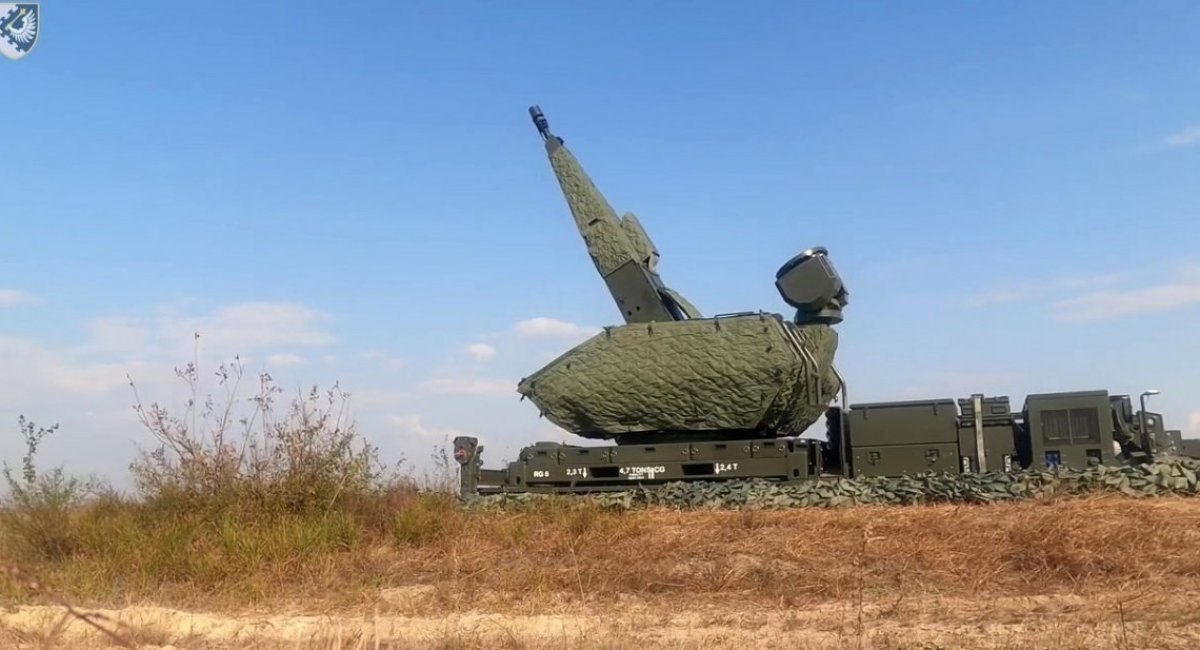
Romania's Ministry of Defence announcement of a €5.68 billion arms procurement from Rheinmetall has revealed the unit price of the 35mm programmable air-burst AHEAD round used in the Skynex and Skyranger air defence systems.
According to the announcement, Rheinmetall Waffe Munition GmbH will receive €449,750,000 for 401,760 AHEAD rounds, putting the cost of a single round at €1,119.50. That figure somewhat undermines any impression that the Skynex and Skyranger systems are an economical option for drone defence. This is compounded by the fact that engaging a drone-type target typically involves not a single shot but a burst. Footage of drone intercepts suggests a standard Skynex burst runs to around 10 rounds, meaning a single engagement, assuming a first-burst kill, costs upwards of €11,000.
Read more: Italy and Japan Were Right to Worry: UK Set to Defer GCAP Funding, Risking Programme-Wide Setback
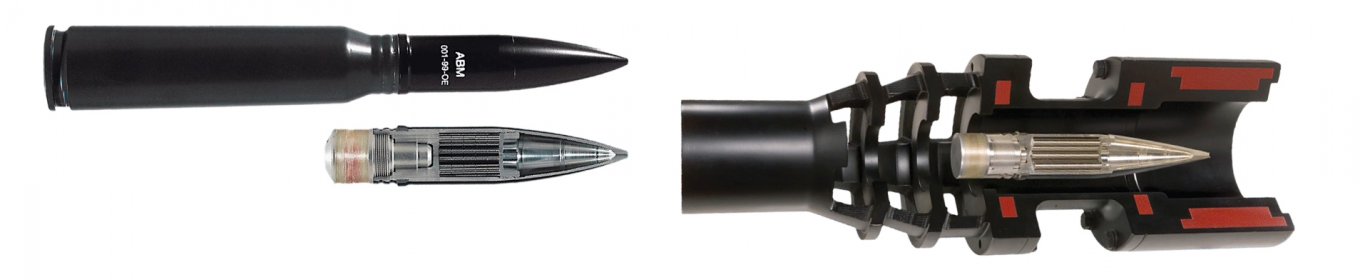
When it comes to shooting down a strike drone such as the Shahed, that €11,000 figure is unquestionably cost-effective — even accounting for operational costs associated with barrel wear and the loading mechanism. However, that ammunition cost alone could already exceed the price of a decoy target such as a foam-construction Gerber.
The price of the 35mm AHEAD round is straightforward to explain. It is a genuine feat of engineering, and its effectiveness is entirely dependent on extreme precision. The fire control system first measures target range and velocity to calculate a lead angle.
At the moment of firing, as the round passes through the muzzle device over the course of 2 microseconds, its velocity is measured allowing the system to calculate exactly when the round will be adjacent to the target and must detonate. That precise detonation time is then programmed into the round inductively within those same 2 microseconds.
The 35×228mm round detonates with microsecond accuracy in the vicinity of the target, releasing 152 tungsten pre-formed fragments. The AHEAD round is, in its own right, an extraordinarily complex munition — manufactured to extremely tight tolerances across every single component. That is precisely what makes it effective, and precisely what makes it expensive.
Read more: russia's Own Tactics Turn Against It as Ukraine Expands Drone-Based Remote Mining of Logistics Routes