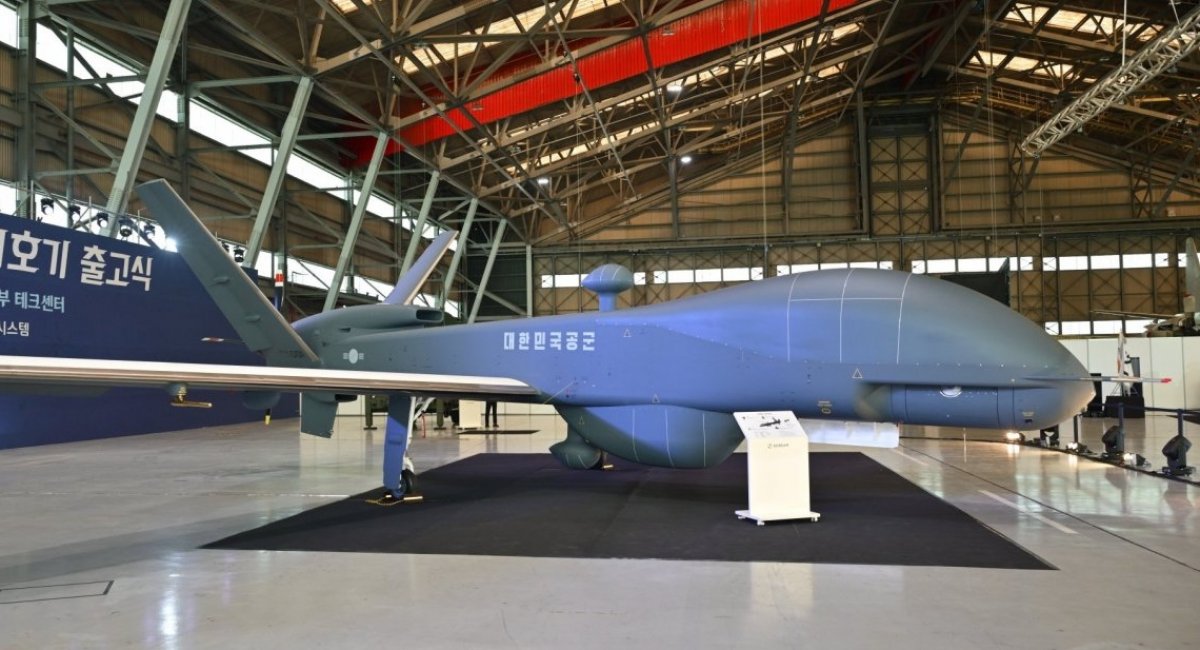
Korea recently held a ceremonial transfer to the air force of the first serial reconnaissance-strike MUAV (Medium-altitude Unmanned Aerial Vehicle) drone, also known as KUS-FS. This is more than a landmark event for development that started back in 2008.
Despite talking about a large, very expensive UAV, the official statement's assertion that such drones are key force determining victory on battlefield may again be relevant now. Although back in 2023-2025, the answer to whether reconnaissance-strike drones have a place on the battlefield would have been negative.
Read more: USS Boise Submarine Spent One-Third of Its Life in Repair Limbo Before Navy Finally Scraps $800M Failed Restoration
Paradoxically, MUAV truly managed to be a breakthrough development, become obsolete, as well as become relevant again. When a whole 18 years ago in South Korea MUAV or KUS-FS reconnaissance-strike drone development began, this was a response to the U.S. decision not to sell Seoul RQ-4 Global Hawk strategic reconnaissance UAVs.
At the same time, Koreans went further. Besides capabilities to conduct reconnaissance using not only an optical station but also SAR radar, they decided to make it strike-capable as well. Also to make such a drone in significantly smaller MQ-9 Reaper dimensions. This looked like a very significant and breakthrough solution at the time.
Korean Air took on MUAV work, responsible for the aircraft itself, Hanwha, optical sighting station, as well as LIG Nex1 SAR radar. By 2011, development was progressing quite actively, but the U.S. signaled Korea they were still ready to sell RQ-4 Global Hawk.
The national project was suspended and began moving by inertia, whose force allowed lifting the first prototype into the air at the beginning of 2012.
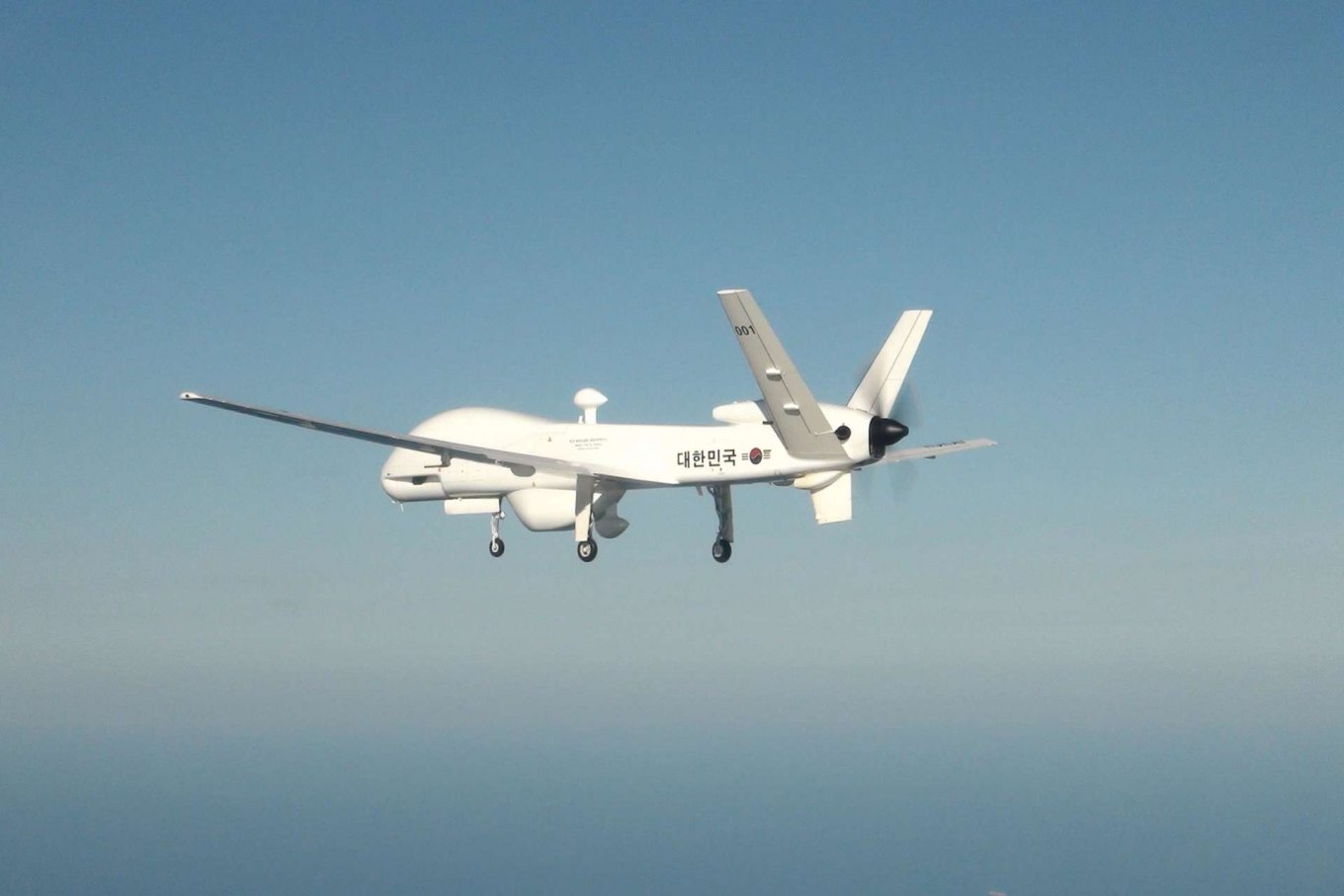
While negotiations with the U.S. about RQ-4 Global Hawk were ongoing, Seoul was very dissatisfied with the price. They renewed the program in 2013. While receiving four RQ-4B Block 30 Global Hawks ordered in 2014 for $657 million until 2020, work on their own MUAV continued. However, not without problems, one prototype was lost in 2019.
Development was completed in 2022. Then the MUAV reconnaissance-strike drone, which could stay airborne for over 24 hours, whose main tool is SAR radar that can distinguish ground targets at 110 km range from 10-13 km altitude, with ability to carry full armament on four hardpoints, was a very promising solution. The decision to order 10 such drones for Korean air forces was logical.
However, subsequent events, not only during the russian-Ukrainian war but also during Middle East conflicts, fully showed that such large drones, MUAV has 13-meter wingspan and 5.7 tons maximum takeoff weight, are very vulnerable.
At the same time, an absolutely new niche is opening for such reconnaissance-strike drones right now. Fighting other drones. In particular, France already understood this, where they're already converting MQ-9A Reaper drones with Hellfire missiles into Shahed hunters. Moreover, Korean MUAV can take on another role, drone detection asset thanks to its SAR radar, which will work in any visibility.
Read more: Simultaneously Detects russian Drones, Displays Their Video Signal in Real Time: What Ukrainian Vydun 7.5 Detector Can Do