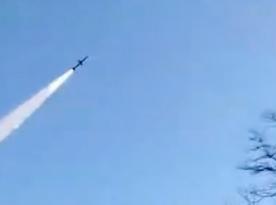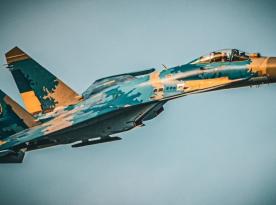



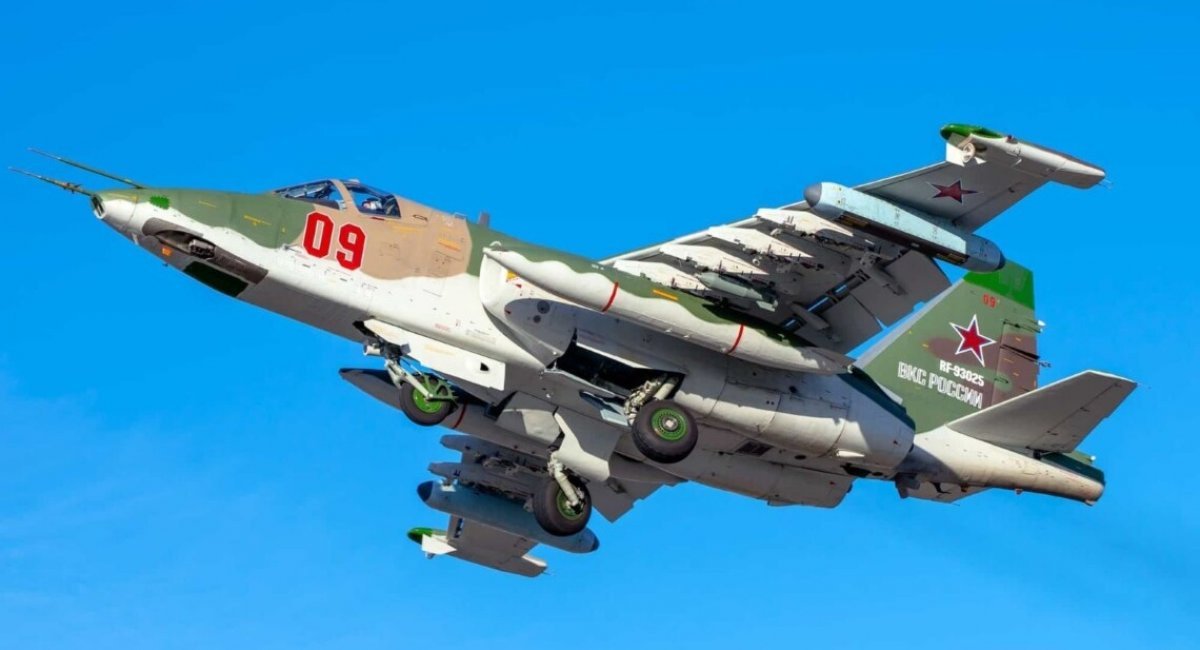
This year, russian invading forces used their new Geran-5 cruise missile (missile-drone) for strikes against Ukraine for the first time. At the same time, information emerged about the jet-powered Geran-4 drone, on which the enemy has integrated an R-60 air-to-air missile. What links these two weapons is russia's intention to deploy them from Su-25 ground-attack aircraft.
Plans to integrate the Geran-5 drone with the Su-25 were officially reported by the Defense Intelligence of Ukraine. In addition, images circulating online suggest that the same aircraft may also be used to launch jet-powered Geran-4 drones.
Read more: north Korea Shows Su-25 Armed with Storm Shadow Copy for the First Time: A New Step in Its Cargo-Cult Approach
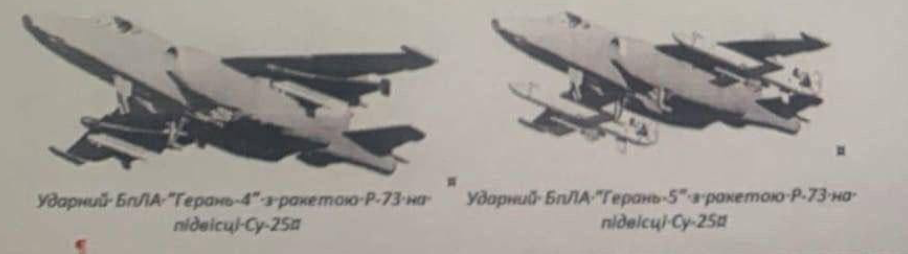
First and foremost, when assessing this possibility, it is necessary to determine whether the Geran-4 and Geran-5 can physically fit under the wings of a Su-25. According to a statement by the Defense Intelligence of Ukraine, the wingspan of the Geran-5 cruise missile is "up to 5.5 meters." At the same time, the image mentioned above lists smaller figures: 3 meters for the Geran-4 and 3.2 meters for the Geran-5.
Given the Su-25's wingspan of 14.36 meters, it can be calculated that even with a notional 5.5-meter wingspan, the Geran-5 could, at least theoretically, be mounted on the aircraft’s second and tenth hard points.
A separate and more complex issue is the actual integration of these Geran drones under the Su-25's wings. This is not a matter of simply attaching the weapon, but would require additional engineering work, the implementation of specific technical solutions, and airframe or avionics modifications. Whether russia has already completed such integration or still needs to carry out these efforts remains an open question.
The next key issue is what tangible advantages russia would gain if it succeeds in implementing this concept. Most likely, the primary benefit would be a significant increase in the "throughput" of simultaneous drone and missile launches during terrorist attacks against Ukraine, as well as the ability to select virtually any launch point for strike weapons.
Even the use of just 10–20 aircraft would allow for the launch of an additional 20–40 Geran drones as part of a single salvo. Moreover, unlike ground-based launches, which are limited by the availability of prepared launch sites, despite russia's efforts to expand such infrastructure, air-launched systems are not subject to these constraints.
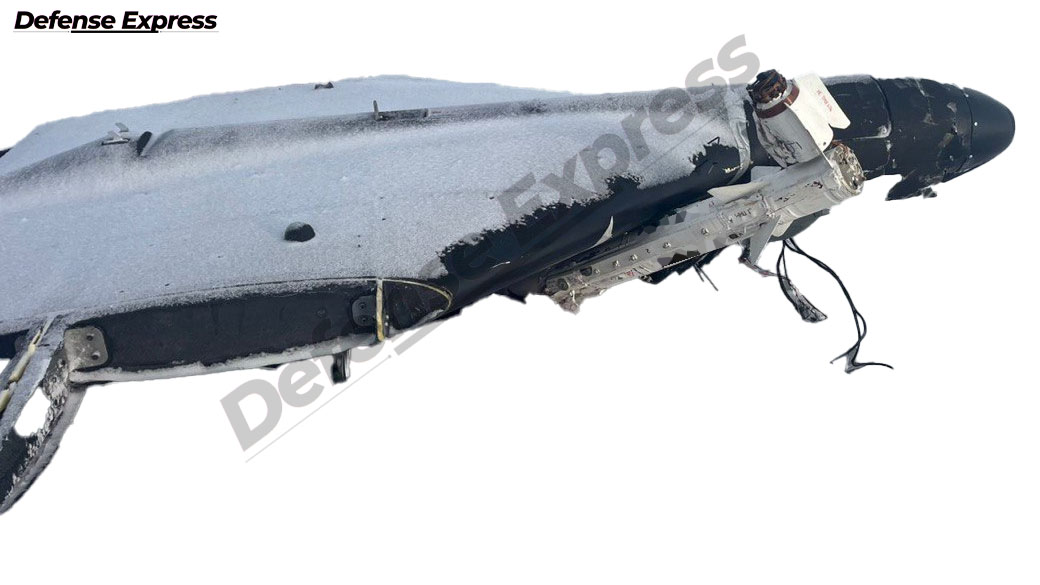
Air launch would also increase the range of the Geran drones by an estimated 100 kilometers, while improving their flight speed. In addition, it has been claimed that air-launched Geran systems could be cheaper to employ than their ground-launched counterparts.
Previously, Defense Express reported that russia's new Geran-5, which is in fact a cruise missile, could potentially be adapted into a "fighter-like" platform capable of launching R-73 air-to-air missiles.
Read more: russia Debuts Geran-5 Jet-Powered Strike UAV in Attacks on Ukraine