


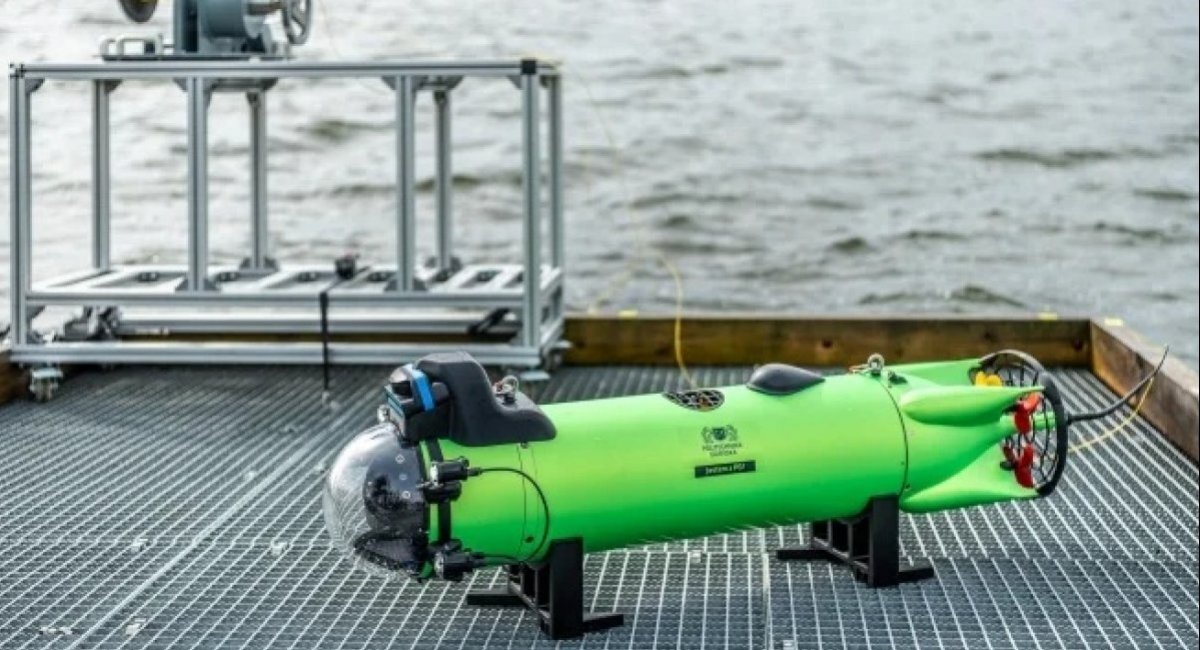
Poland has conducted the first tests of its new underwater drone called Pirania, which was developed jointly by the Gdańsk Polytechnic University and RADMOR, a company part of WB Group. The developers note that such a drone was created due to the need to control water areas important for the country's security, as well as to protect maritime infrastructure.
The Pirania underwater drone was designed as a dual-use product, that is, it can have both civilian and military purposes.
Read more: Poland Is Building Long-Range Precision Strike Capability, Country's Military Command Confirm
Details of the Pirania prototype tests are reported by Defence24.pl. In particular, it is reported that the tests were conducted a month ago, on April 14, in conditions as close to real ones as possible – the drone was prepared for operation and launched from the shore, after which it had to perform the task of detecting and identifying underwater objects and return back. The prototype of the Pirania underwater drone successfully completed the specified mission.
It is noted that the Radmor company, in cooperation with scientists from the Gdańsk Polytechnic University, managed to go from concept to full-fledged operational tests in just five months.
This was made possible, not least due to the fact that part of the technologies for Pirania were borrowed from another Polish development – the Głuptak underwater robotic system, which was developed at the Gdańsk Polytechnic University, whose specialists worked on Pirania.
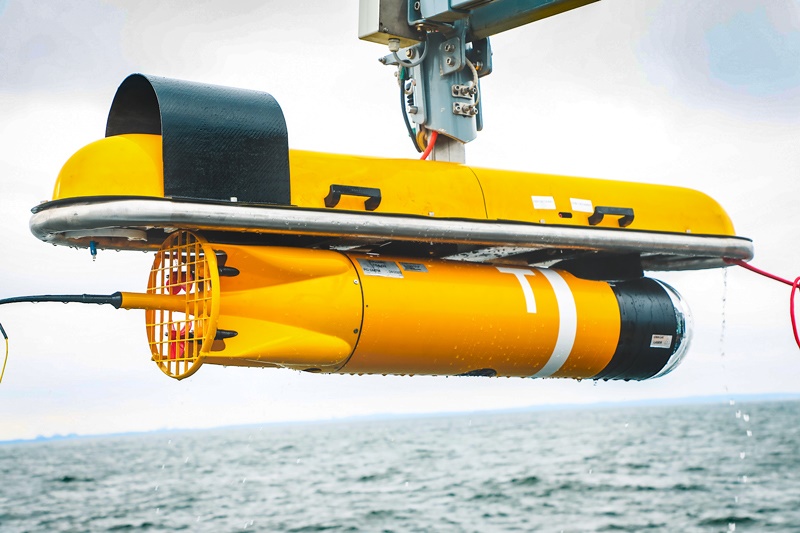
Głuptak exists in two versions – as a training drone, as well as as a kamikaze drone designed to detect and neutralize sea mines. Głuptak has a mass of 48 kg and a length of less than one and a half meters. Operating depth – up to 200 m, range – up to 1.5 km.
Pirania has similar tactical and technical characteristics – a mass of about 50 kg and a length of 1.40 m. This underwater drone is modular and its payload can vary depending on the need to perform a particular mission – it can be various sonars, cameras, sensors, manipulators, etc.
In general, it is worth noting that recently, countries with access to the Baltic Sea have been paying more and more attention to unmanned technologies, especially in the context of having such an enemy as the russian federation nearby.
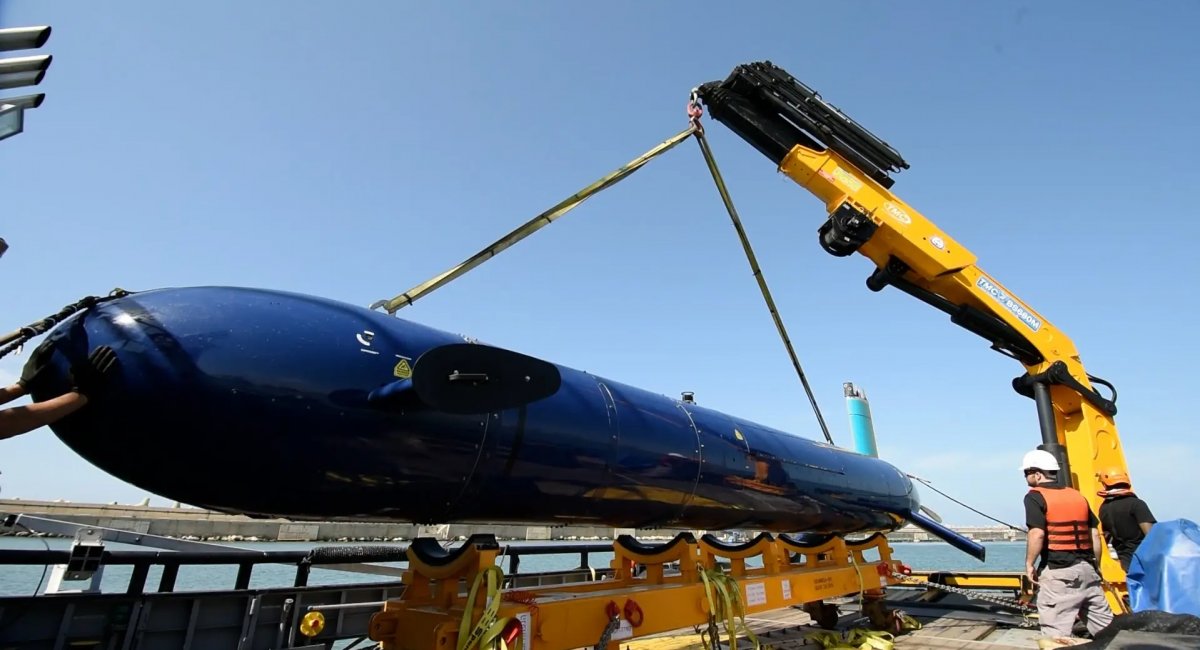
For example, Germany has armed itself with BlueWhale unmanned submarines, which are designed to combat enemy submarines and perform covert maritime missions. This is a rather large underwater drone, 10.9 m long and weighing 5.5 tons.
Read more: Poland Increases Number of Armed Forces to 500 K, Focuses On Punishing Aggressor