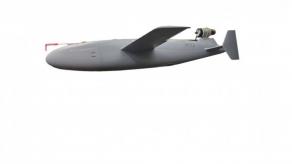



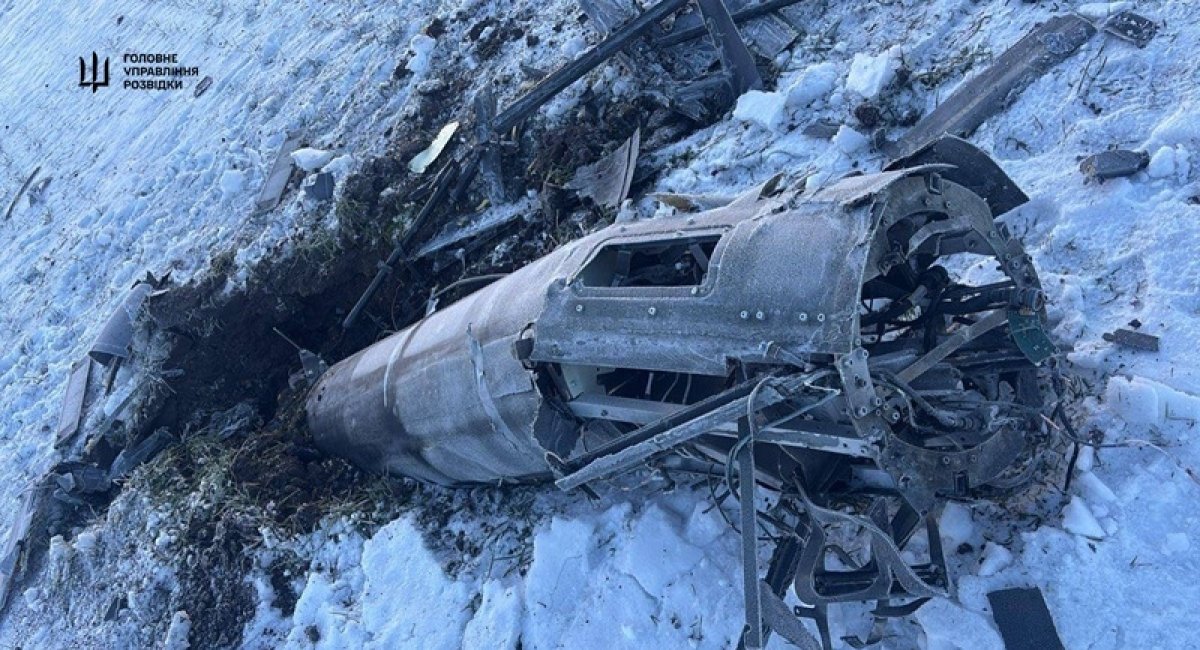
At the beginning of 2026, during a series of combined air attacks against Ukraine, russian forces reportedly employed a new strike unmanned aerial vehicle designated Geran-5 for the first time. This marks another step in the evolution of the Geran family, which has been used extensively to saturate Ukrainian air defenses and conduct long-range strikes against infrastructure and military targets.
In terms of dimensions, Geran-5 system is notably larger than earlier variants. The UAV is approximately six meters long with a wingspan of up to 5.5 meters, placing it closer to the lower end of cruise-missile-sized platforms than to traditional loitering munitions. Unlike previous Geran models, which relied on a delta-wing or flying-wing layout, Geran-5 drone is built using a conventional aerodynamic configuration, suggesting an attempt to improve stability, payload capacity, and flight performance.
Read more: Soviet-made Nona-K Gun-Mortar Used by Ukrainian Artillerymen Demonstrates Phenomenal Accuracy
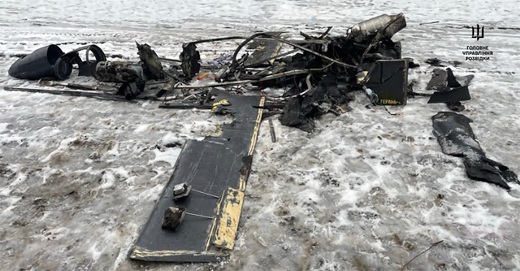
Despite the new airframe, most key systems and components appear to be unified with other UAVs in the Geran series. The drone reportedly uses a 12-channel Kometa satellite navigation system, a tracking unit based on Raspberry microcomputer, and commercial 3G/4G modems. This continued reliance on civilian and dual-use electronics highlights both russia's adaptability under sanctions and its ongoing dependence on non-military-grade components.
Propulsion is provided by Telefly turbojet engine, similar to the one used on Geran-3 drone but with increased thrust. The shift toward a more powerful jet engine indicates an effort to boost speed, range, or payload, potentially complicating interception compared to slower, piston-engine Shahed-type drones. However, this also increases cost and technical complexity, partially undermining the concept of a "cheap" mass-use weapon.
The reported warhead mass of around 90 kilograms represents a significant destructive capability for a UAV of this class. Combined with a stated range of roughly 1,000 kilometers, Geran-5 system can threaten targets deep inside Ukrainian territory without entering contested airspace early in its flight, reinforcing russia's strategy of long-range pressure through persistent aerial attacks.
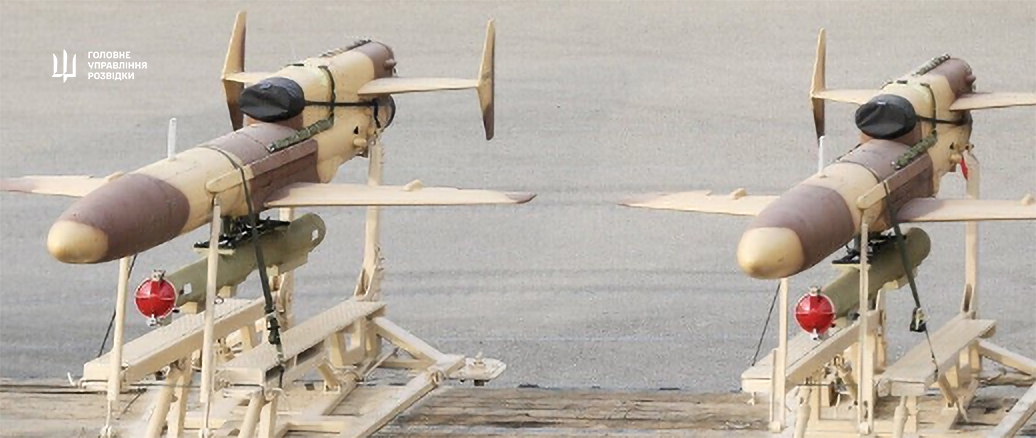
As with earlier the Geran variants, it is difficult to classify Geran-5 system as an indigenous russian development. Observers note strong structural and technological similarities with Iranian Karrar UAV, pointing once again to deep cooperation with Tehran and the adaptation of Iranian designs to russian operational needs. This pattern reinforces assessments that russia's UAV program remains heavily dependent on foreign technology and external design lineage.
According to available information, russia is also exploring air-launched employment of Geran-5, potentially from Su-25 attack aircraft. Such a concept could increase the drone's effective range and flexibility while reducing reliance on ground launch infrastructure. It would also allow launches closer to the front line, compressing Ukrainian reaction time.
Most concerning is the reported consideration of equipping Geran-5 drone with R-73 short-range air-to-air missiles to counter Ukrainian aircraft. While the practical effectiveness of such a configuration remains questionable, the concept itself signals an attempt to blur the line between strike UAVs and improvised air defense or interceptor platforms. If pursued further, this would reflect russia's ongoing experimentation with unconventional and often high-risk adaptations to offset its broader battlefield limitations.
Read more: What Significant Problem Helped Lockheed Martin Deliver a Record Number of F-35s in 2025