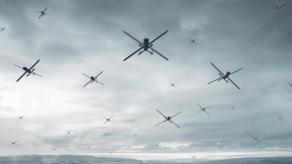
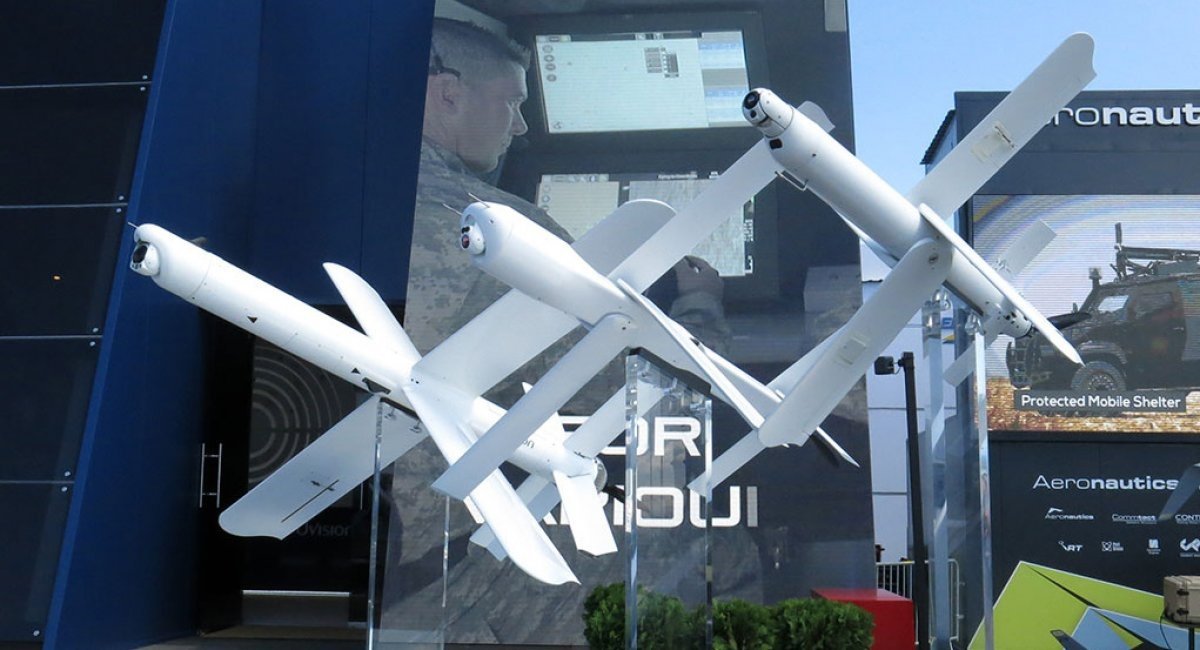
NATO has ordered several hundred HERO loitering munitions worth over €100 million from German company Rheinmetall. They are intended for one of the Alliance's member countries. Deliveries will begin in the first quarter of 2026 and continue until the end of next year.
This drone, known for its X-shaped design, is believed to have inspired the russian Lancet drones. It should be noted that they are manufactured under license in Europe, and the original developer is the Israeli UVision Air Ltd company.
Read more: Ukraine, UK Conclude Agreement on Licensed Production of Octopus Interceptor Drone - What is Known About It
The current order for NATO will be fulfilled by the Italian RWM Italia company with support from UVision Air. It is noted that the latest anti-tank warhead developed by Rheinmetall is being used. Germany is the probable customer and aims to deploy the first battery of these drones in 2027.
It should be noted that HERO is a family of strike UAVs, each differing in its tasks and characteristics. While the German company hasn't specified the exact models for the new contract, all mentioned models share an X-shaped design.
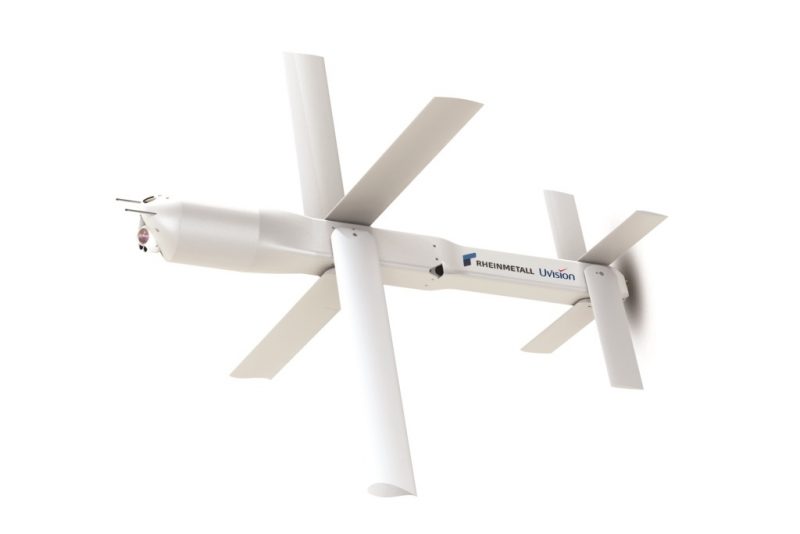
This is the HERO 30, the smallest in the series, weighing 3 kg, with a 0.5 kg warhead and a range of up to 10 km. Despite its appearance, it resembles a niche of modern FPV drones, which are likely much cheaper.
The HERO 120, intended for striking armored vehicles, is comparable in capability to the russian Lancet, the Ukrainian Bulava (exported as Mace), and the RAM-2X. It weighs 12 kg with a warhead of 4.5 kg and a range of 40 km, which is certainly inferior to its counterparts on the battlefield of the russian-Ukrainian war.
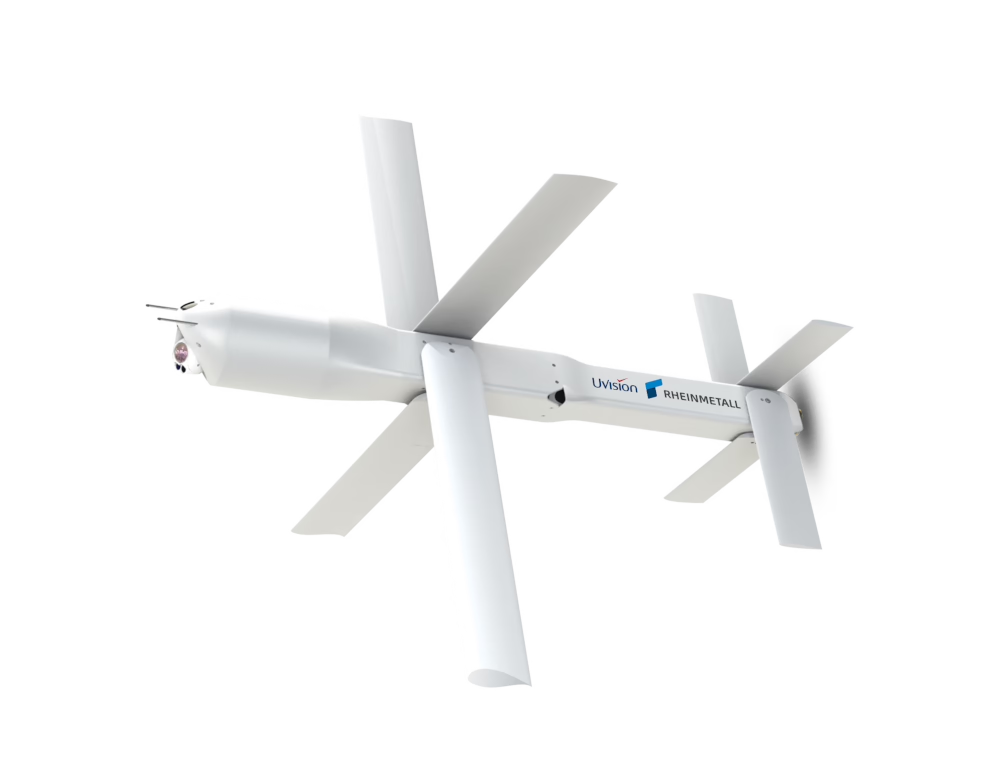
The HERO 400 completes this list, with a range of up to 60 km, a weight of 40 kg, and a warhead of 10 kg. It is suitable for destroying enemy fortifications and fortified positions.
It would be interesting to see their effectiveness on the battlefield of the russian-Ukrainian war, but due to Israel's current policy, this is almost impossible. However, these UAVs have already been used by the Israeli military, enabling Rheinmetall to label them as battle-tested.
Read more: Video of Bullet Interceptor UAV Destroying russian Shahed/Geran Attack Drone Released