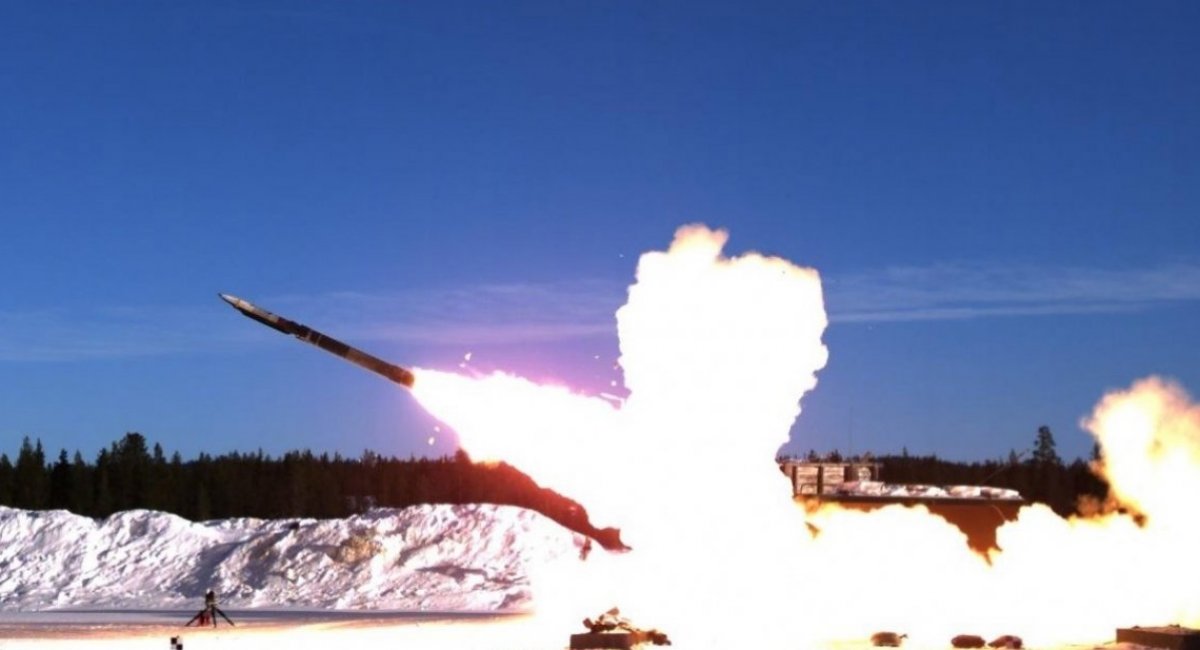
Western countries with start of russia's full-scale Ukraine invasion in February 2022 received opportunity to test their weapons in real combat conditions. Some samples confirmed their effectiveness, others were sent back for refinement. One such example is GLSDB (Ground-Launched Small Diameter Bomb) rocket-bomb from Boeing and Saab, which failed on Ukraine's battlefield.
GLSDB failure was acknowledged at level of then-U.S. Under Secretary of Defense for Acquisition and Sustainment William LaPlante. Main problem of this weapons system was high vulnerability to russian occupation forces' electronic warfare assets, but he also voiced details about other nuances, specifically regarding operational factors.
Read more: Saab Faces Orders for Up to 242 Gripens From Ukraine, Canada, Brazil — Could Brazil End Up Building Ukraine's Jets?
As of today, as military observer Jeff21461 reports on X social network after conversation with unnamed Saab representative, Ukraine received all GLSDB rocket-bombs under existing contracts, while new ones were not concluded.
Post states GLSDB failure in Ukraine is connected both with extremely short development period and with end user, possibly involving short training timelines, battlefield operational issues LaPlante also mentioned and so on.
At the same time, also noted is that Boeing is currently working on solving GLSDB rocket-bomb vulnerability to electronic warfare systems.
Here we have two interesting nuances worth noting. First, recall GLSDB is combination of GBU-39 (SDB) aviation bomb with M26 unguided rocket engine. Idea for such combo arose in early 2010s given significant stockpiles of old M26 rockets being retired from service, plus considerable quantity of SDB precision aviation bombs.

In 2014, Boeing and Saab agreed on GLSDB joint development, and year later successful rocket-bomb testing was reported. However, since then this weapons system never found customer, and ultimately Ukraine became first GLSDB operator. With 150 km range it was viewed as ATACMS compromise at 300 km, which U.S. then refused to supply Ukraine.
Therefore explanation in tight development timelines may appear strange. On other hand, at moment of GLSDB Ukraine delivery plans announcement, this rocket-bomb had only passed testing, and Boeing with Saab had to deploy this weapons system serial production in genuinely rapid timelines.
Second, last year it was reported developers managed to eliminate range of GLSDB vulnerabilities including main one — EW operation conditions problem.
Since now reported Boeing continues working on deficiencies, one can assume that after delivering corrected GLSDB batch to Ukraine it turned out not all problems were properly solved.
Previously, Defense Express reported why GLSDB suffers from EW while aircraft-launched SDB does not, although same GBU-39 is involved.
Read more: Ukraine's Vyrivnyuvach Glide Bomb Kit Publicly Revealed for First Time at Eurosatory 2026, Already Purchased by Defense Ministry