

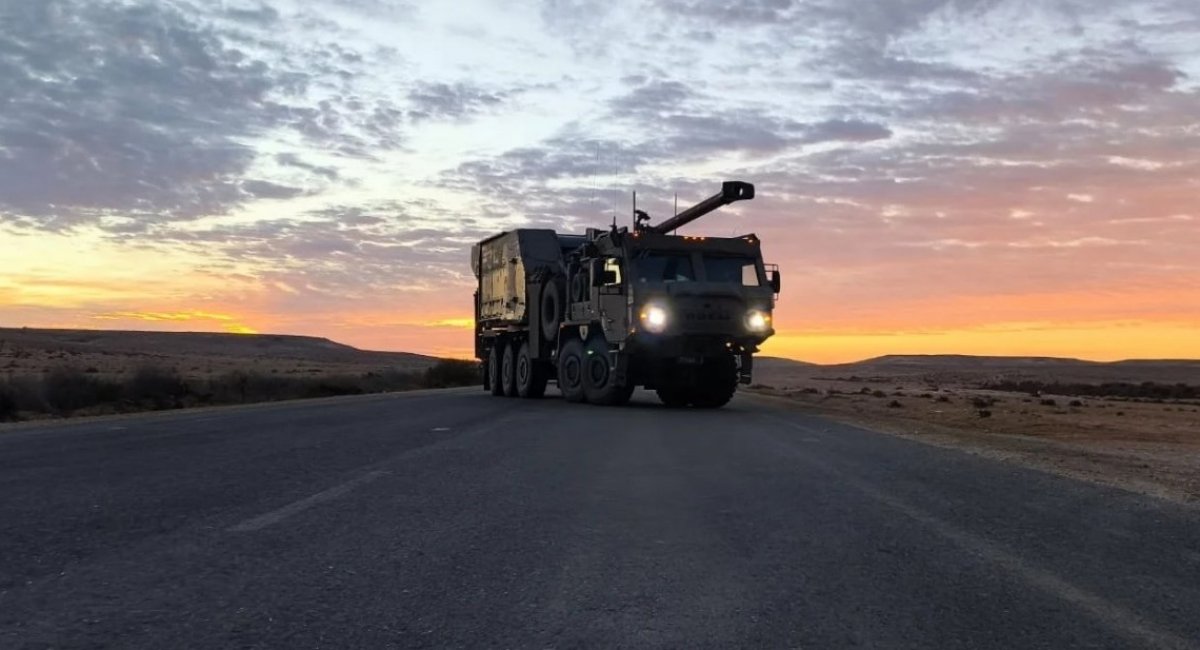
Israeli company Elbit Systems has serious ambitions to win the U.S. Army's competition for a new self-propelled howitzer to finally replace the legendary 60-year-old M109.
To improve the odds for its Sigma wheeled SPH, which only began deliveries to the IDF in late 2025, Elbit has partnered with domestic market player Anduril, a company known for its highly ambitious approach to defense technology.The strategic partnership between Elbit's American subsidiary and Anduril was announced past week. The agreement provides for the integration of Anduril's expertise in C5ISR, battle management, and autonomous control.
Read more: Even Maximum Patriot Missiles Deliveries to Ukraine Would Not Bridge the Gap With russia’s Missile Production
Together, the companies will offer an innovative, all-American solution for the U.S. Army, giving soldiers an advantage on the battlefield of the future. Sigma will provide continuous fire from a networked, mobile, and survivable platform, the announcement states.
Anduril will integrate its Lattice software platform into the howitzer a system that aggregates data from a wide range of sensors, fuses those data streams, and processes them using artificial intelligence algorithms.
As a battle management platform, Lattice's primary function is to accelerate the kill chain by minimising the time between detection, identification, decision, and strike.
Elbit's characterisation of Sigma as an all-American solution is explained by the fact that Elbit Systems America announced in March the establishment of production facilities in Charleston, South Carolina. The company has also previously partnered with Oshkosh Defense, which supplies the 10×10 wheeled platform on which Sigma is based.
The Elbit Systems case illustrates very clearly that winning U.S. defense contracts requires more than strong technical and operational performance there is an entirely separate layer of competition at play. This is particularly significant given the need to beat out strong contenders such as the RCH-155, Archer, K9, and others.
Elbit Systems of America is also a telling example of just how demanding the conditions for accessing U.S. government defense contracts can be. The American subsidiary has operated for 30 years under a Special Security Agreement (SSA), managed by U.S. citizens and without direct oversight from the parent company, Elbit Systems.
Read more: China Launches First Nuclear Attack Submarine with Futuristic Sailless Design, X-form Rudders