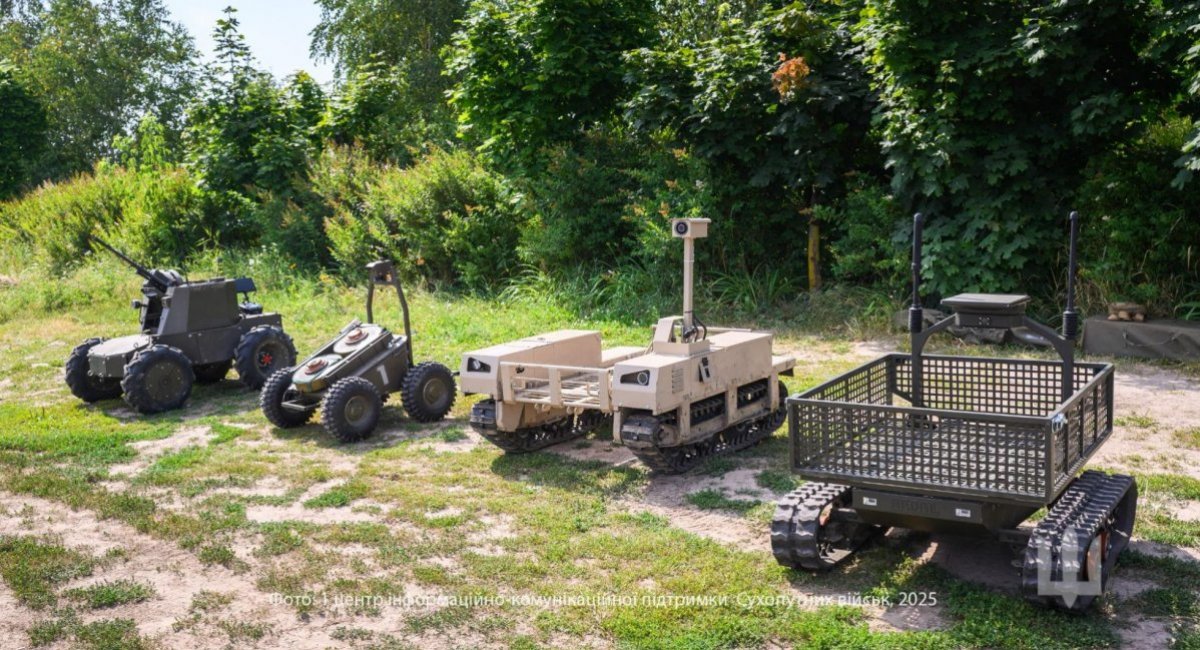
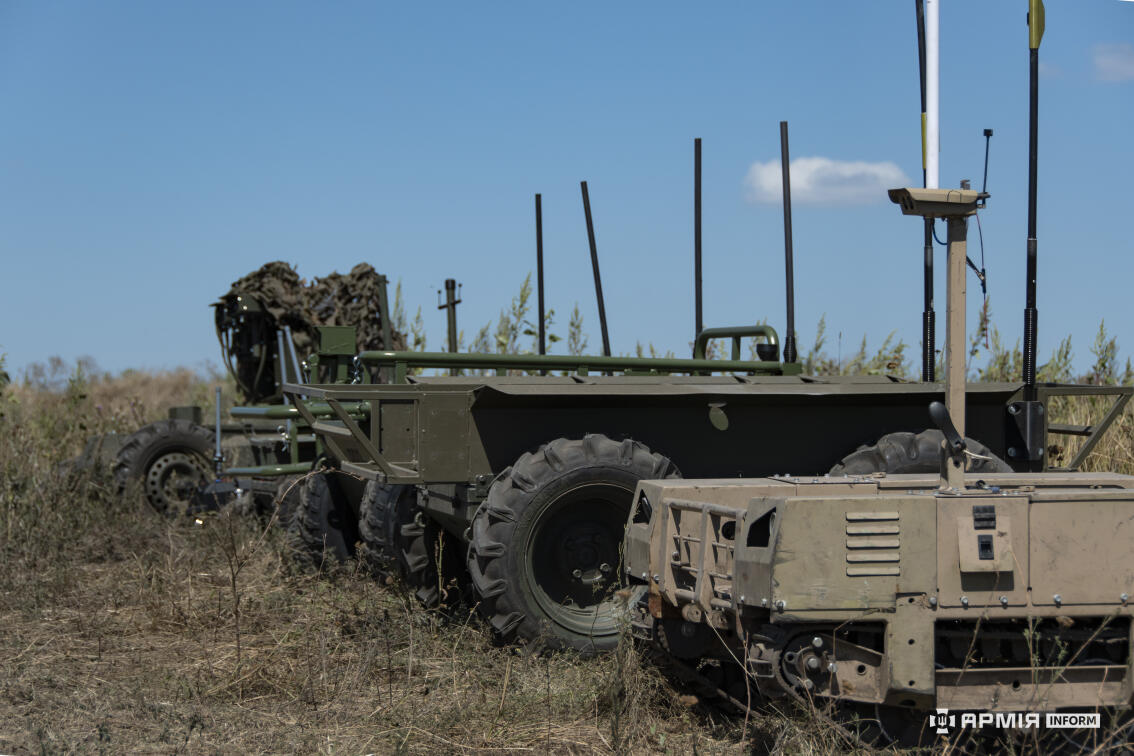
The nature of modern warfare in Ukraine is driving an expanded role for machines directly on the front line. In recent years, unmanned ground vehicles (UGVs) have evolved from simple remotely controlled platforms into full-fledged combat assets, equipped with elements of protection and resilient communications
By 2026, their deployment appears to be reaching a turning point, with an increasing share of battlefield tasks performed by machines under human control. This shift has been preceded by extensive groundwork. Since November 2024, the Ukrainian Ground Forces Command has been developing the concept of a robotic defensive line that integrates UGVs, aerial drones, and electronic warfare (EW) systems into a unified network. By 2025, robotic logistics platforms had already become widespread on the battlefield.
The Kill Zone and Logistics
One of the most critical challenges on the battlefield is the so-called kill zone, an area of constant fire control typically extending 15–20 km in depth and dominated by drones.
Traditional logistics are severely constrained in this environment due to the persistent threat of FPV drones, including fiber-optic variants that are immune to electronic warfare, as well as the high risks for vehicles and personnel.
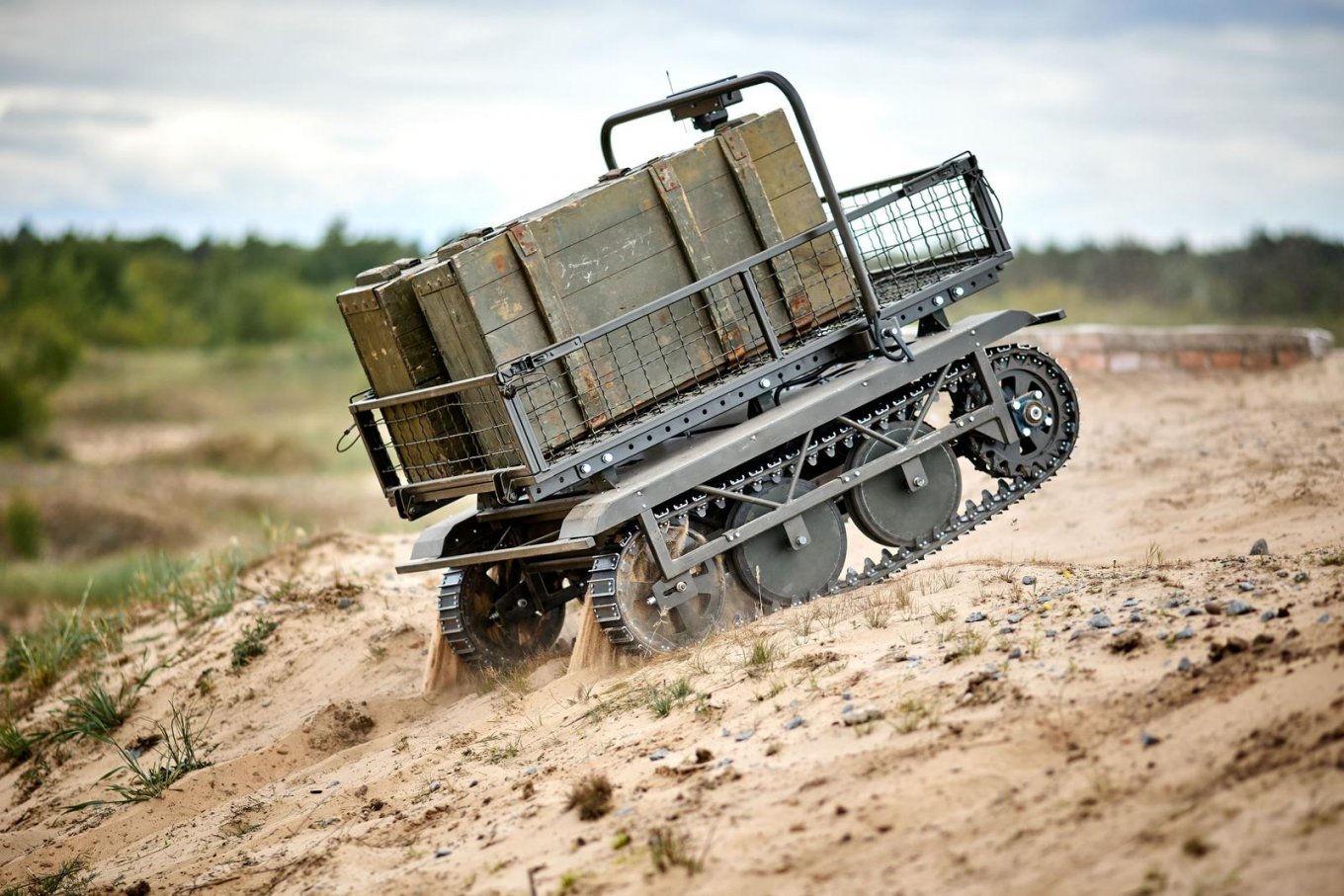
In these conditions, UGVs are emerging as a key solution. Heavy platforms can transport hundreds of kilograms of cargo across rough terrain, while low-profile systems (as low as 50 cm in height) reduce detectability and significantly lower risks for evacuation teams.
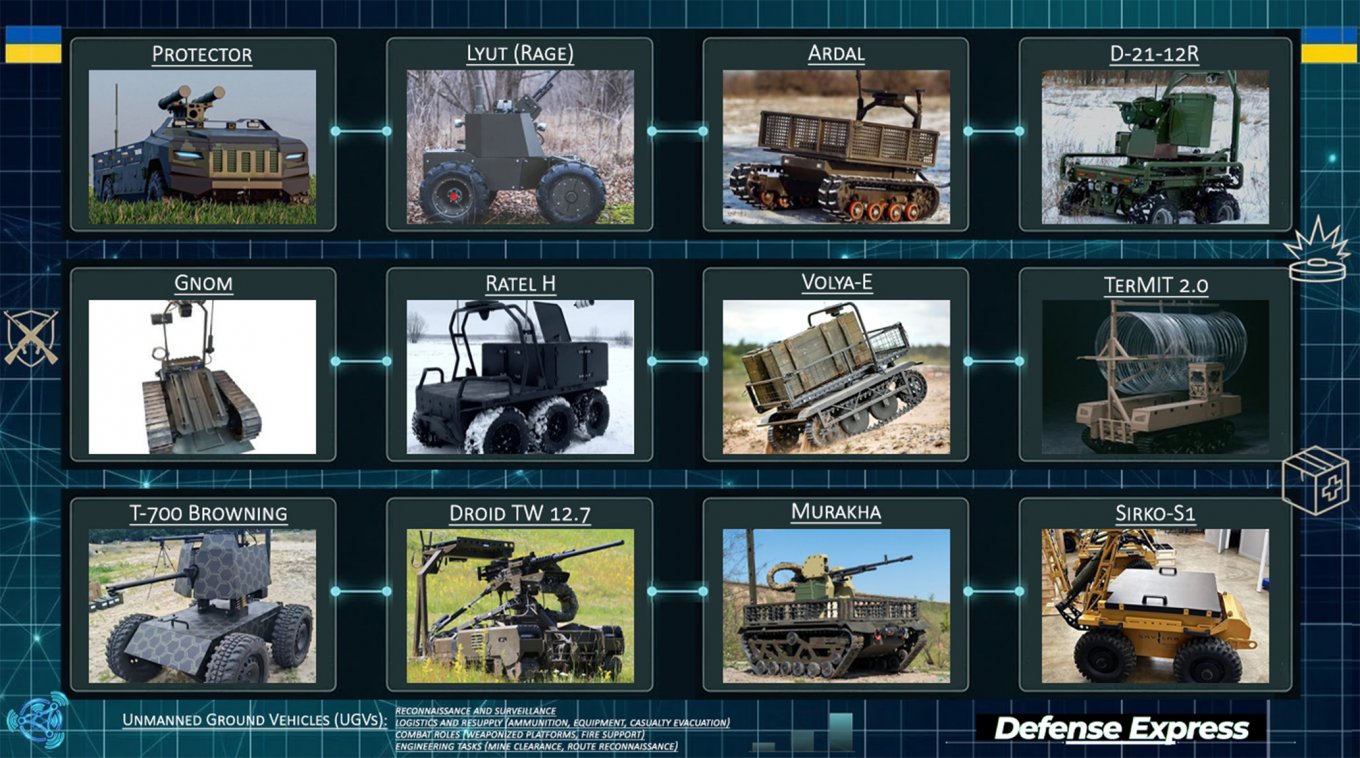
Volia-E UGV / Photo credit: u24.gov.ua
Key Challenges
The primary challenge for UGVs remains communication stability. Near the ground, radio signals degrade rapidly, while enemy trench-level EW can disrupt control at distances as short as 50–100 meters.
Effective solutions include fiber-optic control and mesh networks, often supported by aerial relay drones. Unlike UAVs, ground platforms are critically dependent on terrain conditions such as mud, debris, and uneven surfaces. Even a single immobilized vehicle can block the movement of an entire group.
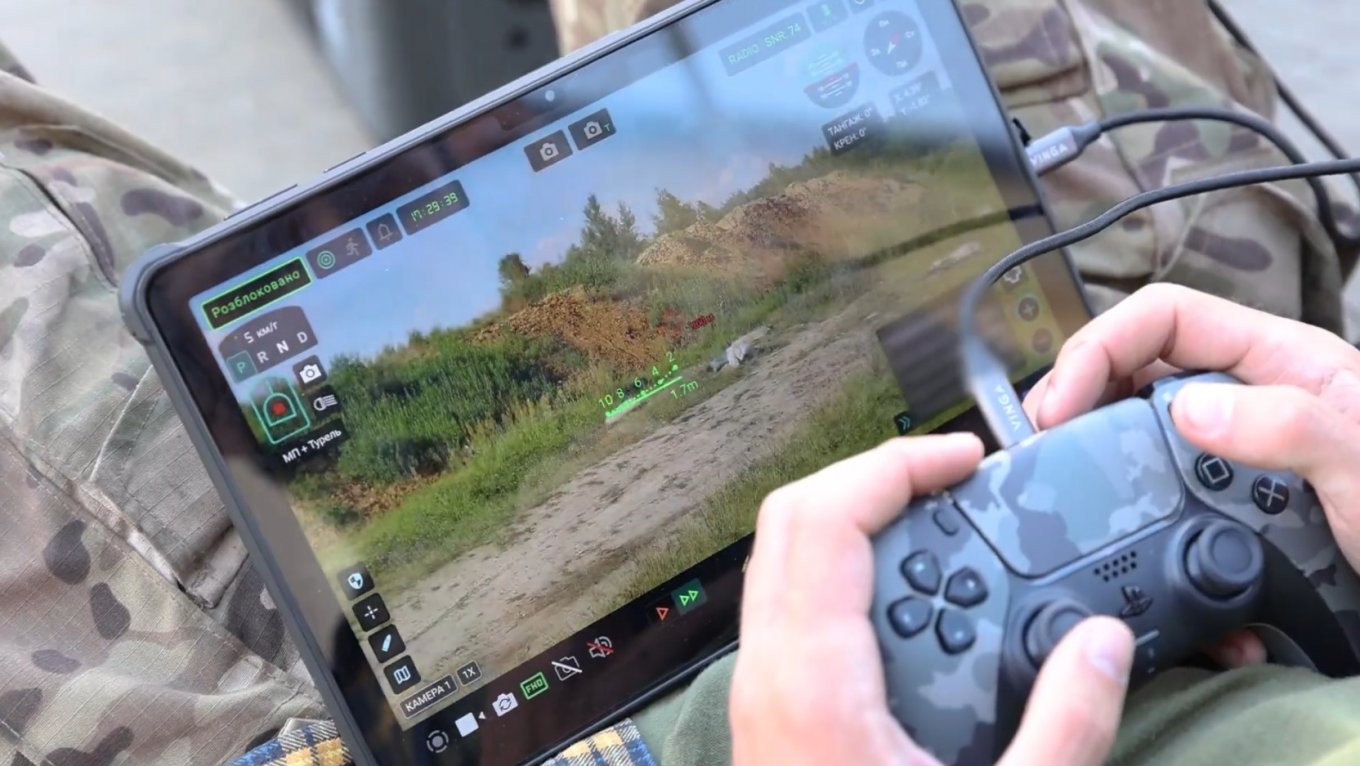
Video screenshot
Another limitation is operator workload, as one person can effectively control only a limited number of platforms at a time.
The main battlefield roles of UGVs include:
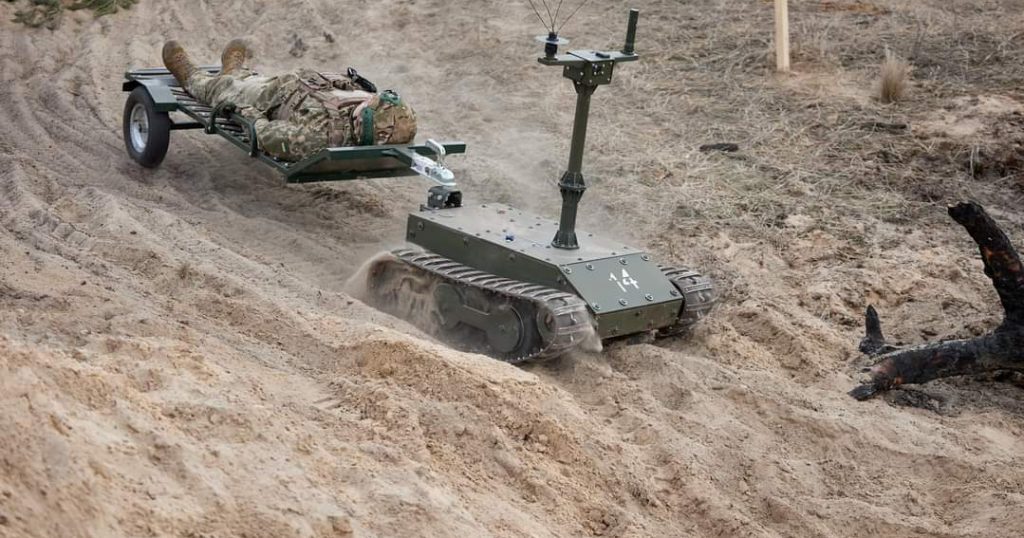
Logistics and casualty evacuation (CASEVAC), currently the most widespread role;
Fire support, including platforms equipped with machine guns or automatic grenade launchers, sometimes integrated with anti-tank guided missiles (ATGMs);
Engineering tasks, such as remote mining and demining;
Reconnaissance (ISR), including surveillance and detection of enemy positions;
Electronic warfare and communications, including mobile relay and EW payload carriers.
At the same time, the human-in-the-loop (HITL) principle remains central, with decisions on the use of lethal force typically retained by the operator.
Testing of evacuation UGVs / Photo credit: Brave1 (Facebook)
Competing Approaches to a "Robotic Army"
Three main approaches to UGV development can be identified.
Ukrainian Model: Mass and Adaptability
Ukraine focuses on relatively simple, low-cost, and scalable solutions. This approach is often described as "FPV on wheels", referring to large numbers of platforms integrated into a unified control system.
The development of the Brave1 ecosystem has transformed fragmented volunteer initiatives into a structured industry, with production plans for 2026 reaching tens of thousands of units.
Western Approach: Versatility and Modularity
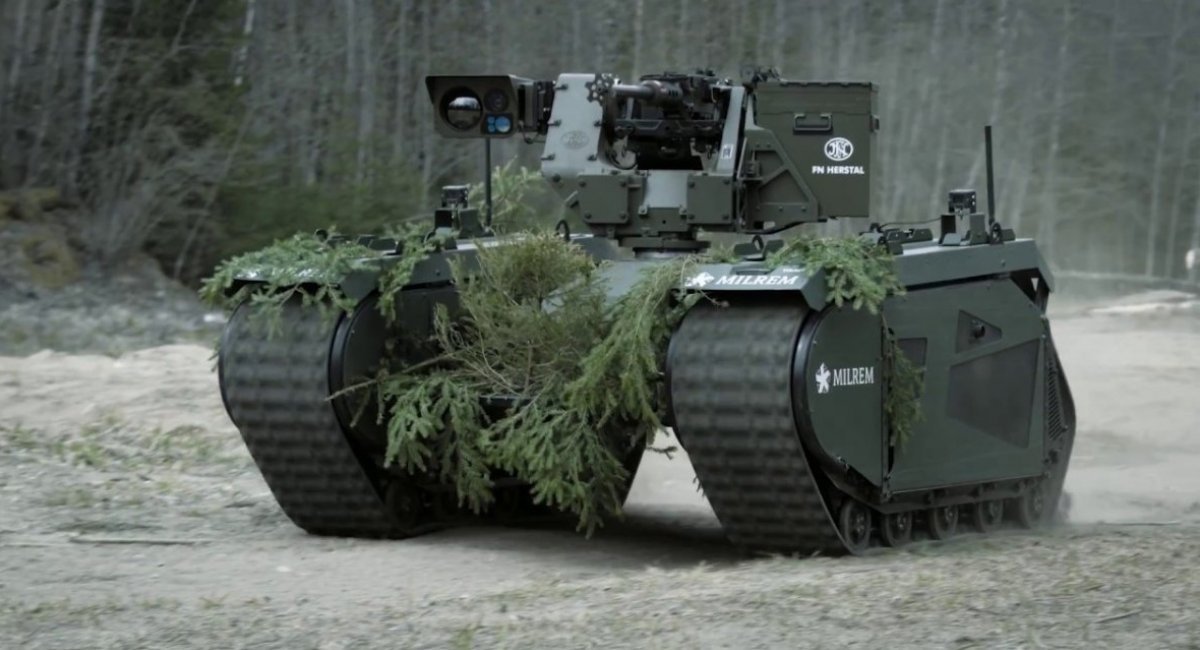
Western systems emphasize multifunctionality, autonomy, and modular architecture. They are often compared to a "Swiss Army knife" on tracks, as seen in platforms like THeMIS.
This segment also includes heavy combat systems such as Ripsaw and Mission Master, as well as smaller engineering robots like PackBot and TALON. While highly capable, these platforms are expensive and can be vulnerable in environments saturated with electronic warfare.
THeMIS combat unmanned ground platform by Milrem Robotics
russian Concept: Protection and Firepower
russian development tends to favor heavier, partially armored "mini-tanks" designed for front-line use. However, limited mobility and high thermal and acoustic signatures make them relatively easy targets for reconnaissance drones.
A notable example is the Uran-9 UGV, which underperformed in Syria due to communication and mobility issues. It is now used mainly for demonstrations and training.
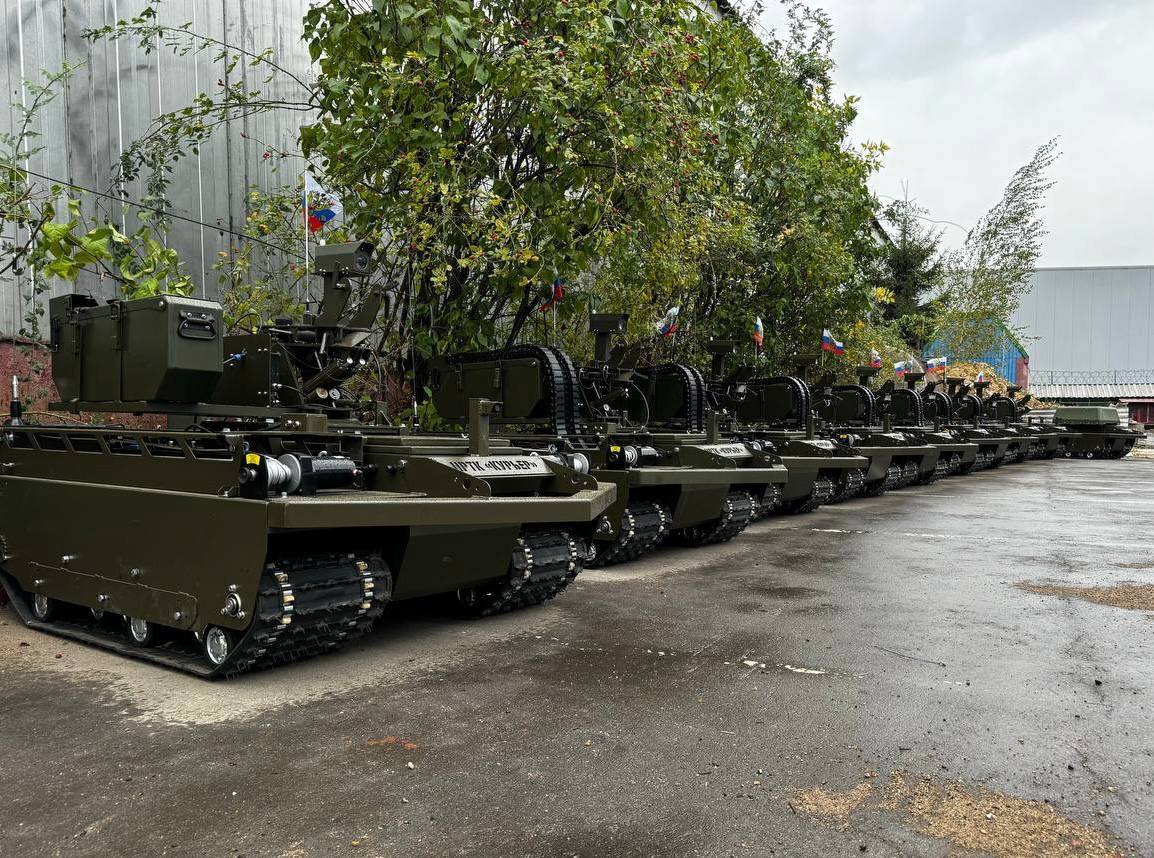
At the same time, russia is attempting to replicate Ukraine’s "cheap and mass" approach. This is reflected in simpler platforms such as the Courier series and improvised systems based on civilian vehicles. However, sanctions-driven shortages of optics and control systems continue to limit their effectiveness.
Battlefield use already demonstrates emerging tactics, including remote strikes, ambush operations, and holding positions without direct infantry presence.
In July 2025, Ukraine’s 3rd Separate Assault Brigade reportedly captured enemy personnel using only a ground robot in the Kharkiv region. In February 2026, a similar operation was conducted in Zaporizhzhia using a Droid TW-7.62 UGV.
The Role of AI
By the end of 2026, the most significant advances are expected in software.
Key priorities include:
Autonomy under communication loss, enabling UGVs to return or complete missions despite EW disruption;
AI-assisted targeting, allowing operators to confirm targets rather than manually aim;
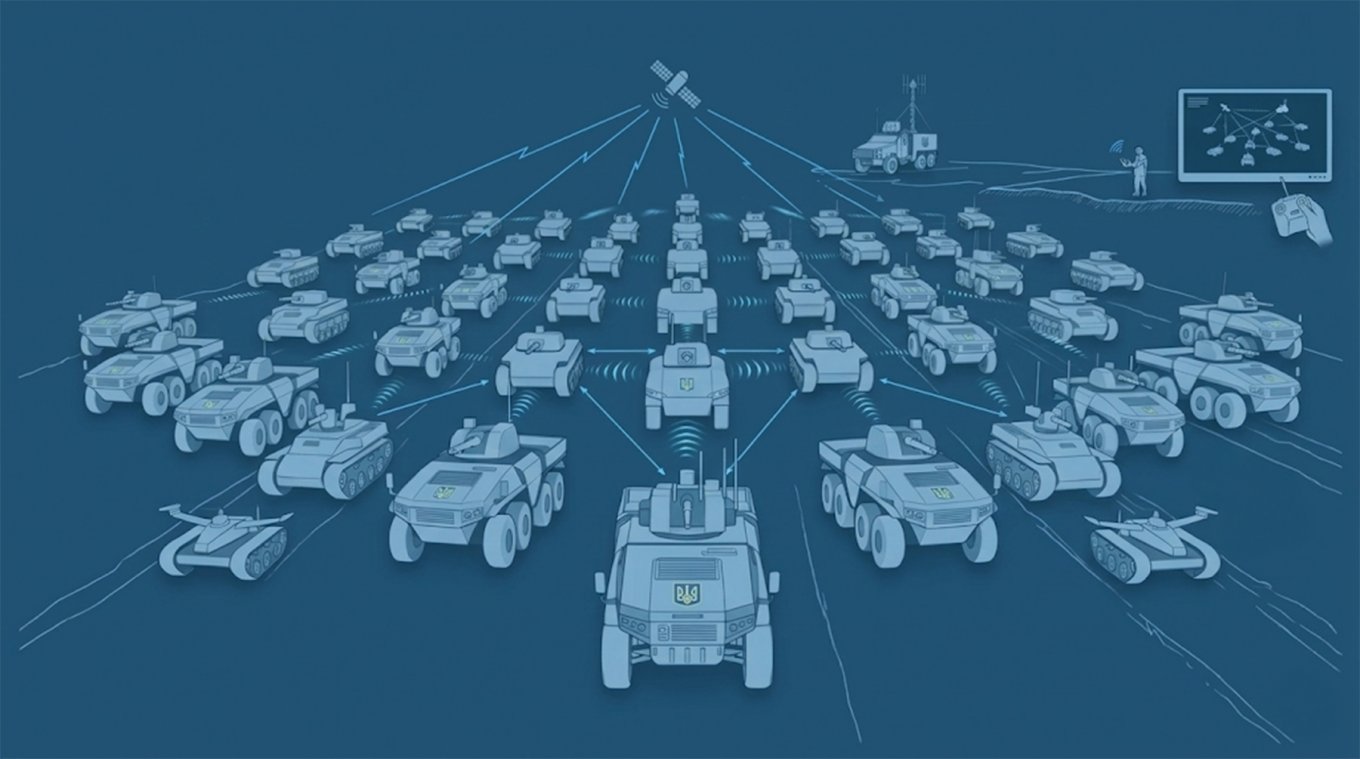
Swarm coordination, enabling a single operator to control multiple systems simultaneously.
At the same time, reliable identification friend-or-foe (IFF) capabilities will be critical to avoid friendly fire incidents.
Conclusion
UGVs are evolving from a supporting tool into a distinct component of modern warfare. The key transformation lies not only in the platforms themselves, but in how they are employed.
The shift is from individual systems to coordinated groups operating within a unified structure. In the future, this may lead to semi-autonomous swarms, where one operator controls not a single platform, but an entire unit of robotic systems.
In this context, the advantage will go to the side that can not only scale production, but also solve communication and terrain challenges while integrating multiple platforms into a single effective system.