


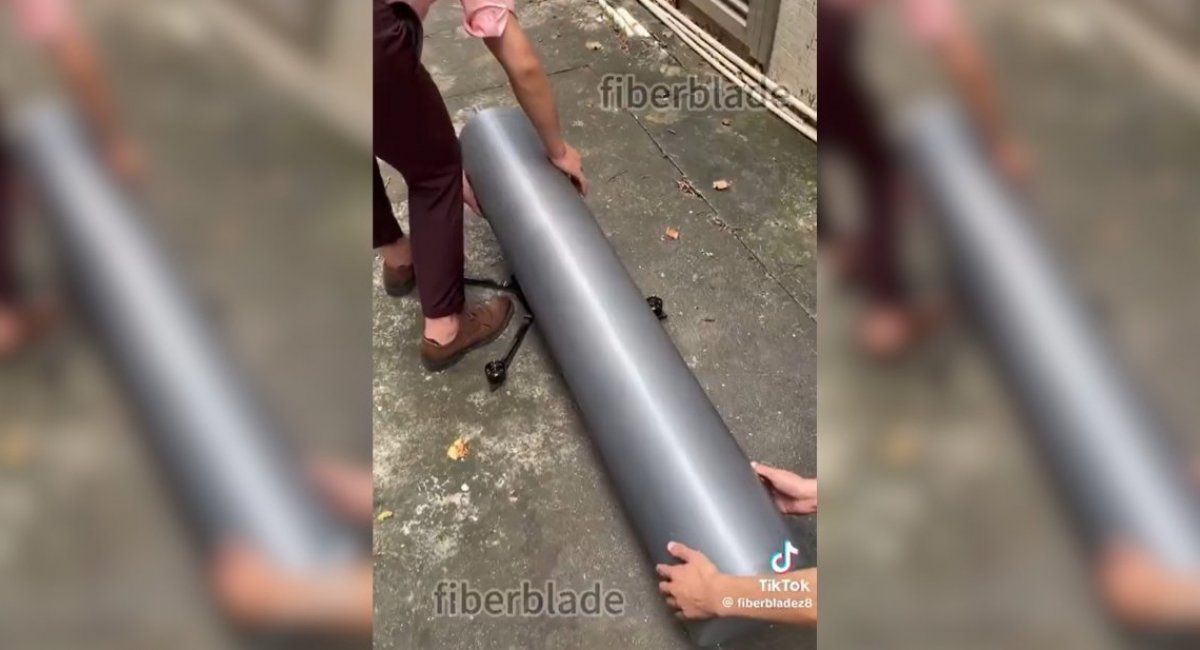
Chinese manufacturers have been actively circulating promotional videos on TikTok showcasing their fiber-optic spools. In recent days, videos featuring truly enormous spools have begun spreading — with claimed ranges of 500, 800, and even 1,300 km.
A fairly logical question arises at this point: if China is displaying spools of that size, could it actually build a fiber-optic drone with a range of 1,300 km? That would be a genuine concern, since such drones could be controlled in real time and would be impossible to suppress with electronic warfare systems.
Read more: Italy and Japan Were Right to Worry: UK Set to Defer GCAP Funding, Risking Programme-Wide Setback
The answer is no. And the issue isn't just the size, weight, and pointlessness of such a spool, it’s basic physics. The laser beam that travels through optical fiber to transmit data has a natural tendency to attenuate and scatter.
This means endlessly increasing the spool size simply won't work. At some point, the laser signal inside the cable will degrade to the point where optical equipment can no longer detect it. The distance at which this occurs depends on many factors, including the wavelength of light used, the fiber type and its cladding, and the quality of the equipment involved.
Under the best possible conditions and with the best available equipment, the maximum practical range would likely be around 200 km, and even that figure is approximate, with much depending on specific parameters and hardware capability.
Extending fiber-optic range requires signal repeaters placed at intervals along the cable, something that is simply not feasible within a spool of this kind. In short, what is being shown in China is nothing more than promotional content designed to draw attention to a product.
In reality, these giant spools are 3D-printed shells with no fiber inside whatsoever. Manufacturers can print them as large as they like, purely to impress casual viewers and drive traffic to pages where real spools, in the 10–60 km range, are actually sold.
Unfortunately, many people unfamiliar with the subject have genuinely come to believe in the existence of spools that would defy the laws of physics, serve no practical purpose, and cost enormous sums of money.
Read more: UK Defence Intelligence Reports on New Pressure on Crimea Corridor as Ukraine Targets M-14 Highway