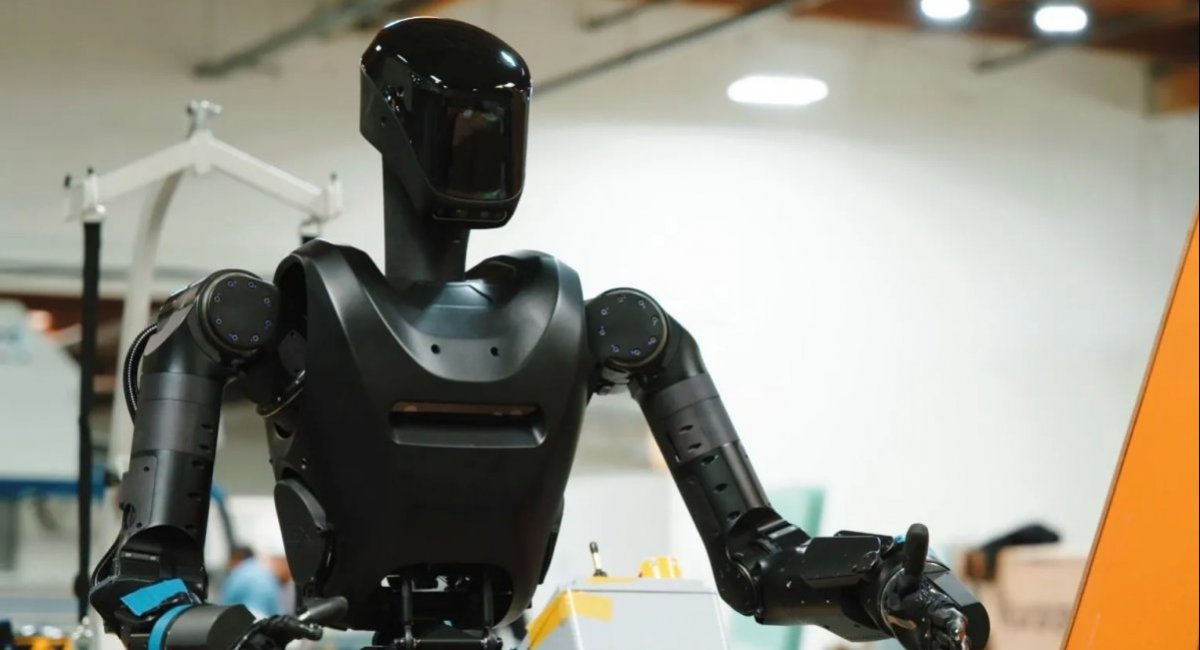
The American defense startup Foundation Future Industries, which creates humanoid robots, wants to promote them primarily for the US military. According to CEO Sankaet Pathak, they want to make about 50,000 such "battle droids" in a fairly short time – in just two years, by the end of 2027.
According to Forbes, this is a very, very rapid scaling of robot production – from 40 or 50 units this year to 10,000 next year as well as 40,000 in a year. The robot itself, called Phantom, was also created in a fairly short time – in 18 months. Some of Foundation’s production robots are already involved in real production at partner locations. However, the details of what tasks these robots perform are undisclosed.
Read more: Sweden Orders 6-Ton Ripsaw M3 Robots as Ukraine Proves Smaller UGVs Work Better
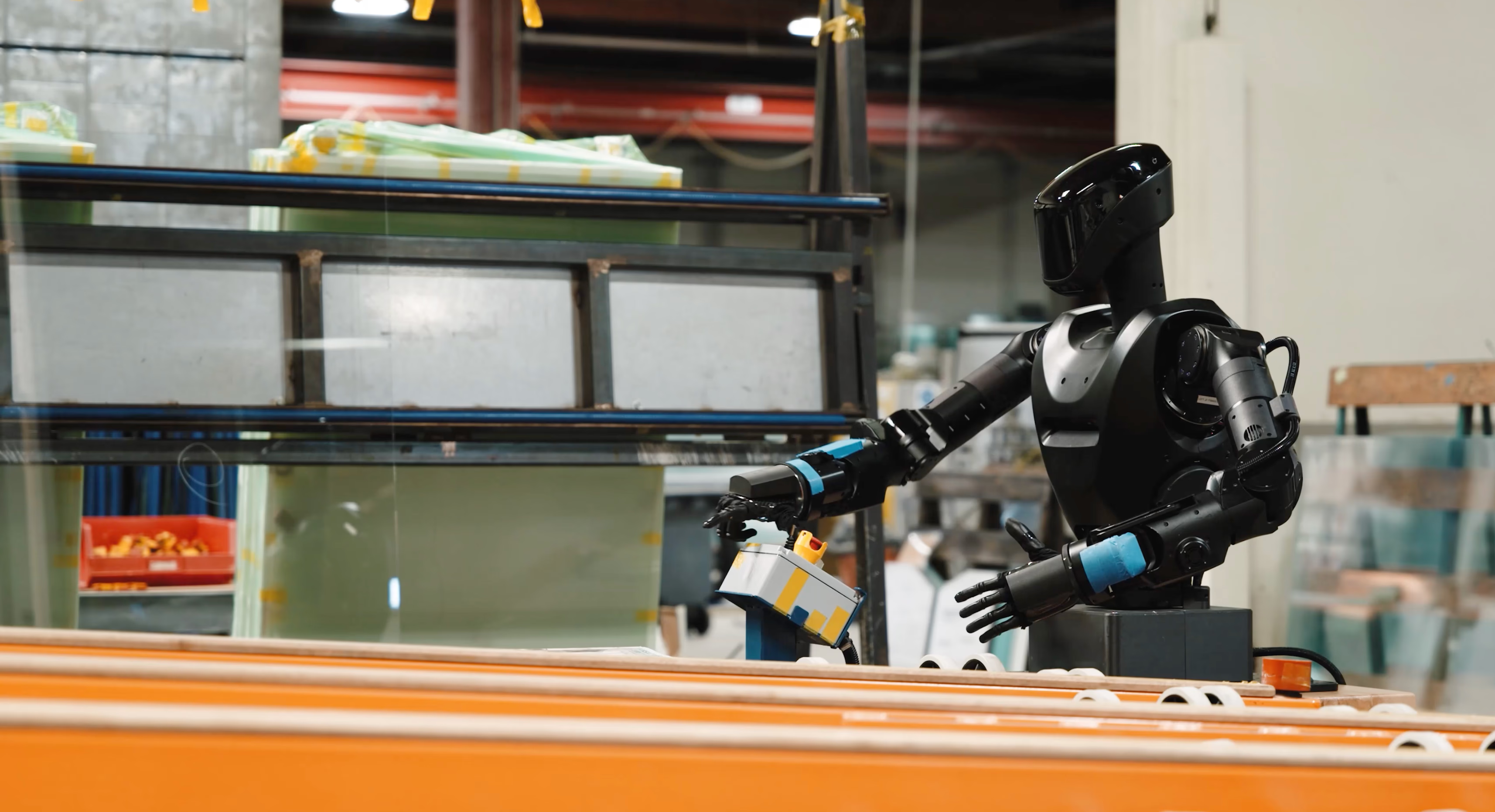
Despite the fact that the Foundation has a plan to implement civilian use of its robots (and they want to rent them out, not sell them), Sankaet Pathak believes that they will also be useful to the American military. Moreover, he believes that if the US army had, for example, 100,000 combat robots in service," it would by and large end a lot of wars before they start." Although, it should be noted that this statement is quite debatable.
Such humanoid robot soldiers could initially replace the military in performing routine tasks - especially those that require significant physical effort. This would include carrying a weapon into a building in street fighting scenarios, or being the first one over a hilltop, or entering a cave to search for enemy combatants., etc.
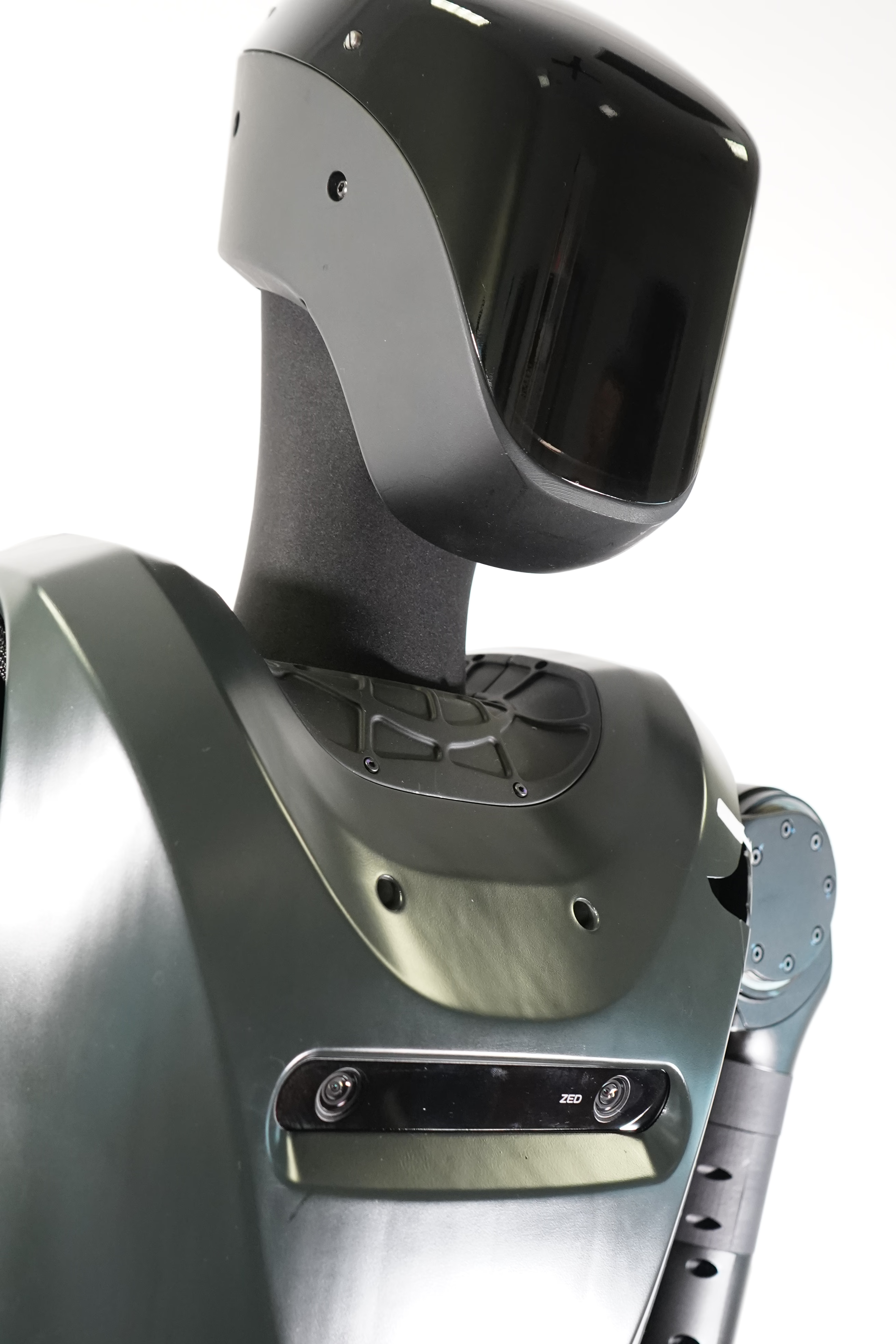
Such robots could also act directly on the battlefield - for example, they can enter buildings, assess situations directly and make the right call and even if imagine, hold automatic rifles in their hands. However, it is unlikely that in the near future humanoid robot soldiers will have the opportunity to make decisions about opening fire themselves - both for ethical and practical safety reasons.
The Phantom robot in the Mk1 version has a height of 1.75 cm, a mass of 80 kg and can carry up to 20 kg of payload. It is likely that for combat use the robot can receive certain improvements, taking into account that the "brains" of the system are located in its upper part and it will be quite vulnerable to enemy attacks.
Previously, Defense Express explained why more UGVs would appear on frontline and what problem robotic systems address.
Read more: Ukrainian UGV Armed with Captured FAB-250 Destroy russian Fortifications: Assessing Feasibility and Effectiveness