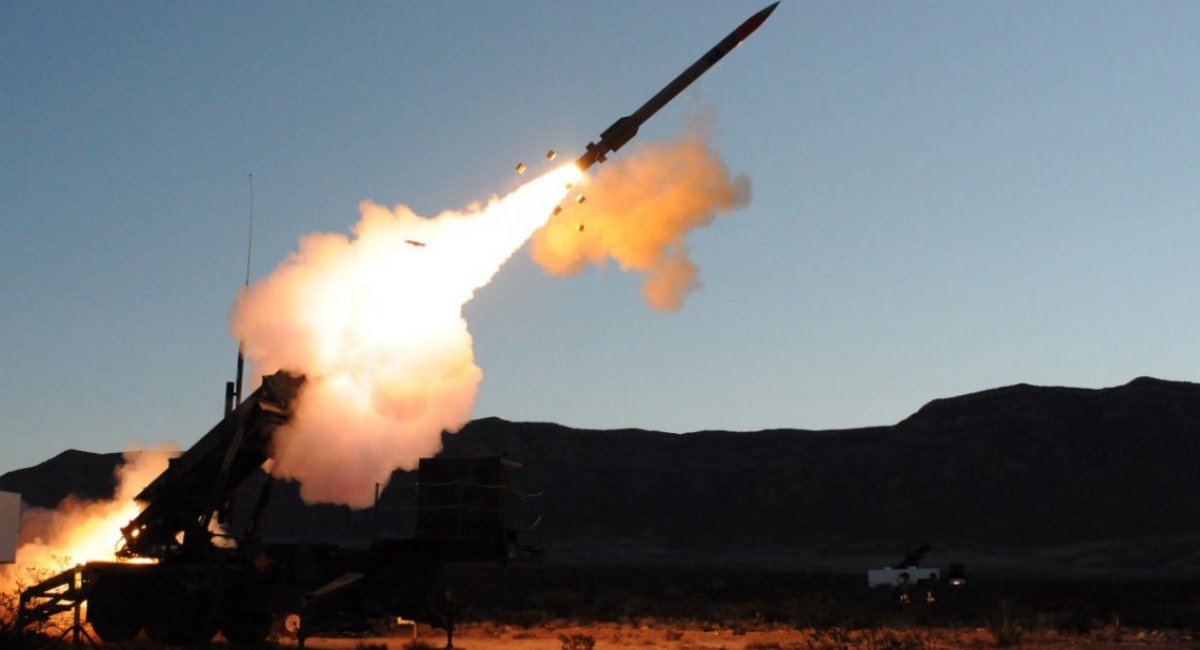
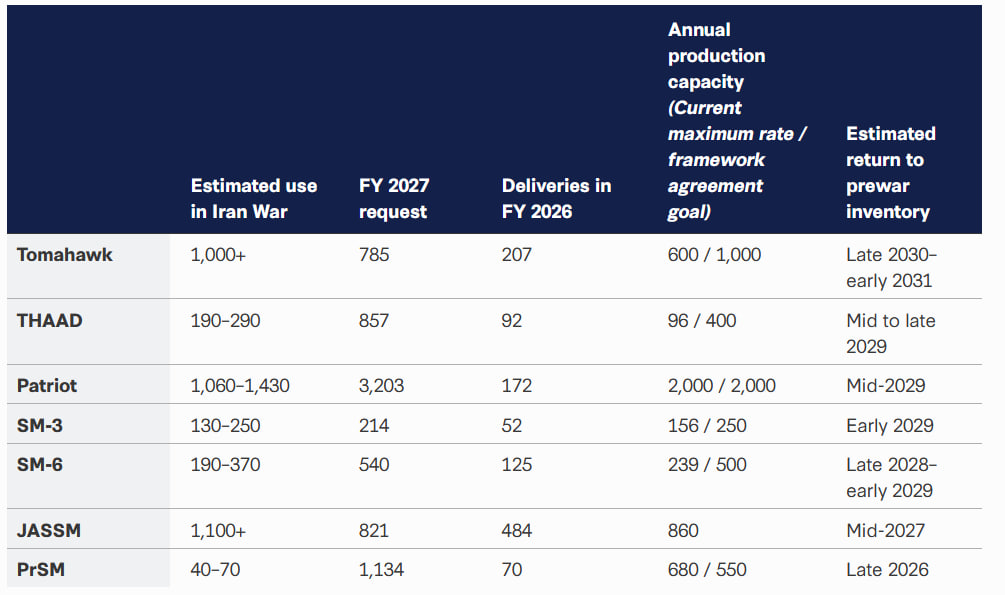
Restoring U.S. Patriot interceptor stockpiles badly needed by Ukraine to pre-iran war levels will take three years. Tomahawk cruise missiles and THAAD interceptors will take a comparable or even longer time to replenish.
These figures come from the Center for Strategic and International Studies (CSIS), based on available budget and production planning data. The think tank emphasizes that the timelines assume successful industrial capacity expansion and sufficient order volumes.
Read more: Over 30% of Every Gripen Is Made in Britain, Ukraine's Fighter Deal Puts 5,000 UK Jobs to Work
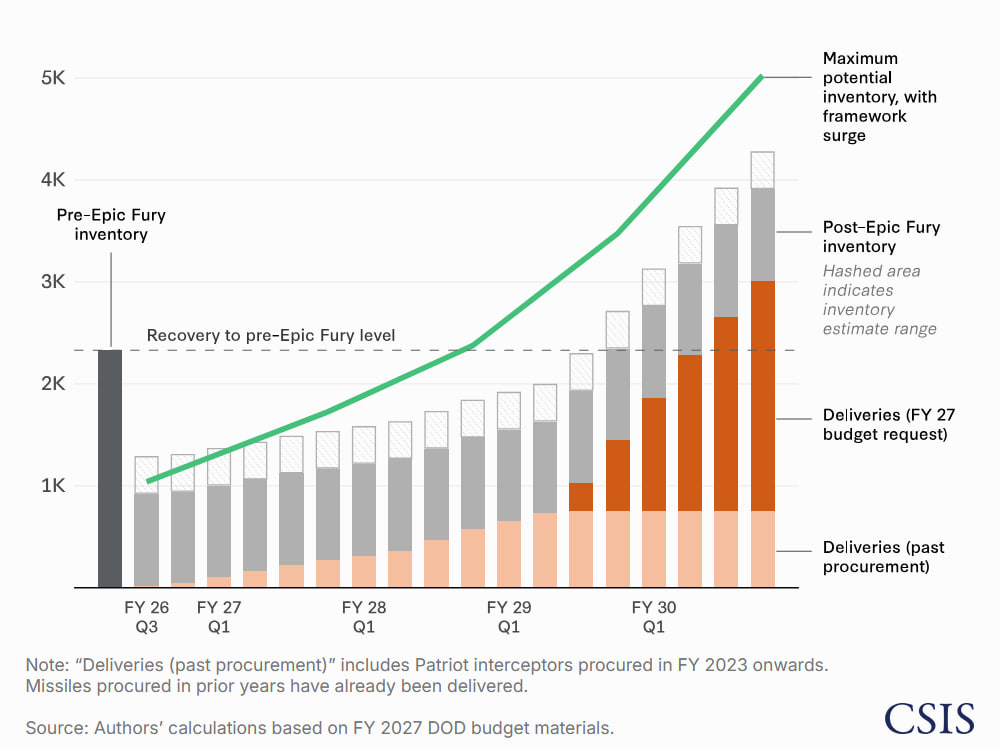
Patriot stocks are projected to return to their early 2026 levels by mid-2029. Maximum declared production capacity is 1,000 rounds per year, with 172 deliveries expected in 2026 and plans to order 3,203 under the proposed US FY2027 budget.
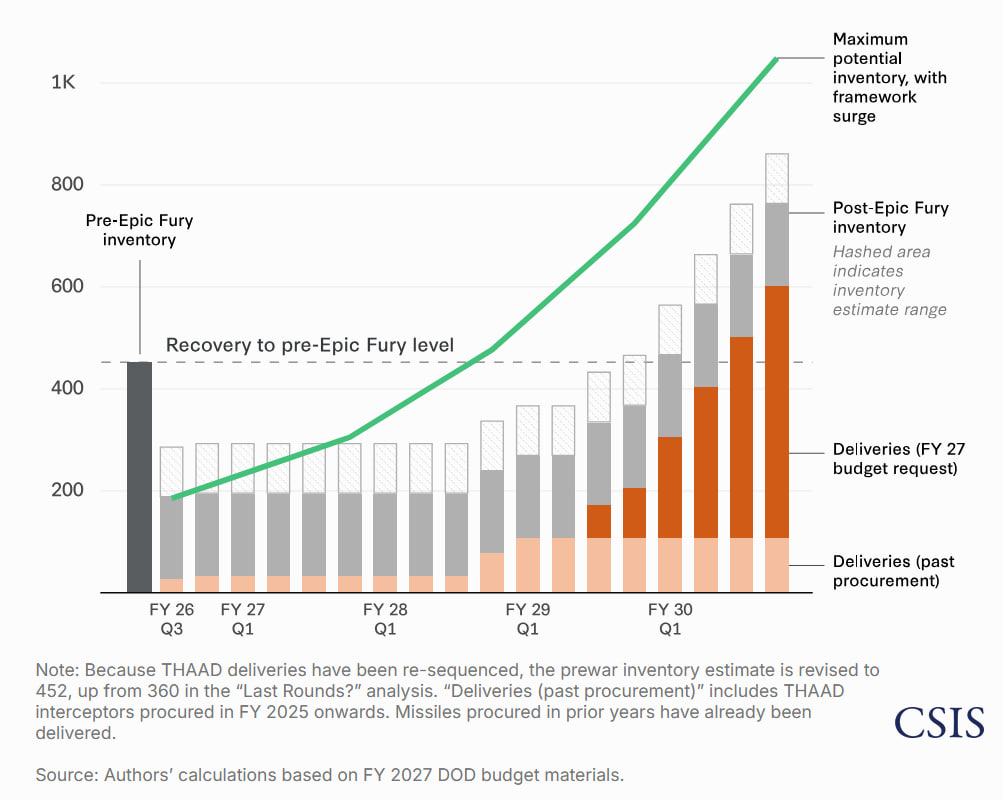
THAAD stockpiles are expected to reach pre-war levels by the end of 2029. Current maximum production is 96 rounds per year, with plans to scale to 400. Ninety-two interceptors are due for delivery in 2026, and 857 are being requested in the FY2027 budget.
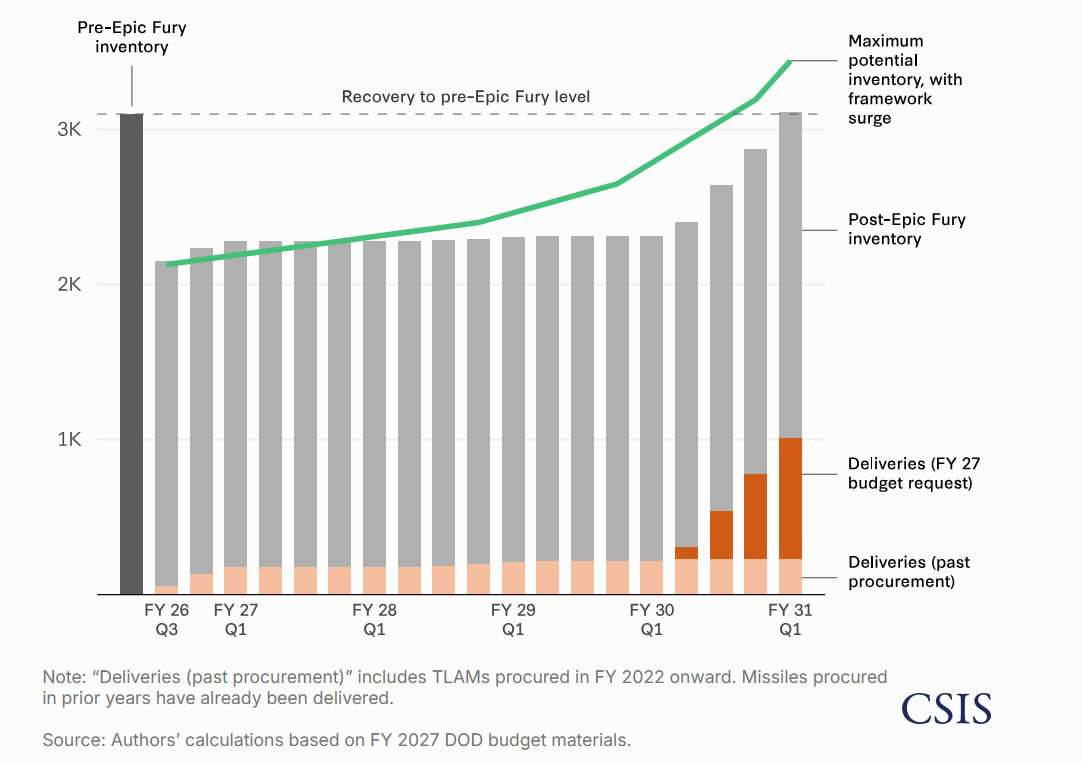
For Tomahawk, the projected recovery date is late 2030 to early 2031, reflecting the expenditure of over 1,000 missiles against iran. Current maximum production capacity is declared at 600 rounds per year, with plans to reach 1,000. Only 207 will be delivered in 2026, while the record FY2027 budget request calls for 785.
The situation is considerably better for naval SM-3 and SM-6 interceptors, whose stockpiles are expected to recover by early 2029 attributed to their less intensive use during combat operations compared to ground-based systems.
PrSM ballistic missiles will reach pre-war levels by end of 2026, and JASSM cruise missiles by mid-2027 — both relatively manageable situations, as PrSM stocks were never large to begin with, while JASSM has been ordered heavily in recent years and substantial industrial capacity already exists.
From Defense Express's perspective, this is a clear demonstration of how insufficient contract volumes in prior years are now extending post-combat recovery timelines. Even a concerted scaling effort today will require a significant amount of time to bear fruit.
One important nuance: CSIS calculated inflows assuming U.S. industry works solely for American military needs, without accounting for export commitments. In practice, factoring in those agreements could push the timelines even further out.
One way to avoid that outcome is to prioritize U.S. military requirements over foreign customers, delaying export deliveries accordingly. Over the past two months, reports have begun emerging that the Pentagon has warned of export delivery delays due to domestic stockpile needs most recently affecting Tomahawk deliveries to Japan.
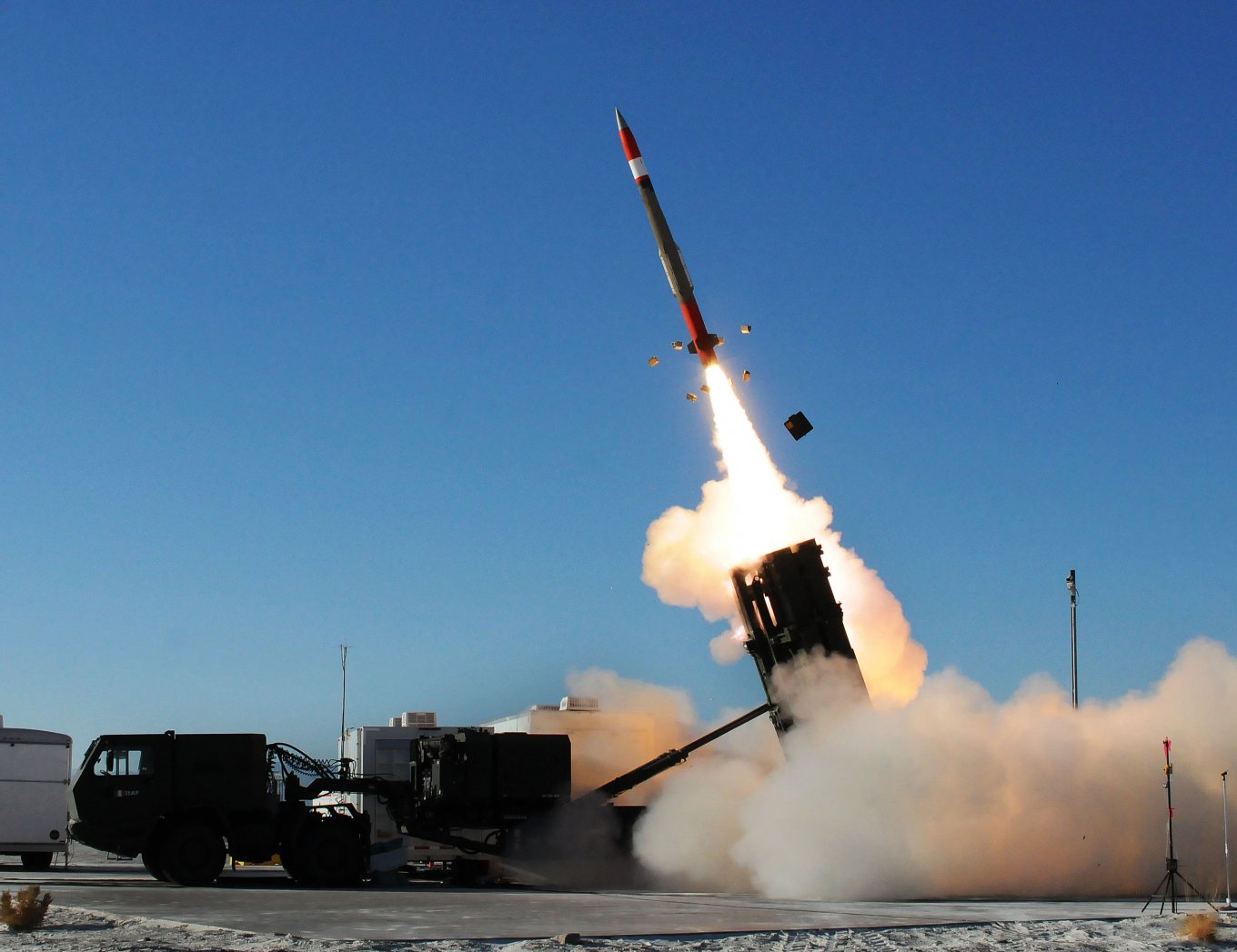
Such a decision could have serious consequences for Ukraine, which is critically dependent on Patriot missiles, and specifically PAC-3 MSE rounds, which remain the only currently available mass-producible and effective solution for intercepting russian ballistic missiles. Any additional delays will directly degrade Ukraine's missile defense capability.
It should be noted that no official decisions to that effect have been made yet but the threat to supply continuity exists, and rapid acquisition of additional interceptors is becoming increasingly problematic. This makes the search for alternative solutions such as European SAMP/T NG systems or domestic Ukrainian developments all the more important.
Translated by Taisiia Vivdych.
Read more: Ukraine Seeks Patriot Licenses to Launch Domestic Missile Production