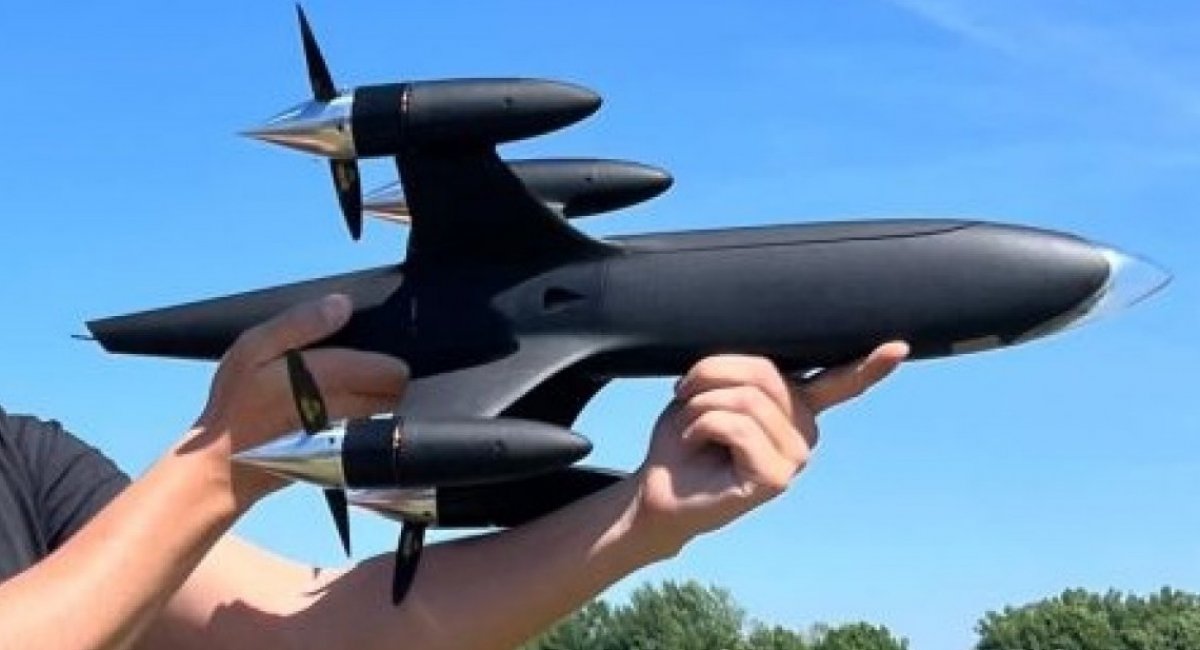
Speed is a critical characteristic for an air defense drone, particularly given that they need to intercept targets such as jet-powered long-range strike drones capable of reaching 400–500 km/h and beyond.
In this context, news that Quantum Systems plans to break the current world speed record for electric drones is of interest, including for Ukraine.
Read more: Trophy APS Is Spreading Across Europe, Lebanon Showed FPV Drones Can Still Hit Tanks That Have It
To achieve this, the German defense company is building its own racing drone incorporating a number of custom-ordered components, including batteries from Porsche AG subsidiary V4Smart GmbH. Quantum Systems CEO Florian Seibel recently announced that their drone has already exceeded 650 km/h in level flight.
World speed records for drones have regularly been set by Luke Bell and his father Mike Bell from South Africa; the last officially registered record set in December of last year stands at 657.59 km/h, achieved with the Peregrine V4 drone.
Earlier this year, Australian specialists Ben Biggs and Aidan Kelly claimed their Blackbird drone reached 730 km/h, though that record has not yet been officially registered.
While the ambition to push a drone to 700 km/h is primarily a marketing story, Quantum Systems confirmed to the publication hartpunkt that the work on their racing drone will ultimately feed into the development of air defense drones though no details on when such a system might emerge have been provided.
Does this mean interceptor drones will also be able to fly at record-breaking speeds? Most likely not, and the German publication offers some convincing arguments.
Building a drone specifically for a 700 km/h record is one thing; producing a serial military system that must perform effectively against aerial targets like drones while accounting for weather conditions, the need to engage targets at altitude, operator proficiency, and numerous other factors is quite another.
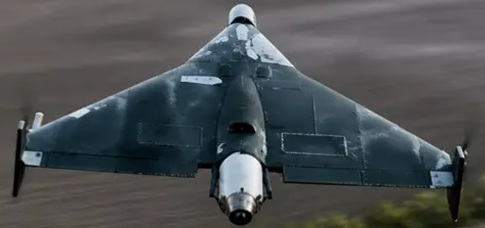
A drone built from essentially exclusive custom components would inevitably be very expensive certainly in production, and probably more so per unit even at scale. A high price tag on an air defense drone would kill the entire concept of such interceptors, which is predicated on making a truly mass-producible and affordable counter-drone tool.
What is plausible is that the experience Quantum Systems gains from building its record-setting drone will be applied to developing a sufficiently high-speed air defense drone capable of intercepting jet-powered strike drones.
Given Quantum Systems' close cooperation with Ukraine, their future interceptor drone could potentially be tested in real combat conditions though again, when exactly a German interceptor drone might materialize remains an open question.
It is also worth noting that Ukraine is working on increasing the speed of its own domestically developed air defense drones. Last year, for example, company Wild Hornets (Dyki Shershni reported achieving speeds of over 315 km/h with their interceptor drone, with even higher figures subsequently mentioned though without details.
Finally, it should be noted that interceptor drones are not an ultimate solution against Shaheds which is precisely why Ukraine is already testing cheap anti-aircraft missiles and has announced plans to scale up production of such weapons.
Read more: Revealed When Canada's Falcon Supersonic UAV Will Fly, Ideal for Penetrating Air Defenses and Valuable for Ukraine