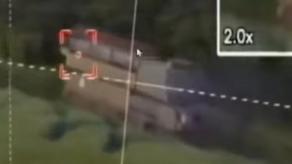




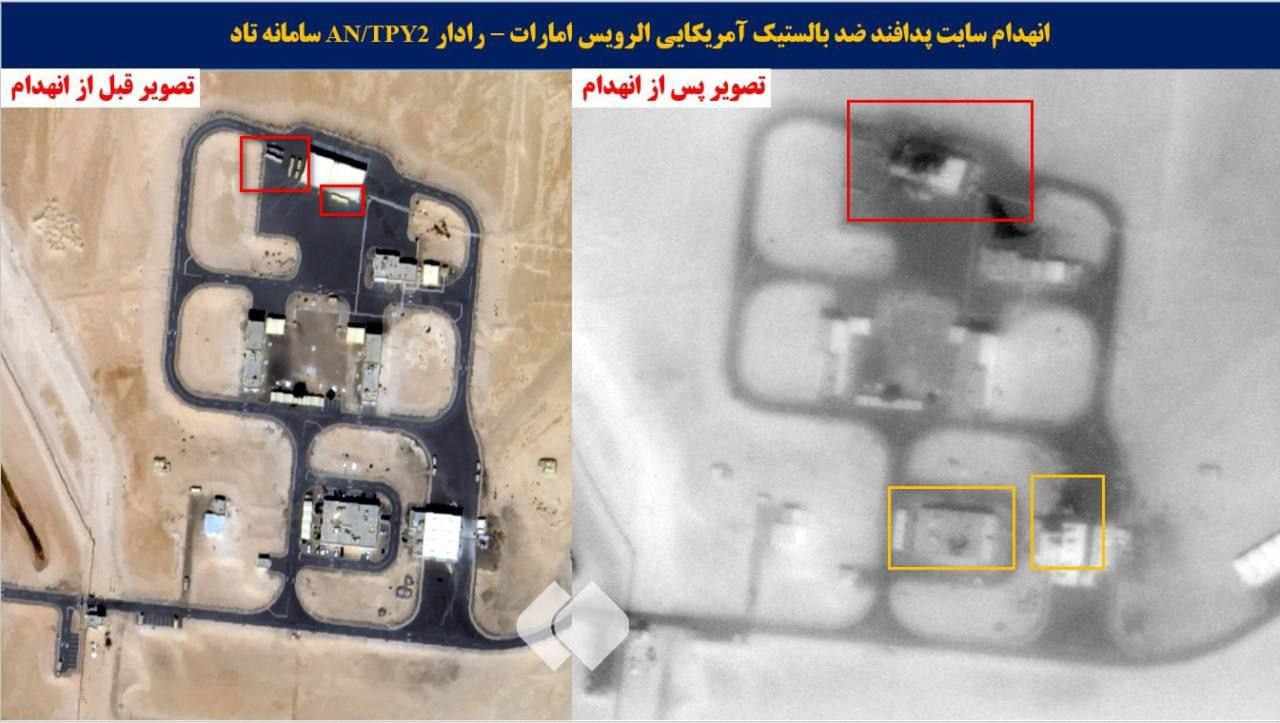
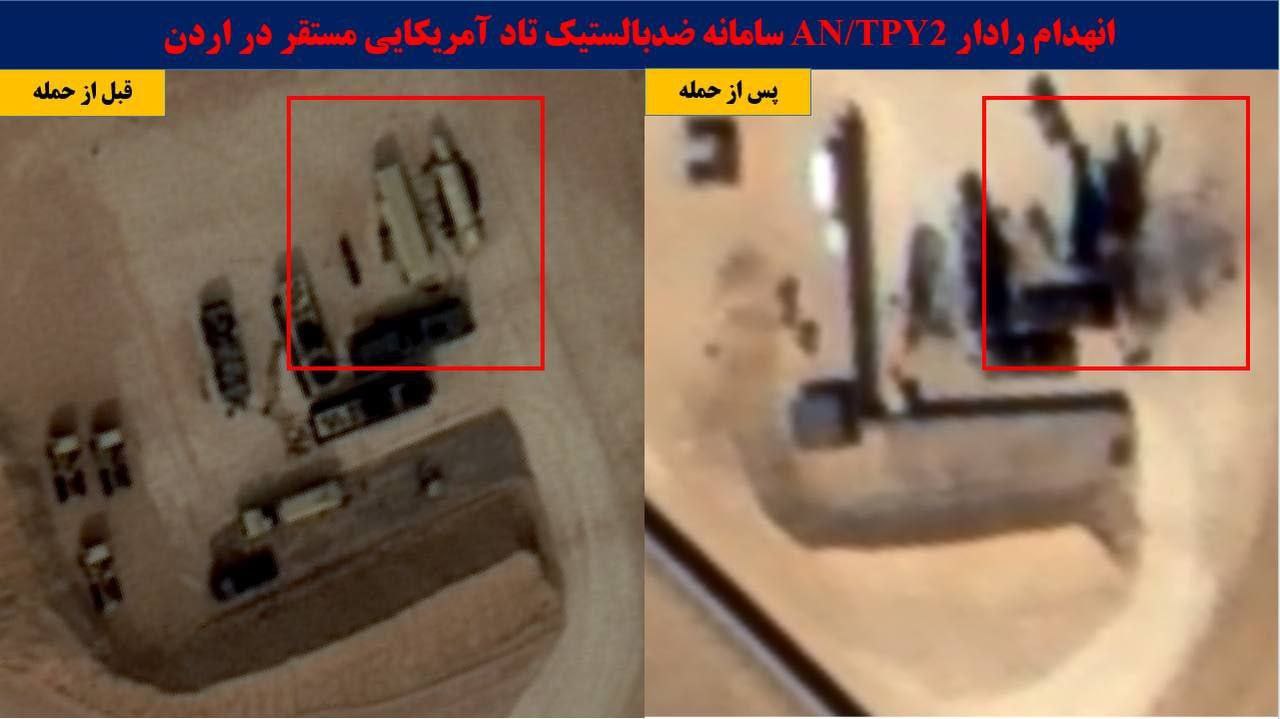
Images circulating online appear to show the deployment sites of AN/TPY-2 radars, key components of the THAAD system. These assets were reportedly stationed in the United Arab Emirates and Jordan.
In imagery from the UAE, which operates two THAAD batteries, damaged buildings and what appears to be burned equipment are visible at the precise locations where the radars were believed to be positioned. Whether the radars were actually destroyed remains unclear, but the strike on the deployment site itself appears evident. The type of weapon used is also unknown. The attack could have involved ballistic missiles, cruise missiles, or Shahed-136 type drones.
Read more: Three F-15E Strike Eagles Lost in One Morning: Analyzing Strategic, Financial Impact of Costliest Friendly Fire Incident
Another image from Jordan, where a U.S. THAAD battery is deployed to help protect both Jordan and Israel, may show possible blast marks at the location where an AN/TPY-2 radar was stationed. However, in both cases the available imagery is low resolution, making any definitive assessment premature.
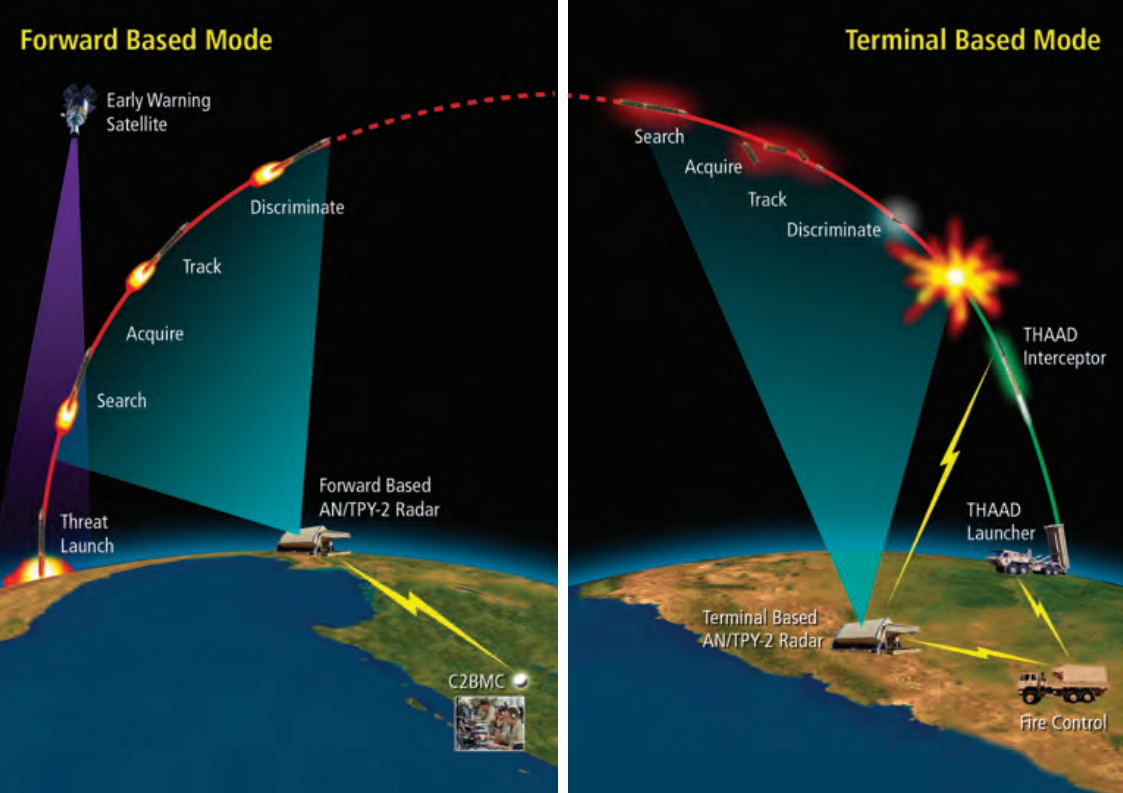
If confirmed, the loss would be significant. The AN/TPY-2 radar is the core element of the THAAD missile defense system. It detects and tracks incoming threats, discriminates between real warheads and decoys, and provides guidance data to THAAD interceptors.
The AN/TPY-2 consumes approximately 2 MW of power and has an antenna area of 9.2 square meters. It is built using gallium nitride (GaN) technology and operates in the X-band (8.55–10 GHz). Its officially declared instrumental range is 1,000 km, while other sources cite figures exceeding 2,000 km. Each THAAD battery is equipped with only one such radar.
These radars are produced in extremely limited numbers. Since the 1990s, only around 20 units are believed to have been manufactured. The estimated cost of a single AN/TPY-2 ranges from $500 million to $1 billion. If two units were indeed lost, replacement would likely take years and require hundreds of millions of dollars.
If the strikes are confirmed, two THAAD batteries would effectively be rendered inoperative, significantly weakening regional missile defense amid sustained Iranian attacks. Redeploying another AN/TPY-2 to the region might become necessary. However, this would require pulling the radar from another theater, thereby weakening U.S. missile defense elsewhere. There are no surplus AN/TPY-2 radars in storage, and redeployment would take considerable time.
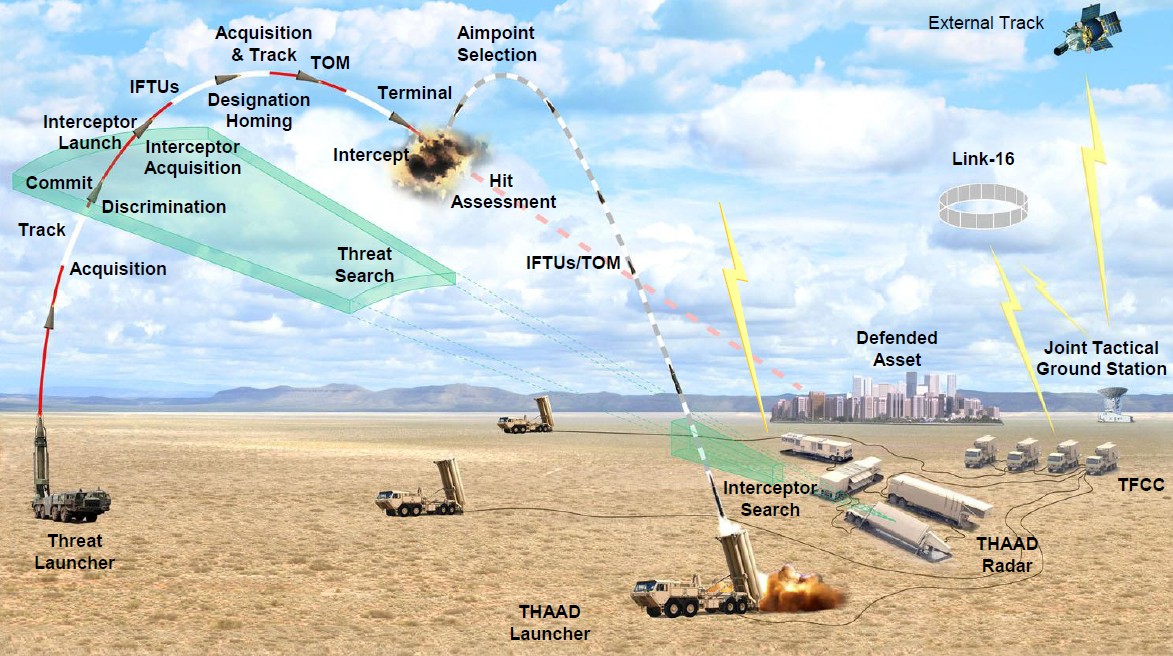
Beyond the potential loss of two THAAD batteries, the destruction of AN/TPY-2 radars would also reduce overall situational awareness for Patriot air defense systems and Aegis-equipped warships armed with SM-3 interceptors. Data from AN/TPY-2 radars feeds into broader air and missile defense networks.
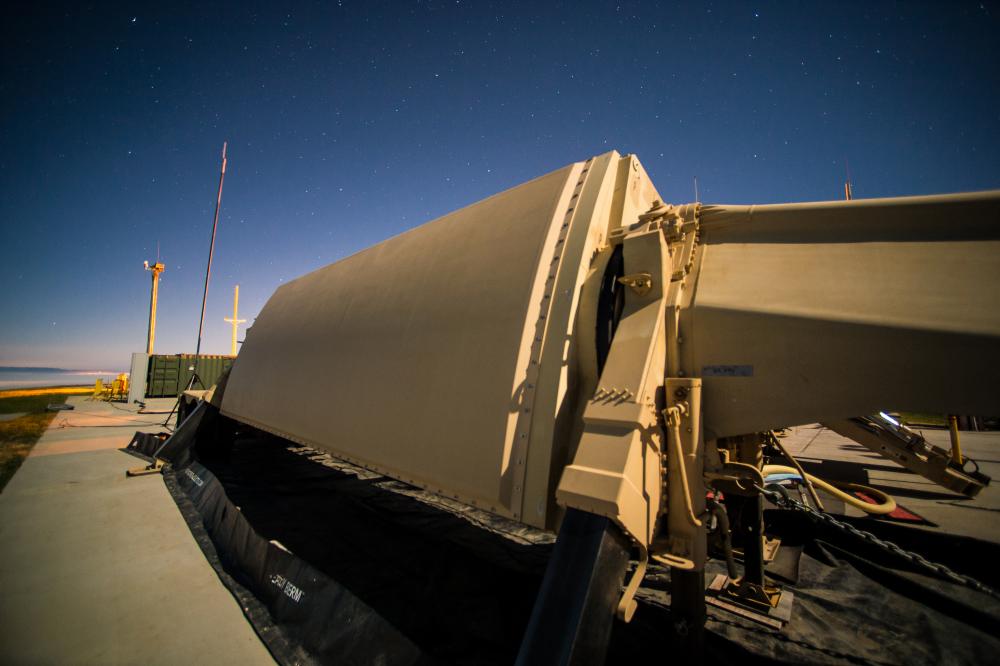
Perhaps most critically, the inability to protect such a costly and strategically vital system would itself represent a serious failure. A multilayered air defense umbrella should have been established around the site to shield it from all threats, including strike drones.
If the radar was hit by a ballistic missile, this would be particularly damaging for the system's reputation, as it would suggest it failed not only to defend its assigned area but also to protect itself.
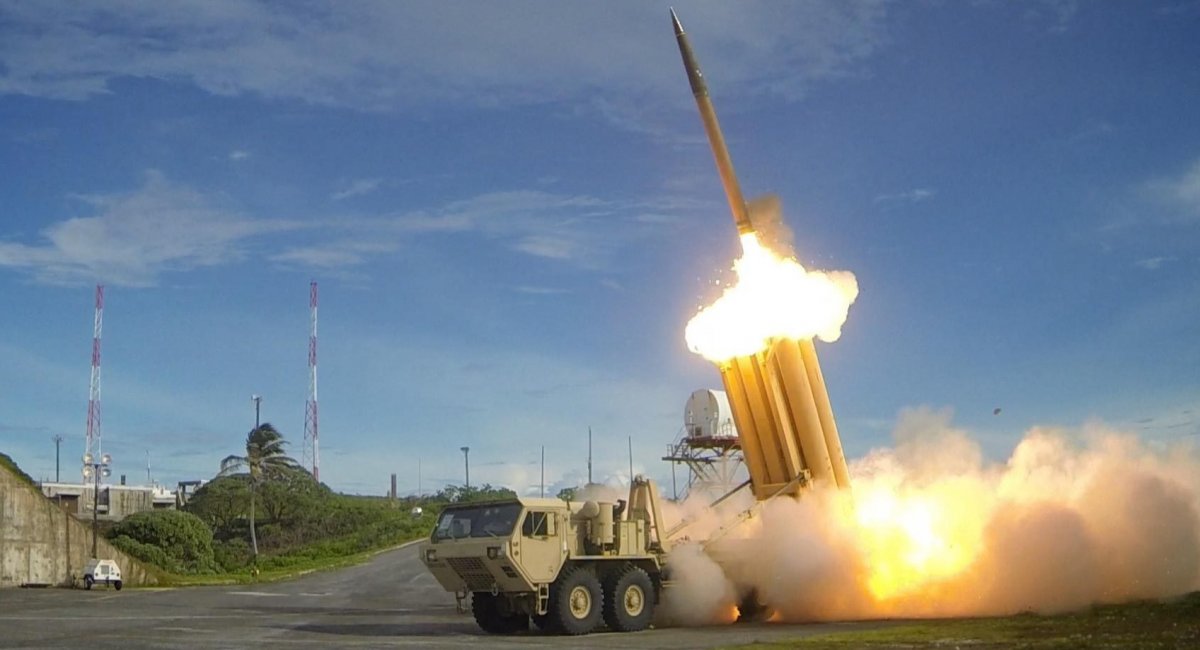
A Patriot battery was likely positioned nearby to provide additional protection for THAAD. Even if both AN/TPY-2 radars ultimately prove to be intact, the fact that strikes reached their deployment sites would still represent a serious lapse in air defense.
It is also worth recalling that earlier this week three U.S. F-15E Strike Eagle aircraft were reportedly lost in what became one of the most expensive friendly fire incidents in modern history, allegedly involving a Kuwaiti F/A-18 Hornet. Against this backdrop, the protection of high-value missile defense assets becomes even more critical.
Read more: How Far Can Iranian Ballistic Missiles, Cruise Missiles, Drones Reach, What Parts of Europe Could Be Targeted?