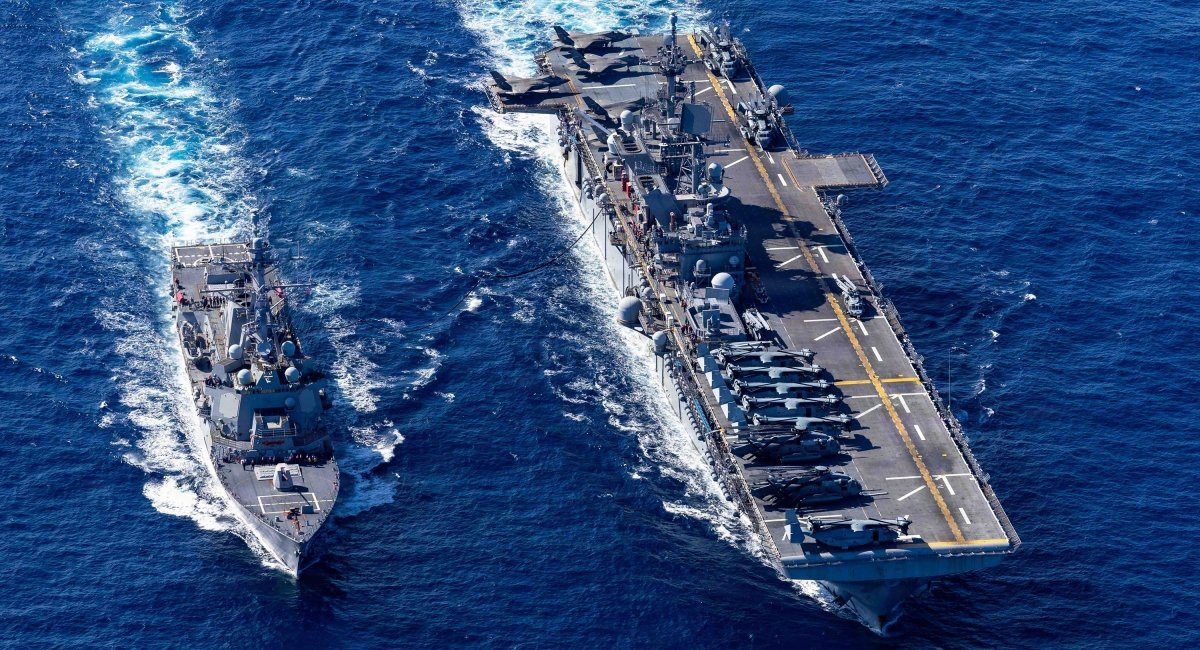
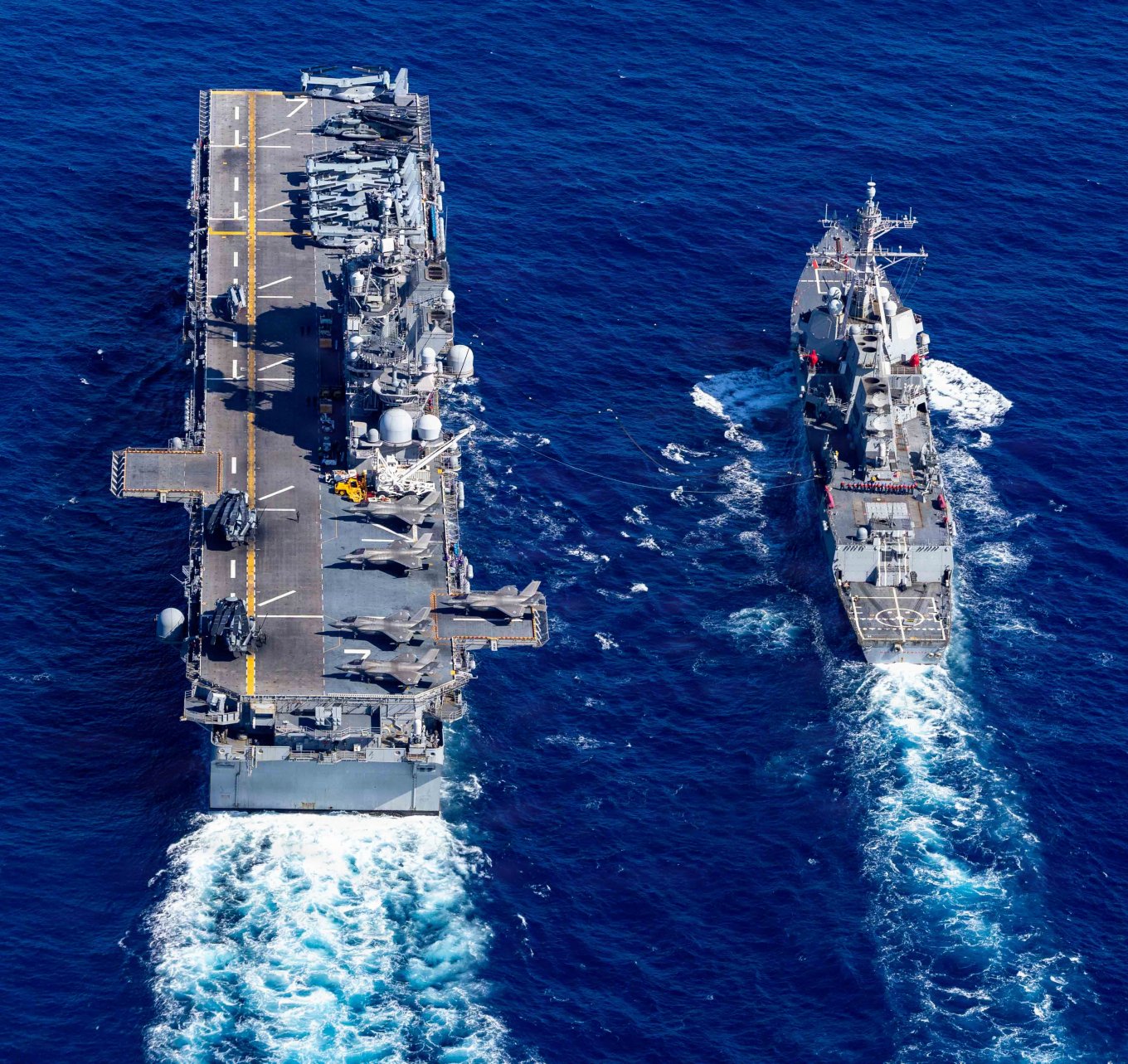
Washington is actively preparing an amphibious operation against Iran, seemingly focused on Kharg Island, through which nearly 90 % of the nation’s oil exports flow. This is evidenced by the urgent redeployment of the USS Tripoli (LHA‑7), an America-class amphibious assault ship assigned to the 31st Marine Expeditionary Unit, from the Philippine Sea.
Satellite images of the ship, sailing alongside two Arleigh Burke-class guided-missile destroyers, were published by OSINT analyst MT Anderson. As of Sunday, March 15, the USS Tripoli was in the South China Sea.
Read more: France May Provide Air Defense System Capable of Intercepting Iskander-M, KN-23 and Kinzhal Missiles
A clear ship's wake was observed, indicating that these ships were moving at very high speeds. While Arleigh Burke-class guided-missile destroyers can reach speeds of 30 knots, America-class amphibious assault ships top out at 22 knots.
At the same time, maximum speeds represent an extreme scenario for any ship, so it is more likely that they were traveling at 18–20 knots. If the group is traveling at that speed, it should reach the Persian Gulf in 9–10 days, assuming no stops.
Therefore, the USS Tripoli currently serves as a "countdown" of the U.S. military's readiness to conduct an amphibious operation against Iran. Prior to this, the nuclear-powered aircraft carrier USS Gerald R. Ford (CVN‑78) served as a similar indicator. Although it was slightly delayed due to a stop in Cyprus, its arrival off the coast of Israel on February 27 marked the final sign that the strike, carried out the following day, was inevitable.
In the initial phase, the target may not be Kharg Island itself, located in the northern Persian Gulf, but rather a group of islands in the Strait of Hormuz. In particular, control over these islands may be deemed necessary to ensure the safety of navigation.
It should be noted that the large America-class amphibious assault ships are a formidable asset in the U.S. arsenal for conducting amphibious operations. Specifically, this ship, with a displacement of over 45,000 tons and a length of 257 meters, can carry nearly 1,700 Marines, whose landing is supported by MV-22B Osprey tiltrotors and, in the case of the USS Tripoli, protected by F-35B fighter jets and AH-1Z attack helicopters.
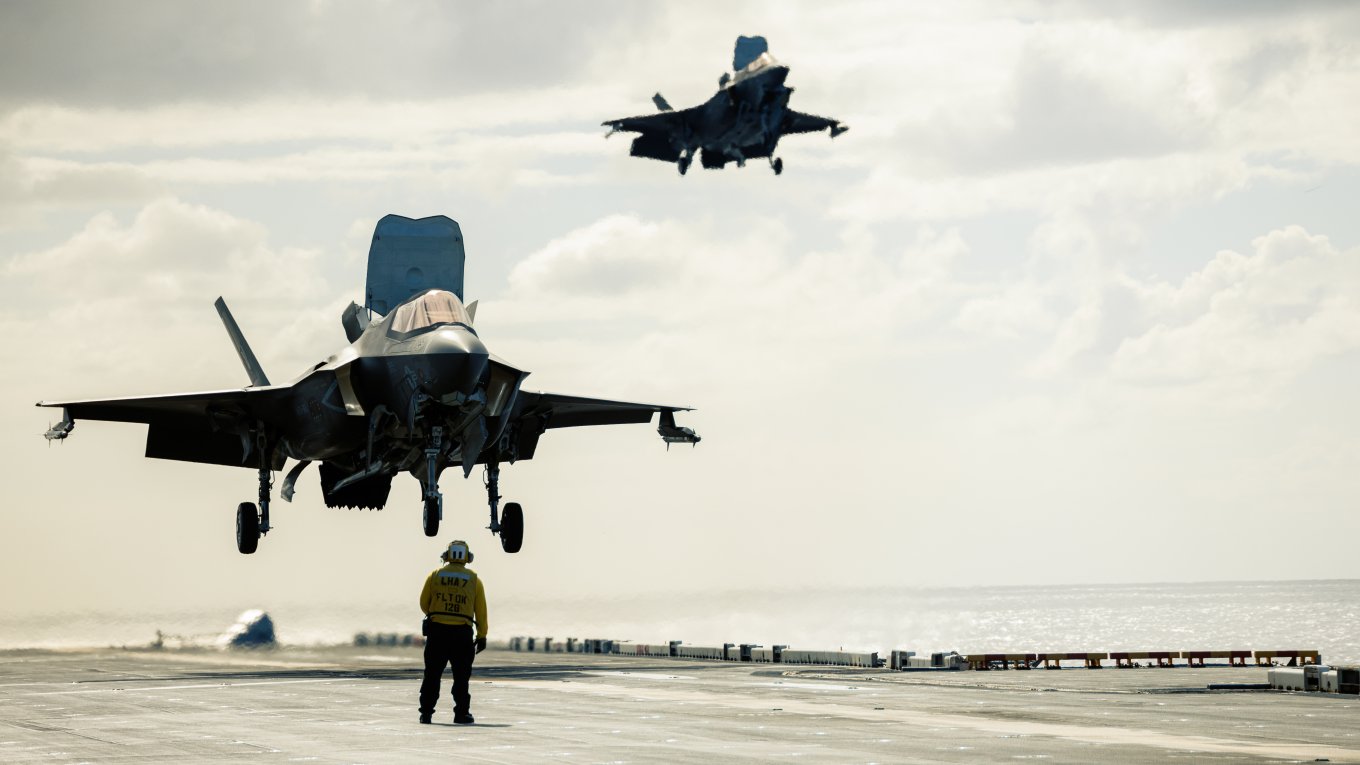
Currently, the first two amphibious assault ships of this class—the USS America and the USS Tripoli, built as Flight 0 variants—do not have the landing craft well found on other ships of this class. This feature will be introduced starting with the Flight I variant, beginning with the USS Bougainville (LHA‑8), which is currently undergoing trials.
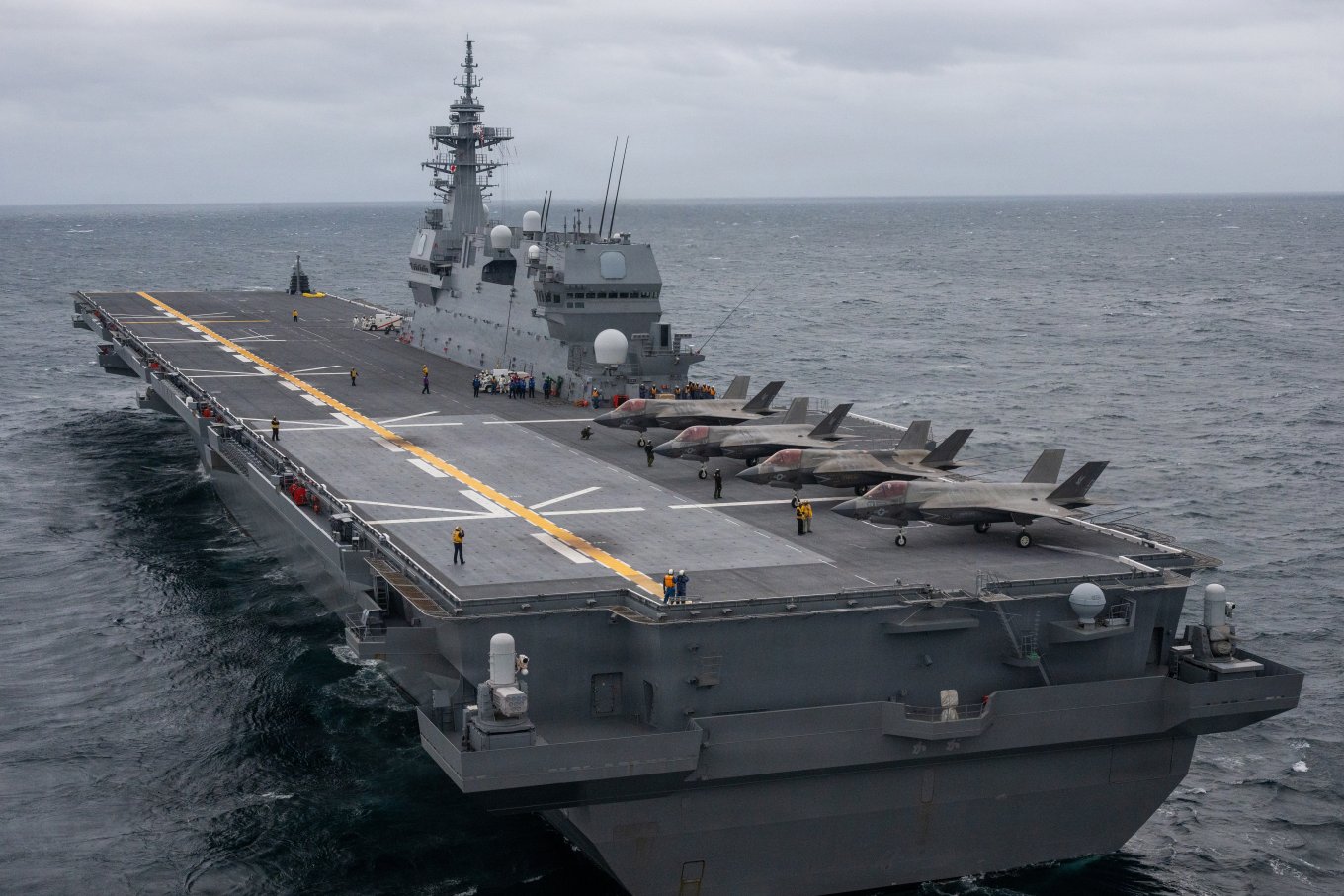
In other words, in the event of amphibious operations from the USS Tripoli, the U.S. Marine Corps would be unable to land any armored vehicles. Given the nature of a war against Iran, this could well be offset by total air superiority and the delivery of precision strikes.
Read more: Ukrainian SOF Strike Khersones Airfield Depot, EW Stations in Sevastopol and Logistics Sites in Zaporizhzhia (Video)