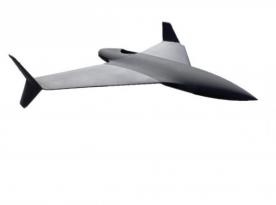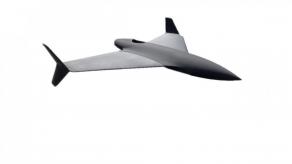
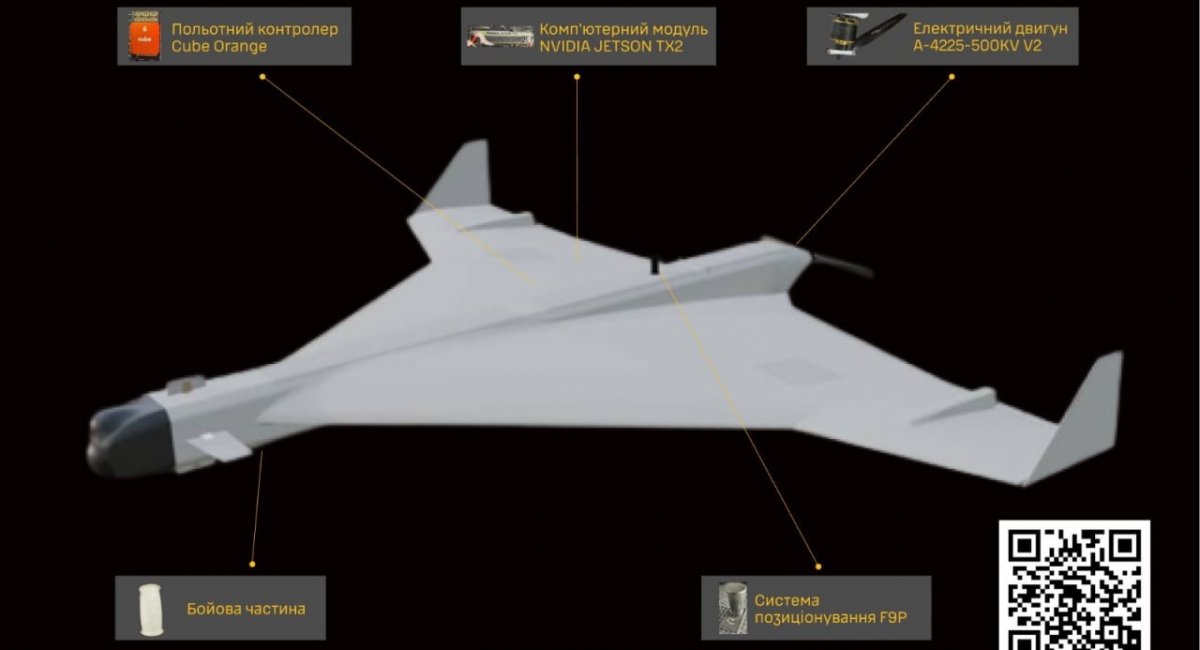
Ukraine's Defense Intelligence has unveiled detailed specifications of new russian AI-enabled loitering munition known as Klin, shedding light on its design, components, and technological features. The information was published via the War&Sanctions portal, where an interactive 3D model of the drone is also available, offering rare insight into one of russia's emerging unmanned strike systems.
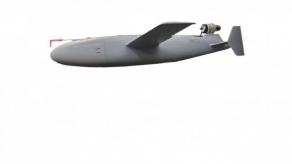
According to the report, Klin UAV is developed by the russian company Roboavia and features a delta-wing fuselage design. The drone measures approximately 1.6 meters in length, with a wingspan of 1.9 meters. It is capable of carrying either a shaped-charge or high-explosive warhead weighing up to 5 kilograms, positioning it as a versatile loitering munition for targeting both armored vehicles and fortified positions.
Read more: Ukraine Sets New Global Standards in Unmanned Warfare, Kyiv Security Forum Concludes
A key aspect of the system is its propulsion. Klin system is powered by a Chinese-made Scorpion F-4225-500KV V2 brushless electric motor, supported by two lightweight 6S Li-AFB battery packs. This configuration suggests a balance between endurance, speed, and operational flexibility, typical of modern electric loitering munitions designed for relatively quiet operation and reduced thermal signature.
What distinguishes the Klin from simpler drones is its integration of machine vision technology. The system reportedly uses an Nvidia Jetson TX2 computing module, enabling automatic target acquisition and tracking. This AI-assisted capability allows the munition to lock onto targets with limited operator input, potentially increasing strike accuracy and reducing vulnerability to electronic warfare interference.
The Defense Intelligence notes that similar technological solutions have already been observed in other russian UAV systems, including the V2U, Lancet, Zala drones, and the russian-Iranian Geran-2 series. This points to a broader trend in russia's drone development, incrementally integrating commercially available AI hardware into strike platforms to enhance autonomy.
The drone's flight control and navigation systems further illustrate its reliance on global commercial components. It uses Cube Orange flight controller from Australia and Holybro F9P navigation module from China, which supports RTK (Real-Time Kinematic) positioning for improved accuracy. Communication is maintained via LoRa radio modem, built around Ra-01H module produced by China's Ai-Thinker
Interestingly, additional onboard electronics reportedly include components sourced from manufacturers in the United States, Switzerland, Taiwan, and South Korea. This underlines the continued challenge of restricting access to dual-use technologies, as sanctioned states still manage to integrate globally produced hardware into military systems.
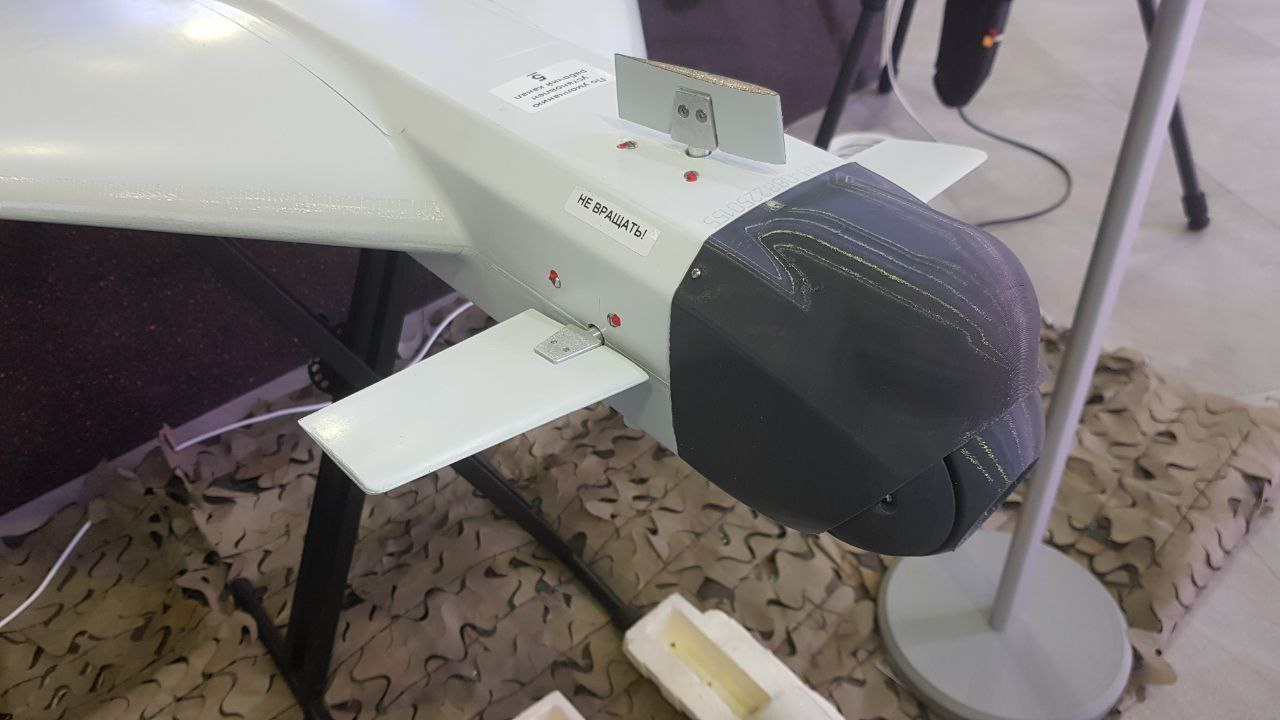
Another notable feature of Klin system is its advanced forward control surfaces, which enhance maneuverability during the terminal phase of attack. This allows the drone to approach targets from various angles and adjust its trajectory dynamically, increasing the likelihood of a successful strike.
Finally, the system is said to have both maritime and land-based variants. In the naval version, detonation is triggered via radar, while the ground-based configuration uses a lidar system. Such modularity suggests that Klin drone is being developed as a flexible platform adaptable to multiple operational environments.
Read more: Baykar Unveils Third Long-Range Strike Drone in Months, But Do K2, Sivrisinek, Mizrak Overlap Too Much?