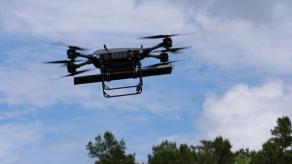



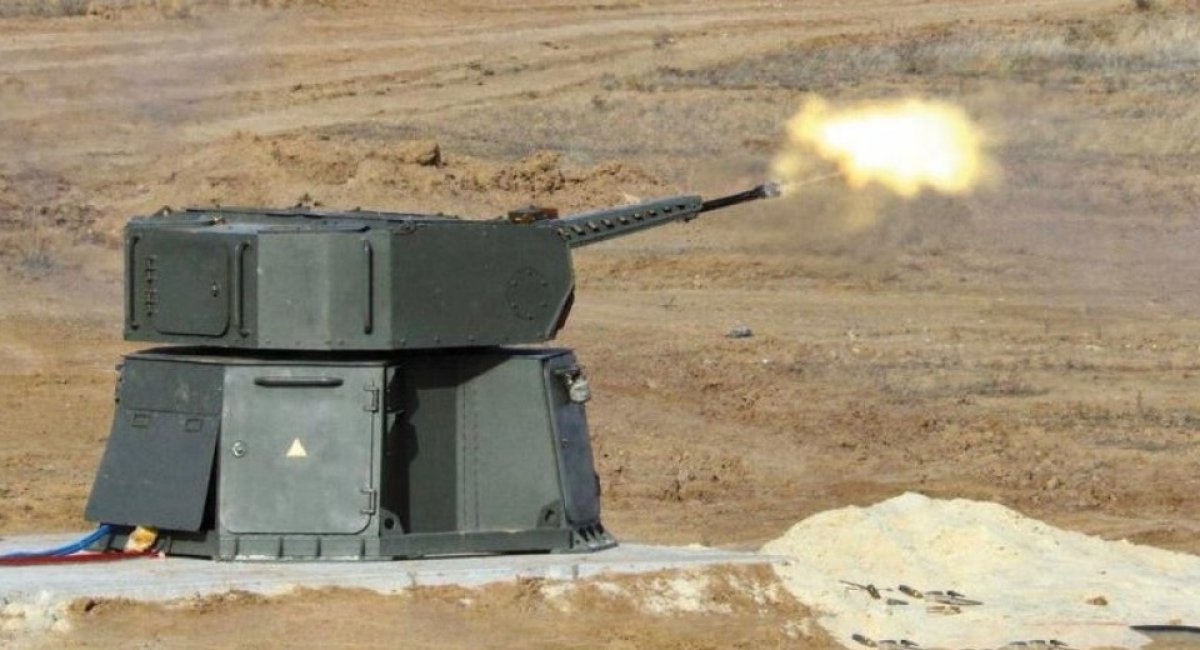
russian State Corporation Rostec has developed its new ZAK-30 Citadel anti-aircraft system. It is designed to protect static infrastructure from both quadcopters and fixed-wing UAVs. This could threaten Ukrainian long-range drones such as the FP-1 and An-196 Liutyi, used in strikes on russian oil refineries and other targets.
It is reported that the system is equipped with a 30-mm cannon mounted in a fixed turret and capable of firing airburst rounds. It is noted that the process from target detection to destruction is highly automated.
Read more: Ukraine Strikes russian Belets Oil Depot, Crimean Ammo Warehouse, and Command Nodes
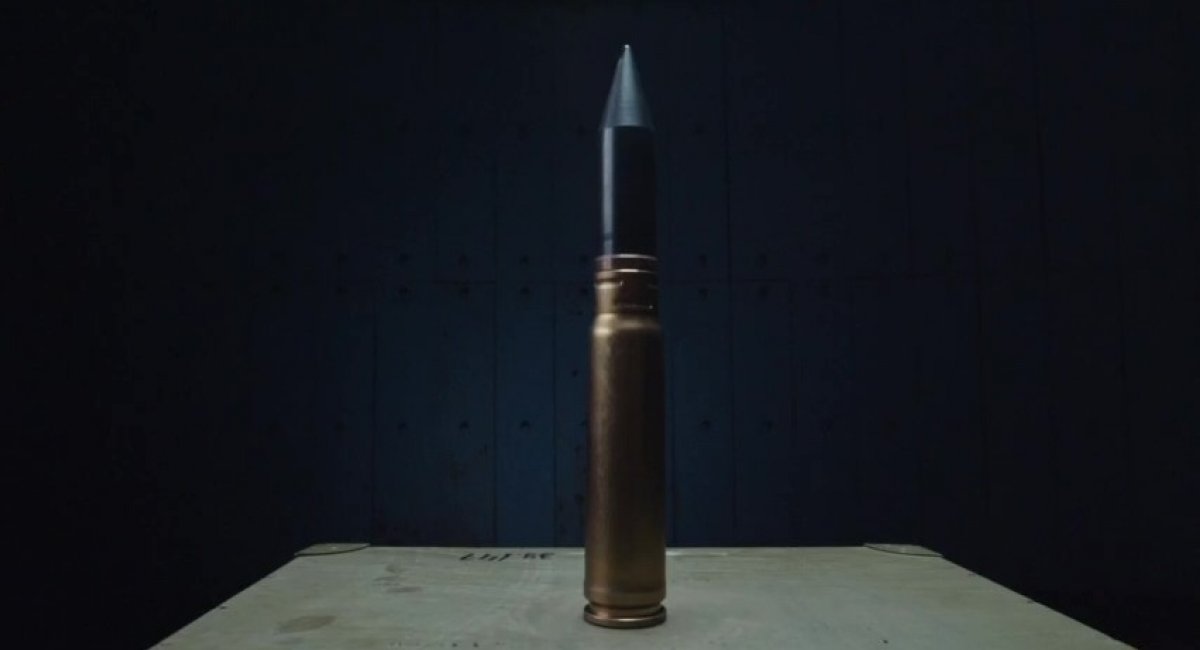
It is equipped with radar and electro-optical targeting systems. However, none are visible in available images of the system itself, suggesting that target designation may be provided by other nearby assets or by an air defense command-and-control system. It is specified that the optical channel operates in both the visible and infrared ranges.
According to Andriy Tarasenko, a researcher specializing in the history of tank manufacturing and the defense industry, the system has an effective range of 1.2 km and costs 0.6 billion rubles, or approximately 3.48–7.21 million euros depending on the exchange rate. He noted that, based on these figures, covering a single oil refinery could require between 3.48 and 6 billion rubles, or 6 to 10 systems.
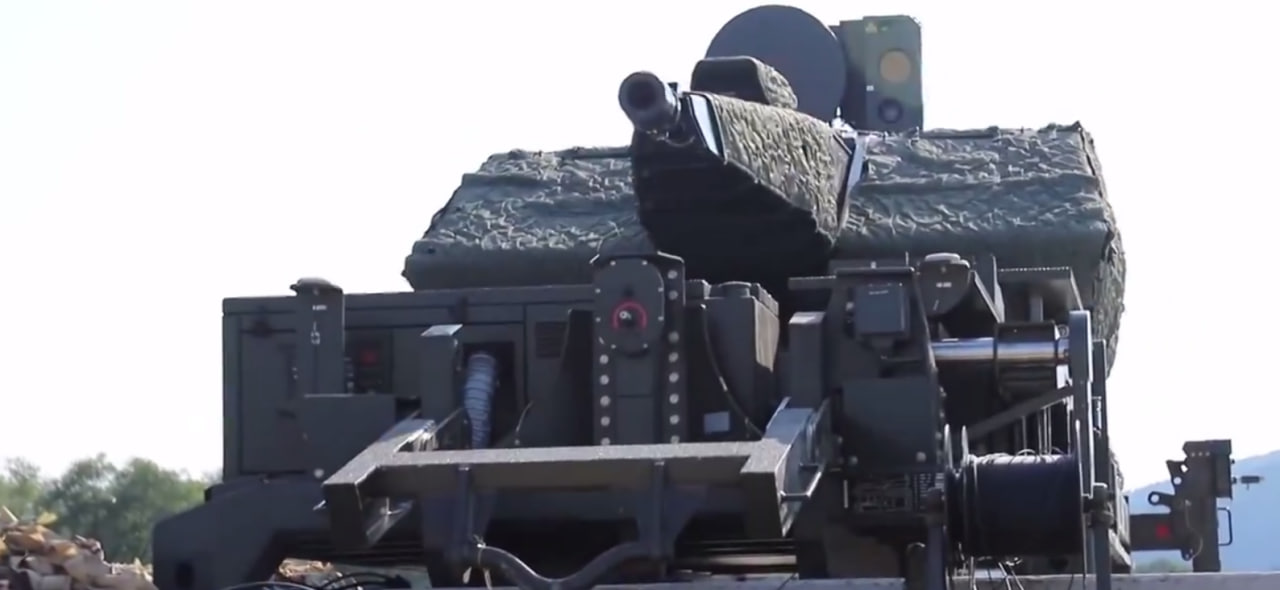
From Defense Express we would like to note that this appears to be a conceptual counterpart to the German Skynex system, which is widely used in Ukraine and is capable of shooting down not only drones but also cruise missiles. The russian system is unlikely to achieve the same level of effectiveness, but conceptually it makes sense.
In other words, if the system performs as intended, the ZAK-30 could pose a serious threat to Ukrainian long-range drones. It may be more effective against UAVs than the Pantsir, whose guns lack programmable airburst rounds and have been criticised for inconsistent performance. However, this raises questions about guidance, as Skynex integrates its electro-optical targeting system and radar on the platform itself, while the russian-made system does not.
Moreover, effective operation would require a sufficient supply of programmable munitions, which russia unveiled earlier in 2026 at an arms exhibition in Saudi Arabia. However, no production details have been reported so far, making it unclear how quickly full shipments can be delivered or what the quantities will be. If this is not possible, standard 30-mm ammunition will be used instead.
Furthermore, for the Citadel systems to have a tangible impact, they must be produced and deployed in sufficient quantities, as only a limited number of units would have little effect on the overall situation. While the russian defense industry appears to be moving toward more modern systems in concept, their actual performance can only be assessed in operational use.
Read more: How Long russia Prepared Latest RS-28 Sarmat Launch and Why Its Deployment Drags On