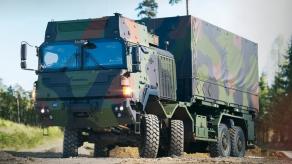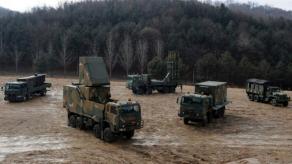



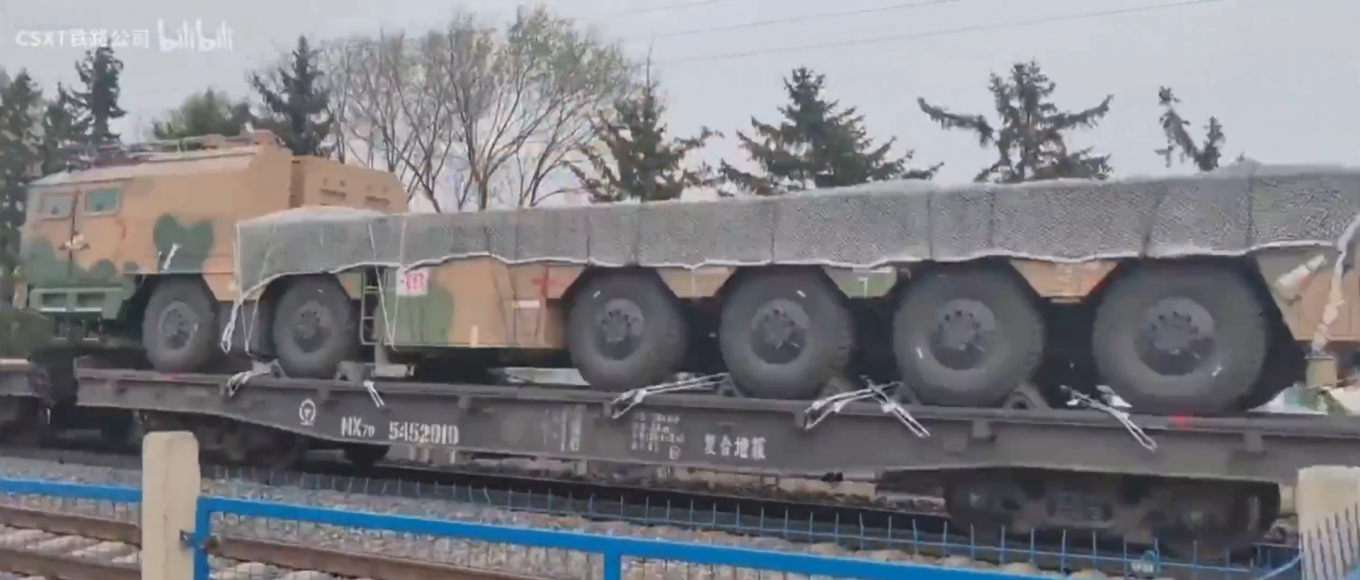
The video, which appeared on Chinese social media, shows at least eight HQ-29 launchers being transported by rail, along with 16 interceptor missiles.
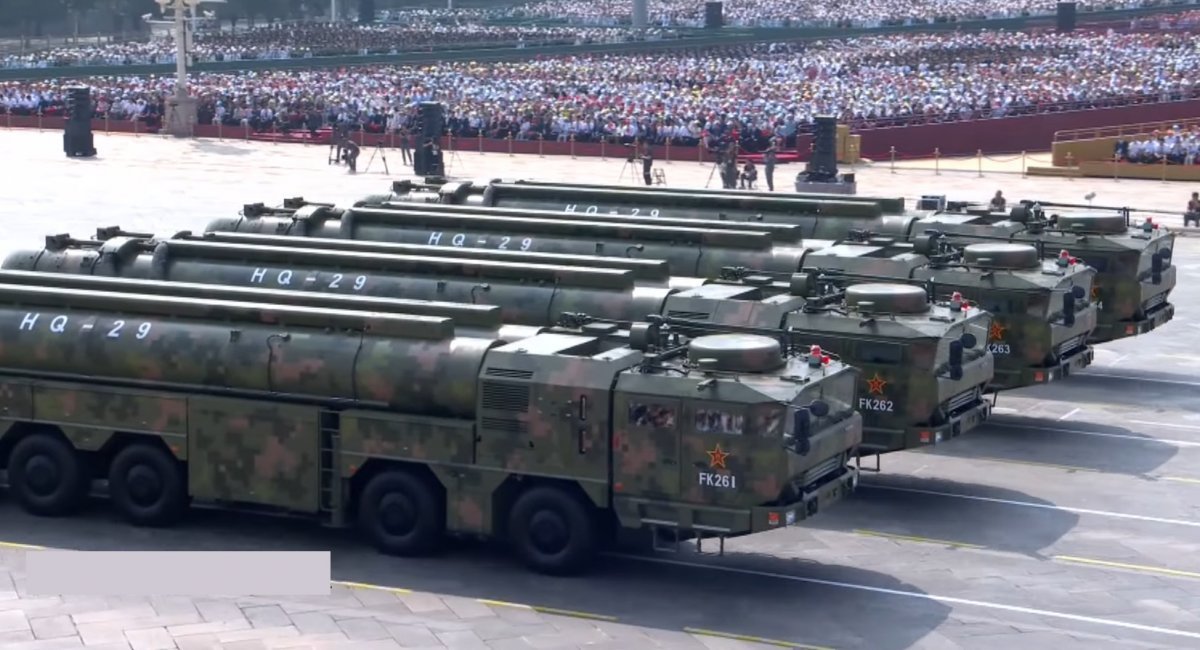
The HQ-29 was officially unveiled only in September 2025 during a military parade in Beijing, although it was reportedly accepted into service earlier that year. At the same time, development of the system is known to have begun in the early 2000s.
Read more: After Major Failures, ARRW Hypersonic Missile Critical Against russia, China Is Spotted on B-1B Lancer for the First Time
HQ-29 mobile strategic missile defense system Seen being transported on a train, as shown in the video China’s long-range strategic anti-ballistic missile system Designed to intercept high-altitude ballistic threats Mobile platform for rapid deployment and… pic.twitter.com/s04iNAYYlo
— NEXUSx (@Nexus_osintx) May 3, 2026
The newly released footage suggests that China may already operate at least two HQ-29 batteries. This assumption is based on the fact that the launchers seen during the parade and those observed in transit feature different camouflage patterns and markings.
This raises the possibility that the recently spotted systems belong to a second battery. However, this remains speculative, as the parade units could have simply been repainted after the event. Therefore, it cannot be ruled out that both sightings involve the same launchers.
As for the HQ-29 itself, very little official information is available, and most of its characteristics are based on external assessments. According to these estimates, the system may have an engagement range of up to 2,500 km and an interception altitude of up to 850 km.
At the same time, other assessments suggest a more realistic interception altitude of 150 to 600 km. The missile’s speed is estimated at Mach 6 to Mach 10, or approximately 7,350 to 12,250 km/h.
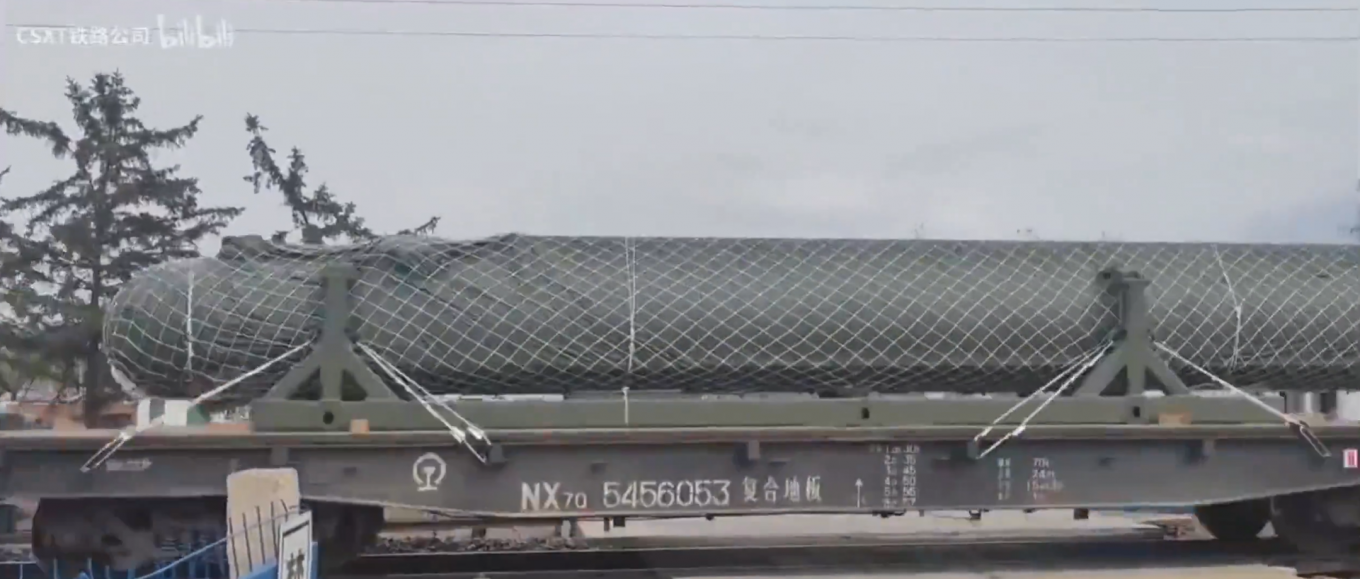
These figures are indeed impressive. However, it is important to note that they remain unverified, and the system's actual capabilities may differ significantly. The HQ-29 is claimed to be capable of intercepting ballistic missiles, likely including intercontinental ones, hypersonic weapons, and satellites in low Earth orbit.
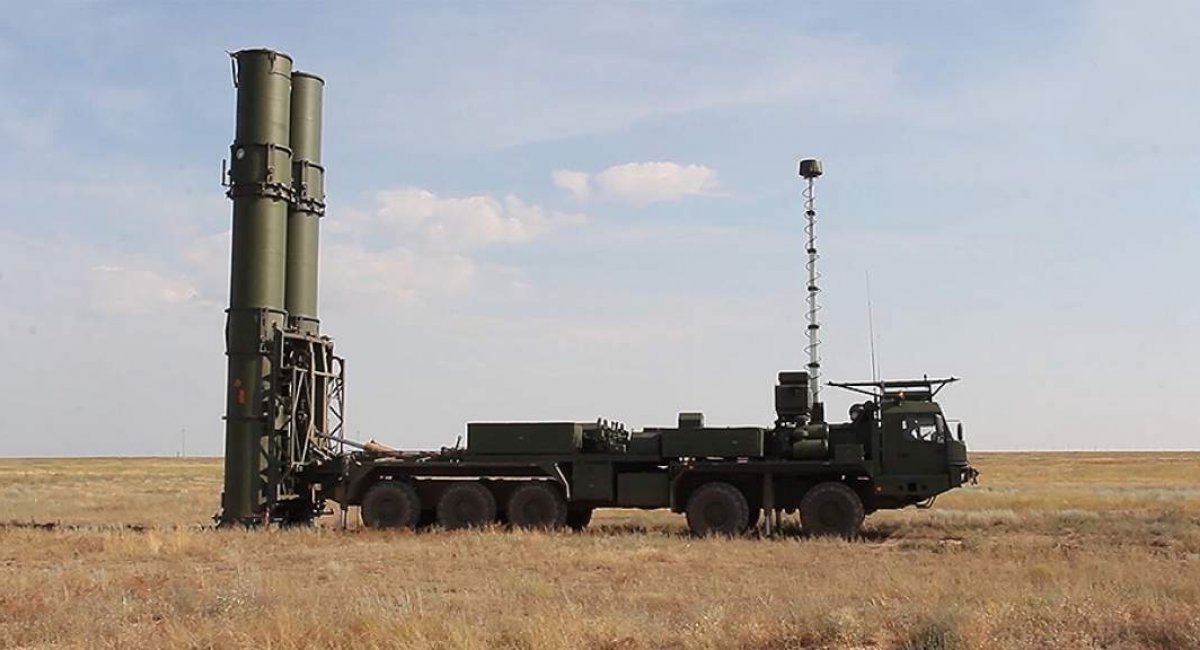
If these specifications prove accurate, they would exceed the declared capabilities of russia's S-500 system, which is reportedly capable of engaging targets at ranges of up to 600 km and interception altitudes of up to 200 km.
Read more: russia's Ka-52K Helicopters for China: Do New Photos Confirm Deliveries or Just Show Good Fake?