


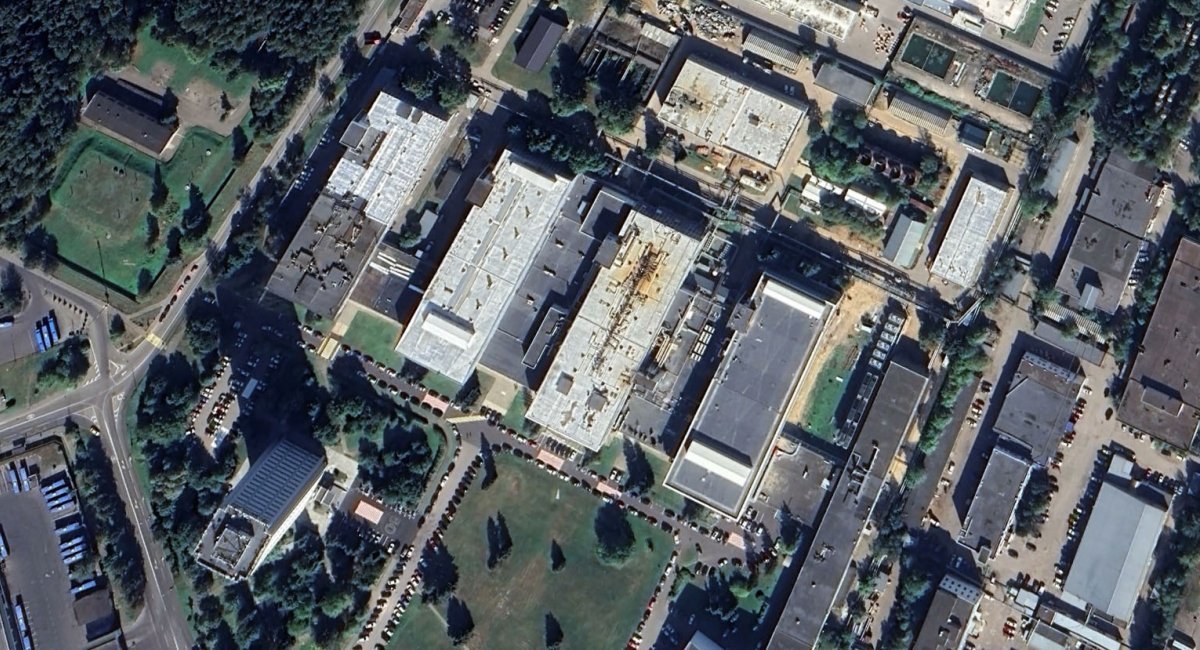
The Kremniy El microelectronics plant in Bryansk can likely be considered destroyed. Manufacturing its most advanced components required extremely strict cleanroom standards, allowing no more than one dust particle per liter of air. The facility was reportedly hit by seven Storm Shadow missiles.
At the same time, Kremniy El has long been described in russia as the country's second-largest producer of microelectronic components. This raises a straightforward question: who is the largest producer, and where is it located?
Read more: Ukrainian Storm Shadow Missiles Strike Kremniy El Microelectronics Plant in Bryansk Linked to Iskander Missile Production
The answer is the Mikron plant in Zelenograd. It is not only the largest microelectronics manufacturer in russia but also the only facility capable of producing chips using a 90-nanometer process.

To understand how far behind russia is in this field, leading manufacturers reached the 90-nm level around 2002–2003, roughly corresponding to the era of the Intel Pentium 4 processor. By contrast, by 2020 semiconductor production using a 5-nm process had already entered mass manufacturing, while the most advanced technologies today are approaching or even moving below the 2-nm node.
However, striking russia’s Mikron plant would present significant challenges. The facility is located on the outskirts of Moscow in Zelenograd and is protected by the densest air defense network in russia, together with the capital itself. russian forces continue to expand these defenses, and there are now around 130 air defense positions deployed around Moscow.
Despite the extensive protection of the Moscow region, Ukraine has attempted to strike the facility before, including in May and July 2025. These attempts involved drones and did not produce significant results.
Reaching the plant in Zelenograd, as well as other targets in Moscow and the surrounding region, would realistically be possible only with ballistic missiles. This assessment was made by Denis Shtilerman, co-founder and chief designer of the defense company Fire Point, in an interview with Armia TV. He estimated that ballistic missiles such as the FP-9 would have roughly a 25 percent chance of penetrating the missile defense system protecting the Moscow region.
The FP-9 is expected to have a range of 855 kilometers, carry an 800-kilogram warhead, and achieve an accuracy of no more than 20 meters circular error probable. According to current plans, the missile is scheduled to complete codification in the summer of 2026.
Read more: russia's Second-Largest Microchip Plant Destroyed: Seven Storm Shadows Hit $300K Equipment Requiring Dust-Free Production