Spanish government has decided to allocate €700 million to the development of the sixth-generation FCAS fighter project. These funds will be distributed among Indra which holds 33% of the overall programme as well as Airbus of Germany and Dassault of France.
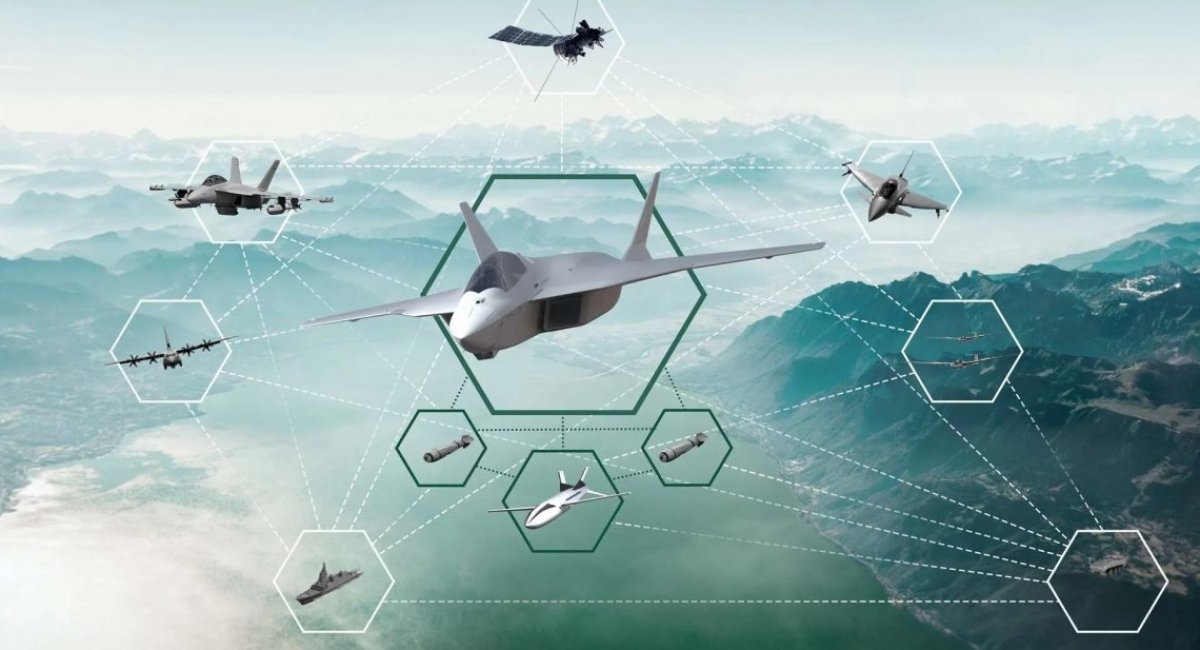
Of that sum, €540 million will go to the Integrated Onboard System subprogramme within the Next-Generation Weapon System (NGWS) programme, which covers the fighter itself, loyal wingmen, armament, etc. Another €160 million are earmarked directly for FCAS.
Read more: China's Secret Sale of HQ-9BE Systems to Azerbaijan Reveals the True State of Baku–Moscow Relations
According to Infodefensa, the recipients will be Indra itself and its joint venture with Airbus. The work is to be completed by 30 November 2031. From Defense Express's point of view, Spain's decision to funnel €700 million into FCAS demonstrates extraordinary optimism.
At the moment, joint work on this project officially a tripartite effort by France, Germany and Spain has effectively degraded into mutual insults and finger-pointing. Dassault demands full control of the programme and wants the status of prime contractor rather than preserving equal footing among partners.
Germany's position, defending the existing rights, is backed by Airbus's CEO, who is himself French and whose company has its headquarters in France. It’s worth remembering that Airbus also has a significant presence in Spain.
In short, the FCAS conflict long ago spilled beyond national interests. Neither Berlin nor Paris has paid much attention to Spain's role, and Madrid has tried to avoid drawing attention to itself. At minimum, Indra has distanced itself from the Franco-German clashes.
It’s also worth noting that Indras area of work in FCAS has not been specified, since the project remains at the conceptual stage. Generally, Indra has outlined contributions in areas such as quantum technologies, photonics, artificial intelligence for sensor systems, communications and control.
A contentious question remains whether Indra will be able to exploit these developments outside the FCAS project, whose future currently appears precarious. After all, similar lines of R&D are being pursued by other sixth-generation fighter developers.
Read more: NATO Admits It Could Lose Next War, But Does Alliance Know How to Prevent It?