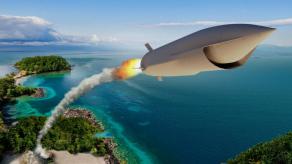



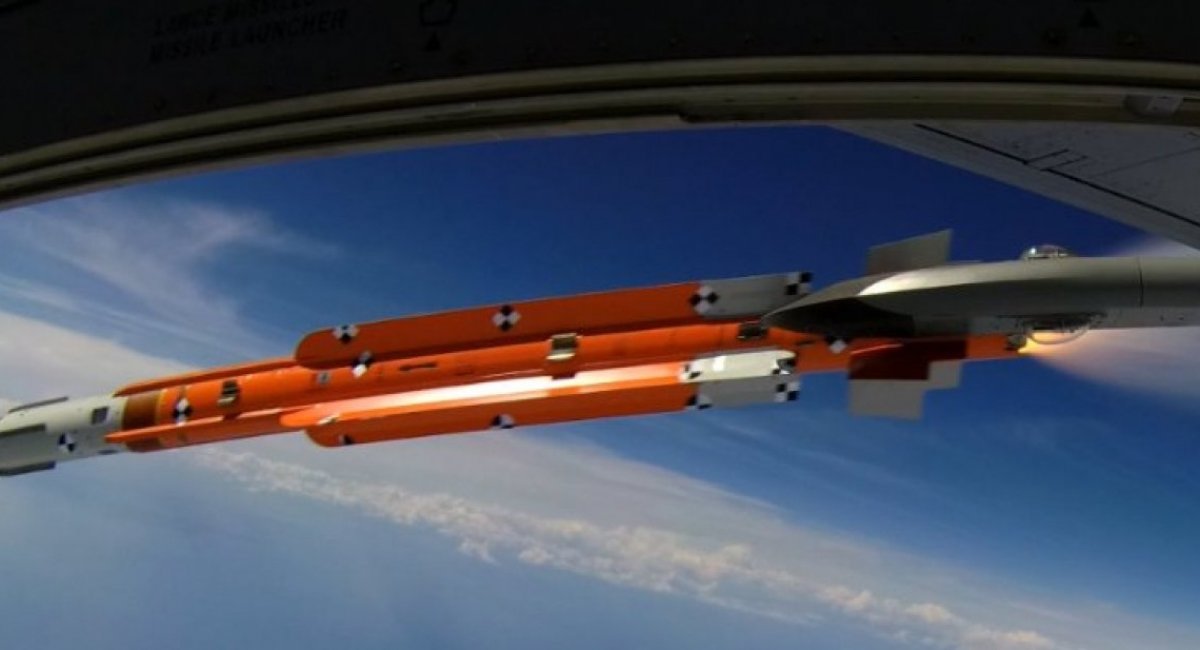
France is pressing ahead with testing of the next-generation MICA NG air-to-air missile, developed by MBDA. The programme has now reached the milestone of its first supersonic launch from a Rafale fighter.
According to France's General Directorate of Armaments (DGA), the aim of the test was to evaluate the performance of the infrared seeker head under highly demanding conditions. MBDA describes this as the second test flight overall, with the first having taken place in June 2025.
Read more: From 1,300 to 100,000: Thales Belgium's Ambitious Production Ramp-Up for Its Ukraine-Proven Anti-Drone Rockets
Defense Express notes that MICA NG can be considered a European counterpart to the most advanced AIM-120C-8, with some advantages of its own. It occupies the medium-range slot ahead of the larger Meteor and will allow French fighters to engage russian aircraft at even greater distances.
The standard MICA has a quoted air-launch range of 60–80km; the new version increases that figure by 40%, putting the estimated range at approximately 84–112km, though an official confirmed figure has not yet been released.

MICA NG uses a dual-pulse motor, which sustains high manoeuvrability all the way through the terminal phase, aided by long-chord wings and tail control surfaces. By contrast, the latest AIM-120 variants rely on a single-pulse propulsion system, which causes some degradation in effectiveness at longer ranges.
Like its predecessor, the updated missile comes in two variants: one with an active radar seeker and one with an infrared seeker. The radar version will use a miniaturised active electronically scanned array (AESA) antenna, a solution currently found in only a handful of missiles worldwide, including the Japanese AAM-4B (Type 99B).
The passive infrared variant is claimed by the manufacturer to enable covert intercepts and to serve as an additional IRSTS-type sensor for the pilot. At short range it supports helmet-mounted cueing and, according to MBDA, all-aspect engagement across a full 360 degrees around the aircraft.
Both variants can also be launched from ground and naval platforms, as with the standard MICA, at reduced range compared to air launch, though exact figures have not been specified. Series production is expected to begin in 2026, though whether that timeline holds remains to be seen.
Read more: U.S. Announces Mass Production of V7, Copy of Ukraine's Magura V7, and Claims It as Its Own