


On the night of April 8, the White House stated it had agreed to a two-week ceasefire with Iran to facilitate peace negotiations, on the condition that the Strait of Hormuz remains open. The proposal was reportedly put forward by Pakistan's Prime Minister Shehbaz Sharif and Field Marshal Asim Munir.
Israel also supported the ceasefire but noted that it does not apply to Lebanon, despite Iran insisting that it should. The United States and Israel halted strikes against Iran, while maritime traffic in the Strait of Hormuz began to gradually resume.
Read more: U.S. Nuclear Launch System Built With President as Only "Safety" — How Trump Could Order Strike on iran
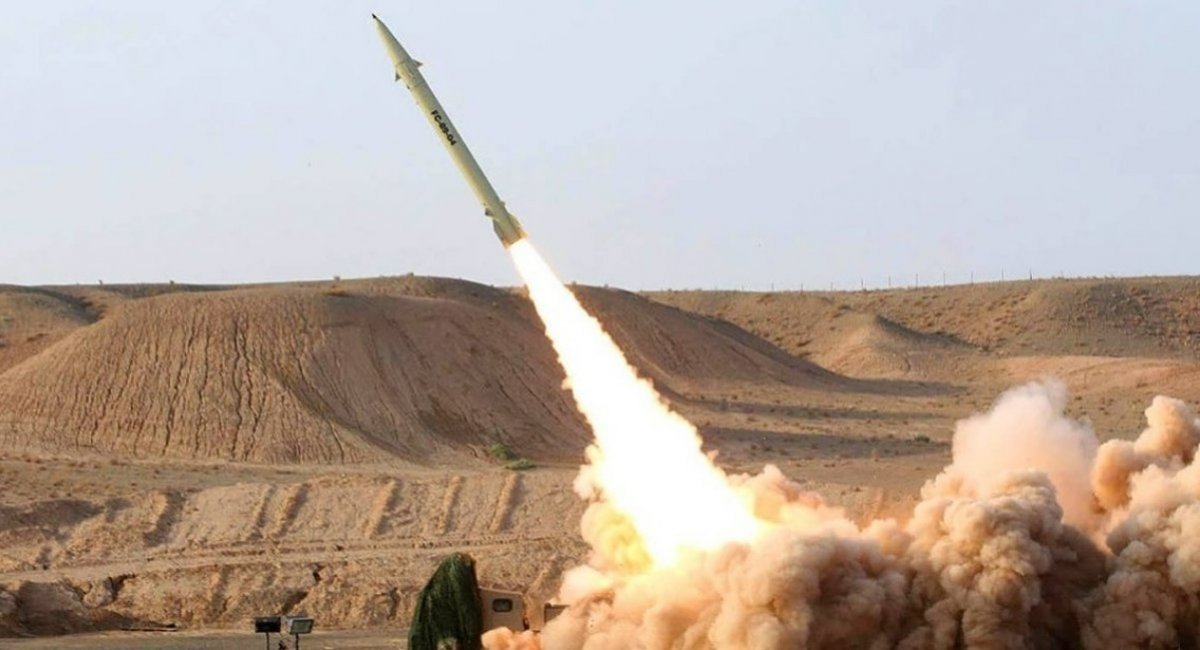
However, Iran continued launching attacks using ballistic missiles and drones. Since the ceasefire was announced, strikes have reportedly targeted the United Arab Emirates, Iraq, Kuwait, Bahrain, and Israel. There have also been reports of explosions at the U.S. Victoria base in Baghdad.
In addition, reports emerged of an attack on a vessel flying the UAE flag in the Persian Gulf. Iranian sources claim that the UAE subsequently struck an oil facility on Iran's Sirri Island, prompting the Islamic Revolutionary Guard Corps (IRGC) to threaten further strikes against the UAE and Kuwait.
Taken together, these developments suggest that the ceasefire is effectively one-sided. At present, only the United States and Israel have halted strikes, while Iran and its proxies continue to target U.S. bases in the region and Israeli territory.
As previously noted, the ceasefire period is intended to enable negotiations between the United States and Iran, mediated by Pakistan. The White House indicated it had received a 10-point plan from Iran and considers it an acceptable basis for talks.
However, the content of this plan warrants closer examination. It likely corresponds to the proposal that surfaced several days ago, which reportedly includes:
- Commitment to non-aggression
- Retention of Iranian control over the Strait of Hormuz
- Acceptance of uranium enrichment
- Lifting of all primary sanctions
- Lifting of all secondary sanctions
- Termination of all UN Security Council resolutions
- Termination of all resolutions of the IAEA Board of Governors
- Compensation payments to Iran
- Withdrawal of U.S. combat forces from the region
- An end to all ongoing conflicts, including operations against Hezbollah in Lebanon
In practice, this would mean lifting nearly all sanctions imposed on Iran. If this is indeed the same plan, and if the United States considers it acceptable even as a starting point, it could be interpreted as a major strategic concession.
Under such conditions, Iran could rapidly rebuild its military capabilities, potentially surpassing previous levels, while also advancing toward nuclear weapons capability. This would significantly increase the threat posed by Iran, not only in the Middle East but globally, while weakening U.S. influence in the region.
Iran says the U.S. agreed to:1—Commitment to non-aggression2—Continuation of Iran’s control over the Strait of Hormuz3—Acceptance of uranium enrichment4—Lifting of all primary sanctions5—Lifting of all secondary sanctions6—Termination of all UN Security Council resolutions… https://t.co/eYys2CG5j7
— Clash Report (@clashreport) April 7, 2026
At the same time, it remains unclear whether this is the exact plan under discussion and how it may differ from any final agreement. Given the apparent failure of the ceasefire to hold, the United States may resume strikes, or negotiations could collapse altogether. Alternatively, Washington may have other strategic reasons for maintaining the current truce.
For now, the situation remains fluid, and further developments will depend on the next steps taken by both the United States and Iran.
Read more: UK Ministry of Defence: RAF Regiment Downs Iranian Drones as UK Typhoon, F-35 Jets, Voyager, and Naval Helicopters Sustain Regional Defense