


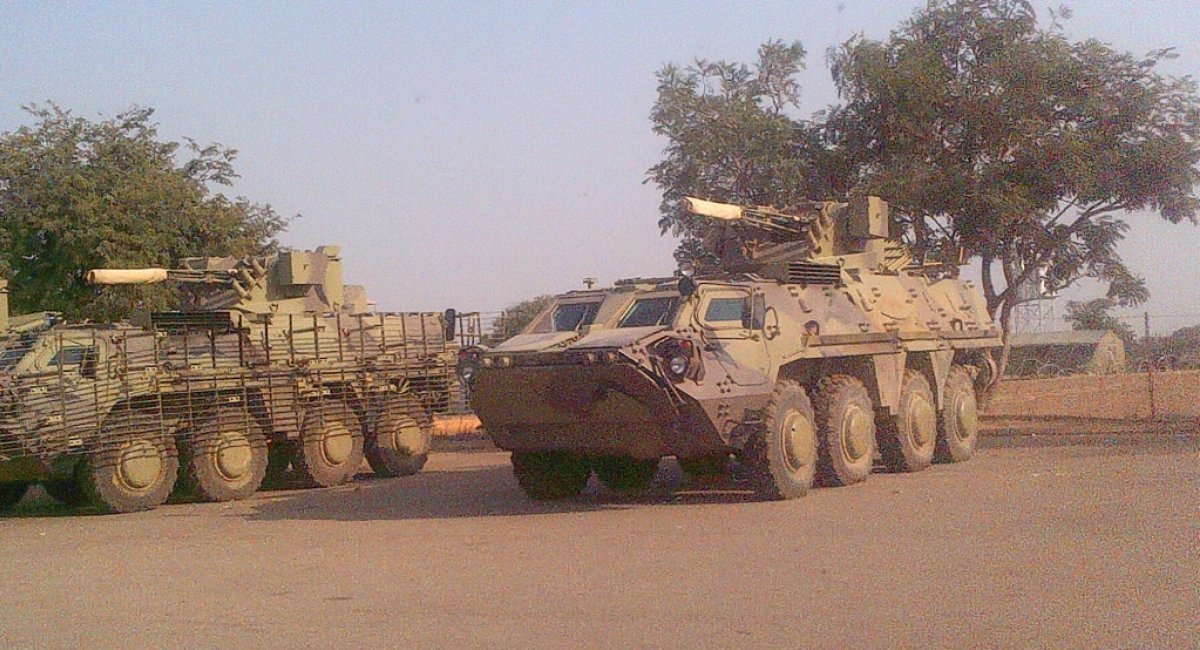
A video has recently surfaced online showing a Ukrainian-produced BTR-4EN in service with the Nigerian Army. It should be recalled that deliveries of the BTR-4EN to Nigeria took place in 2014.
Initially, these vehicles were intended for delivery to the Iraqi Army under an export contract. However, Iraq canceled the agreement after the first batch had been delivered. By that time, a certain number of BTR-4E vehicles had already been manufactured. Some were subsequently taken into service with Ukraine's Armed Forces, while others were exported to Nigeria.
Read more: Why russians Fear the Ukrainian BTR-4 Bucephalus on the Frontline (Video)
According to various sources, a total of between 10 and 15 vehicles were delivered. The newly released video shows that the Nigerian BTR-4EN has been fitted with an additional 12.7 mm DShK heavy machine gun mounted at the front of the vehicle above the commander’s position, along with an armored position for the gunner.
In addition, at the rear of the vehicle, special protective shields can be seen on both sides of the roof. These appear to be intended to protect soldiers who climb onto the roof from the fighting compartment through roof hatches.
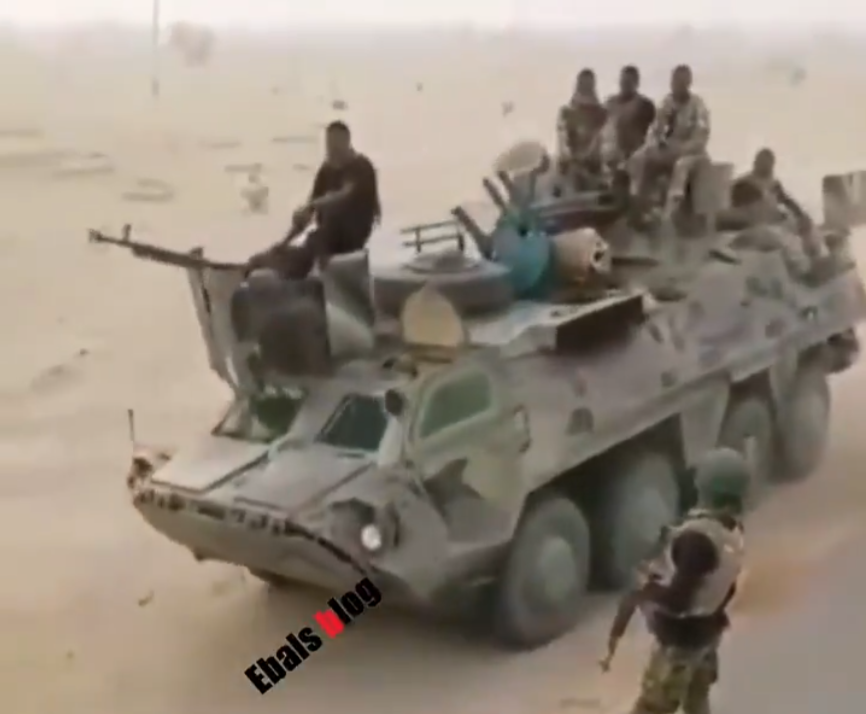
It can also be observed that all six firing ports in the troop compartment are open. This may indicate that the dismounts actively use them for firing or, alternatively, for additional ventilation. Another possibility is that, instead of a standard landing party, several infantrymen are positioned inside specifically to fire machine guns or assault rifles in all directions, increasing fire density and providing flank protection against enemy infantry.
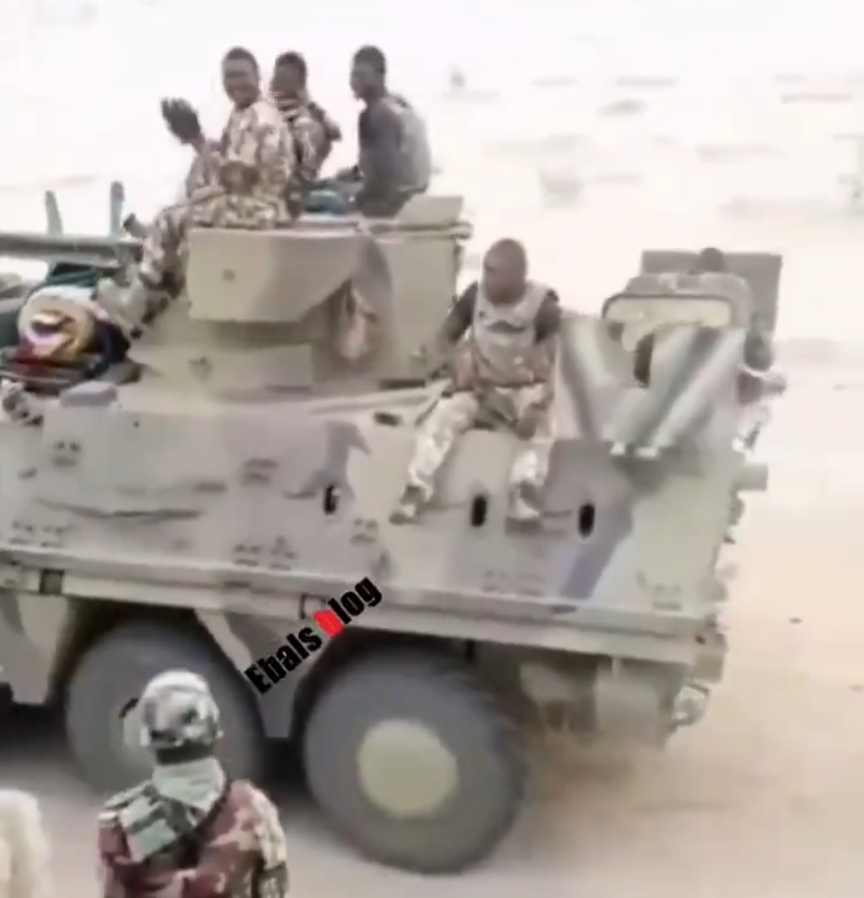
In other words, Nigerian forces appear to be exploiting the firepower of their BTR-4ENs to the fullest—and even beyond. At maximum, after all modifications, a Nigerian BTR-4EN could theoretically engage targets simultaneously in all directions with one 12.7 mm DShK, up to eight machine guns or assault rifles from various firing positions, and the BM-7 Parus combat module. The latter includes a 30 mm automatic cannon, a 30 mm automatic grenade launcher, two Barrier anti-tank guided missiles, and a 7.62 mm PKT machine gun.
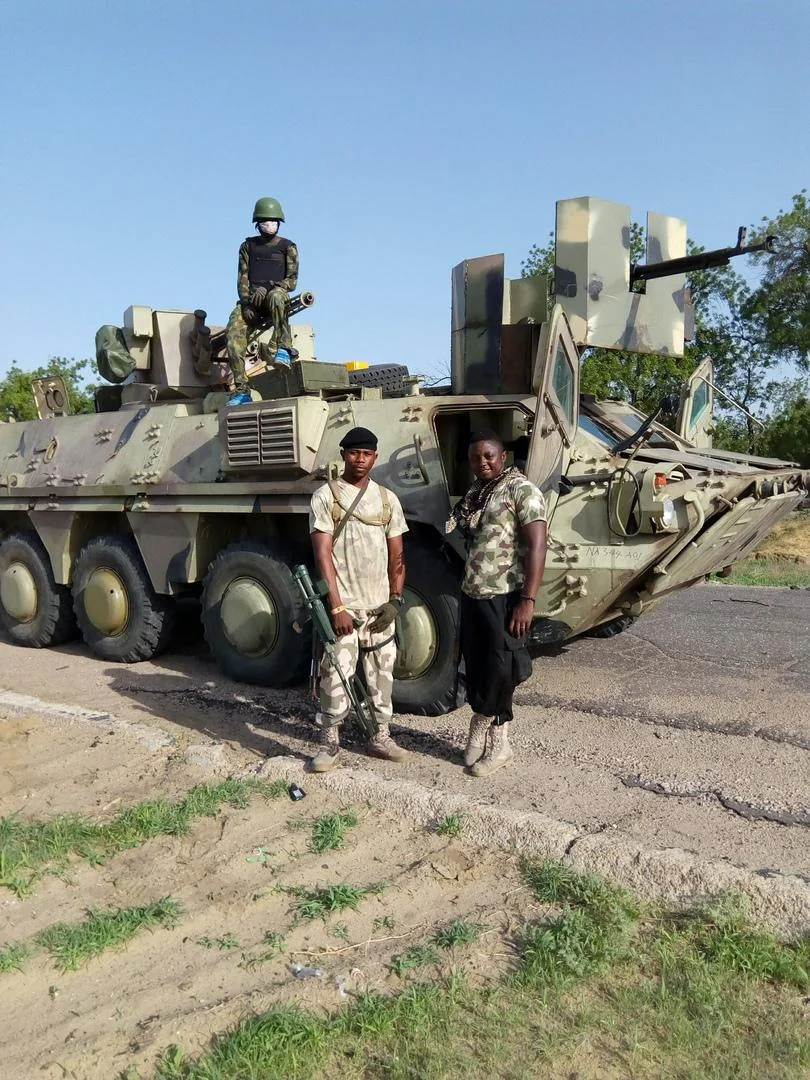
In reality, however, the "modification" involving the installation of the DShK and a protected gunner's position appeared quite some time ago, likely between 2016 and 2020. The practicality of this solution remains questionable, as it interferes with the combat module's ability to fire forward. There is also a risk of accidentally directing a burst from the main 30 mm cannon into this superstructure.
Moreover, judging by available imagery, this position does not appear to be traversable, meaning that fire can be conducted only forward within the limited arc of the DShK itself, which further reduces the practicality of this configuration.
By contrast, the additional shooter positions on the roof at the rear of the armored vehicle appear to be a more recent development, as they had not previously been observed in photos or videos.
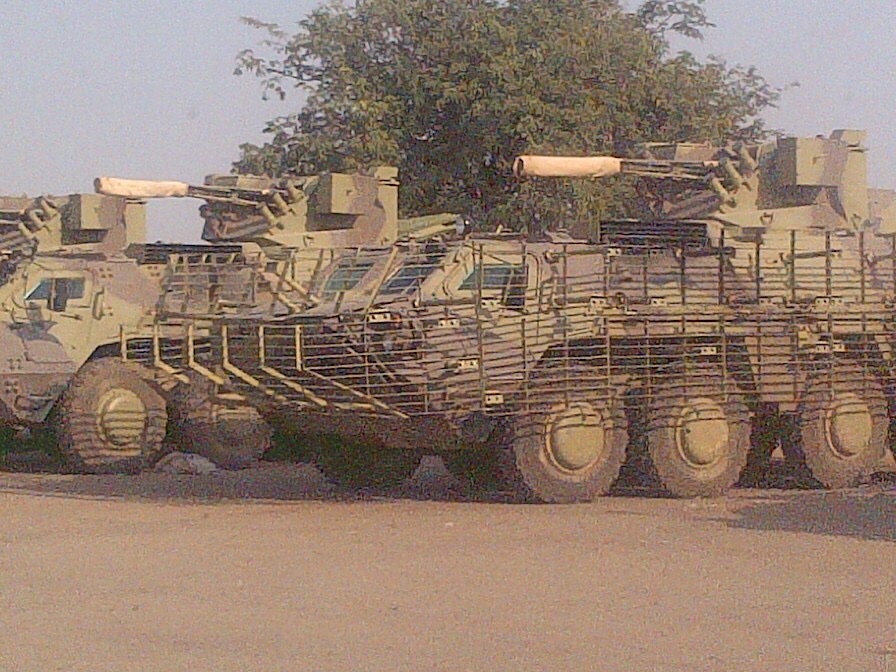
In Nigeria, Ukrainian armored vehicles are used by both the police and the army in combat operations against various radical Islamist groups, including ISWAP (Islamic State West Africa Province) and Boko Haram.
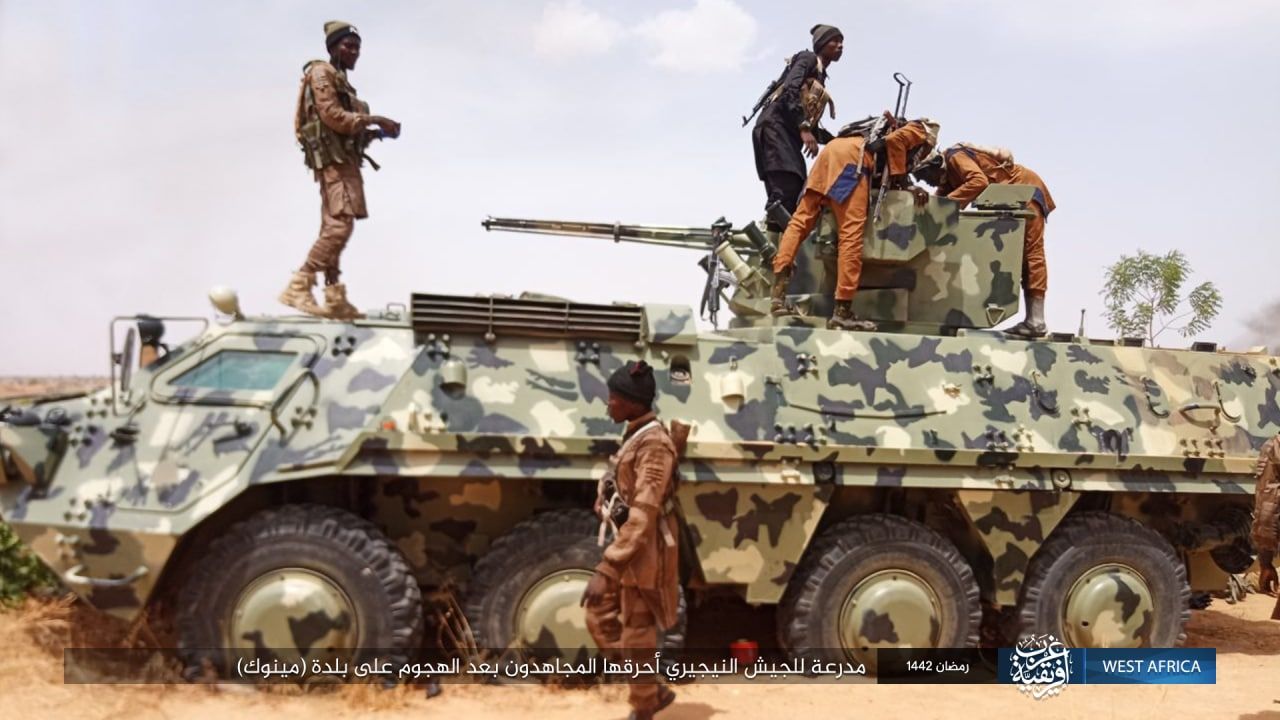
Overall, the BTR-4EN has been in Nigerian service for more than 11 years. During this period, at least one vehicle has been lost, having been captured by Islamic State militants in 2021.
When recalling the fate of the BTR-4 in Nigeria, it is also worth mentioning its service history in Indonesia, where the vehicle has also appeared recently and where some truly unique variants of the series can be found.
Read more: Ukrainian Soldiers Show a Rare BREM-4 Vehicle on BTR-4 Chassis (Photo)