


Against the backdrop of restricted access to Starlink, russian forces have been forced to rely on a range of alternative communication solutions already available in their inventory. These systems, from satellite links to radio relay stations, effectively form a substitute for the capabilities previously provided by Starlink.
At the same time, Ukraine's Defense Forces are gradually expanding their efforts to detect and destroy such assets, recognizing them as critical elements of the enemy's command-and-control architecture.
Read more: Ukrainian Drones Destroy russian Satellite Link to the Yamal-601 System (Video)
One of the most notable recent cases is the reported strike on a communication antenna configured to receive signal from the Yamal-601 satellite.
Until recently, there had been no confirmed evidence in open sources that russian forces were actively using this system in frontline conditions. At the same time, available data suggests that the satellite's coverage footprint includes temporarily occupied territories in southern Ukraine.
Yamal-601 was launched in 2019 as part of a five-satellite constellation funded by Gazprom. Formally, the system belongs to russia's gas monopoly, but its dual-use nature allows for potential military application.
The destruction of such ground terminals indicates that russian forces are integrating civilian satellite infrastructure into their battlefield communications.
Another category of targets increasingly appearing in strike reports is communication antennas.
Footage released by operators of the Raid 413th Separate Battalion shows multiple successful strikes against such systems. These antennas are likely used to deploy local communication networks and act as relay nodes, extending connectivity between units.
Their role becomes especially important in contested environments, where electronic warfare degrades direct communication channels.
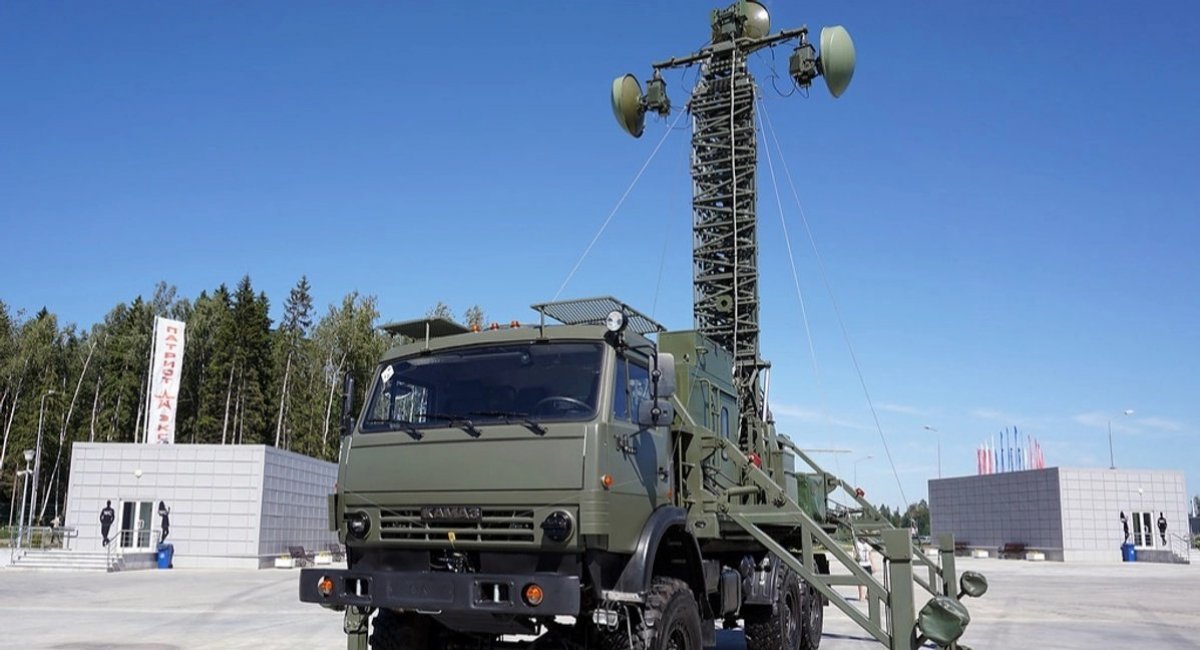
A separate case involves the detection and destruction of a rare R-416GM radio relay station by UAV operators from the Phoenix border guard unit.
This is only the second confirmed instance of such a system being destroyed during the full-scale war, with the previous case recorded in summer 2024.
The R-416GM is specifically designed to operate under conditions of active electronic countermeasures. Its declared characteristics include:
- Up to 40 km communication range per relay interval;
- Operation in decimeter and centimeter wavebands;
- Data transmission speeds of up to 155 Mbps.
Such systems enable stable, high-bandwidth communication links even in heavily contested electromagnetic environments, making them particularly valuable targets.
Although these examples do not represent the full spectrum of russian communication assets, they clearly illustrate an emerging pattern.
Russian forces are compensating for the loss of Starlink by employing a layered communication architecture that combines satellite links, radio relay stations, and field-deployed antennas.
In response, Ukrainian forces are systematically targeting these elements.
This approach aims to degrade the enemy's ability to coordinate operations, maintain situational awareness, and ensure effective command and control, ultimately turning communication infrastructure into one of the key vulnerabilities on the modern battlefield.
Ivan Kyrychevsky, serviceman of the Raid 413th Unmanned Systems Regiment, Defense Express expert.
Read more: Satellite Images of UAE Air Base Reveal Possible Heavy Losses After Iranian Attacks