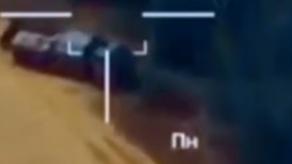



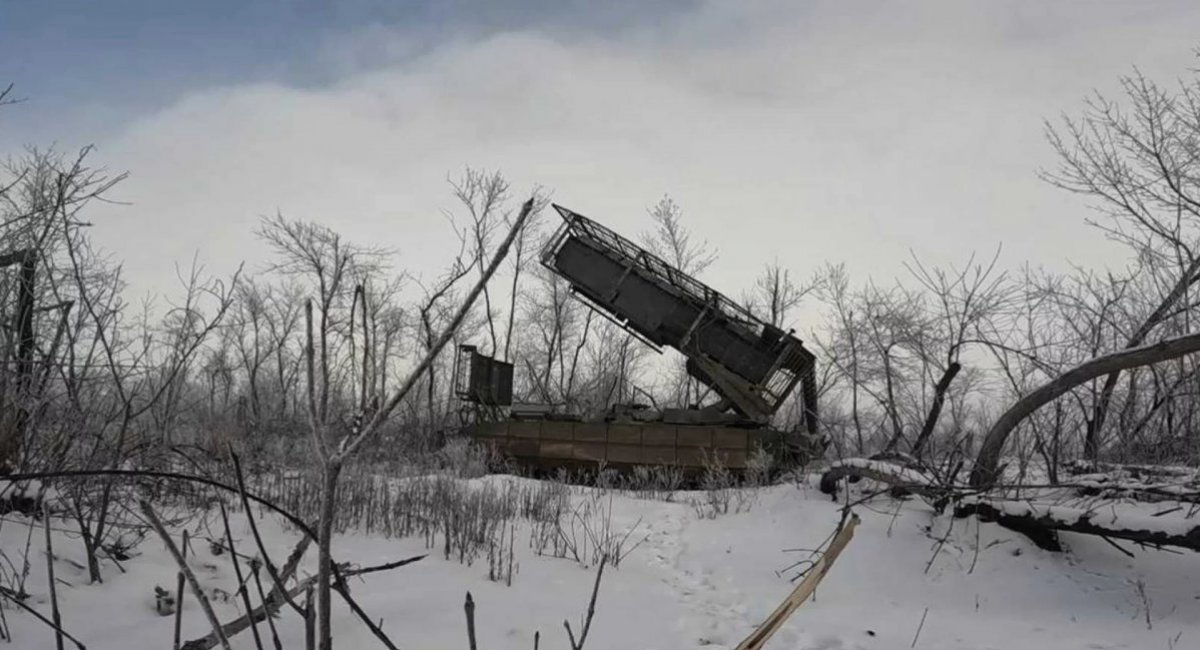
russia's Ministry of Defense released footage showing the system in action at the front, although it was incorrectly labeled in the video as the TOS-1A Solntsepyok. A closer examination of the vehicle confirms that it is in fact the newer TOS-3 variant, which incorporates substantial modifications.
The TOS-3 was first unveiled in 2024, already fitted with improvised anti-drone cage armor and the Volnorez electronic warfare system, whose effectiveness in combat has been widely questioned. Since its debut, only a limited number of confirmed instances of its operational use have been reported.
Read more: Ukrainian Drones Strike russian TOS-1A Solntsepyok System in Belgorod Region for the First Time (Video)
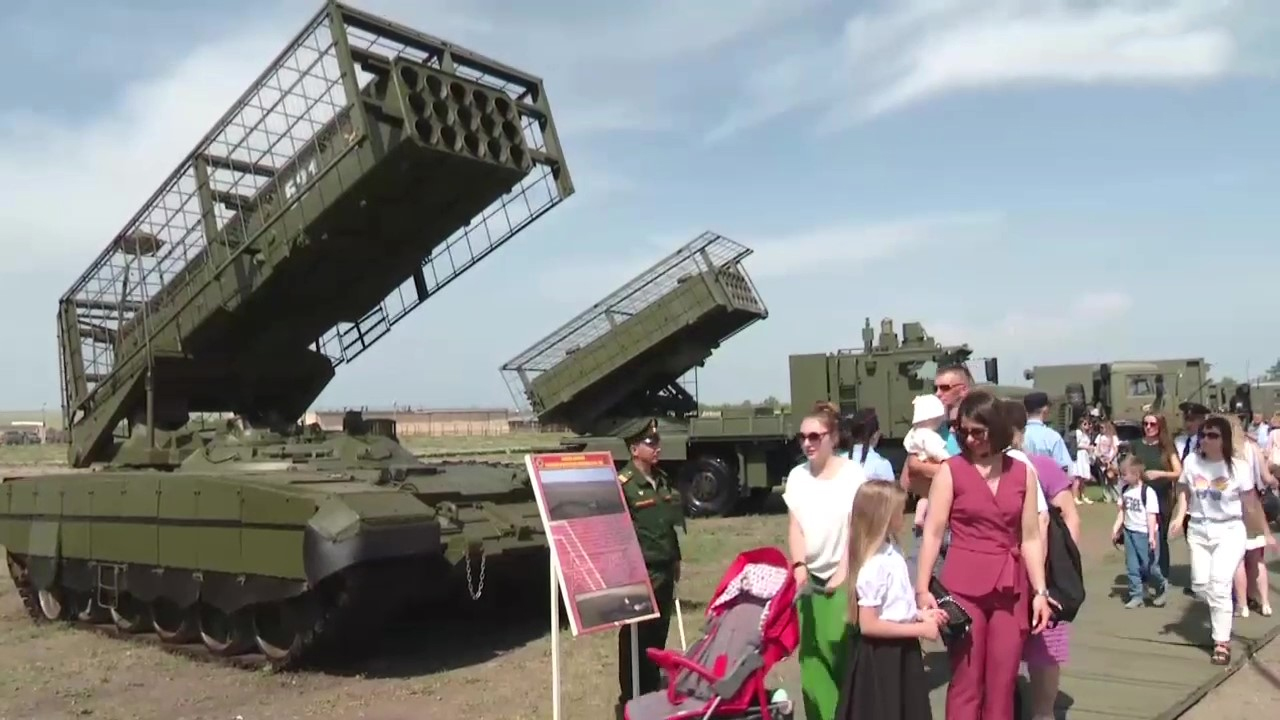
The most notable change is the installation of a redesigned launcher module, reducing the number of guide tubes from 24, as on the TOS-1A, to 15. However, the smaller rocket load is reportedly offset by the introduction of extended-range munitions.
With its new rockets and updated launcher, the TOS-3 addresses one of the most fundamental flaws of earlier variants, a limitation that had significantly reduced the system's battlefield viability. The TOS-1A has a maximum firing range of only about 6 kilometers and must operate in direct line of sight, using a laser rangefinder to determine distance before firing.
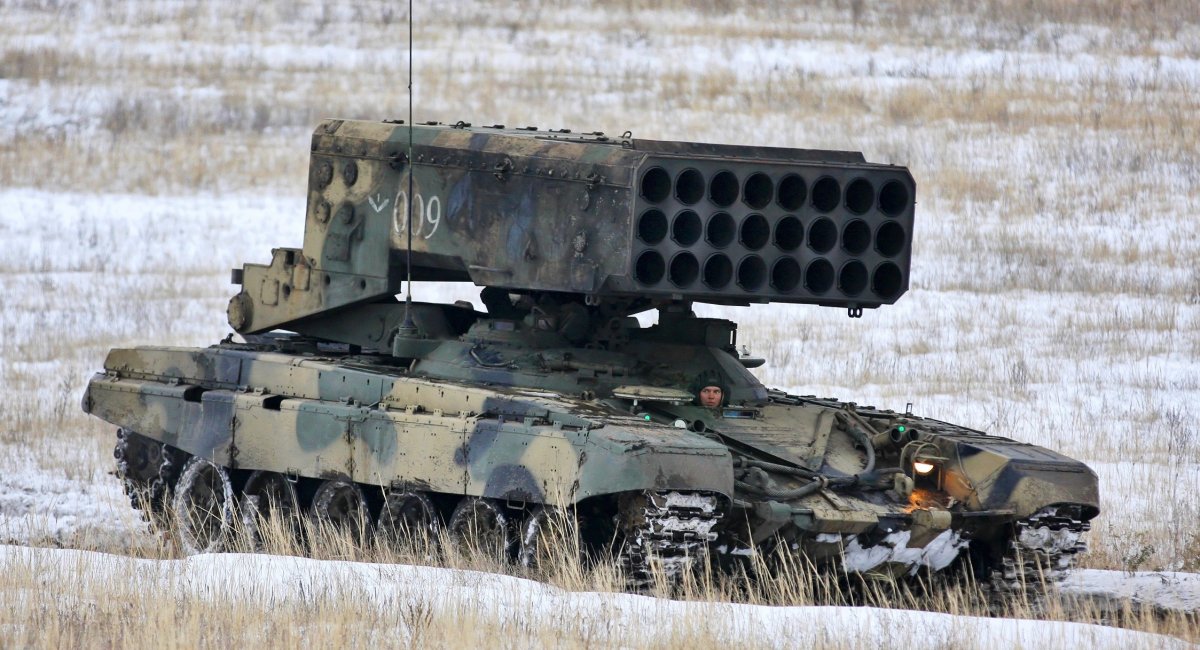
On today's battlefield, such tactics are increasingly untenable due to the proliferation of strike drones, which have created extended kill zones stretching several kilometers beyond the forward line. Systems forced to close within direct-fire range are highly exposed to drone strikes.
In an earlier effort to overcome this vulnerability and adapt the concept to modern warfare, russia developed the TOS-2 Tosochka. This variant offered a range of up to 15 kilometers and was intended for firing from concealed positions. Even so, it remained vulnerable to counter-battery fire and UAV attacks.
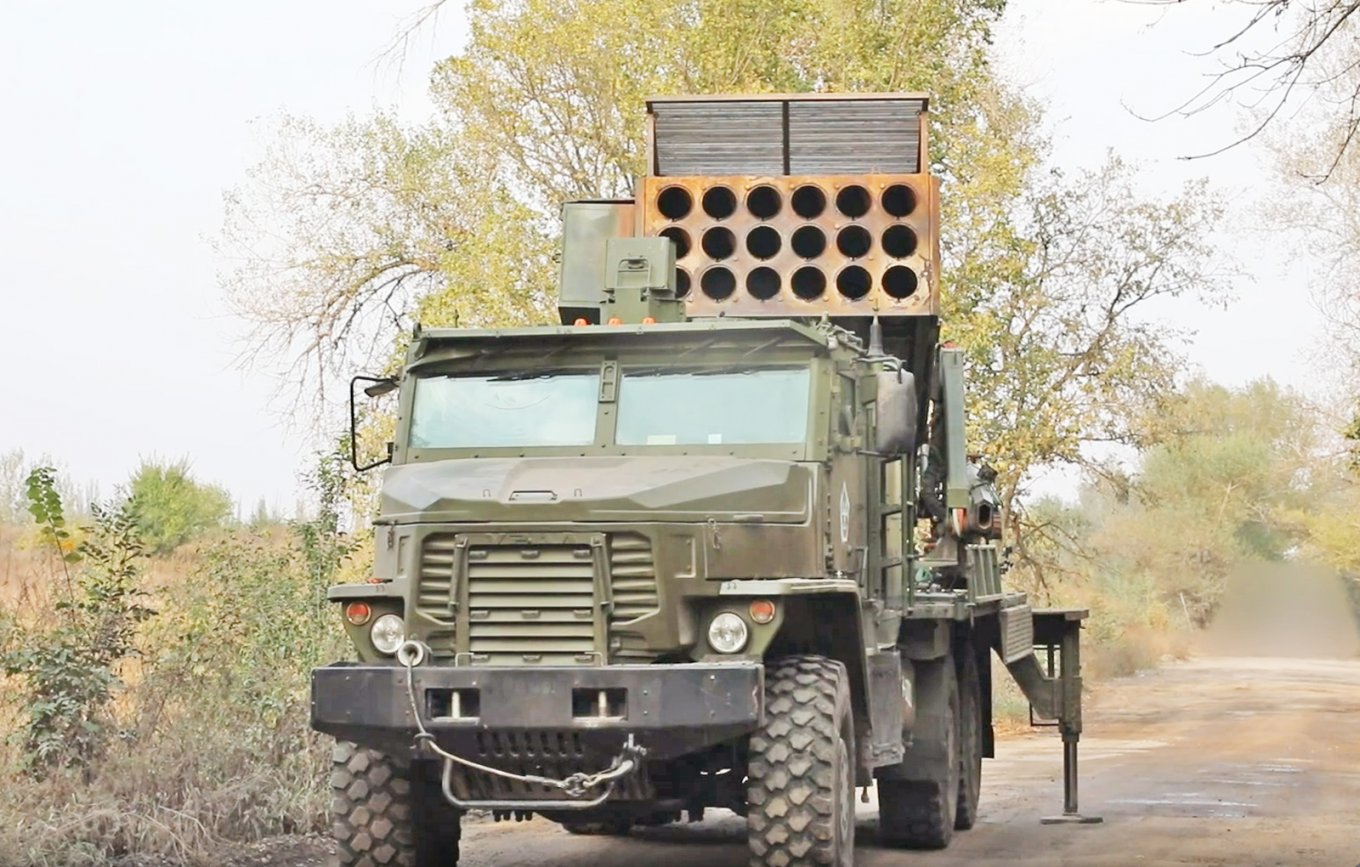
In addition, its wheeled chassis based on the Ural-63706 limited the level of armor protection that could be added. This likely led to the development of the TOS-3 Dragon, which is mounted on a tank chassis and reportedly capable of striking targets at ranges between 15 and 24 kilometers.
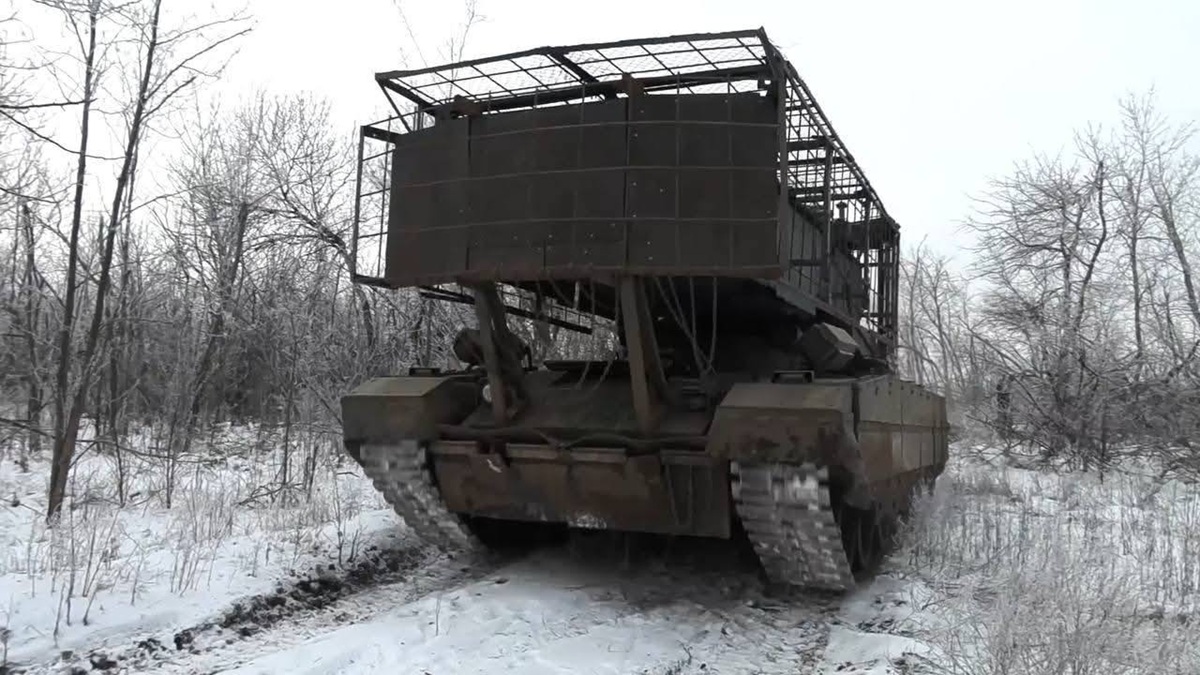
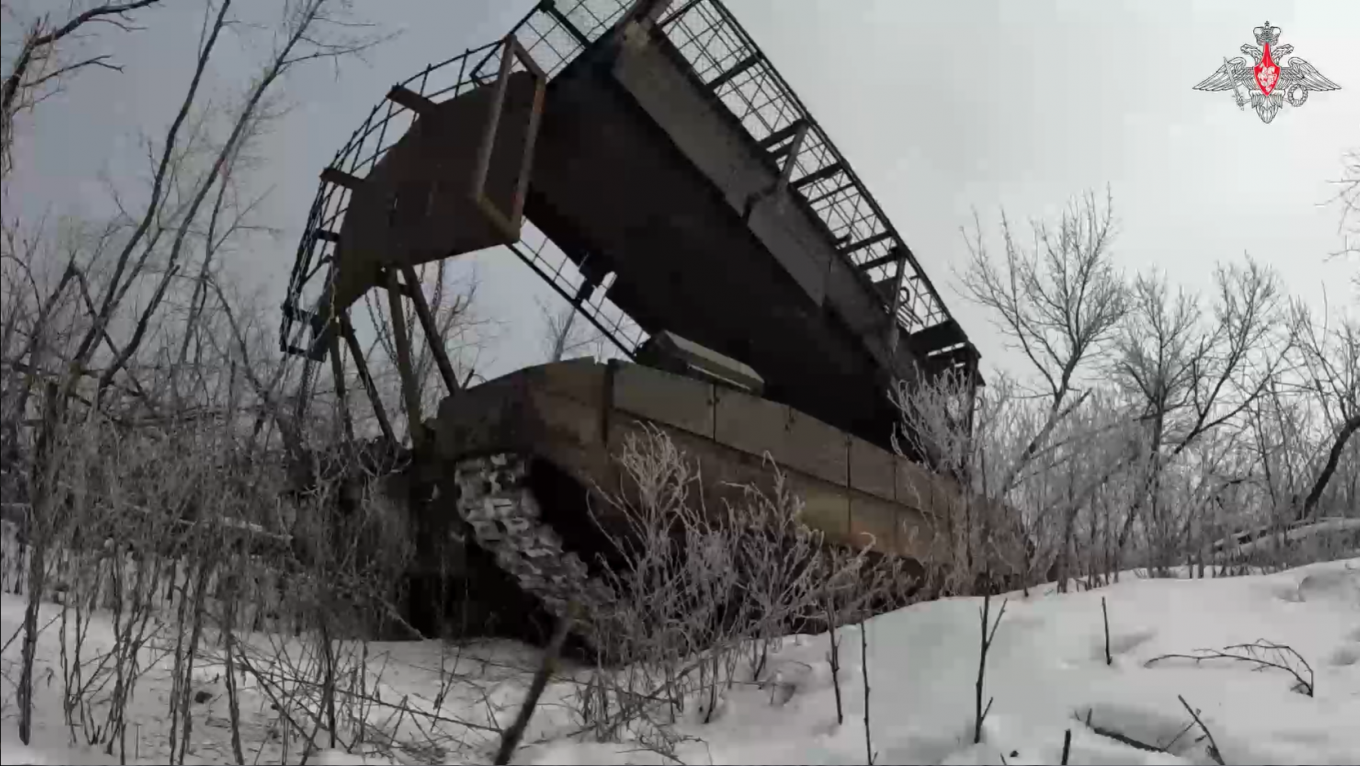
Compared to the standard Solntsepyok, the TOS-3 Dragon has received enhanced protection, including explosive reactive armor such as Kontakt-5, supplementing its existing frontal armor. Built on a chassis derived from the T-72, retaining its base armor, and equipped with additional anti-drone cages and electronic warfare systems, the TOS-3 appears better protected against both counter-battery fire and drone strikes.
Footage released by russian sources also shows further field modifications, including a double-layer mesh screen and a curved metal shield mounted at the front of the launcher to protect the rocket tubes while in transit.
Previously, in an attempt to compensate for the vulnerability of the TOS-1A, russian forces mounted two of its launcher tubes onto a ground robotic platform, creating what could be described as an unmanned mini-Solntsepyok. However, the practical effectiveness of that improvised solution remains highly questionable.
Read more: russians Reportedly Send Mini-Solntsepyok to the Front — What's Behind the Name