


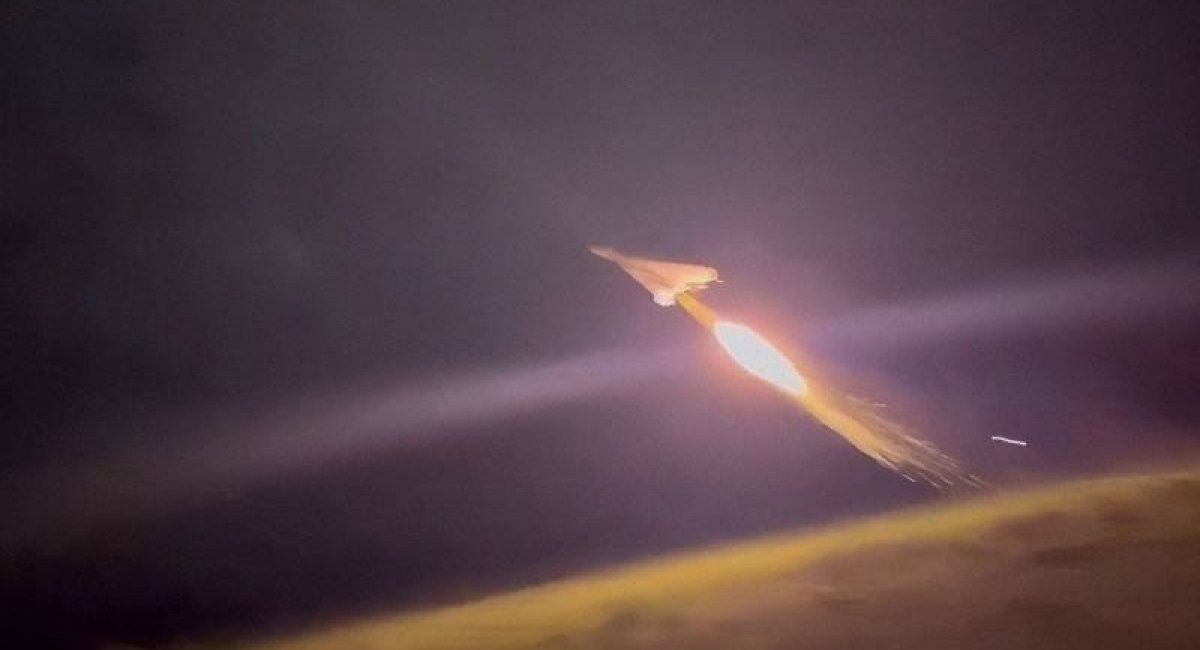
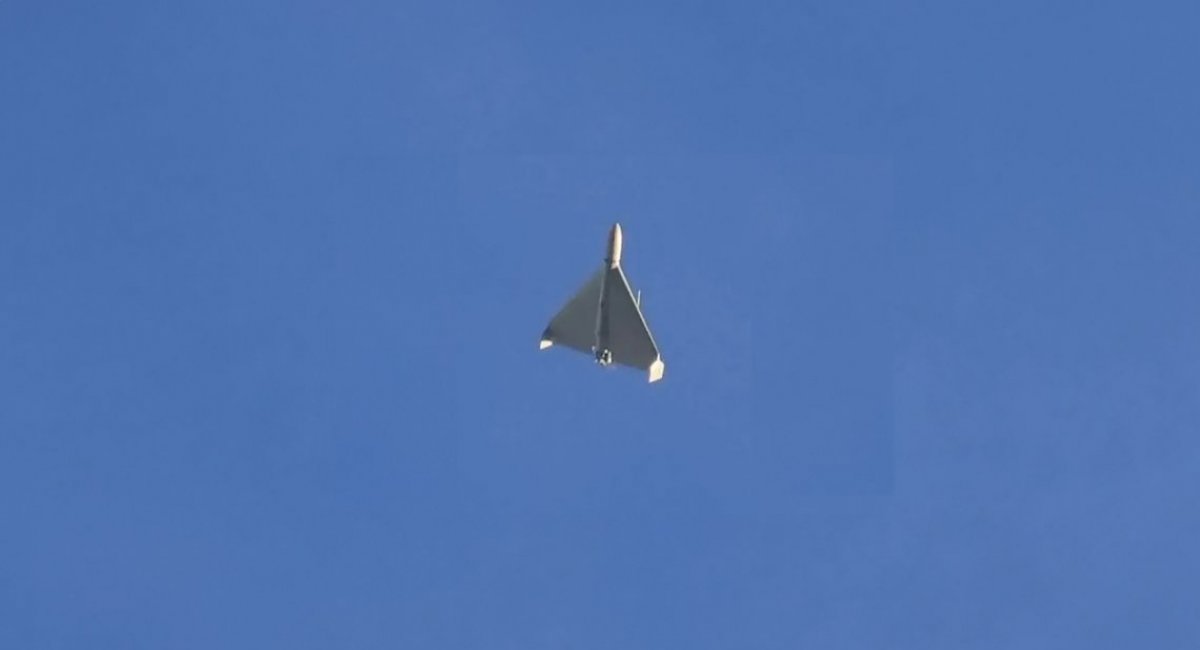
russian media report that the Far Eastern Branch of the russian Academy of Sciences is working on a new naval drone designed to launch UAVs at sea. Based on the available images, it appears to be intended for launching Shaheds or similar drones.
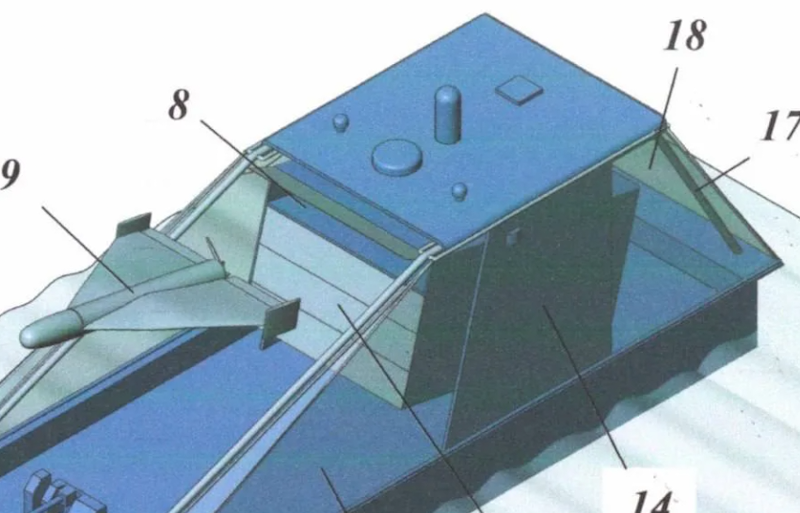
The visuals show a naval drone built as a platform topped with a frame and a small roof. All communication and navigation antennas, as well as cameras, are mounted on this roof. Directly beneath it is a box-shaped launcher containing four presumed Shahed drones.
Read more: U.S. Army Secretary Accuses Defense Giants of Deceiving Pentagon $47,000 Knobs and Billions on Failed Tanks
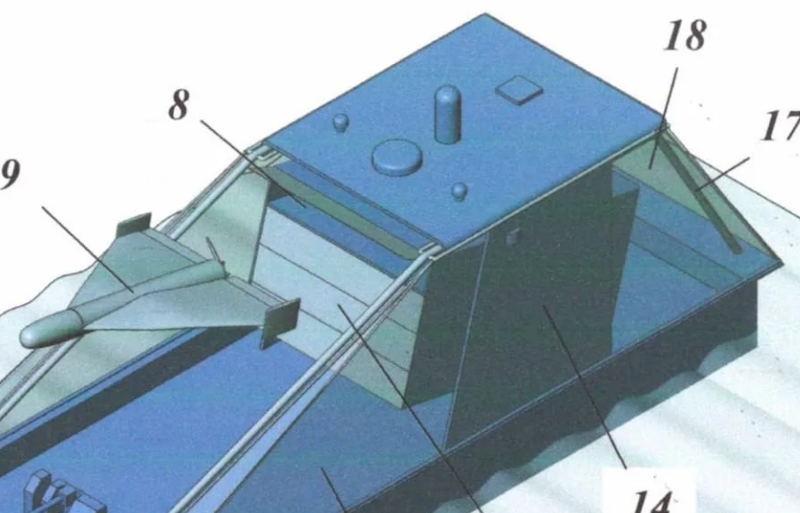
To protect the drones from the marine environment, each cell is sealed with a special lid designed to keep moisture out. Since the system lacks a catapult, each Shahed would require a solid-fuel booster for launch.
In addition to the Shahed launcher, the drone also carries a remotely operated turret armed with what is likely a 7.62 mm PKT machine gun. Notably, it is positioned directly in front of the launcher—exactly where the Shaheds would exit using a powerful booster.
This placement raises serious questions. The exhaust and debris from the booster could damage the turret's electronics, optics, or other components, making it unlikely to remain operational after even a single launch without repairs.
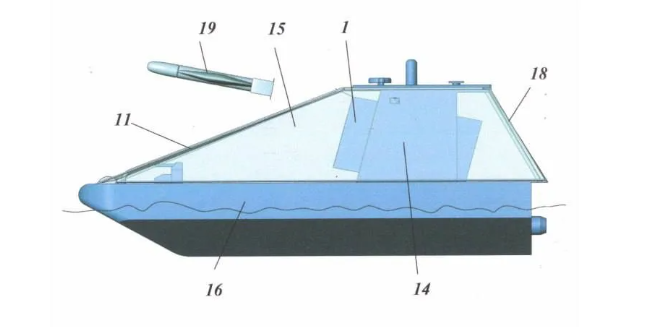
The drone's frame is also expected to be covered with a lightweight mesh claimed to absorb radio waves and reduce radar visibility by a factor of four. While this may sound like an "invisibility cloak," similar materials do exist. However, the effectiveness of russian-made variants is highly debatable.

Another question is whether this system has any real value if intended for use against Ukraine. The distance from the coast of occupied Crimea to Ukrainian-controlled shoreline is roughly 150 km — offering little meaningful advantage.
The concept does not become more convincing when considering strikes against NATO's European members. Given the Shahed's 1,800–2,500 km flight range, launches from russia or occupied Crimea are already sufficient to reach almost all of Europe.
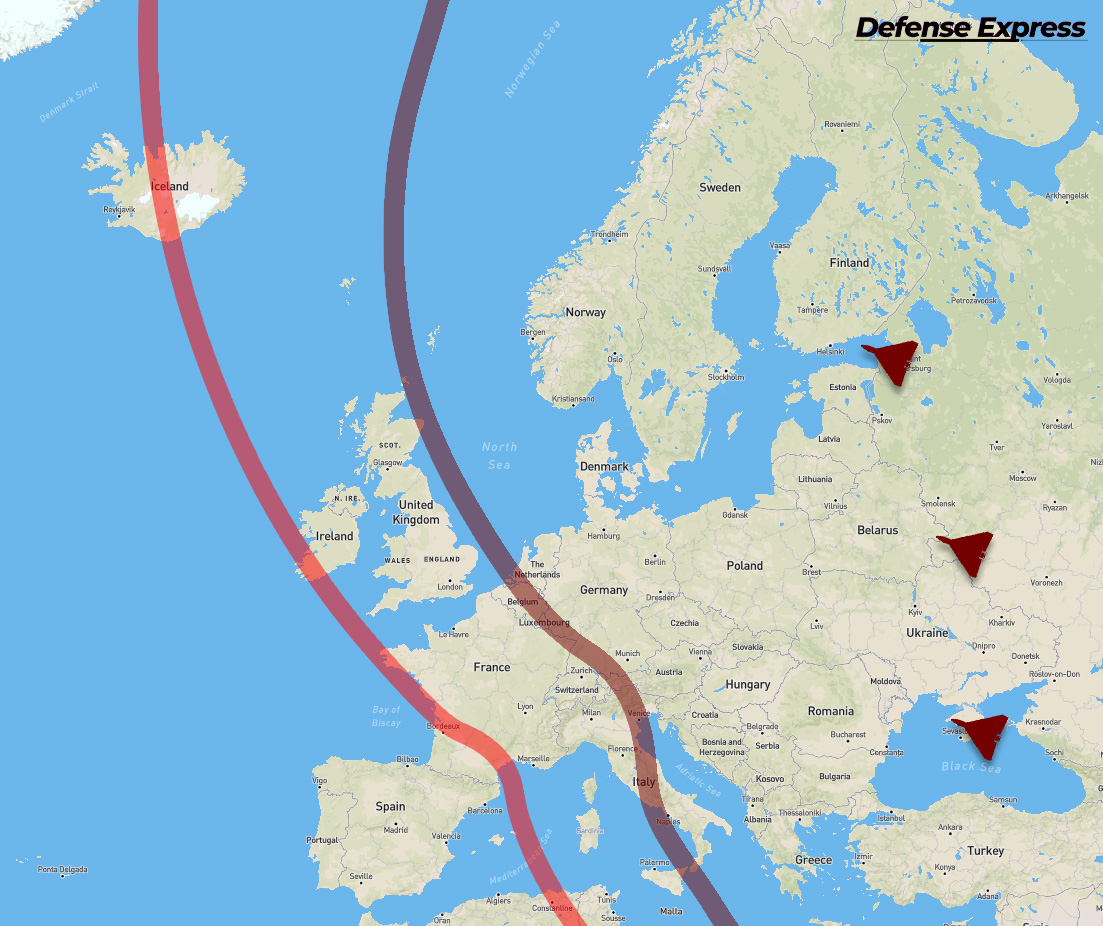
The practical strike range, after accounting for maneuvering, is lower. Furthermore, if Shahed drones are fitted with heavier warheads (over 90 kg instead of the standard 50), their range decreases, making a mobile maritime platform potentially more relevant.
Such a platform could also add an element of surprise, allowing the UAV to appear on radar only a few kilometers from the coast, limiting the response time available to air-defense systems.
However, the rationale for launching Shaheds from naval drones changes significantly when shifting the focus to other theaters—particularly those near the Far Eastern Branch of the russian Academy of Sciences: the Pacific and the United States.
In that context, the idea suddenly becomes more rational. The distance from Kamchatka to the coast of California, for example, exceeds 7,000 km via a complex route. To strike deep inside the U.S. using long-range drones, it would be logical for russia to consider deploying UAVs closer to launch range using unmanned maritime platforms.
Yet one critical limitation remains: russia lacks a reliable satellite communications network. As a result, it relies on radio control, which is easy to jam and detect and which restricts operational range to the distance of the control signal.
In conclusion, the new russian naval carrier for Shaheds makes little sense in a war against Ukraine—or even in the European theater. Its relevance appears only in the context of a hypothetical conflict with the United States.
Read more: After Europe Rejected E-7, Saab GlobalEye Looked Unstoppable Until L3Harris Decided to Compete