


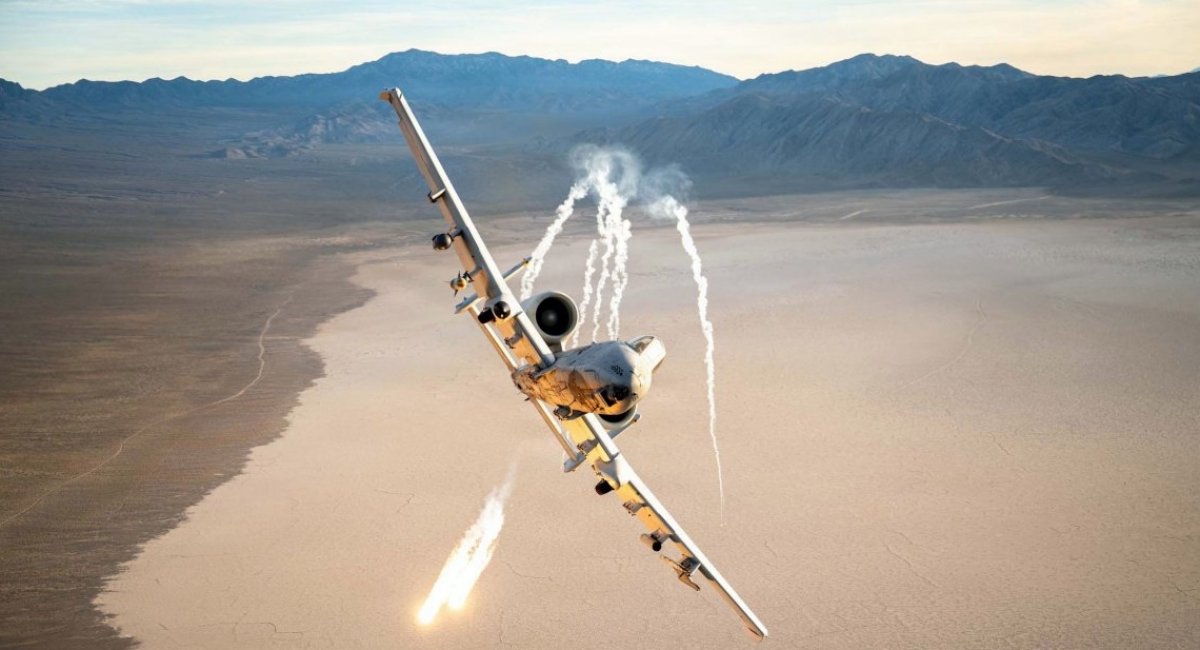
Month into the war against iran, the United States continues massing forces in the region and is deploying additional A-10 Thunderbolt II ground attack aircraft. At minimum, aircraft from the 124th and 127th National Guard Wings have been spotted on the move, completing transatlantic flights to the United Kingdom via aerial refueling.
Video has emerged of the aircraft landing at RAF Lakenheath in eastern England, which is serving as a transit hub en route to the Middle East. The arrival of 12 Thunderbolts proved a genuine event for the British spotting community, with enthusiasts crowding the perimeter fence beside the runway threshold.
Read more: Boeing, Rheinmetall Team Up to Adapt Ghost Bat for Germany by 2029, Valkyrie Already Ahead in Integration
These aircraft will soon join American forces deployed in proximity to iran, where they are being used, objectively, as a universal stopgap. The A-10 is currently serving the U.S. in several simultaneous roles.
First, A-10s have become Shahed hunters, employing APKWS rockets and AIM-9 missiles for the purpose. Second, they are being used to counter iranian maritime drones. Third, they are performing a counterinsurgency role — striking targets in Iraq, in permissive environments, with their 30mm GAU-8 Avenger cannon at a rate of 3,900 rounds per minute.
The aircraft is performing all of these missions so effectively that calls to halt the retirement program have grown louder than ever. Yet the Pentagon is already on the home stretch of ending the Thunderbolt's service life — earlier this year it deactivated the 571st Aircraft Maintenance Squadron, the sole unit capable of modifying and depot-level overhauling the type.
And yet the A-10 an aircraft the Pentagon first sought to retire in the 1980s has since repeatedly demonstrated its ability to carry a staggering workload. During Desert Storm, Thunderbolts were credited with destroying 900 tanks, 1,200 artillery pieces, and approximately 2,000 other military vehicles across 8,100 sorties, achieving a record mission-capable rate of 95.7%.
At the same time, the deployment of additional A-10s to the region is a clear indicator that the Pentagon has no plans for a swift end to the war against iran. And with preparations for a ground operation underway, the A-10 may once again step into its defining role: close air support for ground forces.
That level of intensive operation will, in all likelihood, finally exhaust the remaining airframe life of these aircraft. For the A-10, the war against Iran may well prove to be its last. And the United States still has no real replacement for it anywhere on the horizon.
Read more: Rheinmetall to Produce Up to 400 Skyranger and Skynex Systems Annually to Counter Shahed Drones in Ukraine and Europe