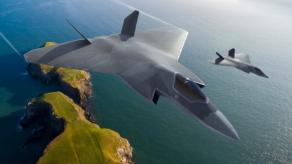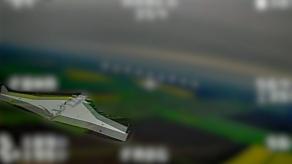



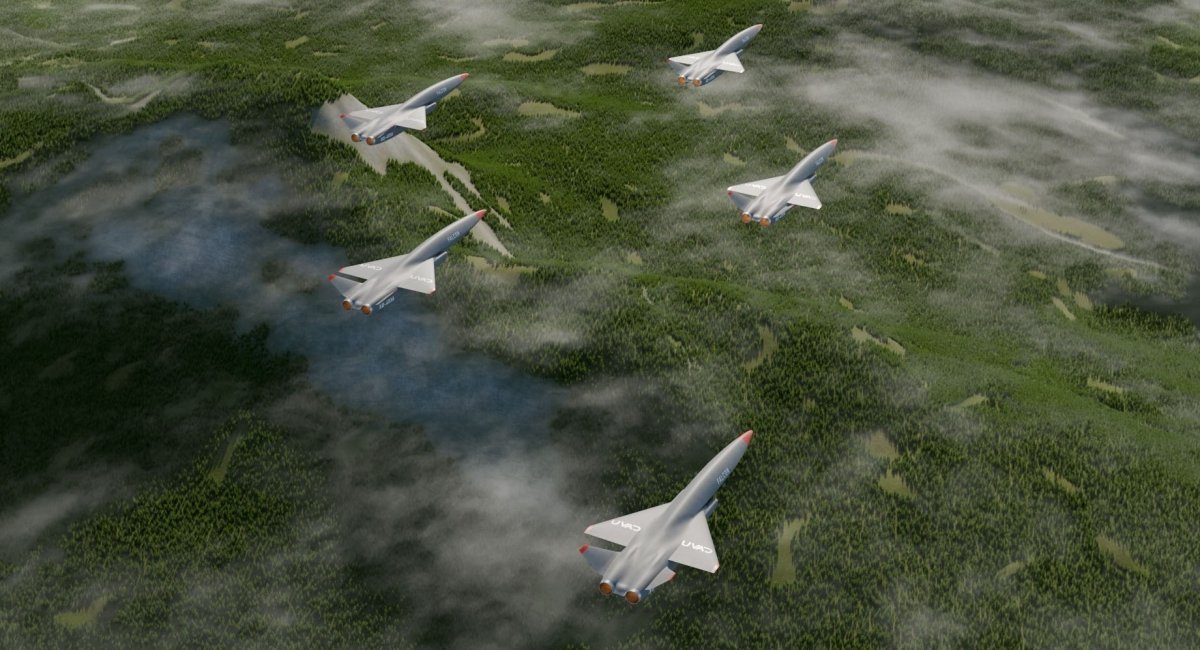
The jet-powered stealth drone is designed to reach speeds approaching 2,000 km/h, making it an extremely difficult target for both surface-to-air missile systems and fighter aircraft.
The Falcon UAV, developed by Canada's UVAD Technologies, is expected to conduct its maiden flight in 2027.
Read more: U.S. Forces in Europe to Deploy Ukrainian-Origin Stork UAVs for Reconnaissance Missions, Produced by Czech U&C UAS
The timeline was announced by the German company Eurobotics, which is responsible for promoting the system on the European market, contributing to its further development, and potentially organizing production in Europe, according to Janes. From Defense Express, it is worth noting that this platform could be of considerable interest to Ukraine.
Officially, Falcon is being developed as a target drone for training air defense crews and fighter pilots. However, the UAV could also be produced in combat configurations, including as a decoy platform or a strike drone. In addition, Falcon is being considered as a potential loyal wingman platform.

The drone's key feature is its maximum speed of Mach 1.6, or approximately 1,960 km/h. Combined with its compact dimensions, 5.8 meters in length and a wingspan of 2.2 meters, this already makes Falcon a highly challenging target. Its ability to penetrate air defenses is further enhanced by the use of stealth technologies.
Intercepting such a target could require the expenditure of multiple anti-aircraft missiles, meaning the UAV could itself serve as a "sponge" to exhaust enemy air defense systems. At the same time, if equipped with appropriate guidance systems, Falcon could also become a platform for suppressing or destroying enemy SAM systems.
The drone's maximum takeoff weight is up to 450 kg, while its payload capacity, including a potential warhead, is around 50 kg. This places it within a payload category already familiar in the UAV sector.
Another important aspect of Falcon's potential effectiveness is the developers' promise to keep the system relatively low-cost despite its high-speed performance and the use of two compact jet engines.
At the same time, another key parameter remains undisclosed: range. The developers have only stated that Falcon will have a flight endurance of up to 30 minutes. Assuming this figure is based on a typical cruise speed, likely around 900 km/h rather than maximum speed, the UAV’s practical range could reach approximately 450 km.
From the Defense Express side, we urge readers to join a fundraiser for a solution that is already proving effective: the One United Fundraiser, organized by the Serhiy Prytula Charity Foundation to support interceptor drones.

Read more: Ukraine's Hornet UAVs Targeting Crimea Corridor Could Fly Farther, Longer With Balloon Deployment