


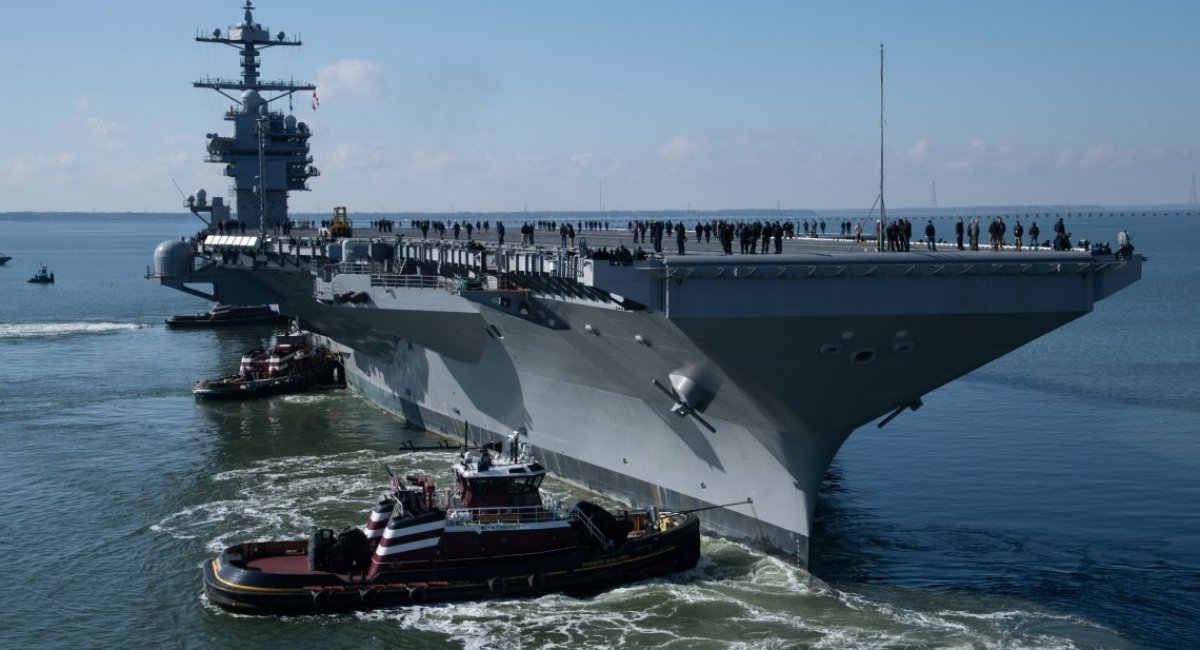
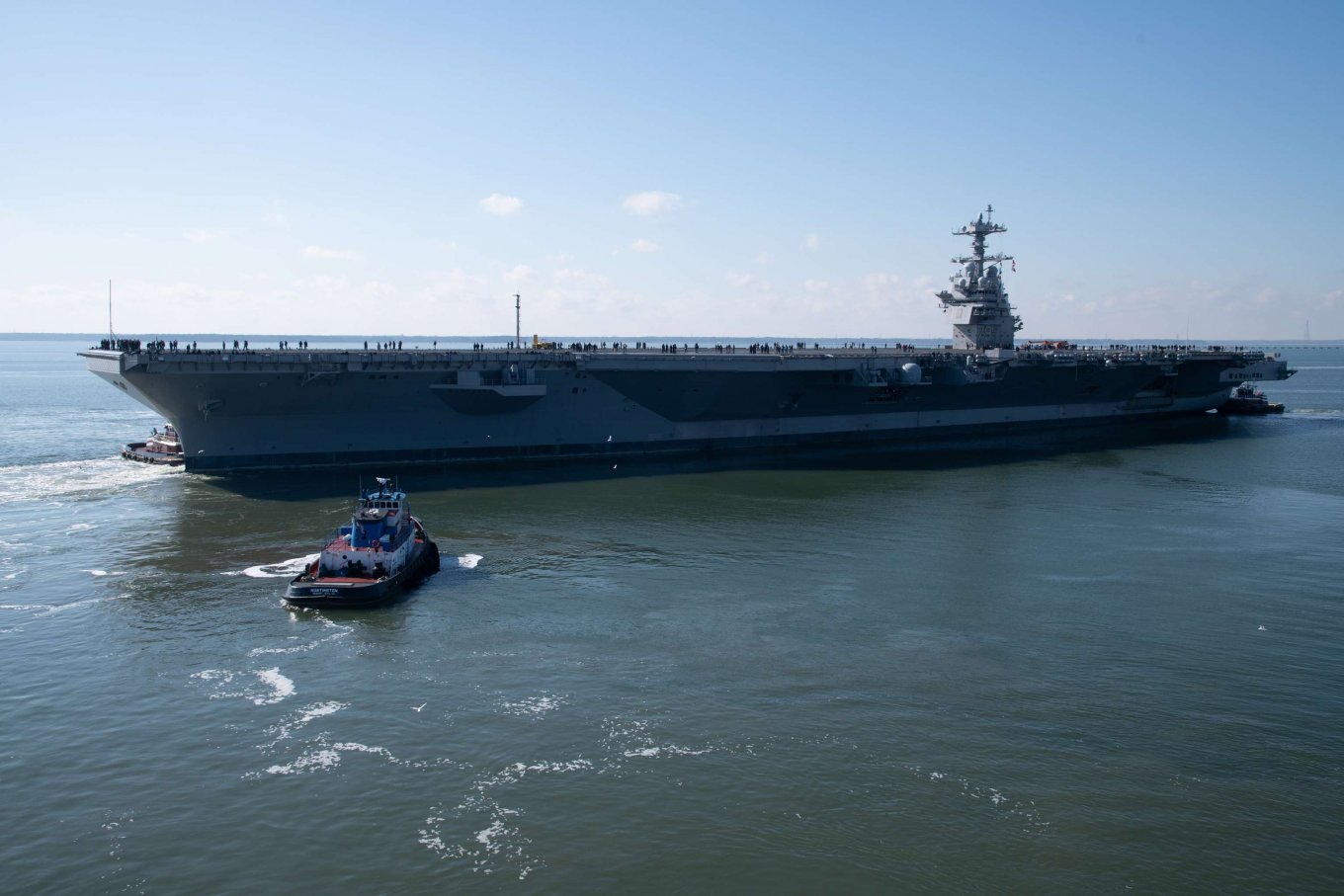
American nuclear aircraft carrier USS John F. Kennedy set to receive CVN-79 designation upon commissioning departed for first sea trials. This is a significant moment considering the ship was laid down in 2015, launched in 2019, and overall construction budget exceeded $13 billion.
Currently these are factory trials conducted by shipyard Huntington Ingalls Industries (HII), which announced reaching this important milestone.
Read more: As Europe Outpaces the U.S. in Artillery Shell Production, the U.S. Taps South Korea's Hanwha to Close the Gap
Ahead for the ship is verification of all main ship systems and preparing the carrier for delivery to customer U.S. Naval Forces. But ship commissioning should occur no earlier than March 2027. Over more than one year, if everything goes according to plan, USS John F. Kennedy will undergo various trials and refinements.
Despite USS John F. Kennedy being the second Gerald R. Ford-class carrier, it has differences from the class's first ship and will receive full functionality built into the design.
Particularly, this carrier should receive new Raytheon AN/SPY-6(V)3 Enterprise Air Surveillance Radar (EASR) instead of AN/SPY-3 and AN/SPY-4 pair like on USS Gerald R. Ford (CVN 78).
Also immediately operate F-35Cs, as the class’s first representative still carries F/A-18E/Fs despite being the newest carrier in U.S. Navy composition and equipped with newest electromagnetic catapult.
The class's second representative should also receive new aircraft arresting system and weapons elevators, whose certification should occur precisely on USS John F. Kennedy.
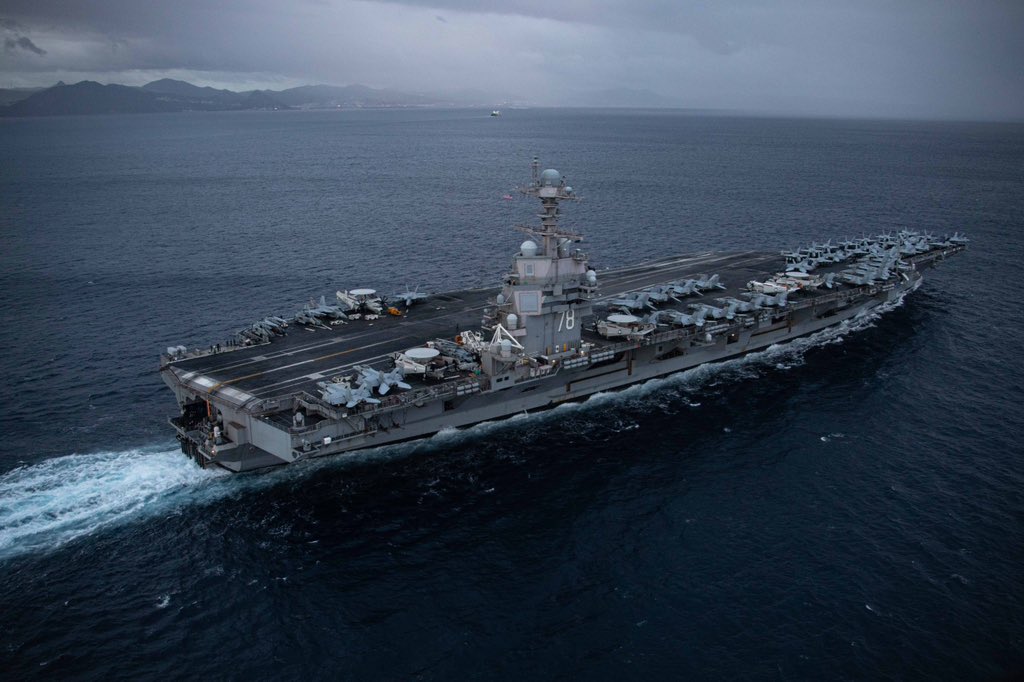
And if USS Gerald R. Ford will only subsequently receive these capabilities, USS John F. Kennedy will have them immediately which is connected to the two-year ship delivery delay. Because according to previous plan, carrier commissioning should have occurred in July 2025 under conditions of subsequent refinement, but later U.S. Congress decided to receive full functionality immediately.
In everything else, the Ford-class carriers' second representative is identical to the first. It has analogous length of 337 meters and displacement over 100,000 tons. Ship power plant two A1B reactors with estimated power of 700 MW.
Air wing size designed for 80-90 aircraft. Overall, six USS Gerald R. Ford-class carriers are planned for construction.
Read more: Romania Reopens IRIS-T Negotiations After Prior Selection of Israeli SPYDER SAM