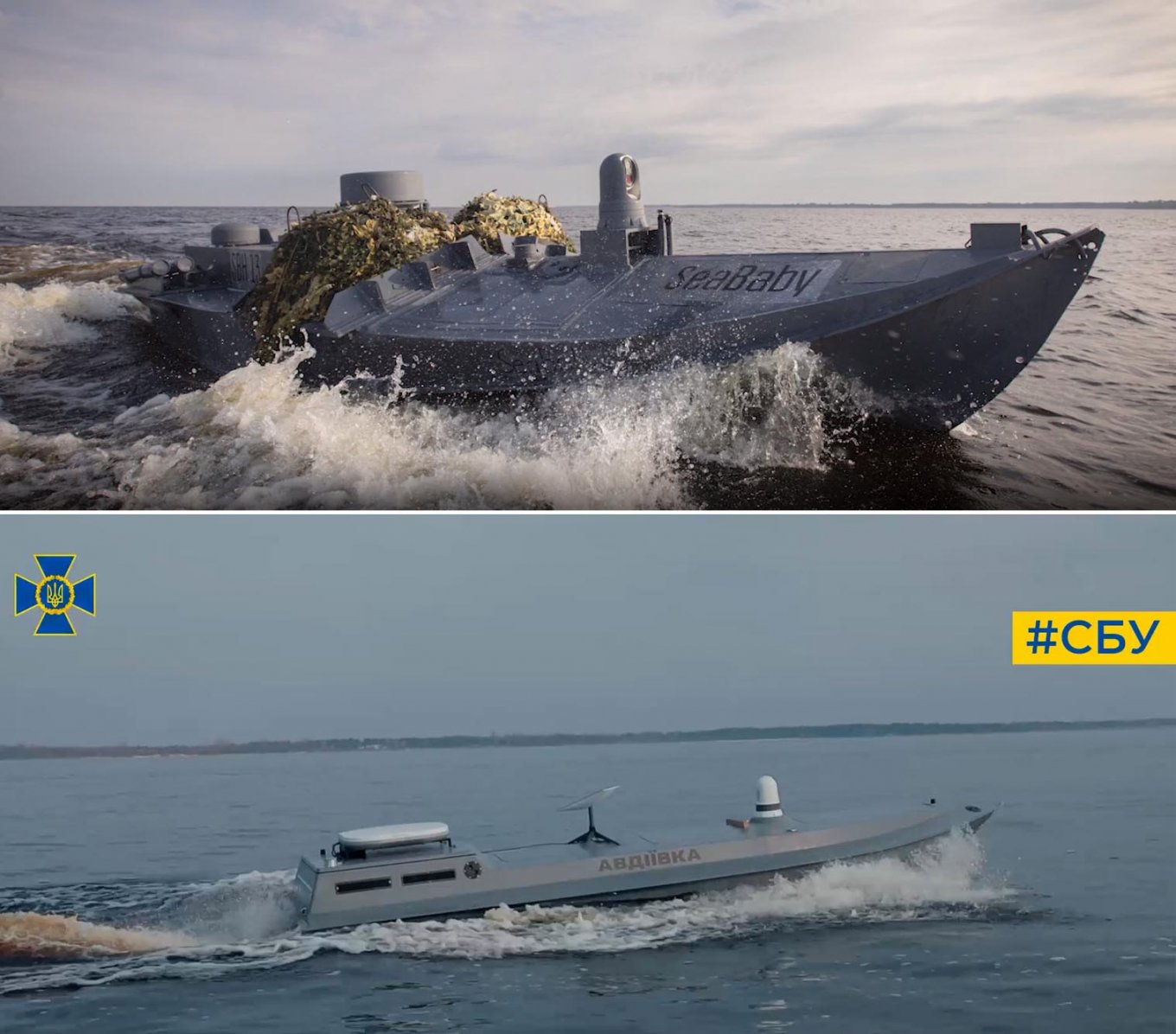
The Security Service of Ukraine has unveiled a new generation of the Sea Baby maritime drones that have already been used in combat missions. According to Brigadier General Ivan Lukashevych, these upgraded drones were responsible for delivering equipment and explosives used in the third strike on the Crimean Bridge on June 3, 2025б a mission that was carried out in an unusual manner.
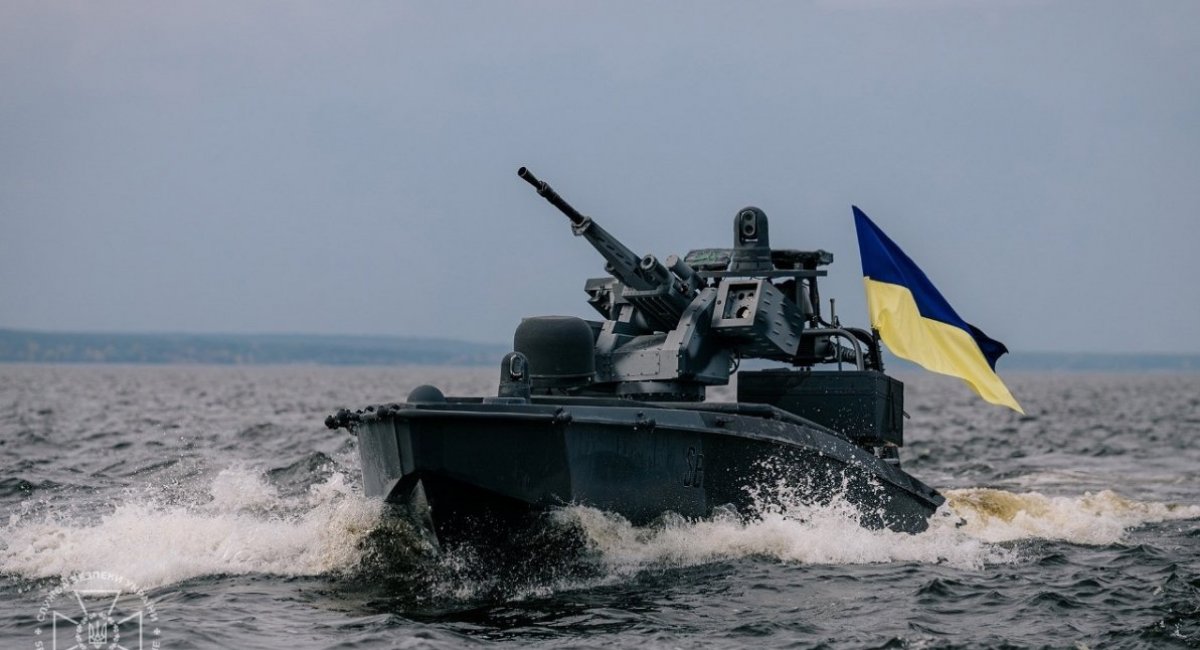
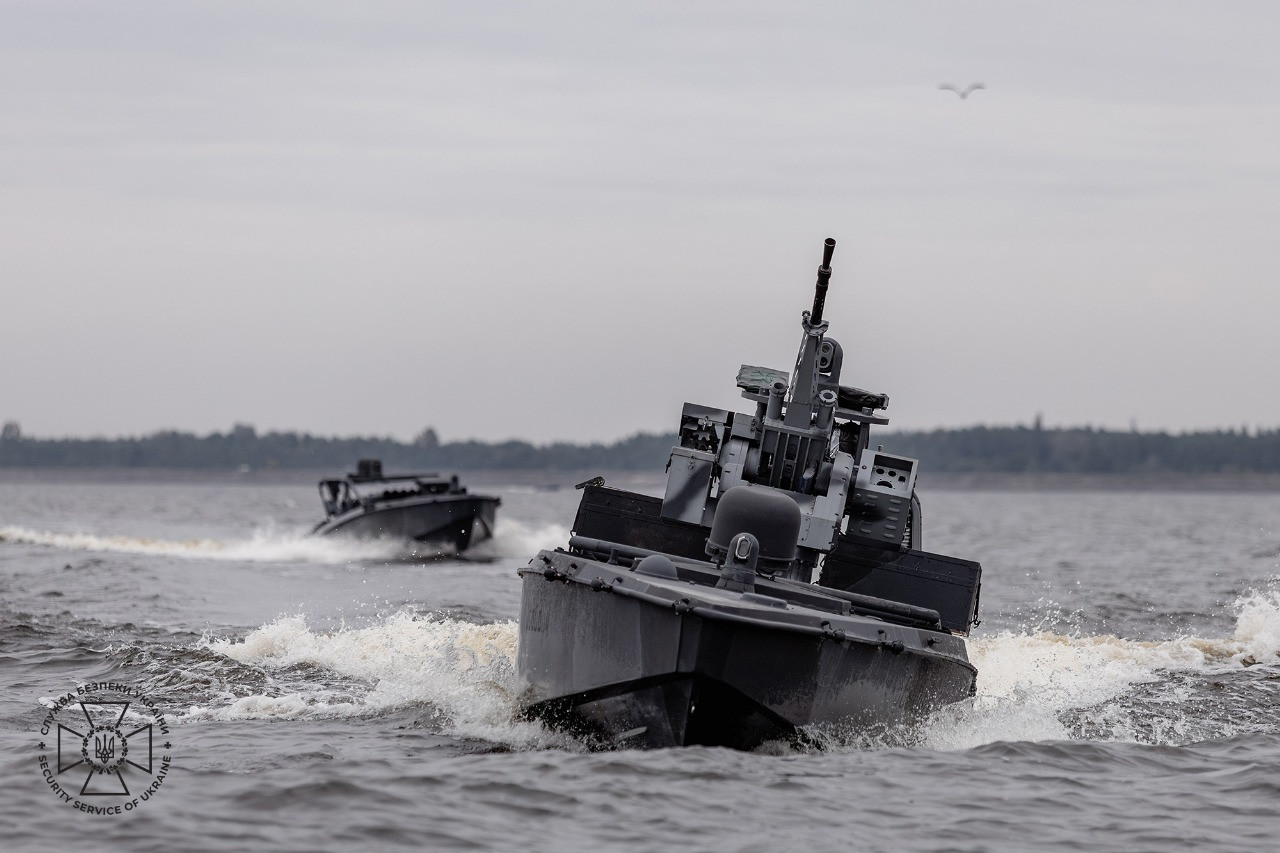
Two types of next-generation Sea Baby drones were presented, each reportedly equipped with a 900-kg warhead for kamikaze missions or for self-destruction if recovery is impossible. The drones can travel up to 1,500 kilometers and carry a payload of up to two tonnes. The first version is armed with a stabilized Tavria 14.5 combat module featuring a 14.5 mm KPVT heavy machine gun and a 200-round ammunition supply. Its electro-optical module allows target detection at distances of up to five kilometers, both day and night.
Read more: Inside Ukraine's Barracuda Fleet: 9 Sea Drones Packing FPVs, Rockets, 1-Ton Warheads
In addition to the machine gun, the new Sea Baby appears to carry two FPV drones, as indicated by the presence of two containers located behind the Tavria 14.5 module. A camera and antennas for communication and navigation are installed on the upper structure at the rear, while the front section houses what is likely a small radar or a satellite communication terminal. Ivan Lukashevych also noted that Vasyl Malyuk, Head of Ukraine's Security Service, initiated the idea of creating fighter sea drones a year ago, specialized for destroying russian unmanned vessels.
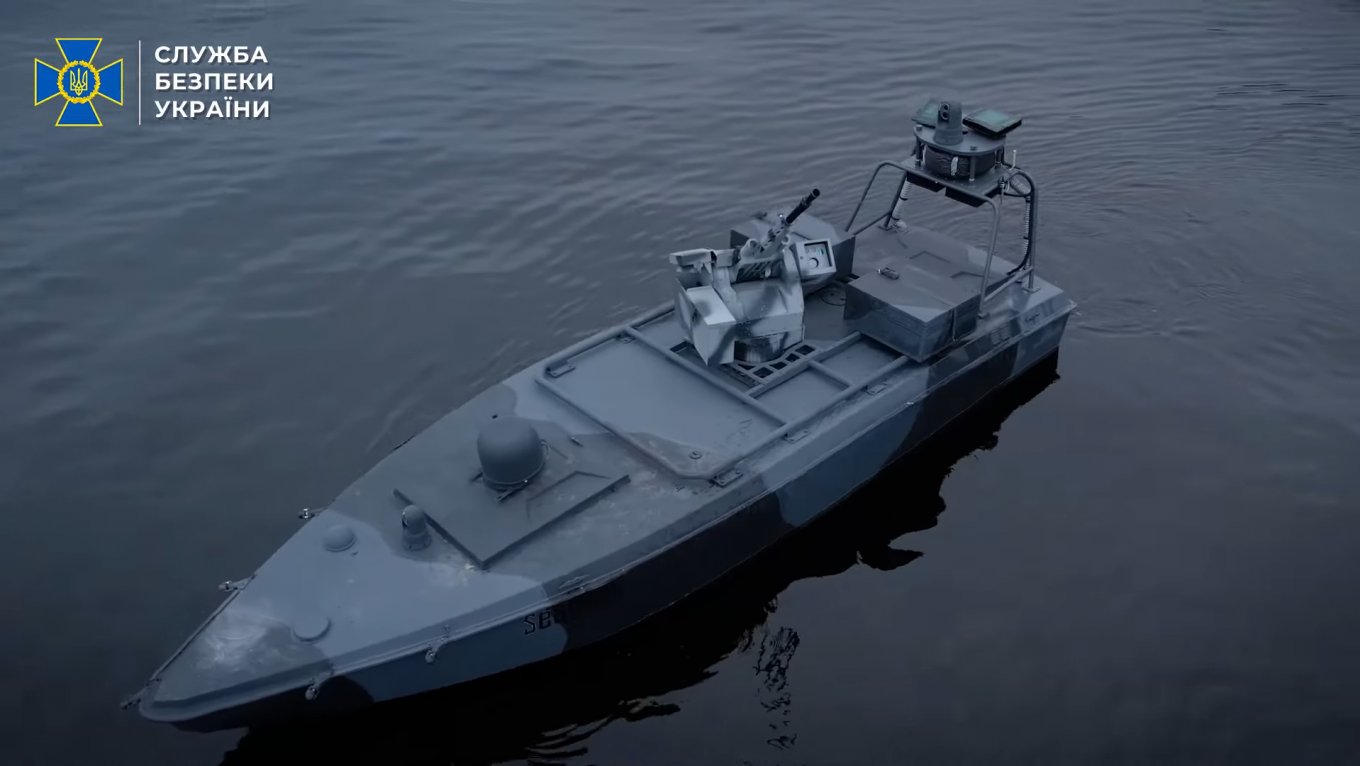
This new Sea Baby model seems to have been developed precisely for that purpose. Its mounted weapon is capable of hitting enemy drones at distances over one kilometer, while the FPV drones it carries can also be used effectively to destroy such targets.
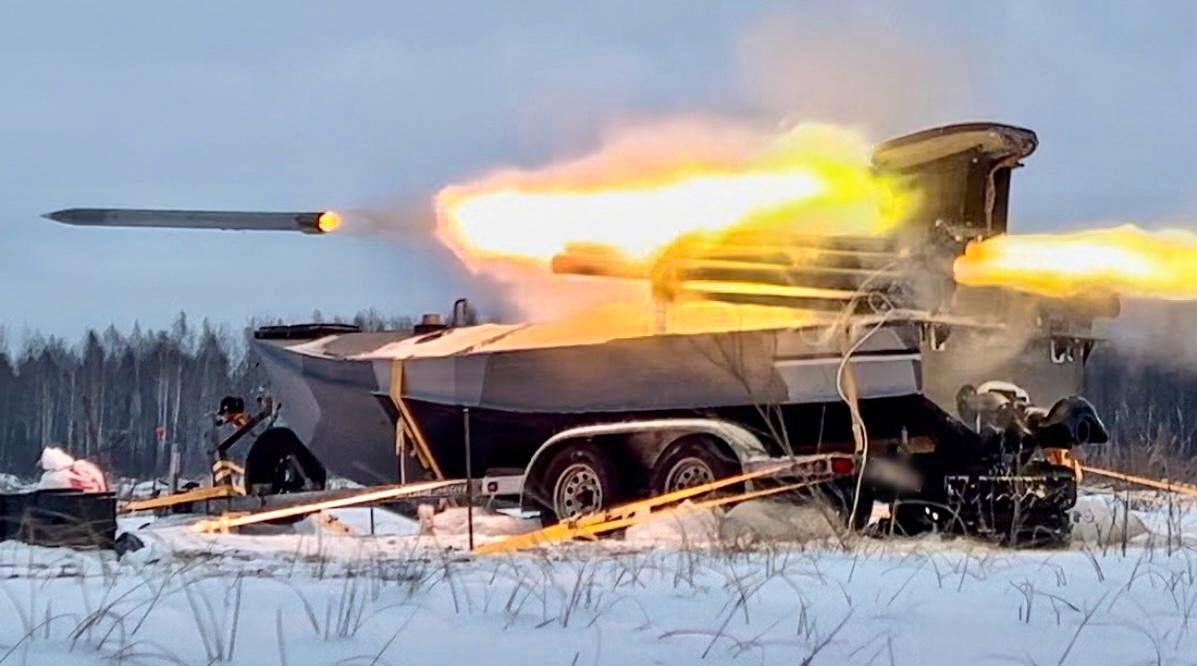
The second version of the new Sea Baby drone is even more distinctive: it features ten launch tubes taken from the Grad multiple rocket launcher system, which can be raised and lowered for aiming. However, these are likely intended for direct fire within visual range, as the Grad rockets are not accurate enough for indirect fire from an unstable sea platform.
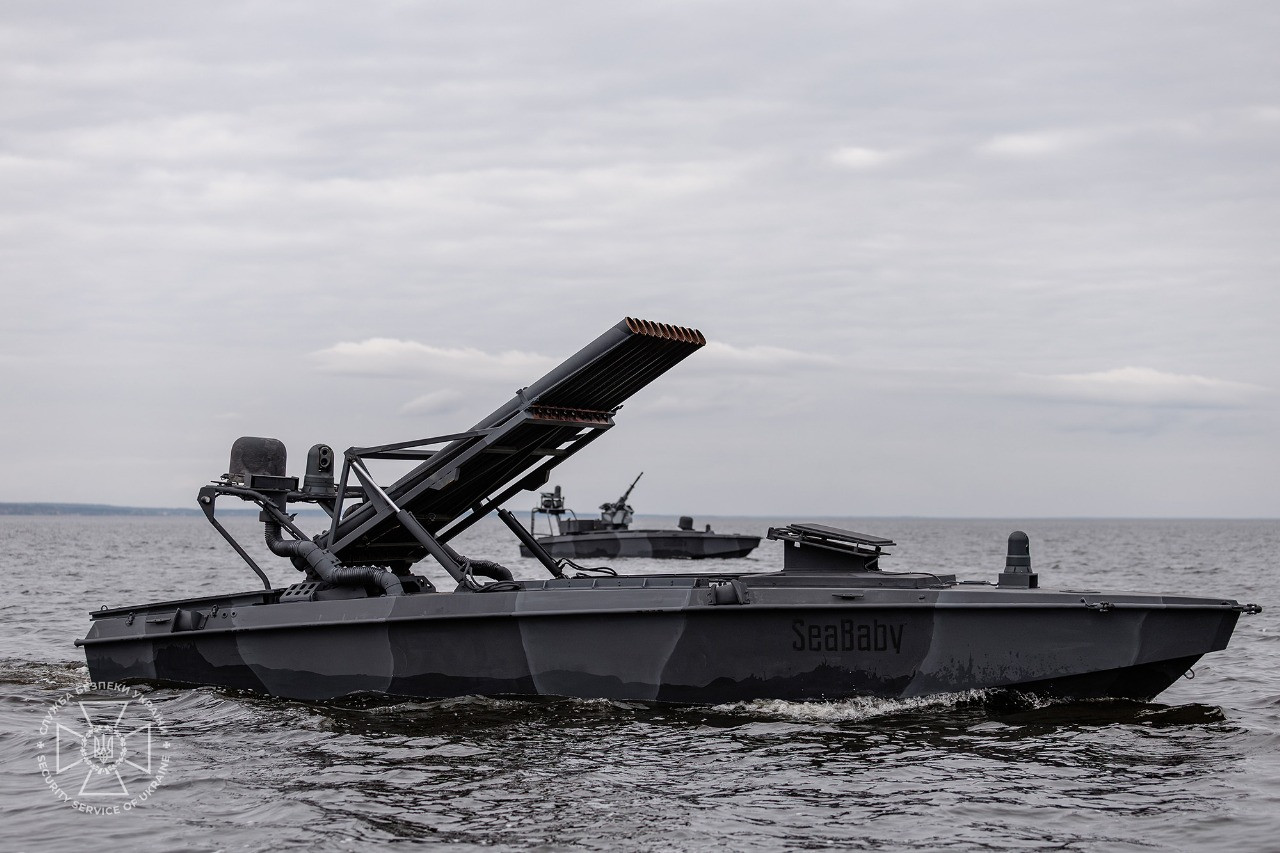
The idea of installing the Grad launchers on the Sea Baby drones is not entirely new, it appeared on earlier versions, but the new generation has refined this concept. This version also has a different layout and superstructure compared to the gun-equipped model, likely to prevent damage during rocket launches. Both variants share the same hull design, which appears largely unchanged, and their weapon systems are mounted on detachable frames bolted to the main body.
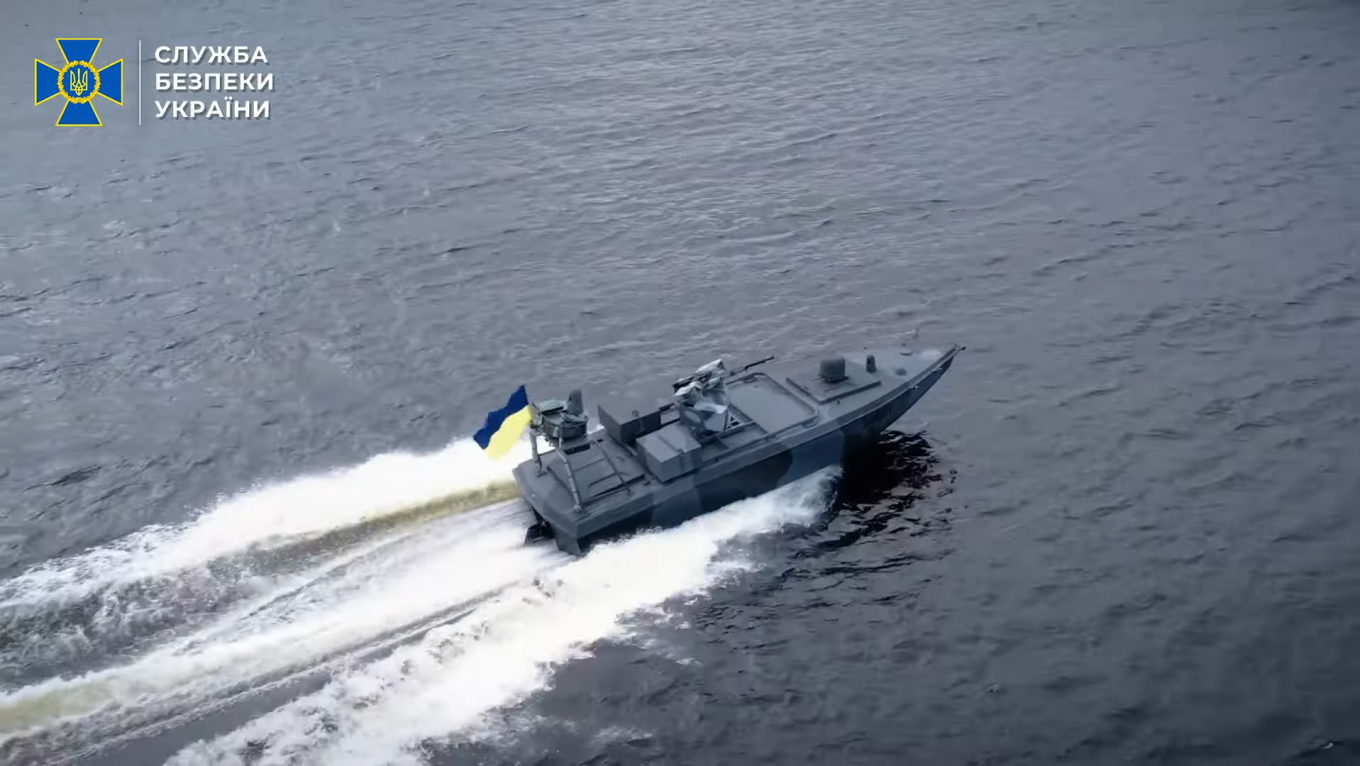
This modular approach suggests that the new Sea Baby design serves as a universal platform: depending on the mission, different weapon modules can be quickly installed or replaced with minimal effort. Such flexibility significantly shortens preparation time and simplifies upgrades, allowing new systems to be integrated more efficiently. Previously, for instance, the machine gun had to be mounted directly on the hull, requiring more complex structural modifications.
Overall, Ukraine's naval drone industry continues to evolve rapidly, keeping the country among the global leaders in this field. Recently, Ukraine also introduced nine new types of the Barracuda sea drones, ranging from anti-tank missile carriers to kamikaze models with one-ton warheads, further highlighting the pace of innovation driving the nation's unmanned maritime capabilities.
Read more: Ukraine's Security Service Struck the Yak-52 Aircraft Whose Location and Details Were Inadvertently Exposed by russian Media