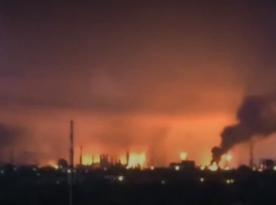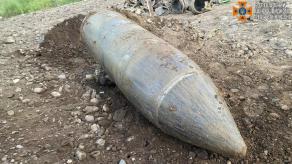



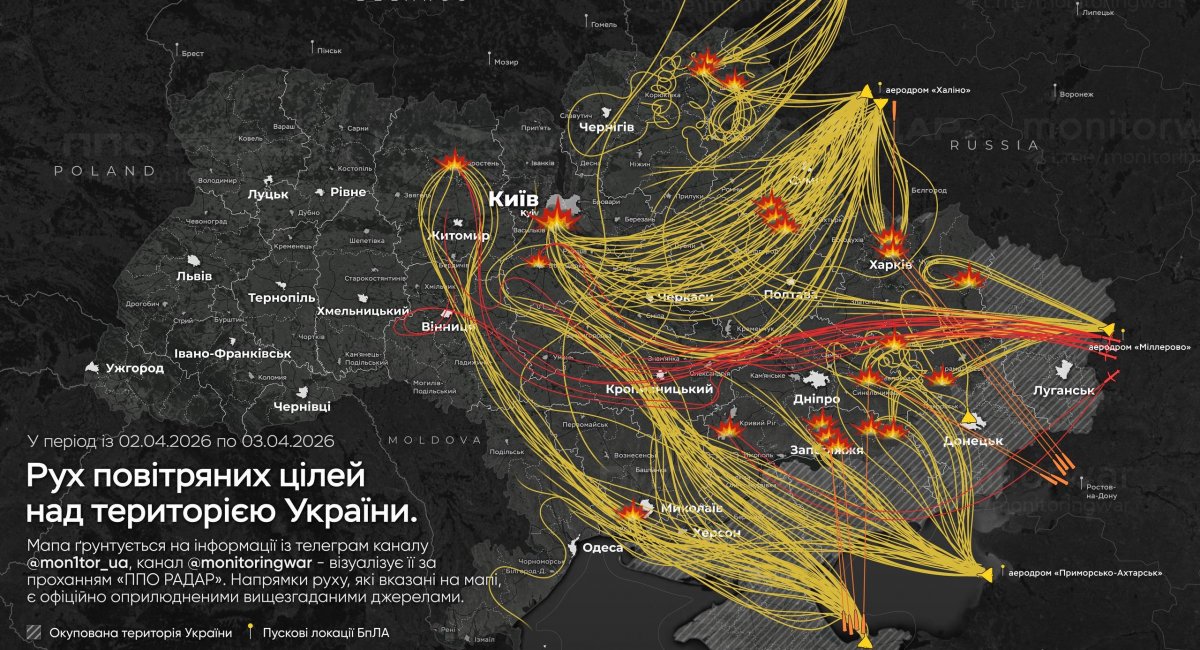
russia launched one of its largest combined aerial assaults in recent months overnight into April 3, targeting Ukraine's critical infrastructure with a mix of ballistic and cruise missiles alongside hundreds of drones. The scale of the attack underscores Moscow's continued reliance on saturation strikes to overwhelm Ukrainian air defenses.
According to the Ukrainian Air Force, a total of 579 aerial threats were detected between the evening of April 2 and early April 3. The strike package included 10 Iskander-M ballistic missiles launched from russia's Kursk and Rostov regions, as well as 25 Kh-101 cruise missiles fired from aircraft over Samara region.
Read more: Ukrainian Forces Hit Strela Plant Producing Cruise Missile Components in russia, Drone Control Centers
In addition, russian forces launched two Iskander-K cruise missiles and a massive wave of 542 unmanned aerial vehicles. These included Iranian-designed Shahed-136 drones, along with decoy and auxiliary UAV types such as Gerbera and Italmas, launched from multiple directions including Bryansk, Kursk, Oryol, and temporarily occupied Crimea.
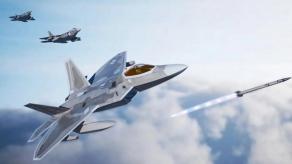
Ukrainian air defenses responded with a layered effort involving fighter aviation, surface-to-air missile units, electronic warfare systems, drone units, and mobile fire groups. This multi-tiered defense structure continues to play a crucial role in countering complex, multi-vector attacks of this scale.
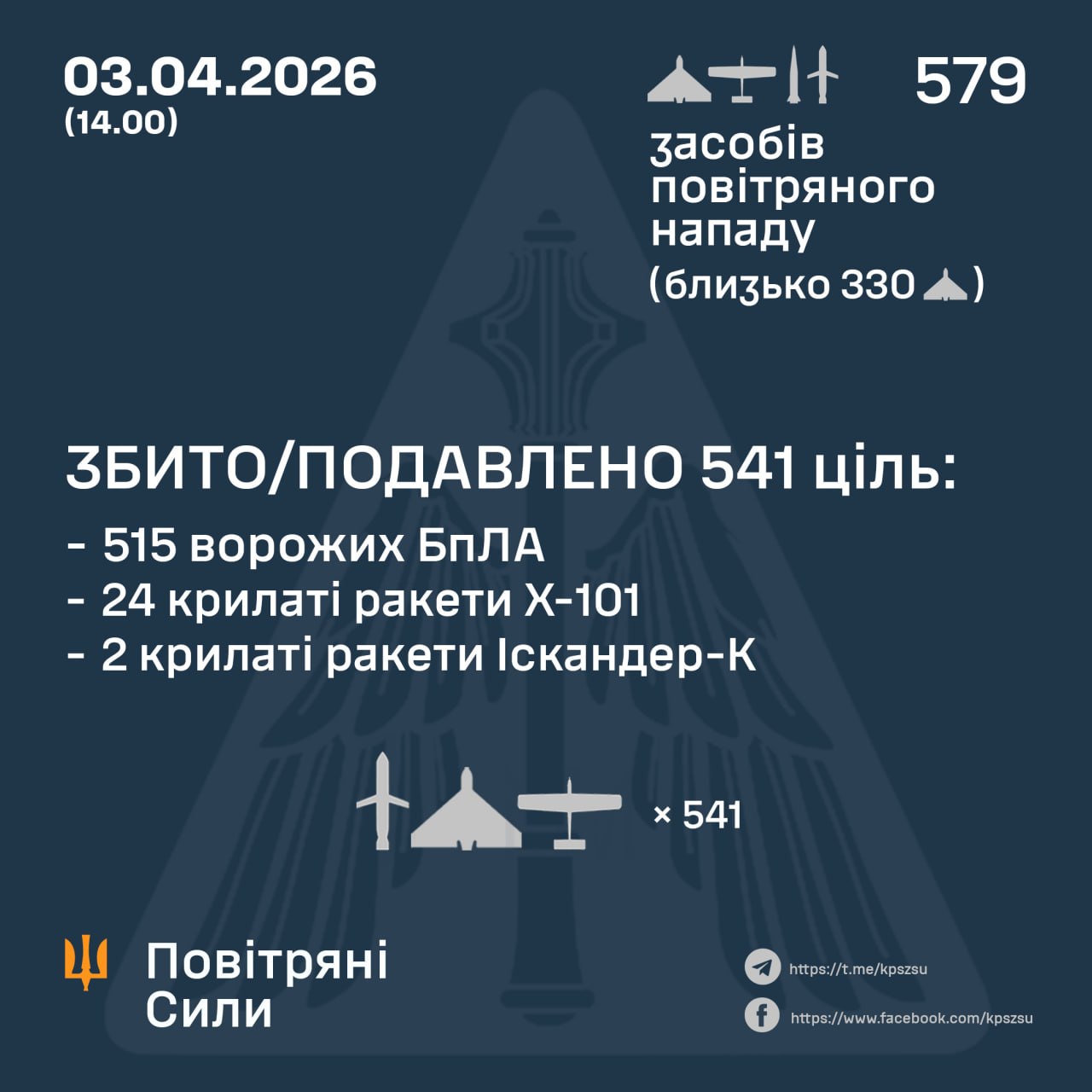
Ukrainian forces successfully intercepted or suppressed 541 incoming targets. This included 24 Kh-101 cruise missiles, both Iskander-K missiles, and a total of 515 drones of various types, highlighting a high interception rate despite the volume of threats.
However, the scale of the attack inevitably led to some breakthroughs. Ukrainian authorities reported that 11 missiles and 27 strike drones reached their targets across 20 different locations. Additionally, debris from intercepted drones fell across 22 locations, posing further risks to civilian areas and infrastructure.
Read more: Ukrainian Drones Destroy Buk-M1, Fuel Tanks, and Depots in Temporarily Occupied Luhansk (Video)