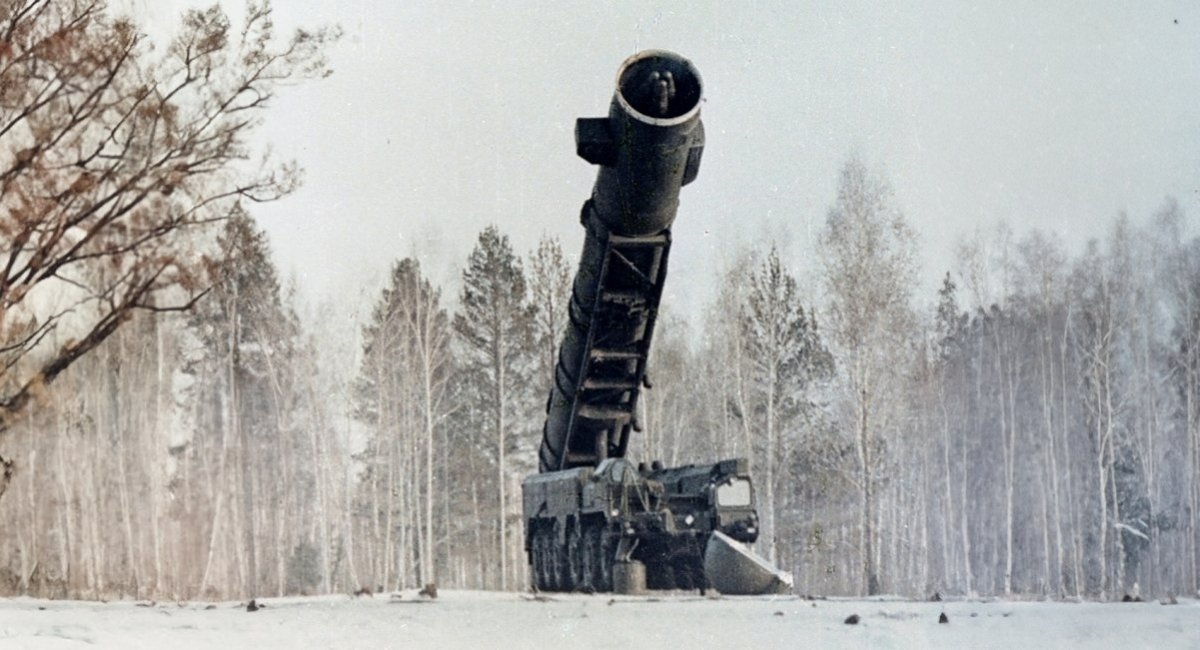
The russian strike using the Oreshnik intermediate-range ballistic missile on Lviv on January 8 at 23:47 local time marked the second use of this missile, following an earlier strike on the city of Dnipro on November 21, 2024.
The target of the strike has not yet been officially announced. However, the Mayor of Lviv, Andriy Sadovyi, reported that in the village of Rudno, a western suburb of the city, the shock wave triggered the gas supply's automatic protection system, temporarily cutting off 376 customers.
Read more: Combat Lasers and "Microwaves" Are Not Ready for Ukraine Yet – Why These Weapons Remain Impractical
Videos also show six Oreshnik warheads hitting the target without detonating, indicating that they were full-size mock-ups, as was the case in the strike on Dnipro.
It is also possible to note the difference from the previous strike. At that time, the warheads were deployed together with decoys intended to overwhelm air defense systems.
In this configuration, which in russia is referred to as kinetic, such a missile cannot effectively strike a target. In 2024, Defense Express published calculations estimating the power of full-size mock-ups of Oreshnik warheads. These calculations were based on 36 elements—six blocks with six elements each—having a total weight of 1,500 kg. Now, with a better understanding of Oreshnik, its kinetic power for six warheads can now be calculated.
It should be noted that the RSD‑10 Pioneer intermediate-range ballistic missile, the predecessor of the Oreshnik, had a comparable total warhead mass of 1,500 kg, while carrying only three (15F453) warheads, each weighing 290 kg.
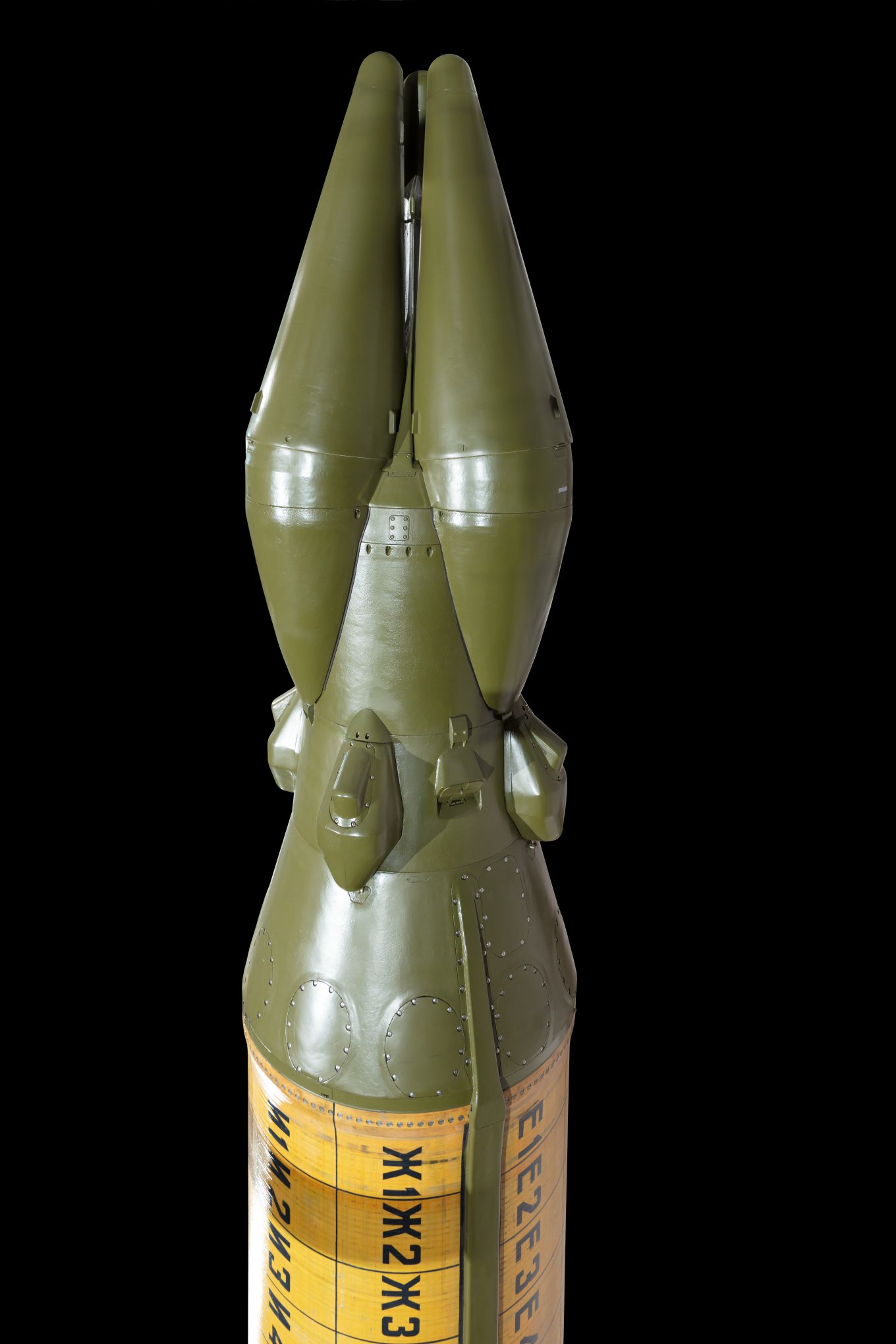
The Oreshnik's 1.5‑ton combat load is distributed among six combat units rather than three, together with a warhead dispensing system, decoys, and other countermeasures.
Therefore, it is most likely that the Oreshnik warheads weigh less, at approximately 150 kg each. This estimate is consistent with the mass of the U.S. W76 warhead deployed on the Trident submarine‑launched ballistic missile.

Assuming six warheads weighing 150 kg each, the following calculations can be made. As the missile approaches the surface and enters the dense layers of the atmosphere, its warheads decelerate from approximately 3–4 km/s to about 1.5–1.8 km/s. At these velocities, each kilogram of mass delivers roughly 1.4 megajoules (MJ) of kinetic energy upon impact.
If the reduction in warhead mass due to thinner ablative shielding (used to prevent burn‑up during atmospheric entry) is neglected, the impact energy of a 150‑kg full‑size mock‑up would be approximately 210 MJ. For comparison, the explosive energy of 1 kg of TNT is about 4.2 MJ.
In other words, a single 150‑kg block impacting at roughly Mach 5 is energetically equivalent to about 50 kg of TNT. However, a kinetic impact lacks both a high‑explosive effect and fragmentation, unlike a conventional high‑explosive fragmentation warhead. As a result, even a comparison with a FAB‑100 aerial bomb, which contains a similar amount of explosive, is misleading.
Moreover, questions remain regarding the accuracy of these strikes. The guidance system for individual warheads involves their separation onto distinct trajectories while still in space, at altitudes of several hundred kilometers. From such heights, the warheads descend toward the target with an estimated accuracy of around 100 meters (or approximately 300–500 meters for Soviet-era technology).
Such accuracy in the so‑called kinetic variant would allow a target to be hit only by chance. By contrast, an error of even 100 meters is largely irrelevant in a nuclear role, where individual warheads can have yields of up to 300 kilotons. The Oreshnik was originally designed for precisely such nuclear warheads. However, it is also well known that the russian federation retains the ability to conduct nuclear strikes without the introduction of new missile systems.
Read more: Estonia's Tiny Mark I Anti-Drone Missile, Developed for Ukraine, to Receive Naval Launch System