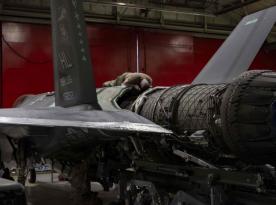


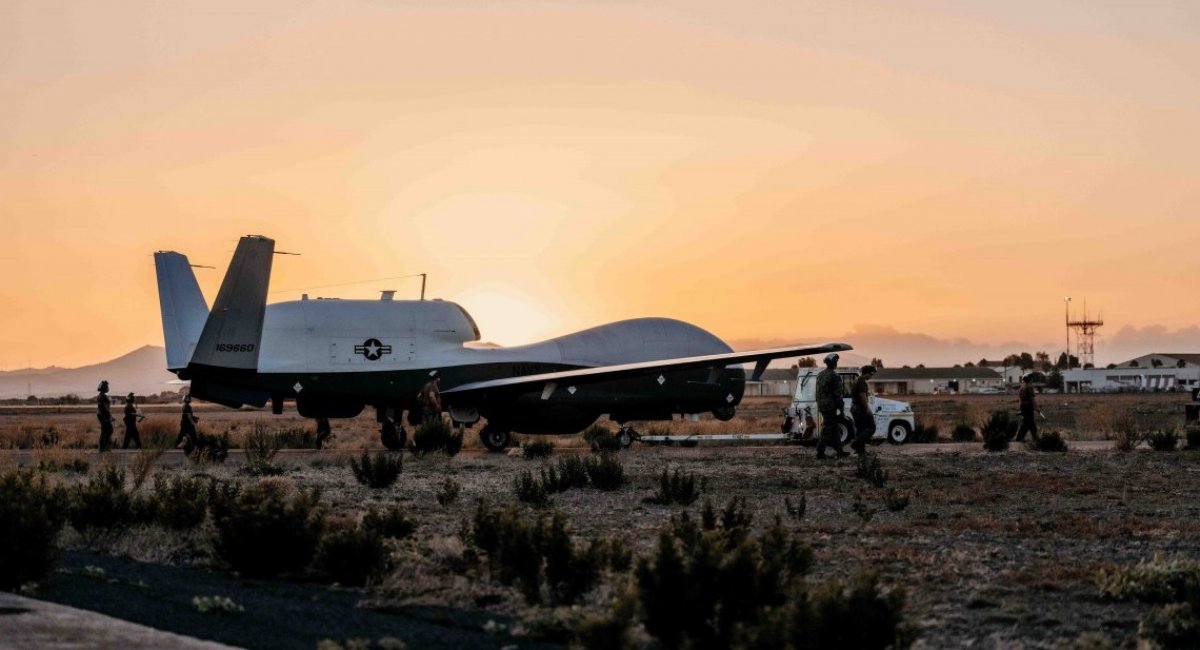
Information has emerged suggesting iran may have shot down an American MQ-4C Triton strategic reconnaissance drone, a Navy version of the RQ-4 Global Hawk. This could mark its second combat loss throughout operational history, occurring in the exact same location.
Online information appeared about possible loss of an American MQ-4C Triton strategic reconnaissance drone over the Strait of Hormuz off iran's coast. Evidence cited includes data from monitoring service Flightradar24 as well as others.
Read more: Skunk Works Proves AI Can Save Pilot Lives by Autonomously Dodging Missiles in X-62A Vista Tests
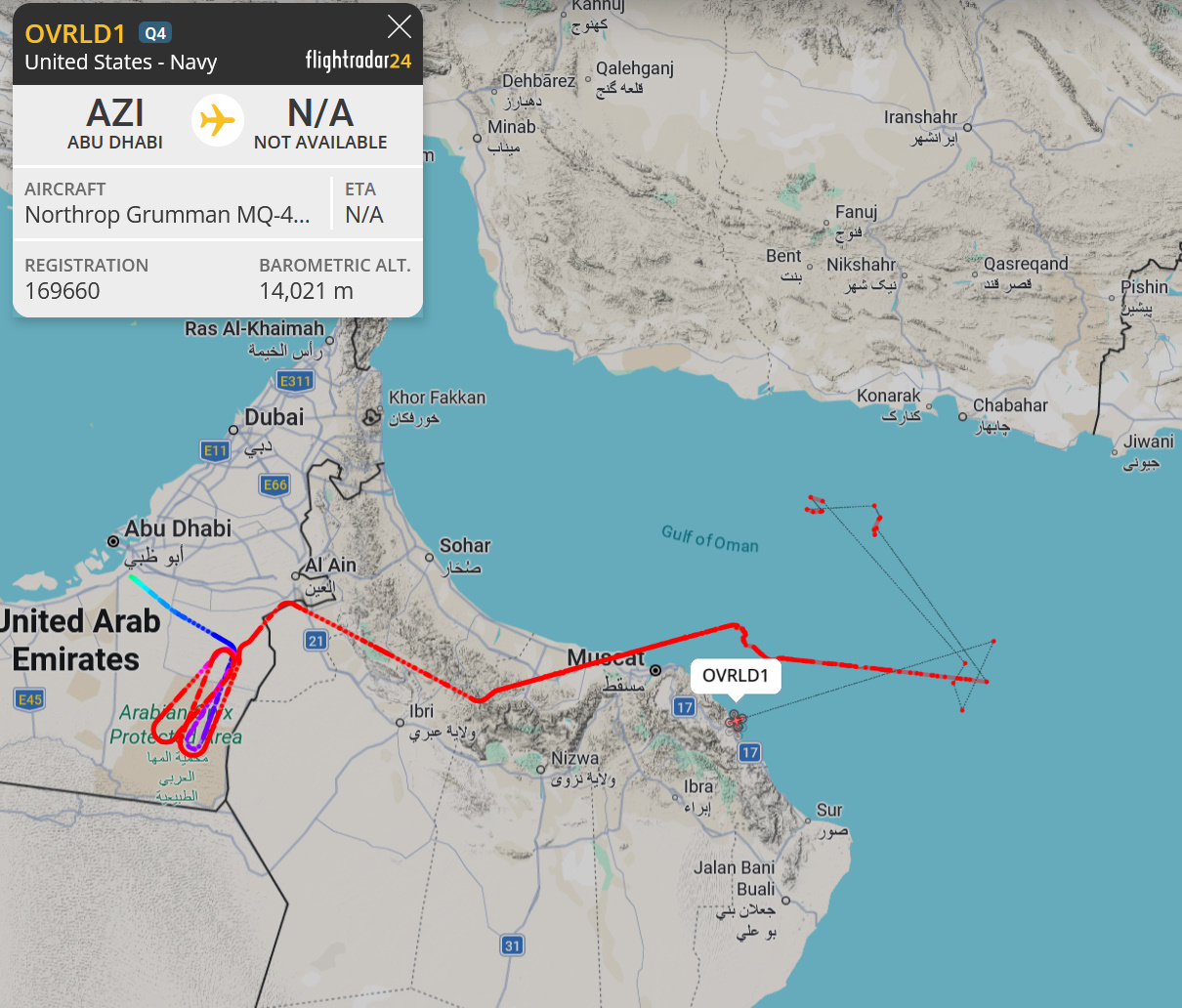
On February 22, MQ-4C Triton with registration number 169660 and callsign OVRLD1, having taken off from a UAE airbase, was conducting flights over the Strait of Hormuz at 32,900 feet altitude (approximately 10,000 meters), likely gathering intelligence on Iranian territory.
Suddenly, the drone transmitted code 7700, which in aviation signifies an emergency. After some time, MQ-4C Triton disappeared from screens. Online speculation suggests iran could have either jammed the drone using electronic warfare systems or shot it down.
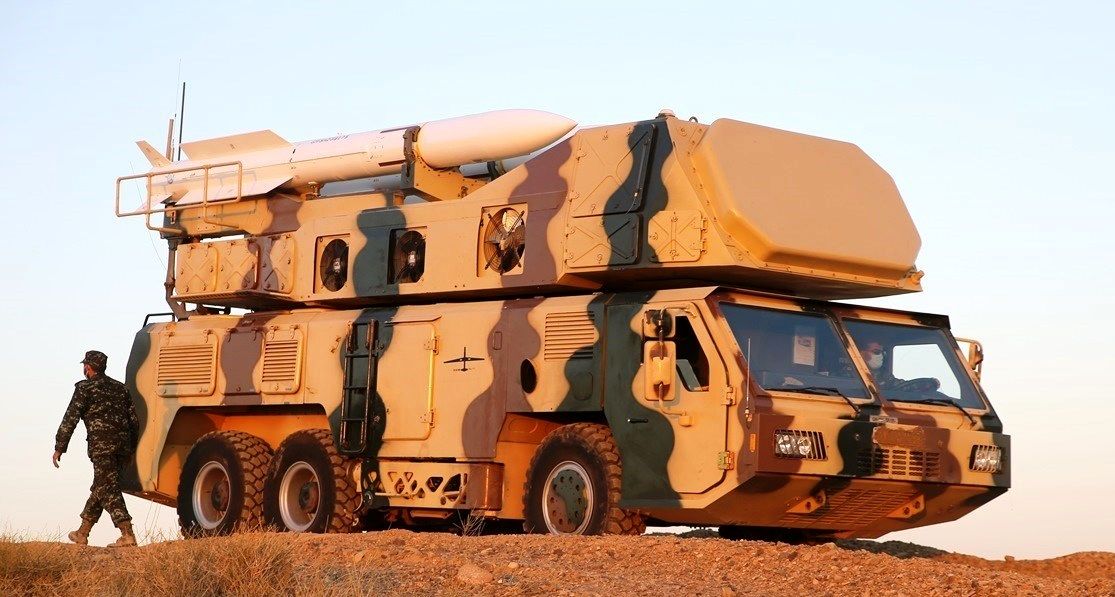
It is worth recalling that in June 2019, almost over this same location in the Strait of Hormuz, iran used the Sevom Khordad surface-to-air missile system (copy of russian Buk-M2E SAM system) to shoot down an MQ-4C Triton prototype RQ-4A Global Hawk BAMS-D.
iranians then claimed the American drone entered the country's airspace, while the U.S. denied this, stating it was 34 km from the country. However, in 2019 this incident immediately caused significant resonance.
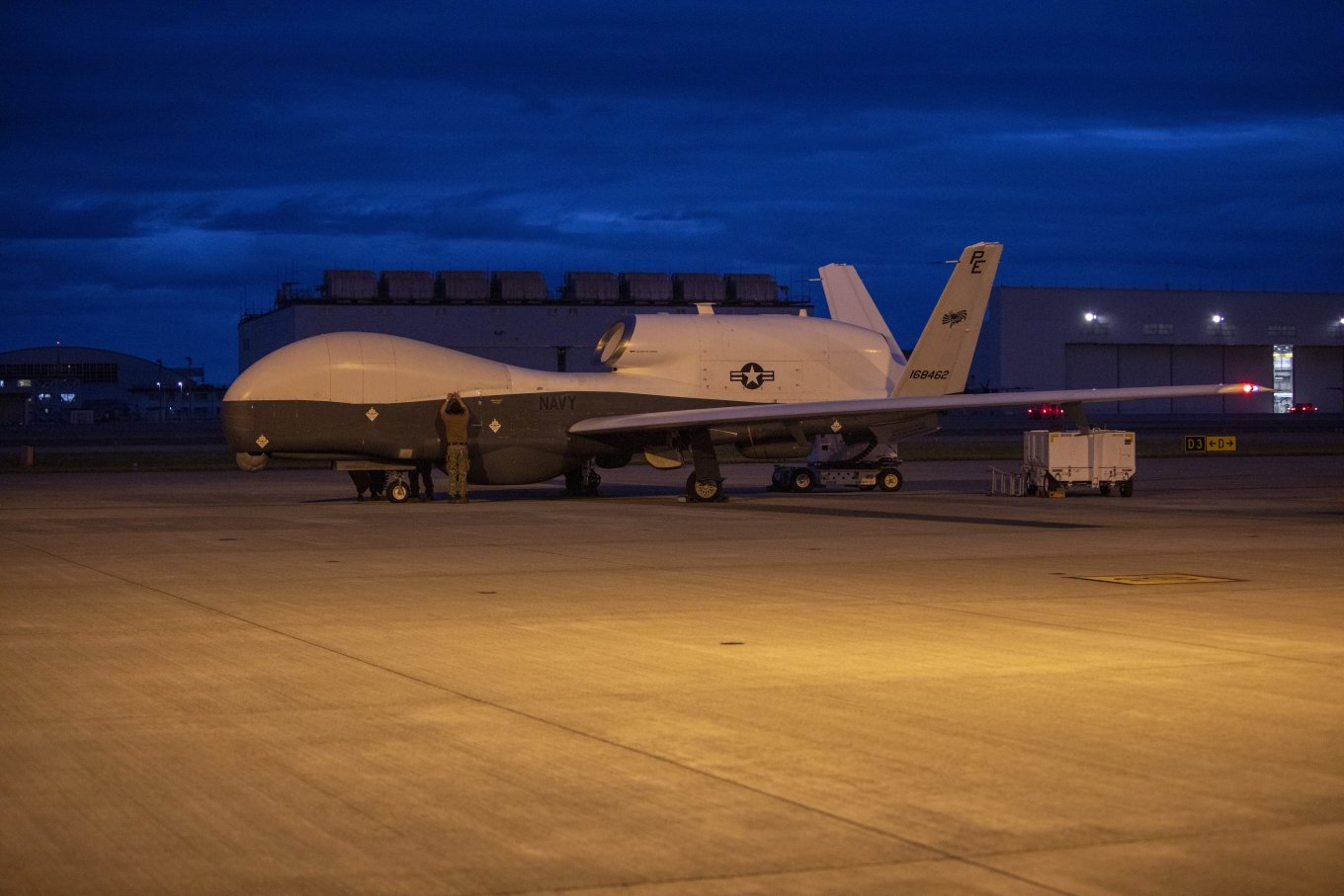
In contrast, no actual evidence of MQ-4C Triton being shot down has appeared besides questionable claims built around Flightradar24 data. Official sources from both sides remain silent. One might speculate that if the drone was indeed shot down, this incident is simply being kept quiet amid ongoing negotiations.
However, a more plausible version now appears that MQ-4C Triton was not shot down. What Flightradar24 shows is merely the result of public data transmission from the transponder, which drone operators could have turned off.
From a technical standpoint, iran could shoot down MQ-4C Triton, having several long-range SAM systems including S-200, S-300, and indigenous Bavar-373. However, if this genuinely occurred, Tehran would hardly keep quiet about shooting down an American drone. Especially considering how diligently they attempt to demonstrate military superiority over the U.S., publishing various AI-generated photos and videos from official government social media accounts.
Recall that MQ-4C Triton is a special improved version of RQ-4 Global Hawk for U.S. naval forces. Throughout its history since first flight in 2013, this could mark only the second loss of this drone. In both cases the loss would be from iran, occurring in the exact same location.
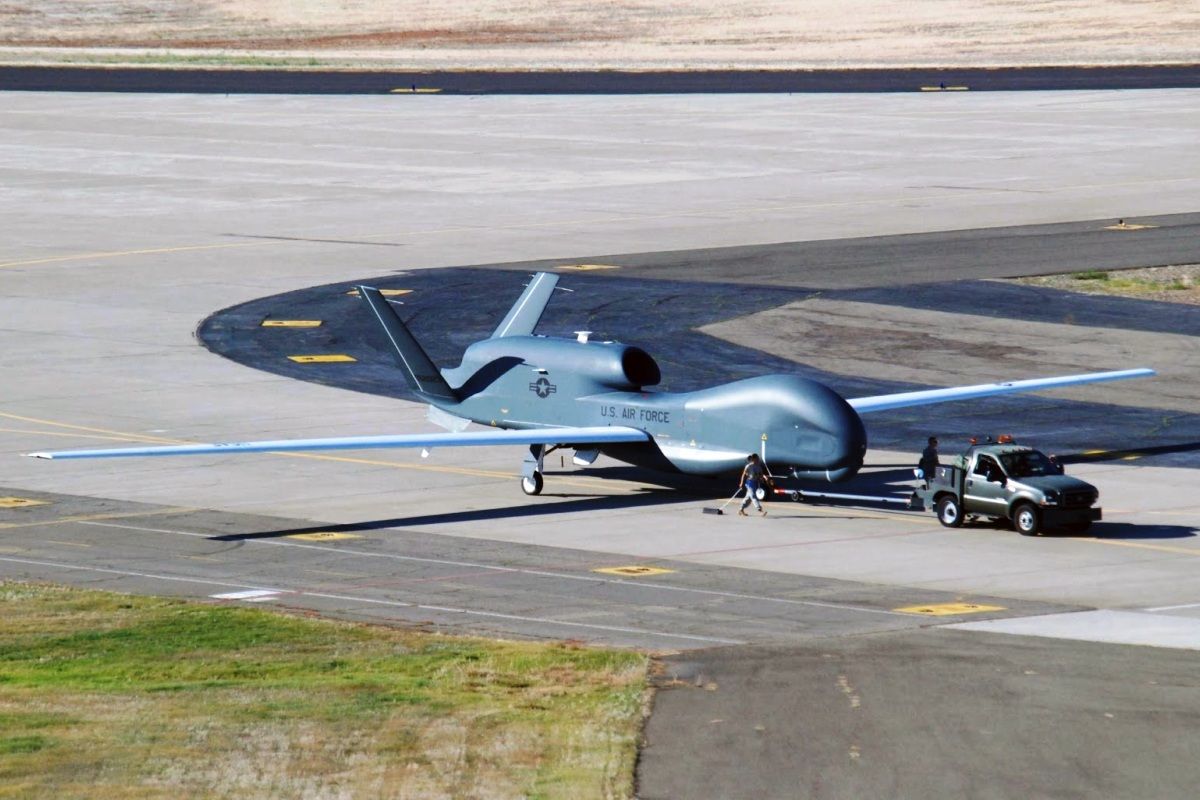
Regarding RQ-4 Global Hawk, it has significantly more losses. Specifically, over 28 years since first flight in 1998, eight units were lost (not counting the RQ-4A Global Hawk BAMS-D shot down by iran), though all were lost due to technical malfunctions rather than interception.
It is worth recalling Iran is currently actively preparing for a possible U.S. attack by purchasing weapons. Recently, intentions to acquire Chinese CM-302 supersonic anti-ship missiles became known, which could prove beneficial for russians.
Read more: Frame-by-Frame Analysis of FP-5 Flamingo Strike on russia's Votkinsk Plant, Where Iskander, Oreshnik Missiles Are Produced