


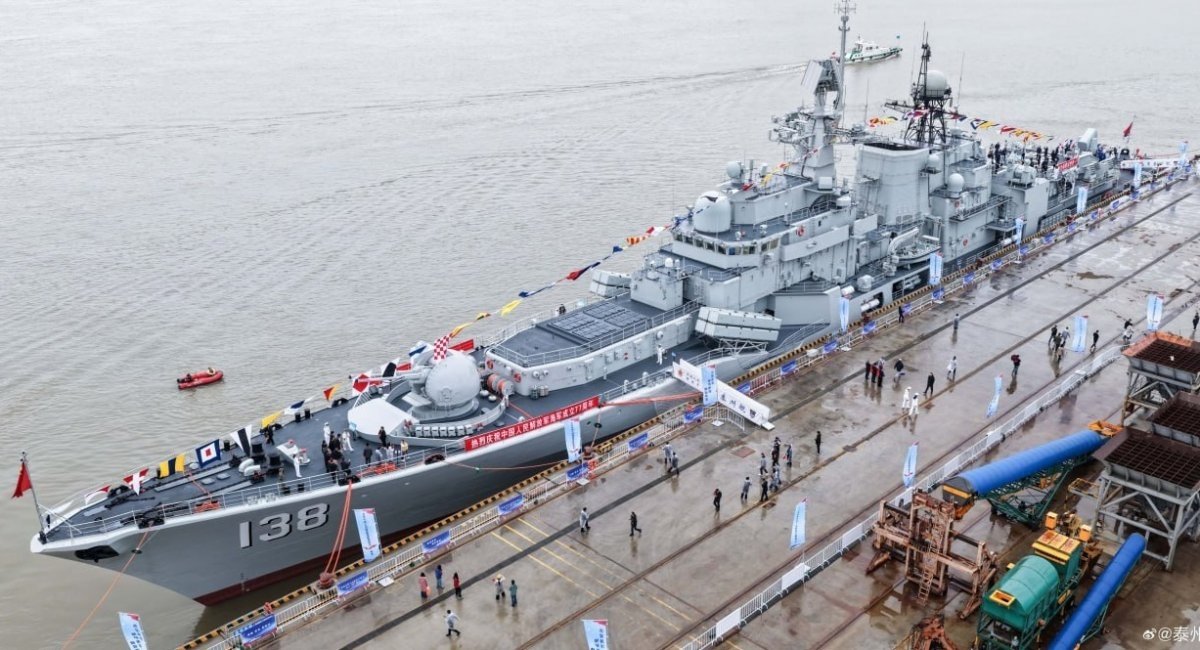
China has revealed the upgraded Project 956-E Hangzhou destroyer, turning an outdated warship with limited combat value into a modern missile platform. This was achieved by removing all russian weaponry and replacing it with new Chinese models.
The standard armament of a Project 956-E destroyer consists of eight Moskit anti-ship missile launchers with a range of up to 120 km (on a low-altitude trajectory), two Uragan air defense launchers (the naval version of the Buk system, with the export variant known as Shtil), as well as two Kortik air defence gun-missile systems (the export version is known as Kashstan).
Read more: Large-Scale SSU Strike in Crimea Damages Three russian Warships, MiG-31, Key Air Defense Facilities
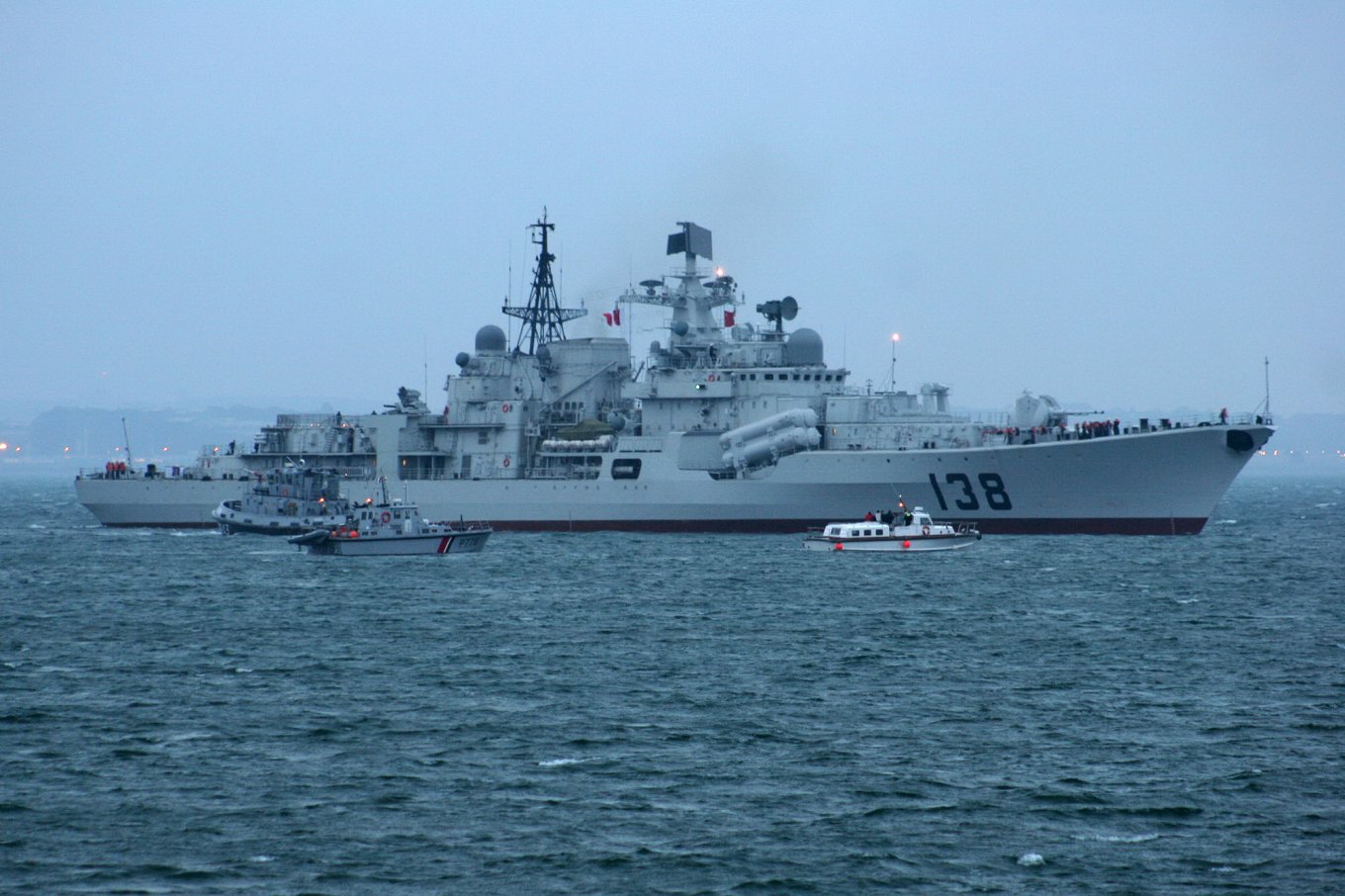
The modernized Hangzhou, publicly unveiled on the 77th anniversary of the founding of the Chinese Navy, has undergone a complete overhaul of its armament and systems.
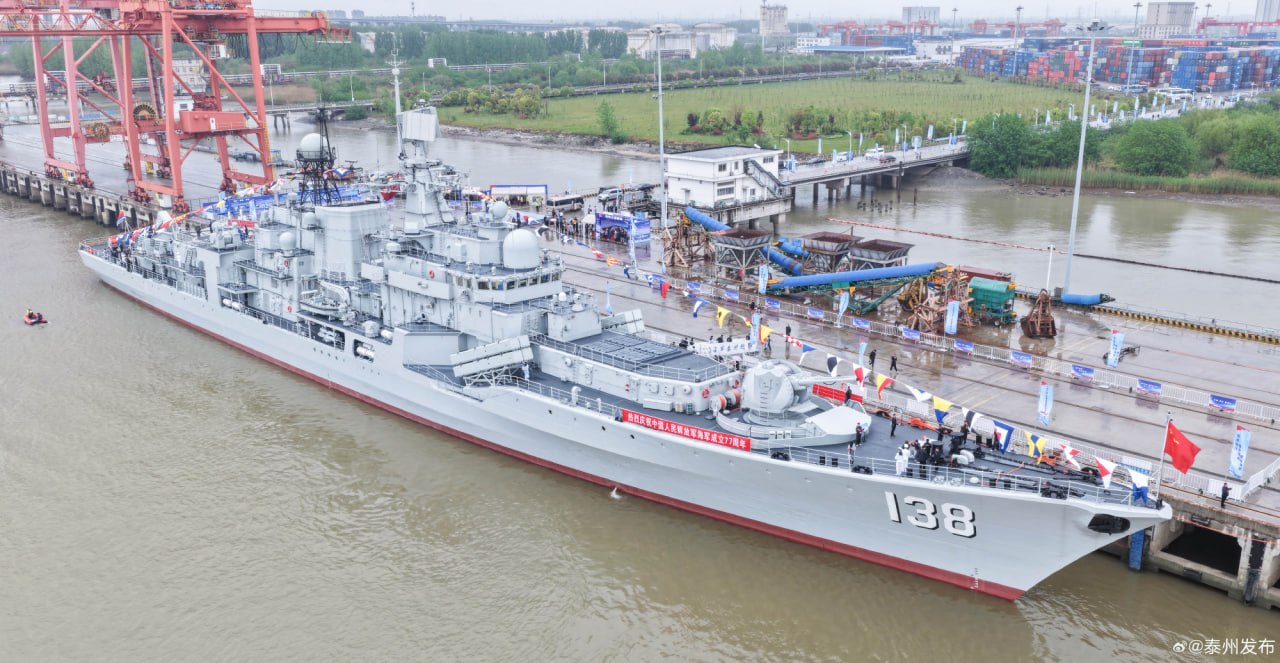
The Moskit launchers have been replaced by YJ-12 anti-ship missile launchers with a range of up to 500 km. russian air defense systems capable of launching only a single missile were replaced with HQ-16 systems, which are based on the Buk design but feature an extended range of up to 70 km and 48 vertical launch cells. These same cells are also used to launch Yu-8 missiles, which are designed to destroy submarines.
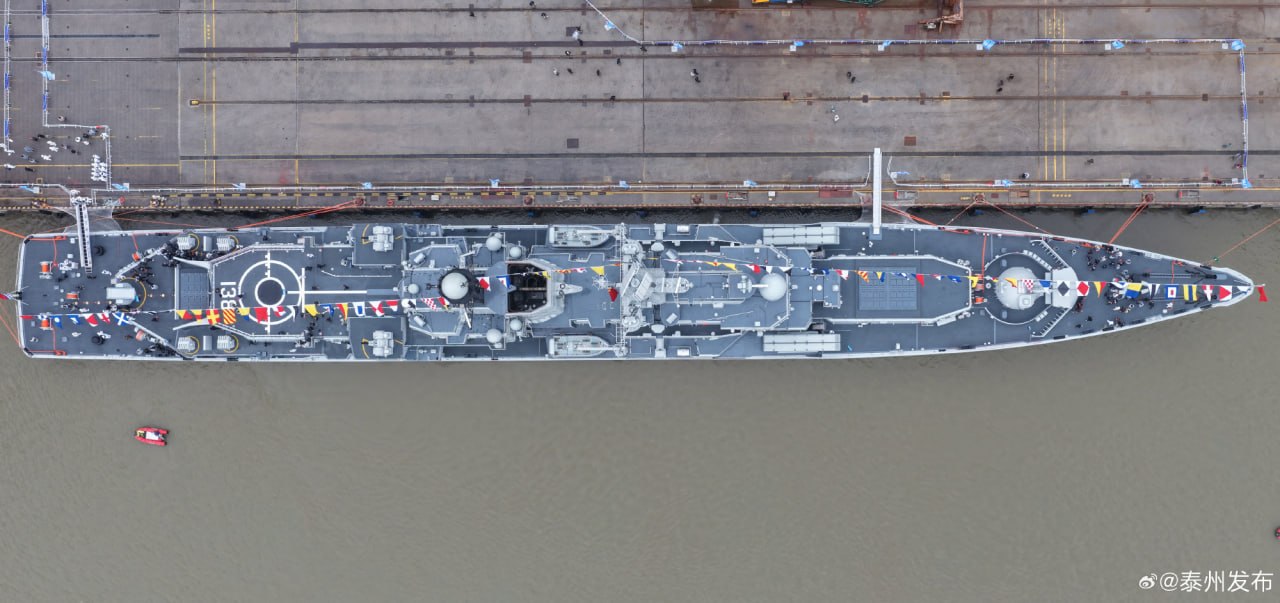
The old anti-aircraft artillery systems were replaced by Type 730 CIWS and supplemented with the HQ-10 short-range air defense missile system, comparable to the American RIM-116. Additionally, two twin 533-mm torpedo tubes were replaced with three-tube 324-mm Chinese ones. An H/RJZ-726-4A countermeasure system against anti-ship missiles was installed. The only remaining piece of the original armament is the 130-mm AK-130 gun.
There are also noticeable changes to the ship's electronic equipment, which has been fitted with a different set of antennas. However, the antenna for the Fregat-M2 surveillance radar remains unchanged.
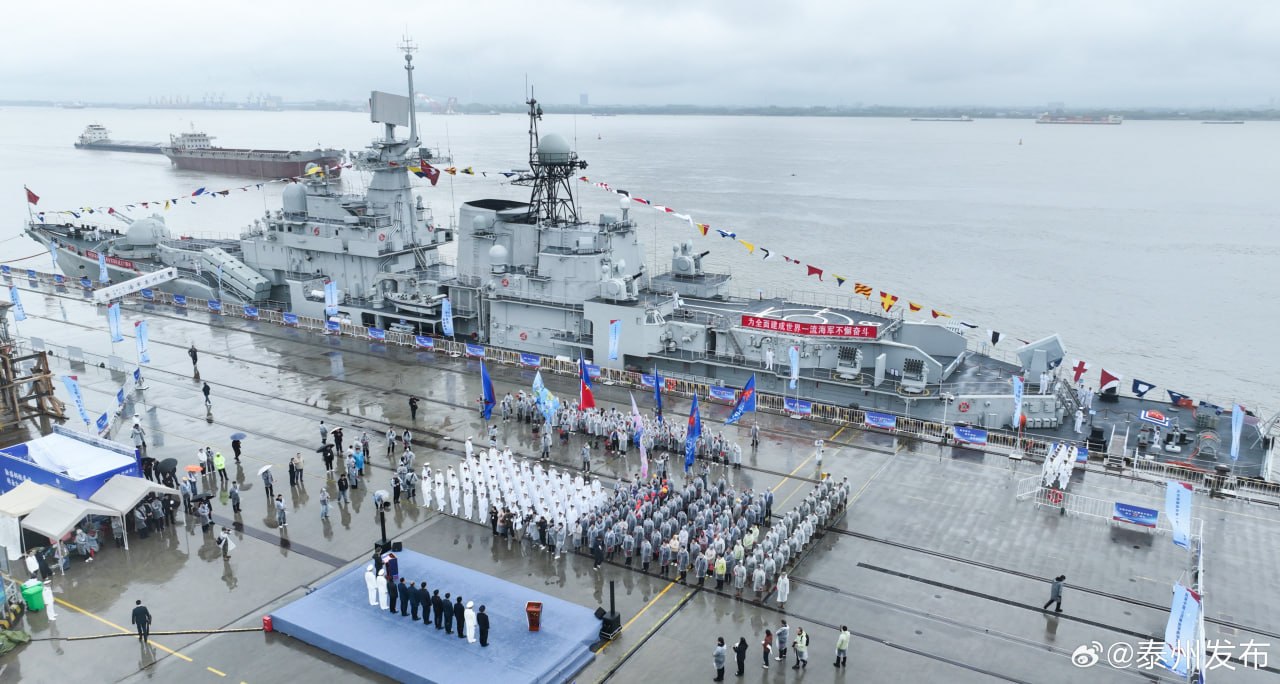
Given the extensive work on the weapon systems, the ship's onboard systems also underwent a major modernization, which apparently included the replacement of the combat management system. It is also likely that significant work was carried out on the ship's power plant, comprising two boiler-turbine units that are now outdated.
As a result of these upgrades, China has incorporated a missile destroyer with significant capabilities into its fleet. This is particularly notable because the Hangzhou, formerly known as Ekaterinburg (Vazhnyy), was launched in 1988 and sold to China shortly after its completion in 1996. It is possible that the other three Project 956-E destroyers acquired by China in the 1990s and 2000s will undergo similar modernization.
At the same time, in russia, most of the same class of destroyers were largely decommissioned, while the last remaining vessel in service—the Nastoychivy, flagship of the Baltic Fleet—underwent extensive repairs from 2019 to 2022 but was not modernized.
Read more: Why Peru Chose F-16 Over Gripen, Rafale, and What Kind of Dirty Competition Ukraine Should Prepare For