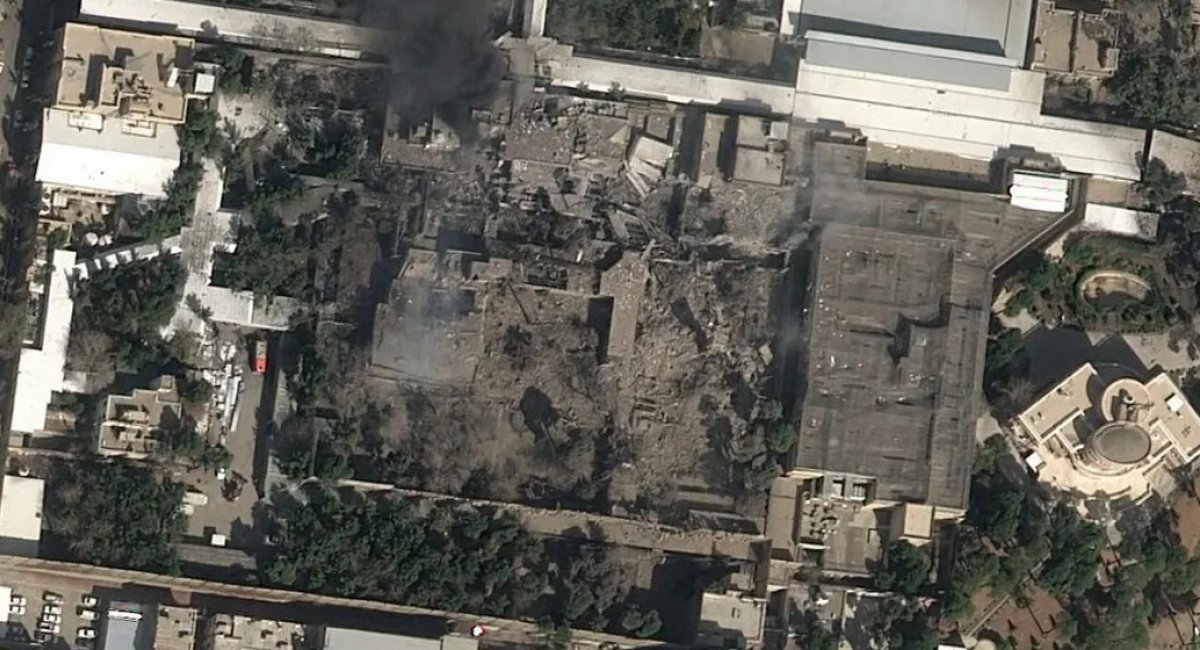
The central development of the second day of the joint U.S.-Israeli operation against Iran was Tehran’s official confirmation of the death of Supreme Leader Ayatollah Ali Khamenei. The campaign shifted from suppressing air defenses to direct strikes on political and military command centers.
Political Vacuum: Death of the Supreme Leader
Israel’s Channel 12 has reported that "30 missiles were dropped on the Supreme Leader’s compound" and Khamenei was "'almost certainly' dead." A 40-day mourning period has been declared. The Assembly of Experts is preparing to select a successor, but the country appears to be in a state of political shock.
Read more: Largest Airstrike in Israeli Air Force History: What First Day of Strikes on Iran Reveals (Video)
Military Dimension: Air Superiority Established
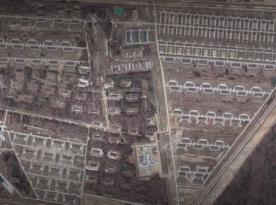
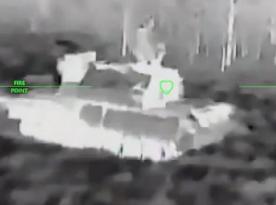
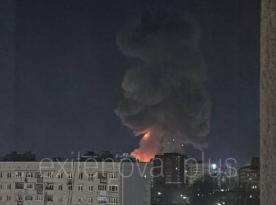
The Israel Defense Forces released footage of what it claims was a strike on the headquarters of the Iranian Armed Forces in central Tehran. Israel’s Minister of Defense Israel Katz stated that Israeli aircraft are maintaining an almost constant presence over the Iranian capital.
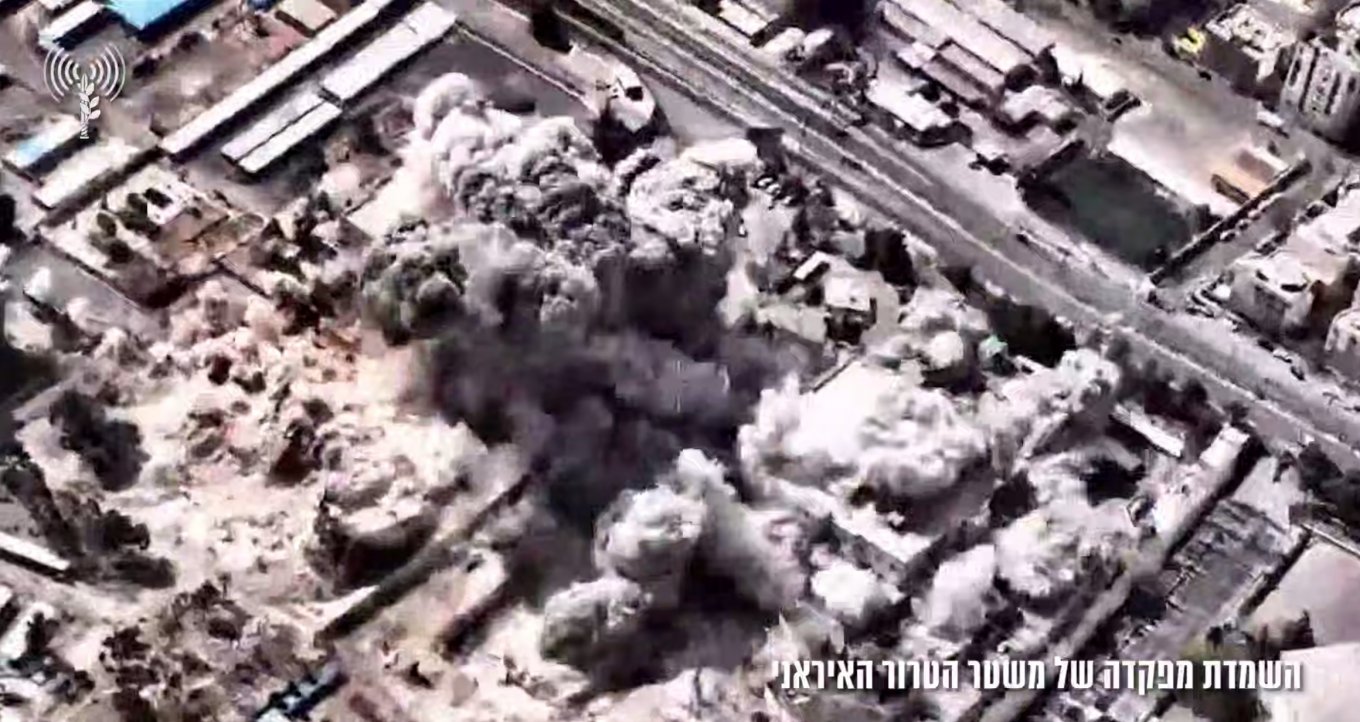
During Operation Roaring Lion, more than 1,000 aerial munitions have already been expended.
The death of the Chief of the General Staff of Iran’s Armed Forces, Abdolrahim Mousavi, along with several senior officers, has also been confirmed.
U.S. President Donald Trump told Fox News that 48 Iranian leaders have so far been killed in U.S. and Israeli strikes.
"It's moving along. It’s moving along rapidly," Trump said. "Nobody can believe the success we’re having. Forty-eight leaders are gone in one shot. And it’s moving along rapidly."
Destruction of Aircraft: At an airfield in Tabriz, Iranian F-4 Phantom II and F-5 Freedom Fighter jets were reportedly destroyed on the ground.
New Technologies: U.S. LUCAS loitering munitions, described as analogous to Iranian Shahed drones, were reportedly used for the first time in strikes inside Iran.
United States Central Command confirmed the use of the B-2 Spirit Stealth Bombers.
Regional Escalation: Missile Saturation of the UAE
Iran responded with large-scale attacks against U.S. allies, apparently aiming to overwhelm their air defense systems.
United Arab Emirates: The United Arab Emirates came under what officials described as an unprecedented attack. According to the UAE Ministry of Defense, 541 drones, 165 ballistic missiles, and two cruise missiles were detected and engaged. Most were intercepted, although impacts on civilian infrastructure were reported.
Bahrain and Kuwait: The headquarters of the U.S. Fifth Fleet in Bahrain was targeted. Fires were reported at fuel storage facilities at Ali Al Salem Air Base in Kuwait.
Oman: In a notable development, the port of Duqm was struck by long-range drones, despite Oman’s mediating role in regional negotiations.
Maritime Theater
United States Central Command confirmed a strike on an Iranian Jamaran-class (Moudge) corvette. In addition, the oil tanker Skylight, sailing under the flag of Palau and reportedly linked to Iran’s Ministry of Defense, was attacked in the Gulf of Oman.
Humanitarian and Internal Situation
Information Blackout: A large-scale internet shutdown continues across Iran, obscuring the real situation in major cities.
International Destabilization: In Karachi, protests near the U.S. consulate escalated into armed clashes, resulting in several fatalities.
Proxy Forces: Iranian-backed groups in Iraq attacked Erbil International Airport and attempted to breach the U.S. Embassy compound in Baghdad.
Chaos in Baghdad this morning as pro-Iran regime protestors attempted to breach the Green Zone, reportedly trying to get to the U.S. embassy. pic.twitter.com/OpZPZUL3Oq— OSINTtechnical (@Osinttechnical) March 1, 2026
Conclusion
By the end of the second day, Iran had lost key leadership figures and control over much of its airspace. The primary remaining threat is Iran’s missile arsenal, estimated at around 2,500 missiles, as well as the ability of proxy forces to conduct asymmetric attacks across the Middle East.
The next phase will likely focus on efforts by Washington and Israel to pressure Iran's new leadership toward capitulation amid mounting internal unrest.
Read more: How Strong Is Iranian Air Defense Network