


The Stockholm International Peace Research Institute (SIPRI) has published its latest report on global arms transfers, offering a five-year retrospective that provides a broader view of how the global arms market has shifted since russia openly launched its war against Ukraine.
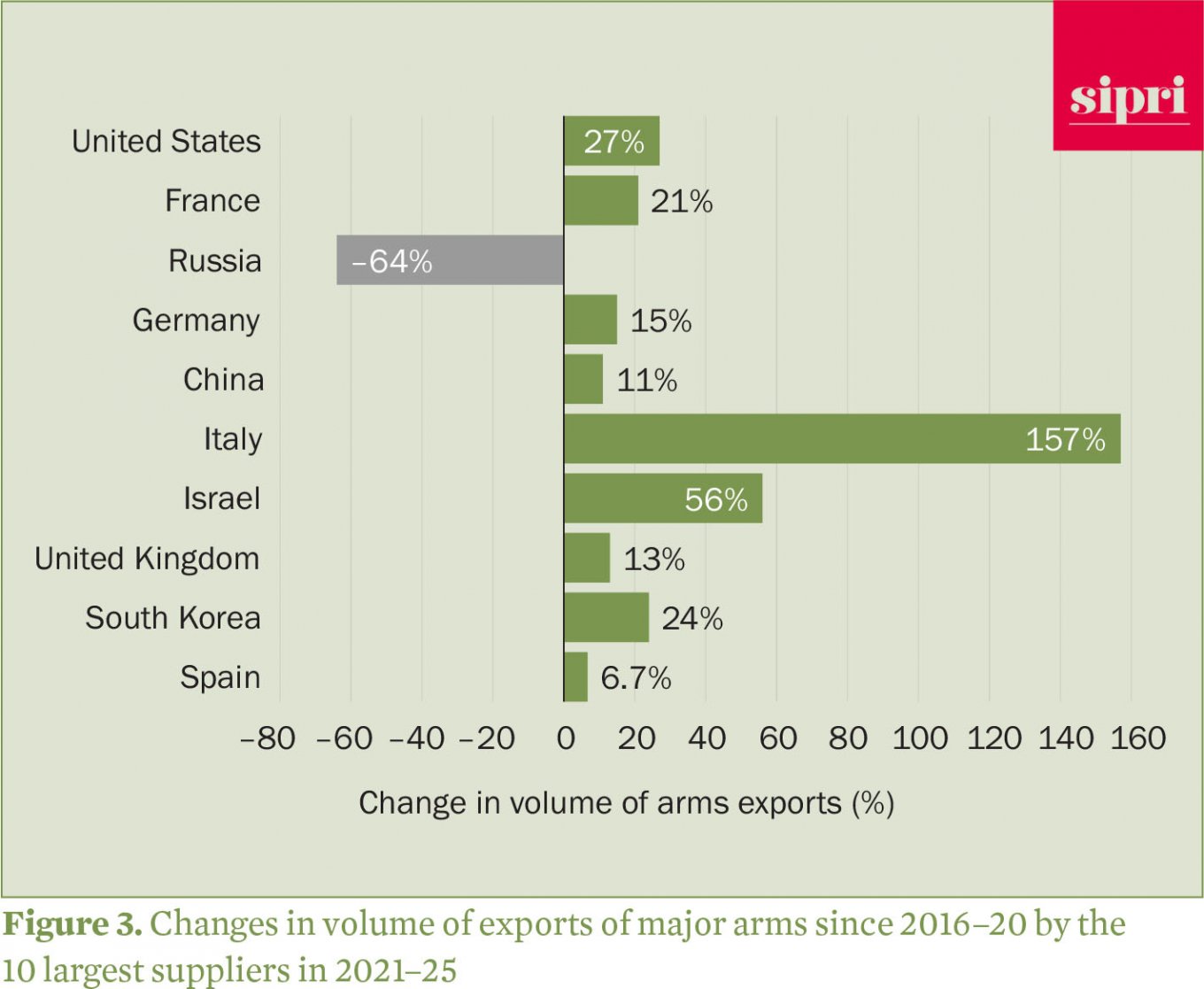
The report, Trends in International Arms Transfers 2025, compares arms exports and imports between the periods 2016–2020 and 2021–2025. While the overall defense market grew by 9.2% amid a global trend toward strengthening military capabilities, the data clearly shows russia disappearing as a major arms exporter.
Read more: Can Ukraine Take Part in European Competition For the Best Loitering Munitions
Specifically, russia accounted for 21% of the global arms export market in 2016–2020. However, in 2021–2025 its share fell to just 6.8%. The main buyers of russian weapons remain India, which accounts for 48% of russia's total arms exports, followed by China and Belarus with 13% each.
Despite India remaining russia's largest customer, New Delhi has been steadily reducing its purchases of russian arms. In 2011–2015, India sourced 70% of its imported weapons from russia; in 2016–2020 this fell to 51%, and it has now declined to 40%. At the same time, India's overall arms imports dropped by 4% over the last five-year period as its domestic defense industry continues to expand.
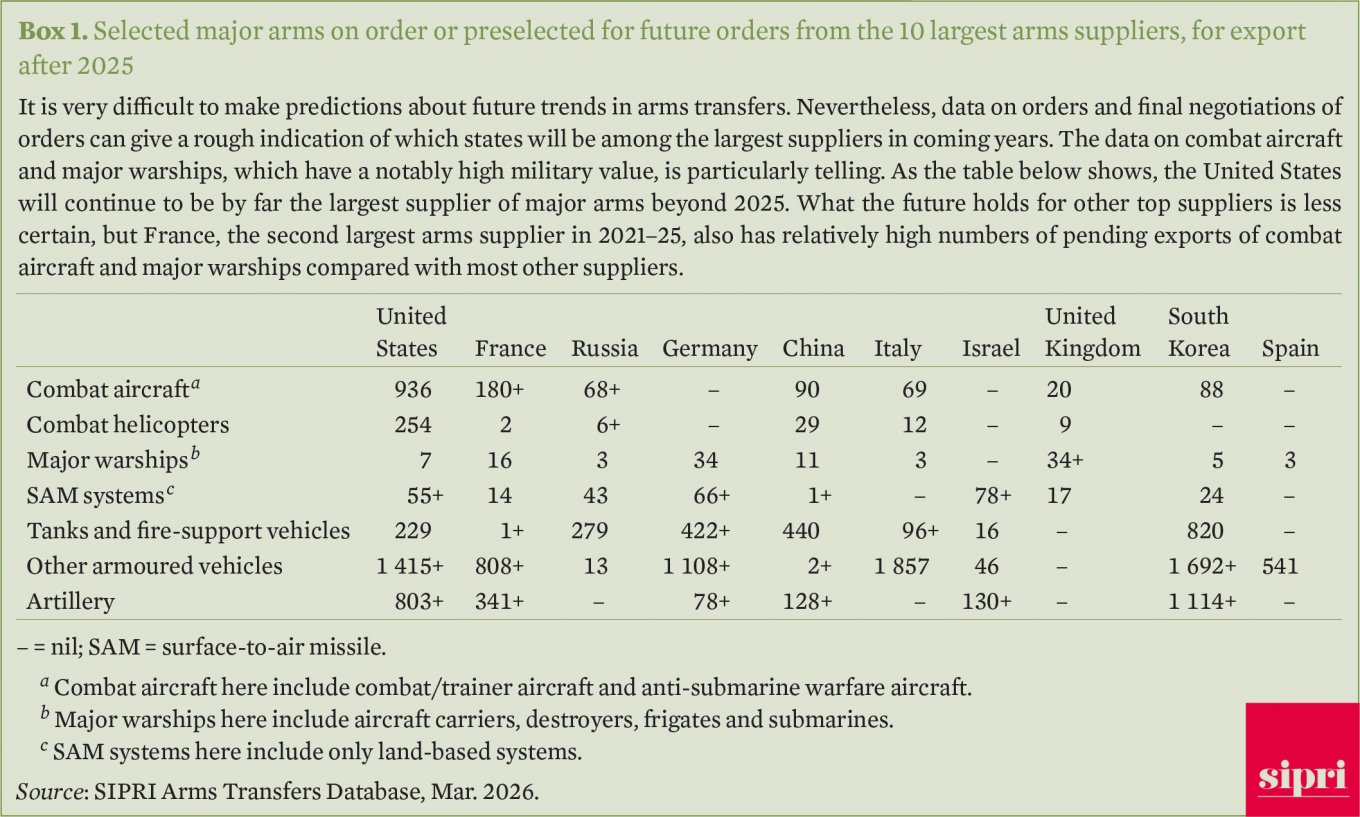
Over the past five years, russia exported more than 68 aircraft, six military helicopters, three warships, 43 air defense systems, 279 heavy armored vehicles, and another 13 units of other armored equipment. Yet in none of these categories did russia rank among the leading suppliers by number of units delivered.
This reflects a broader structural shift. Arms sales themselves represent only part of the long-term revenue stream, as suppliers typically earn additional income through maintenance, servicing, and modernization contracts. It is also worth noting that the period analyzed still includes contracts signed with Moscow in 2021 and even earlier. After that, many buyers not only began weighing the risks of sanctions for purchasing russian arms but also reassessed the real battlefield performance of these systems.
At the same time, SIPRI also calculated Ukraine's figures in terms of arms imports. Thanks to military assistance from Western partners — which effectively "imported" weapons into Ukraine starting in 2022 — the country made an extraordinary leap in the global importer rankings.
According to SIPRI’s methodology, Ukraine's share of global arms imports increased by an astonishing 11,896%, rising from just 0.1% in 2016–2020 to 9.7% of global imports in 2021–2025.
The largest suppliers of weapons to Ukraine over the past five years were the United States (41%), Germany (14%), and Poland (9.4%).
For the United States — which alone accounted for 42% of global arms exports during this period — Ukraine ranked as the second-largest export destination with a 9.4% share, slightly ahead of Japan with 9.2%. Even so, Saudi Arabia still received 12% of total U.S. arms exports.
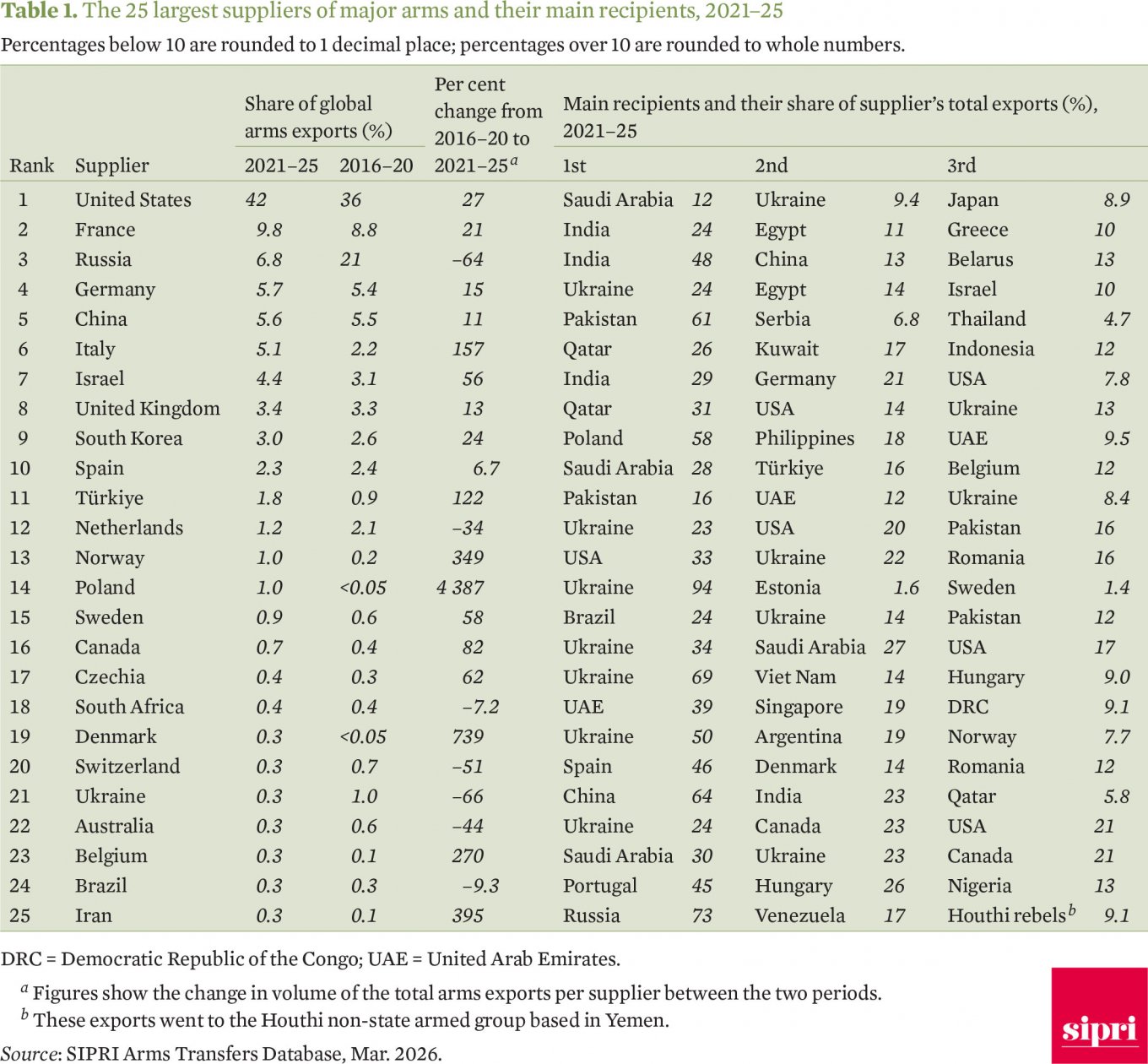
Meanwhile, for Germany, the Netherlands, Poland, Canada, the Czech Republic, Denmark, and Australia, arms transfers to Ukraine exceeded their arms exports to any other country. Ukraine ranked second among export destinations for Norway, Sweden, and Belgium, and third for the United Kingdom and Turkiye.
Read more: $65M Loss Instead of Three Tu-95MS Repairs: Results of Ukrainian Strikes on russia's Beriev Aircraft Plant