


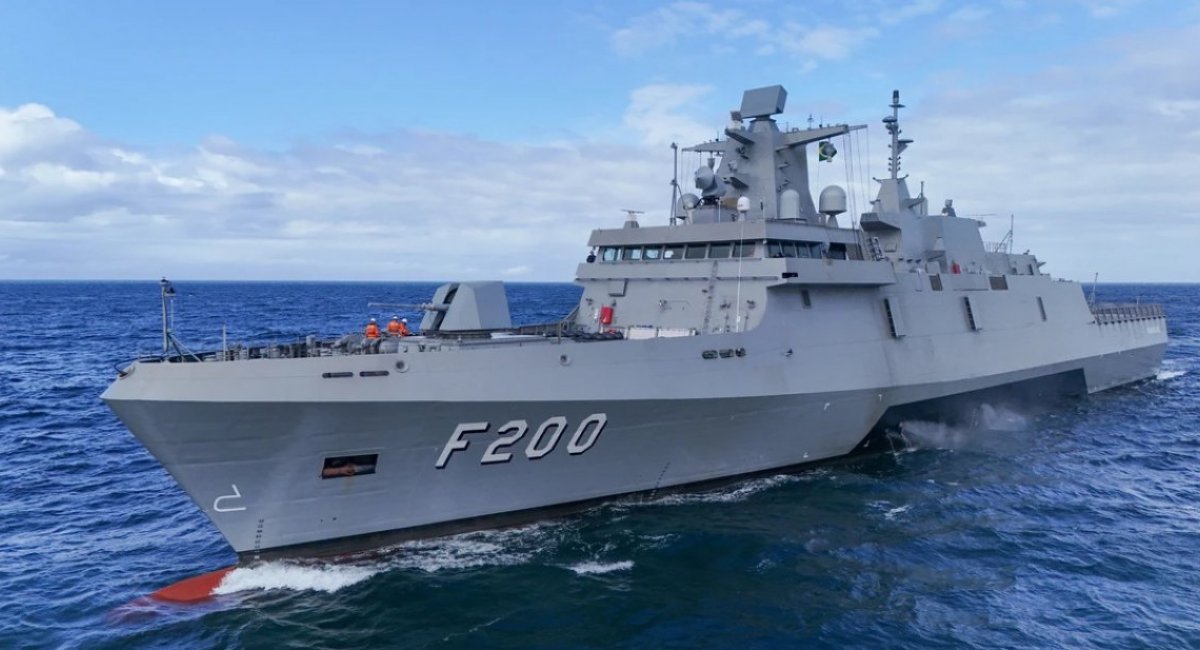
Brazil agreed to strengthen defense cooperation with Germany. Within this framework, it will order another batch of Tamandaré-class frigates for 4 hulls, bringing total planned numbers to 8 units. This is despite Brazilians being in BRICS and having "friendly" relations with China as well as russia.
Construction is at Brazilian shipyard through Águas Azuis, which is a joint project company of German ThyssenKrupp Marine Systems (TKMS) with local Embraer and Atech. Currently, construction of three of the first four ordered ships is already underway there.
Read more: Japan's Terra A1 Interceptor Drone Enters Combat Use in Ukraine
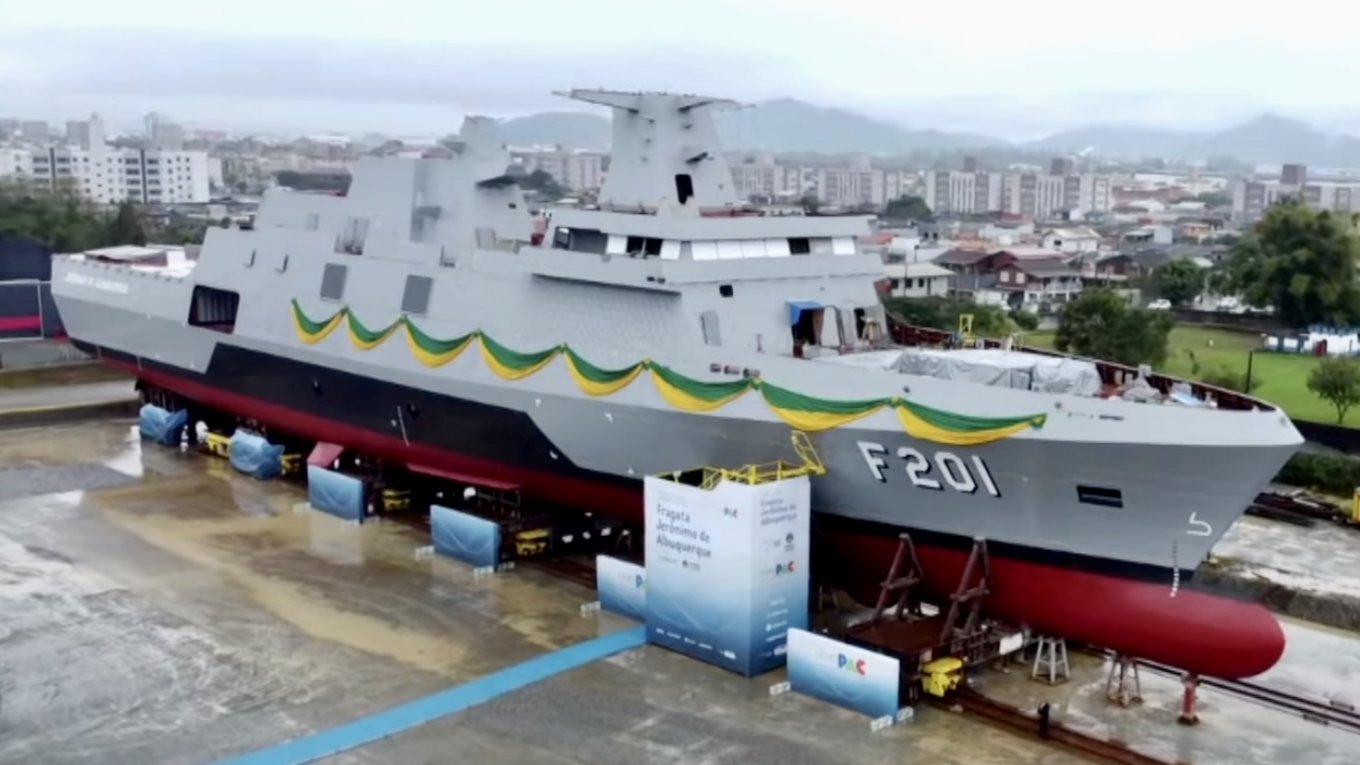
Brazil is thus essentially ordering all 8 planned hulls to strengthen its own Navy. At the same time, the first Tamandaré is almost ready and should be commissioned in the near future.
Regarding this frigate class overall, they have quite compact dimensions with length of 107.2 m and displacement of 3,500 tons. For comparison, French FTI Amiral Ronarc’h-class frigates have length of 122 m and displacement of 4,460 tons.
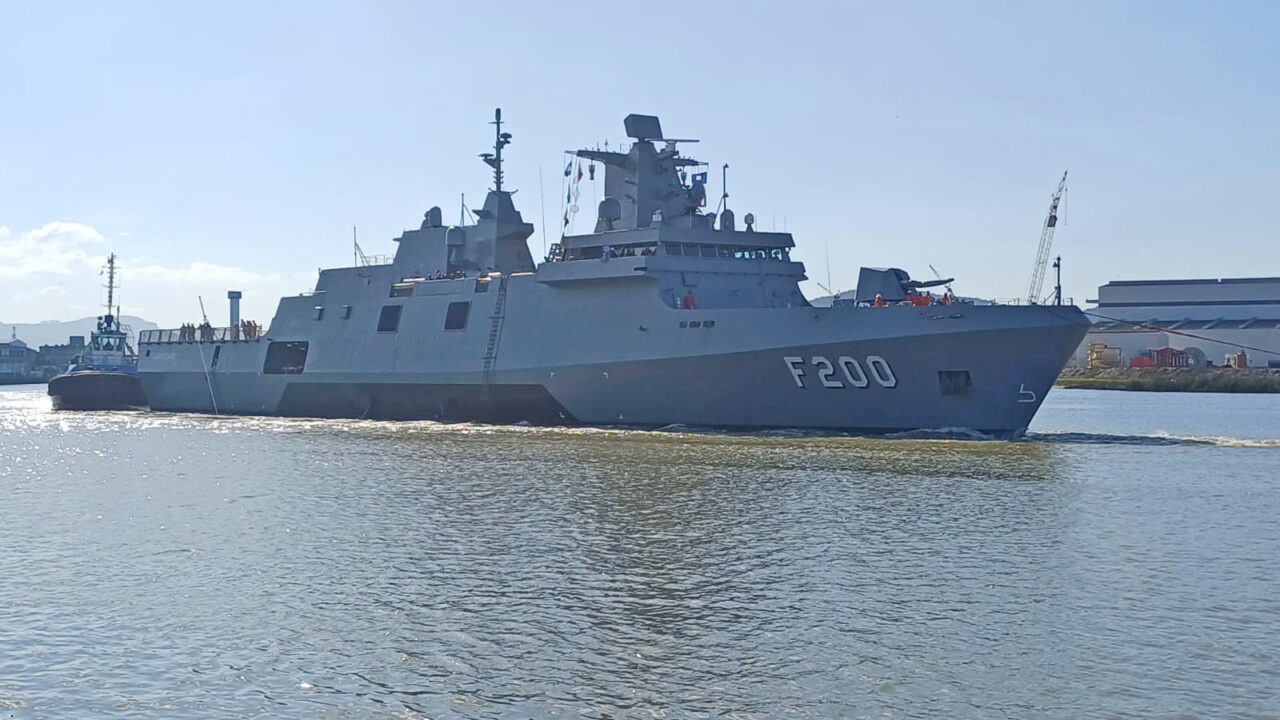
One of Tamandaré's features is that they’re built according to low observability principles and based on the German MEKO family. They're modular and multipurpose, so they can execute air defense, anti-ship, as well as anti-submarine defense missions.
For this, the frigate is equipped with Sea Ceptor (CAMM) SAM system with 12 launch cells, 8 launchers for Brazilian MAANSUP anti-ship missiles, as well as 2 triple launchers for Mark 54 torpedoes. Guns include 76mm Oto Melara Super Rapid Gun and 30mm Sea Snake.
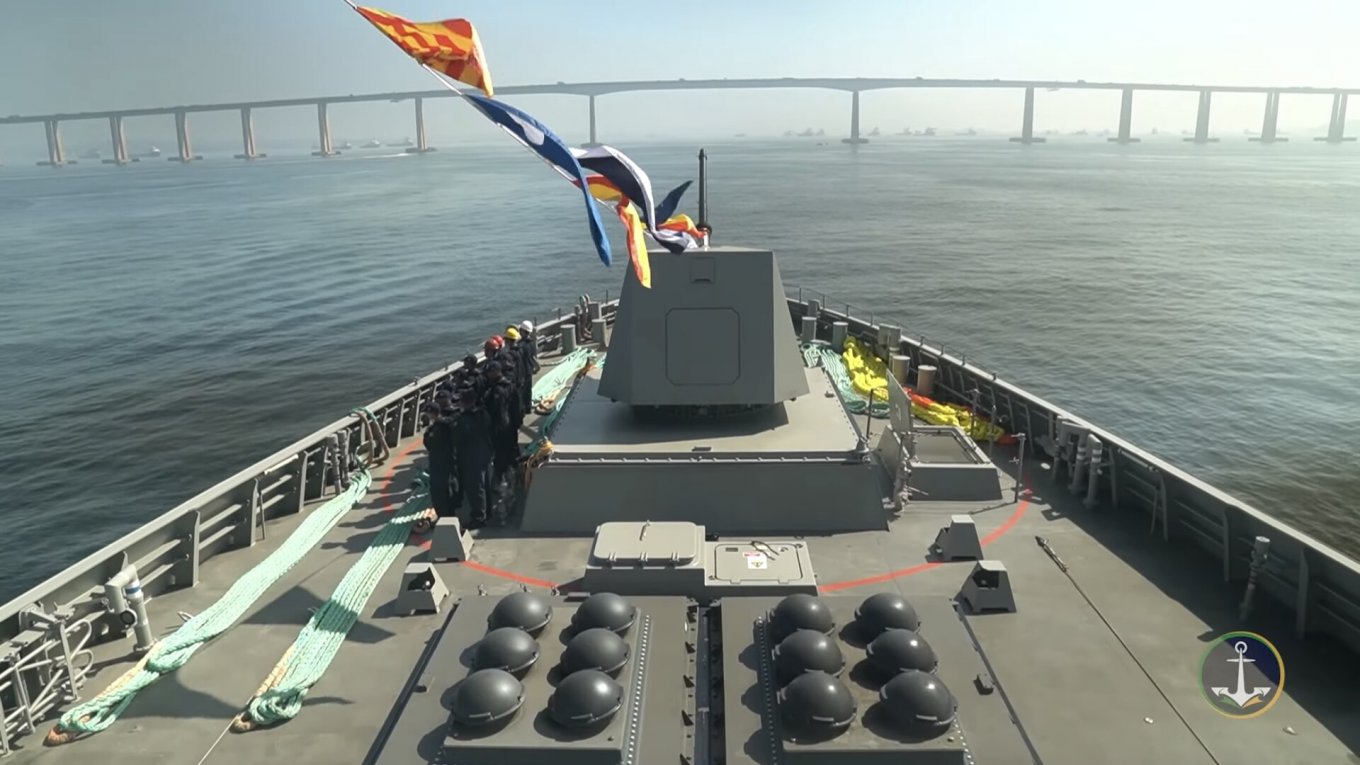
Regarding radar, TRS-4D is installed here, which is a naval version of TRML-4D radar actively supplied to Ukraine and used by Ukrainian Armed Forces. It can track up to 1,000 targets at distances up to 250 km.
The first Tamandaré-class frigate was laid down in 2023 with launch in 2024 and planned acceptance this year. The second ship was laid down and launched in summer 2024 and 2025 respectively. It should be accepted in 2027. Two others should be transferred to the fleet in 2027 and 2028 respectively. Most likely, Brazil will receive the new batch at the end of 2020s beginning of 2030s.
Read more: China Reportedly Produces 1,000 Type 19 IFVs Per Month, Releases a Video to Prove It — But the Claim Is Questionable