russian forces are increasingly adapting their drone tactics against Ukrainian air defense systems, including the use of reconnaissance UAVs and coordinated double strike attacks, according to Serhii Flash, Ukrainian defense technology advisor.
Speaking on May 19, Serhii Flash said russian Shahed loitering munitions equipped with online control capabilities were recently used in an attack against Ukrainian air defense position. The strike reportedly involved a new operational scheme designed to expose and target Ukrainian air defense crews.
Read more: UAE Copies russia's "Barbecue Grill" Tactic to Protect Oil Depots From Shahed Drones
According to the advisor, the attack begins with reconnaissance flights conducted by Shahed drones or decoy-type UAVs such as the Gerbera. These drones monitor Ukrainian air defense positions, determining whether systems remain stationary and how frequently crews relocate after engagements.
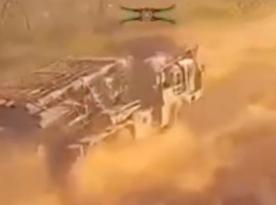
Once sufficient intelligence is gathered, russian forces reportedly employ a coordinated double strike tactic. In this scenario, one drone acts as a decoy to draw Ukrainian fire and reveal the position of the air defense unit, while a second UAV simultaneously moves in to strike the exposed target.
The described tactic reflects the growing evolution of drone warfare on the battlefield, where reconnaissance, real-time targeting, and attack coordination are increasingly integrated into a single operational cycle. Such methods complicate the work of mobile air defense crews, particularly those tasked with intercepting low-flying drones.
Serhii Flash urged Ukrainian air defense personnel to adapt quickly to the changing threat environment. He advised crews not to remain static, to improve camouflage measures, and to closely monitor the presence of reconnaissance drones before engaging aerial targets.
He also emphasized the importance of battlefield awareness during engagements, noting that while one crew member operates against a target, another should continuously observe nearby airspace for additional incoming drones or secondary strike elements.
The advisor stressed that preserving personnel is more important than protecting equipment, warning operators against unnecessarily revealing their positions. His remarks underscore how both sides of the war continue to refine drone tactics, turning air defense operations into an increasingly dynamic and high-risk contest of detection, deception, and rapid response.
Read more: BAE Systems Unveils 155 mm MDACS Air Defense Gun Designed to Hunt Shahed Drones and Cruise Missiles