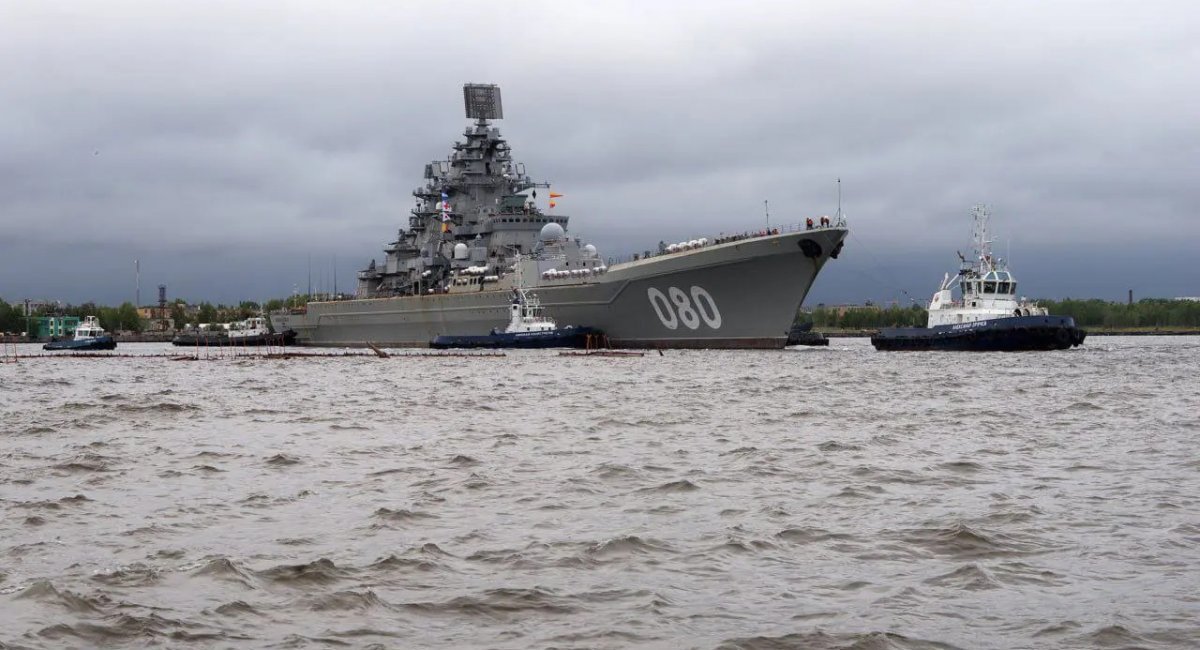
For russia, the modernized Admiral Nakhimov heavy nuclear-powered missile cruiser, which has recently completed the first stage of sea trials, is more likely to become a parade centerpiece and a subject of propaganda television coverage than a genuinely effective combat unit. The project, already described by experts as an exercise in vanity, vividly illustrates russia's chronic technological lag.
This lag did not begin recently — nor even nearly 20 years ago, when Admiral Nakhimov entered overhaul in 1997, a process that eventually evolved into the current modernization program involving the installation of 80 universal launch cells. Its roots run much deeper.
Read more: How Ukraine Rendered russia's $5 Billion Admiral Nakhimov Nuclear Cruiser Powerless
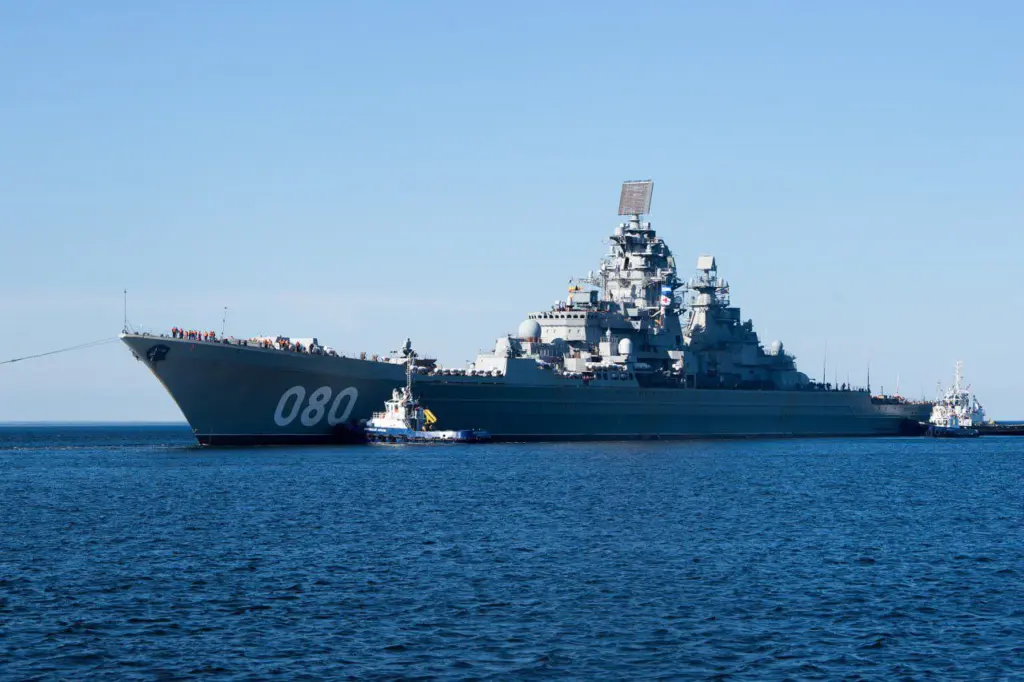
To understand this, one must go back to 1964, when the Northern Design Bureau in then-Leningrad began drafting an 8,000-ton large anti-submarine ship. Progress was slow, while requirements and ambitions grew rapidly. This ultimately led to the selection of nuclear propulsion and the decision to equip the cruiser with virtually every available, and even still-promised, weapons system.
Almost immediately, doubts emerged about whether all these capabilities could be integrated into a single platform. As a result, separate designs were initiated: Project 1144 Orlan for anti-submarine warfare and Project 1165 Fugas for engaging surface ships. Eventually, however, the projects were merged again, and by 1972 the concept had evolved into a 24,100-ton heavy nuclear-powered missile cruiser equipped with a full arsenal of anti-ship and anti-submarine weapons, as well as relatively robust air defense systems.
The main strike weapon of Project 1144 Orlan became the P-700 Granit anti-ship missile (20 launchers), intended primarily to counter aircraft carrier strike groups, with launches planned at the edge of carrier aviation range — approximately 500 km. For anti-submarine warfare, the Metel system (later replaced by Vodopad) delivered torpedoes via rocket propulsion to distances of up to 90 km. For air defense, the cruiser was fitted with the naval version of the S-300F system.
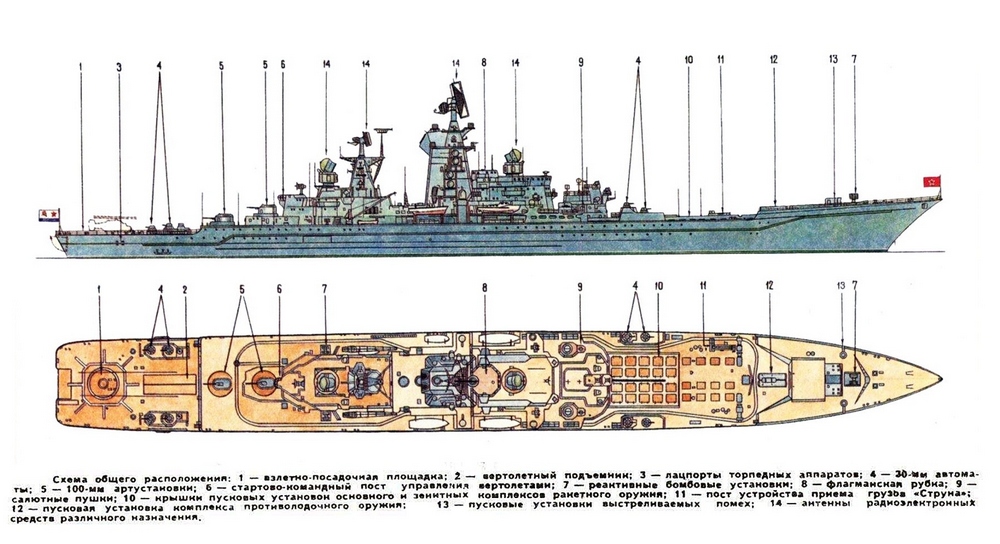
However, a fundamental problem was that as of spring 1973, when the project was approved, and even in 1974, only the Metel anti-submarine system actually existed among the ship's three principal systems. The P-700 Granit began testing only in 1975 and entered service in 1983. The land-based S-300 was adopted in 1980, while its naval variant entered service only in 1984. In other words, the ship reached its originally envisioned combat capabilities roughly a decade after construction began.
While the Soviet Union struggled with Project 1144 Orlan, the United States was preparing a revolution in naval warfare built on two key components: the Aegis combat system and the Mk 41 Vertical Launching System (VLS) for SM-family surface-to-air missiles and Tomahawk cruise missiles.
The first Aegis-equipped ship was the USS Ticonderoga missile cruiser, commissioned in 1983. The first vessel fitted with the Mk 41 VLS was the third ship of that class, USS Bunker Hill, commissioned in 1986.
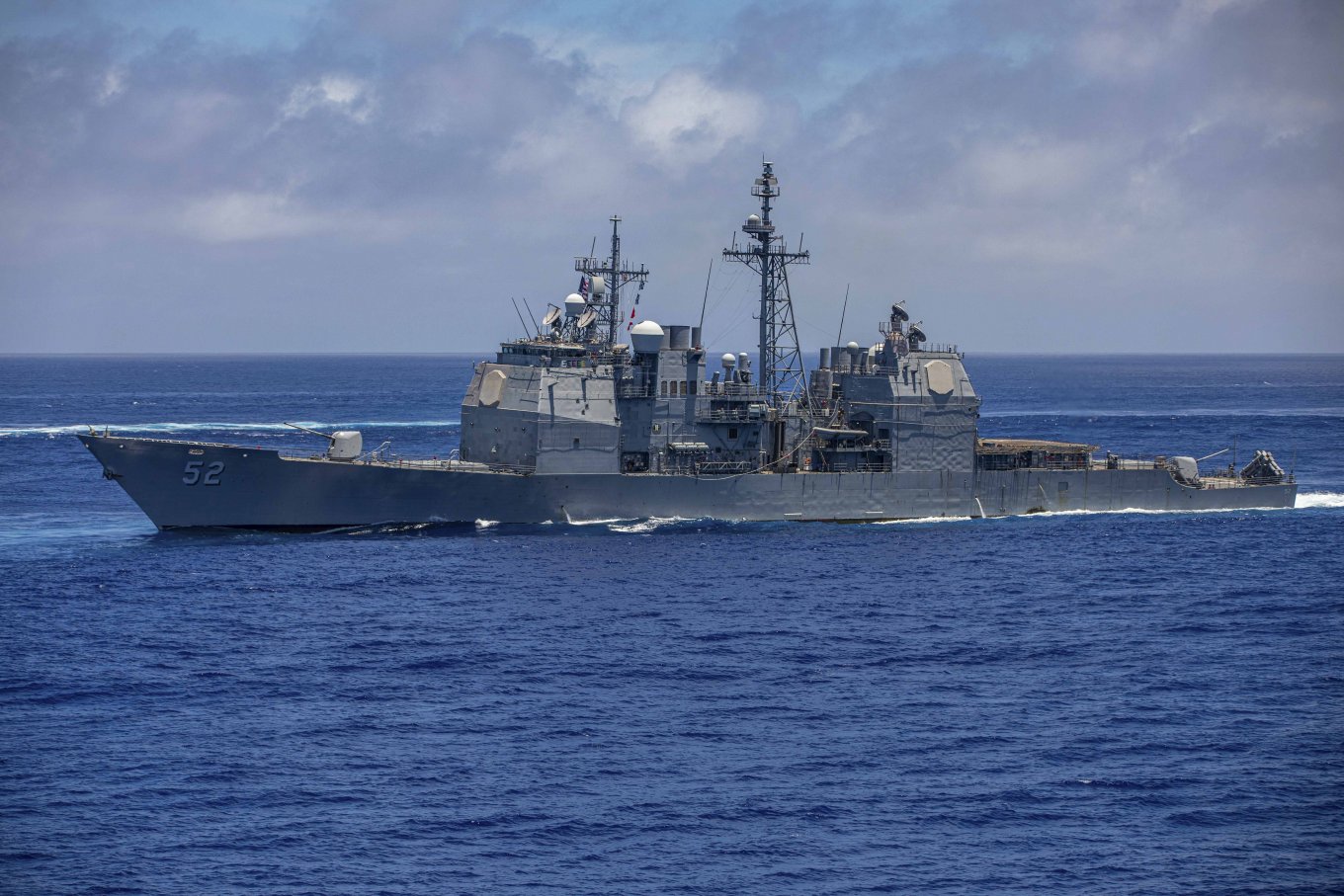
By that time, the USSR already had two conceptually outdated Project 1144 cruisers — Kirov (later Admiral Ushakov) and Frunze (later Admiral Lazarev) — while two more were under construction: Kalinin (later Admiral Nakhimov) and Kuibyshev (later Pyotr Velikiy). Although the project underwent modifications beginning with the 1144.1 variant, and each subsequent ship differed in weapons and systems, none possessed a capability that U.S. cruisers had gained — the ability to conduct long-range precision strikes against land targets.
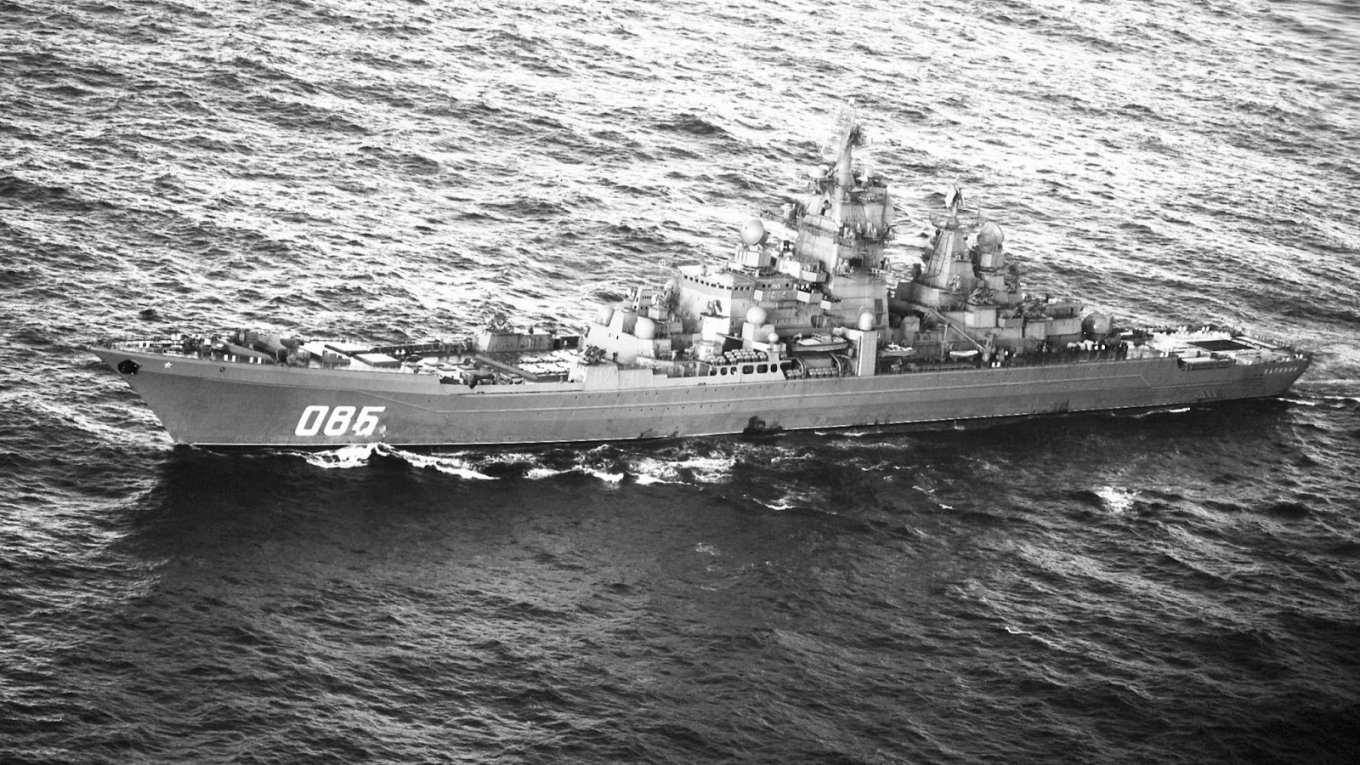
The Soviet Union collapsed with this naval capability gap unresolved. In post-Soviet russia, efforts to "catch up" continued using Soviet-era groundwork. Only in 2010 was the Project 22350 Admiral Gorshkov frigate launched with UKSK 3S14 universal launch cells capable of firing Kalibr and Oniks missiles. In 2013, substantial modernization work began on the former Kalinin cruiser, renamed Admiral Nakhimov, to equip it with the same UKSK 3S14 launchers.
If russia announces Admiral Nakhimov's return to service in 2026, it will effectively mean that it took 40 years to field a missile cruiser with long-range land-attack capabilities similar to those the United States had already achieved with USS Bunker Hill in 1986.
Even then, the comparison holds only in principle. Ticonderoga-class cruisers carry 122 launch cells with a displacement of 9,800 tons, whereas Admiral Nakhimov will have 80 launch cells despite a displacement of 23,750 tons, roughly 2.5 times greater.
Meanwhile, the Admiral Nakhimov nuclear cruiser has become obsolete once again during its modernization. The proliferation of drones of the naval battlefield leaves such massive vessels with little to no chance of survival.
Read more: After 25 Years of Stalemate, Admiral Nakhimov Battlecruiser's Modernization Finally Poised to Finish?