



Frankenburg Technologies is actively developing its Mark I anti-drone missile and recently published on its X account the first video showing tests of the missile in an air-to-air configuration, specifically ground-based launch trials.
The footage shows a successful launch of the Mark I missile from a pylon mounted on a ground-based launcher. Other details of the tests were not disclosed, but the company emphasized that it is carefully working on the missile to reduce the risks associated with air-to-air launch dynamics, including safe separation from the pylon and stable flight.
Read more: Estonia's Tiny Mark I Anti-Drone Missile, Developed for Ukraine, to Receive Naval Launch System
In practice, this means that Mark I is being developed as a universal weapon because it can be launched from land, naval, and aerial platforms. Such a requirement directly reflects the experience of Ukrainian warriors in repelling Shahed attacks, including the use of naval drones to intercept long-range strike UAVs with interceptor drones.
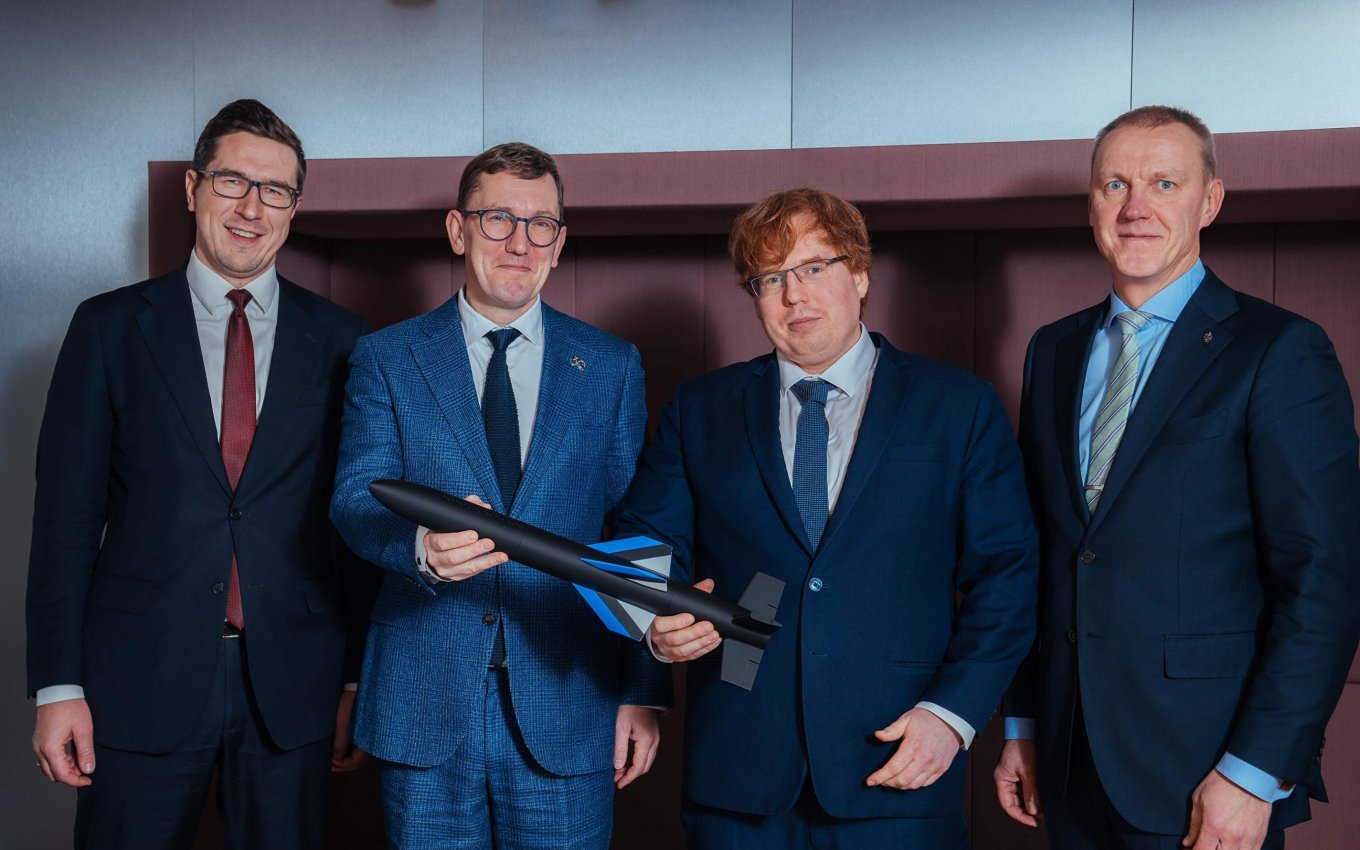
At the same time, if the Estonian Mark I can indeed maintain a low price, it could become an excellent addition to the arsenal of naval platforms. Earlier this year, it became known that the British company Babcock International planned to develop a containerized naval launcher specifically for the Estonian Mark I missile.
As for the air-to-air version, Mark I's compact dimensions, just 66 cm in length and weighing less than 2 kg, make it fully suitable for launches even from drones. There is already an example of the APKWS being successfully launched from a multicopter, and with Mark I, such copters could realistically be turned into interceptors for long-range strike drones.
Testing of the Mark I anti-drone missile from a ground-based launcher
Mark I could also eventually enter service with Ukraine's Defense Forces. Two years ago, Frankenburg Technologies stated that the first trials of its Mark I surface-to-air missiles were expected to take place in Ukraine in 2025, although as of now, there has been no public confirmation of whether those tests actually happened.
At the same time, an important question remains whether the Mark I micro-missile can truly become an effective weapon against jet-powered Shaheds, given its relatively short range of just 2 km. However, an air launch could significantly improve its effectiveness for this role.
Another key issue is the final price of the Mark I missile because, from the very beginning, its main advantage was supposed to be that it would be a genuinely low-cost anti-drone weapon compared to expensive surface-to-air missiles.
However, an upgrade is now being developed for the anti-Shahed Mark I micro-missile that could eliminate this key advantage.
Read more: Can Frankenburg Mk 1 Micro-Missile Effectively Counter Jet-Powered Shahed Drones?