


Specialists are actively studying the impact area in Bila Tserkva following the overnight strike on May 24 involving Oreshnik missile submunitions. Initial findings have already undermined another major russian narrative surrounding this weapon.
After the third known combat use of the Oreshnik IRBM without any particularly significant battlefield effect, even russian audiences have increasingly begun questioning Kremlin claims about the system's supposedly unique capabilities.
Read more: Could Oreshnik Have Missed by As Much As 80 km – What Conclusions Can Be Drawn from russia’s Strike on Ukraine with This IRBM
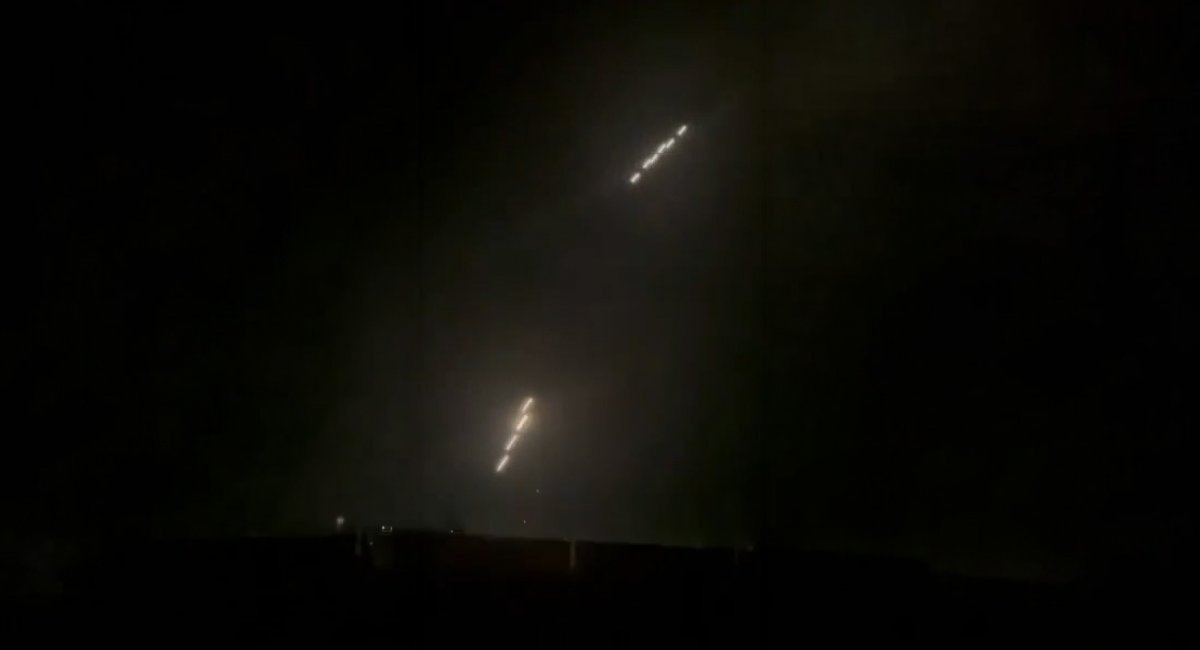
Russia used an Oreshnik intermediate-range ballistic missile (IRBM) against the Kyiv region, with the impact area identified near Bila Tserkva.Footage also appears to show the missile’s post-boost separation phase, with multiple reentry vehicles descending toward the target… pic.twitter.com/NkUxI5TP7P— OSINTWarfare (@OSINTWarfare) May 23, 2026
Against this backdrop, russian propagandists once again promoted the claim that Oreshnik carries special tungsten kinetic penetrators allegedly capable of extremely deep penetration, supposedly allowing the missile to destroy "secret underground shelters" while leaving little visible surface damage.
Defense Express has learned from its own sources the approximate dimensions of the craters left by Oreshnik strike elements in ordinary soil.
According to preliminary assessments, the craters measured up to roughly 3 meters in diameter and about 2 meters deep on average.
Due to the enormous collision energy, the strike elements themselves were almost completely destroyed through extreme fragmentation and partial vaporization upon impact.
As a result, specialists currently cannot definitively determine whether the missile used actual tungsten rod penetrators or simply inert mass-dimensional mockups simulating warhead bodies.
In any case, both the crater dimensions and the observed damage to nearby garage structures generally correspond to earlier strike sites previously examined in Dnipro and Lviv. In other words, there is currently no indication that russia employed any fundamentally new type of warhead.
The crater dimensions nevertheless allow for a rough estimate of the kinetic energy involved in the impacts.
Precise mathematical calculations and modeling will require additional analysis, but preliminary estimates place the impact energy in the range of approximately 220–400 megajoules.
That amount of energy is roughly comparable to the explosive effect of approximately 52–95 kilograms of TNT equivalent.
At the same time, this remains only a highly approximate comparison because the release of energy from a kinetic impact differs fundamentally from that of a chemical explosion. Even conventional high-explosive warheads generate primary and secondary fragmentation effects, whereas a purely kinetic strike produces almost no fragmentation.
Still, the available data allows for a general assessment of the missile's practical destructive effect.
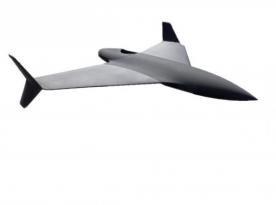
An Oreshnik strike reportedly involves 36 separate strike elements, making the overall effect conditionally comparable to an attack by roughly 36 Shahed drones equipped with enhanced warheads. However, the damage mechanisms remain fundamentally different because Shahed warheads rely primarily on blast and fragmentation effects.
The key difference lies elsewhere. russia reportedly plans to manufacture only around five Oreshnik IRBMs during 2026, at a production rate of approximately one missile every two to two-and-a-half months. By contrast, producing 36 Shahed drones would reportedly require russia only around eight hours.
Read more: russian Airstrike on Ukraine Includes Oreshnik, Kinzhal, Zircon, Ballistic, Cruise Missiles and Shahed UAV Swarms