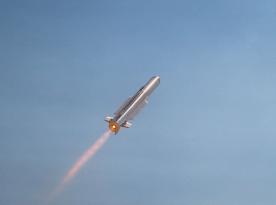

Estonian startup Frankenburg Technologies highlighted a vital detail in a recent flight test video of its Mk 1 miniature SAM: the capability to intercept not only propeller-driven Shahed type drones but also jet-powered UAVs traveling at speeds of 450 - 600 km/h.
Given the ongoing search for solutions against russian jet drones like the Geran-3 and Geran-4, as well as the Geran-5, which effectively functions as a cruise missile - this is a significant claim. Frankenburg Technologies positions its solution as a low-cost, mass-produced tool for neutralizing such threats.
Read more: Ukraine Spotted With New U.S. Tempest Air Defense, But $100K Missiles Make It Pricey for Shaheds
However, the missile faces several challenges when countering jet-powered targets. First, the Mk 1 has an operational range of only 2 km. In pursuit engagements (rather than head-on courses) against high-speed targets, the effective engagement range will decrease further, as the missile may lack the kinetic energy to overtake the target.
The second factor is the maximum engagement altitude. While the developer has not officially disclosed this parameter, it is unlikely to exceed 1–1.5 km, given the missile's specified 2 km total range.
For comparison, the Defense Intelligence of Ukraine reported that the Geran-5 operates at altitudes up to 6 km, with confirmed flight data at 3 km. Meanwhile, jet-powered Shahed-like drones, such as the Geran-3 and Geran-4, can fly at altitudes of 2–3 km.
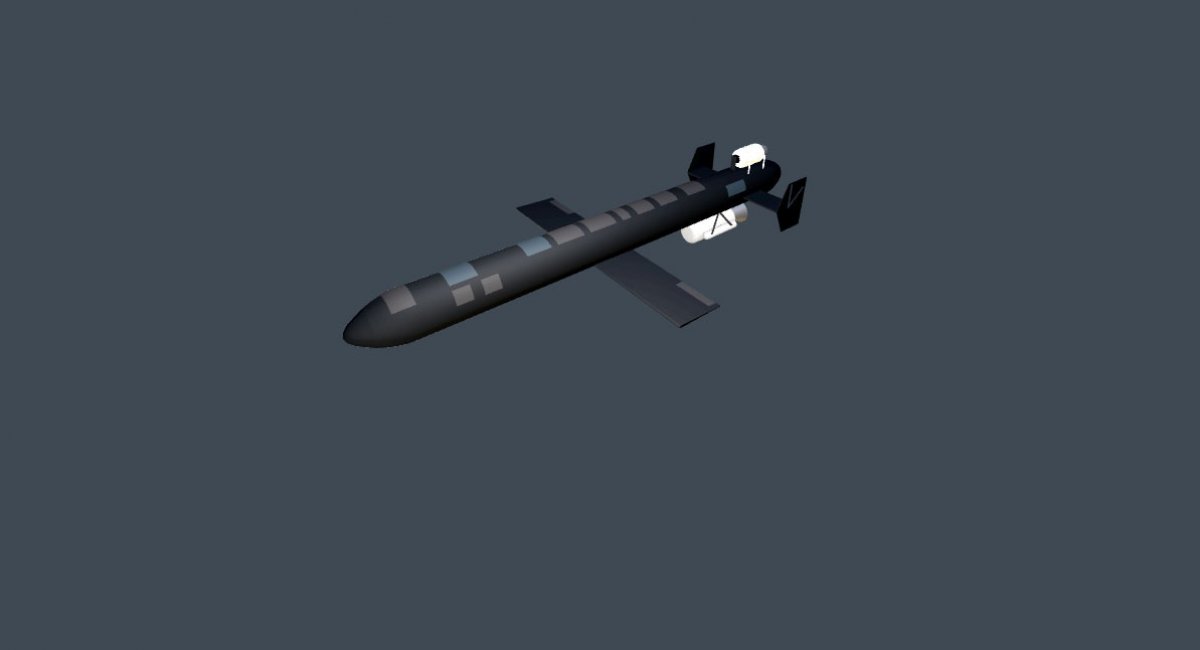
Consequently, the Frankenburg Mk 1 is better suited for point defense, where jet drones are intercepted during their final attack dive or in head-on engagements. This limitation is a logical trade-off for the missile's miniature size, which has been compared to a baguette.
One potential workaround is to adapt the SAM into an air-to-air asset. Launching the Frankenburg Mk 1 from an aerial platform would exponentially increase its range due to the initial altitude and launch velocity.
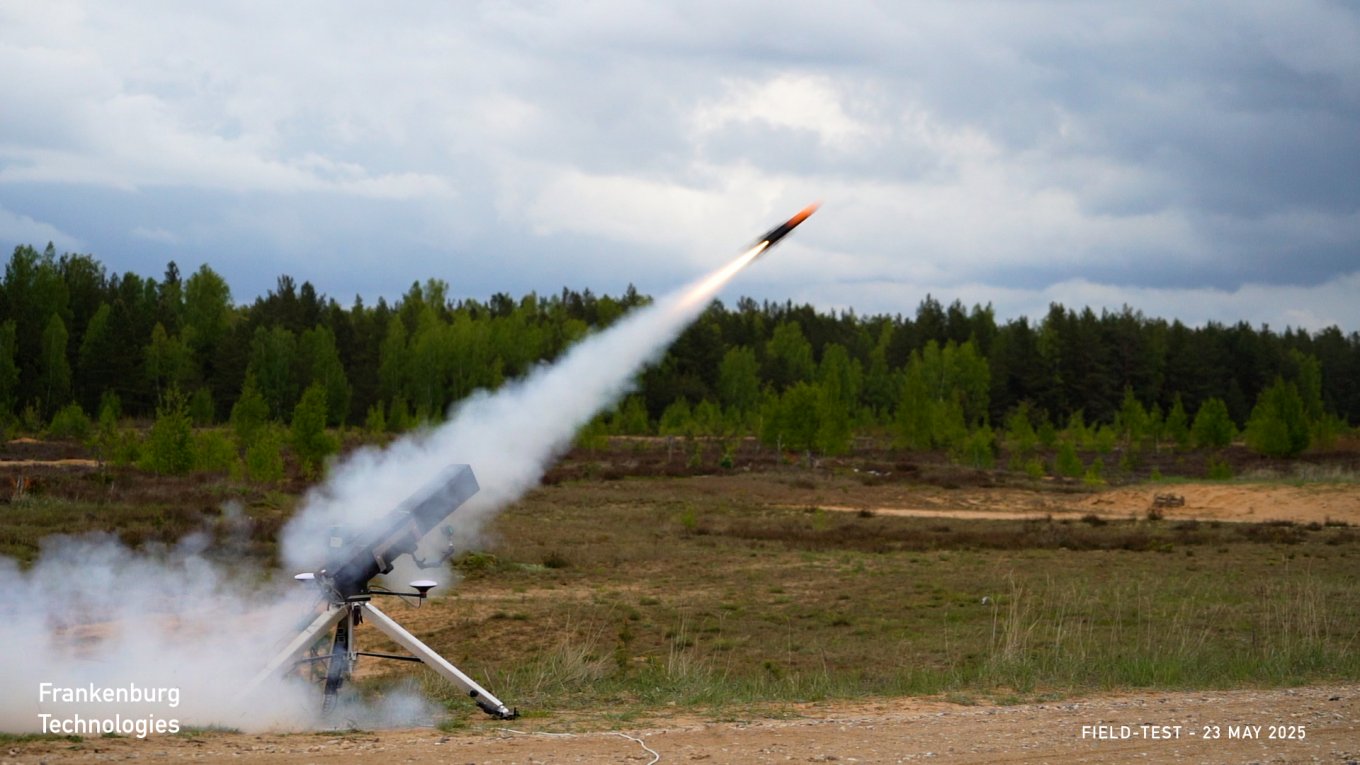
When a missile like the P-73 is converted from an air-to-air missile (with a 20 km range) to a surface-launched SAM, its effective range drops to approximately 4–5 km. In the case of the Frankenburg Mk 1, the opposite effect would occur. However, mid-course guidance would remain a challenge until the missile's seeker, utilizing computer vision algorithms, achieves target lock-on.
Achieving this requires integrating the missile and its launcher onto an airframe. This is typically a lengthy process for manned aviation, though focusing on unmanned carriers could accelerate development.
Ultimately, the project's viability hinges on cost. A high price tag could undermine the Mark I’s utility. Frankenburg Technologies claims their system costs less than 10% of traditional anti-aircraft missiles. In the current market, this suggests a price point in the tens of thousands of dollars, rather than thousands.
Read more: Two NATO F-35s Failed to Shield Estonia from russia's MiG-31s: What Is Known About Its Air Defense