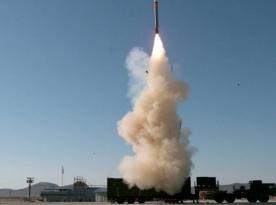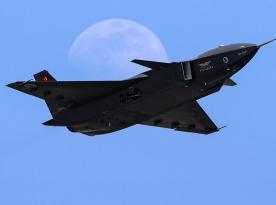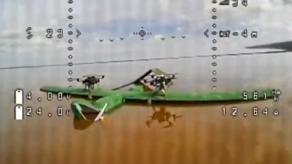



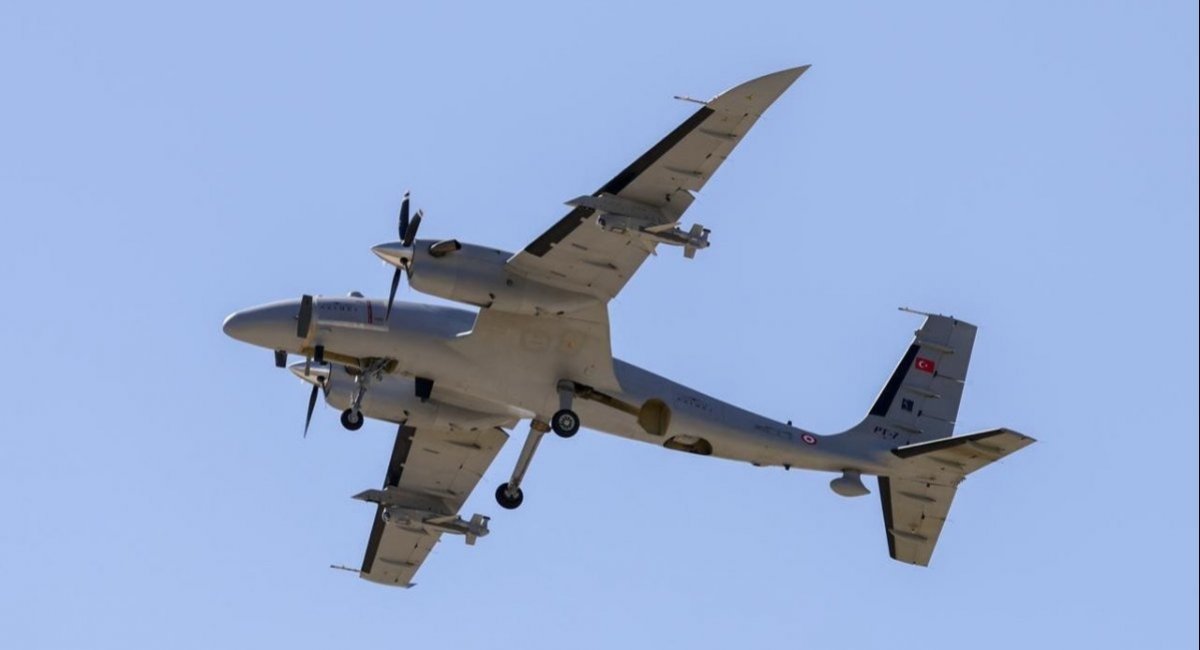
The technical director of Baykar, Selcuk Bayraktar, published a video of the tests of the latest Kemankes 1 cruise missile. Moreover, the tests were extremely unusual for this type of weapon.
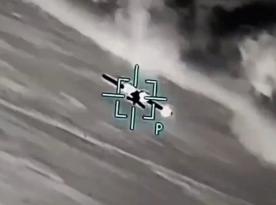
In particular, three Kemankes 1 missiles were tested in different modes. But the most interesting test is the destruction of an air target. Two more missiles were tested in the flight to coordinates mode, and in the flight to coordinates mode with the capture of the target by the homing head.
Read more: Baykar Launches World's First Mass Production of Kizilelma UAV with Ukrainian Engine
Bayraktar AKINCI SİHA, 3 adet Bayraktar KEMANKEŞ-1 seyir füzesiyle uçuşunu başarıyla tamamladı. Testlerde atış, seyir ve dalış faaliyetleri başarıyla gerçekleştirildi. pic.twitter.com/B4iDBNYqVW— Tercüman (@tercumanmedya) October 31, 2025
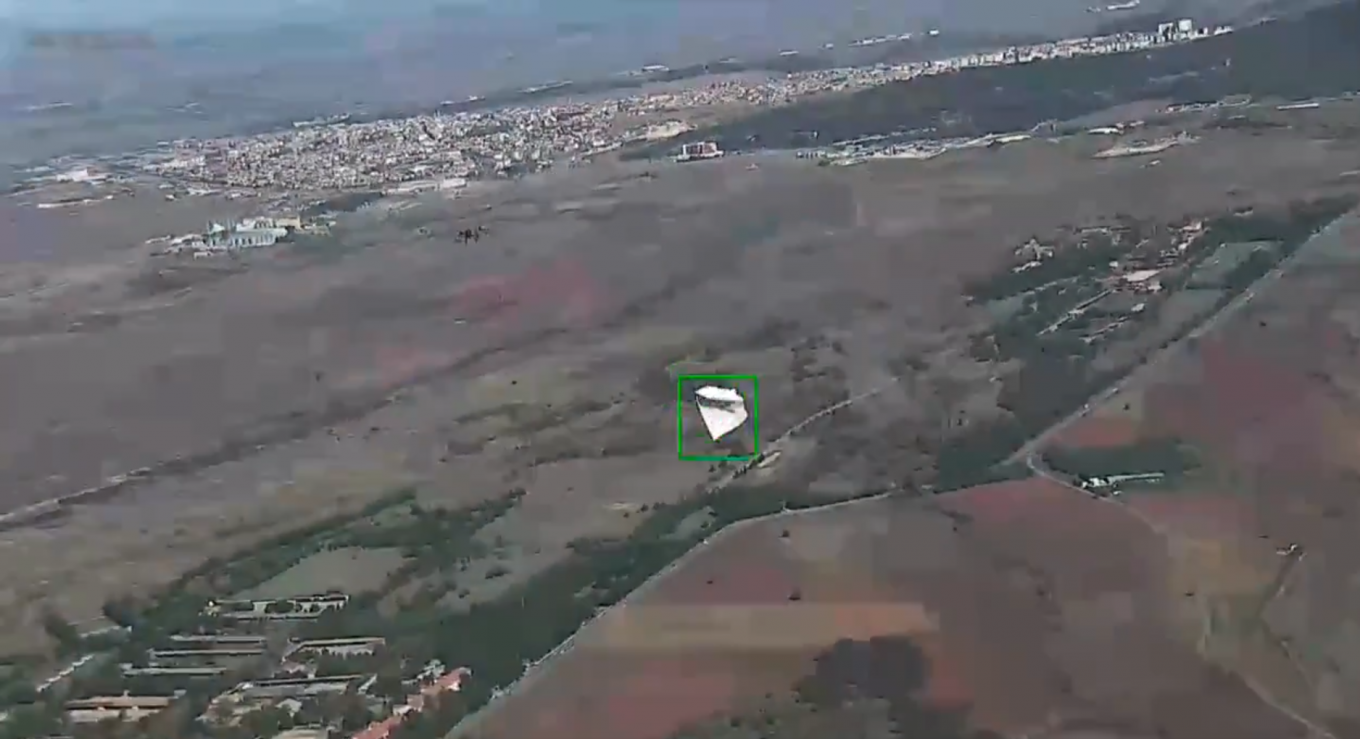
Their launch was carried out from the Bayraktar Akinci strike drone. As such an air target, the company used a drone with a white canvas suspended from it. But, judging by the published video, the missile did not hit the target, but passed by, although this is likely due to the fact that the canvas is constantly moving and changing shape in the wind, but with a real target this probably should not happen.
It is worth noting that this is not the first such test. For the first time, an air target was hit using Kemankes 1 at the end of June this year. The new tests are probably intended to improve and develop technology and capabilities.
Hitting air targets with the Kemankes 1 cruise missile is possible due to the fact that is optical homing head is enforced with artificial intelligence. Thanks to it, the missile can capture any object, including an air target. In addition, the image from the camera is transmitted first to the carrier drone, and then to the control station.
However, it is not known whether the operator has the ability to change the captured target during the flight. As already noted above, in addition to the optical homing head, the missile can also be guided by coordinates.
The Kemankes 1 has a range of 200 km, however, this is in the mode of striking ground targets. Therefore, whether it is capable of hitting air targets at a distance of 200 km is unknown. But if Kemankes 1 is able to receive target coordinates in real time, including from the Akinci UAV radar, and the seeker will be captured at the final stage, then the range of 200 km is quite real.
The dimensions of Kemankes 1 are quite modest, weighing only 35 kg, 1.73 meters long, and the wingspan is 1.25 meters. Thanks to this, it can be launched from such UAVs as Bayraktar TB2, TB3 and Akinci.
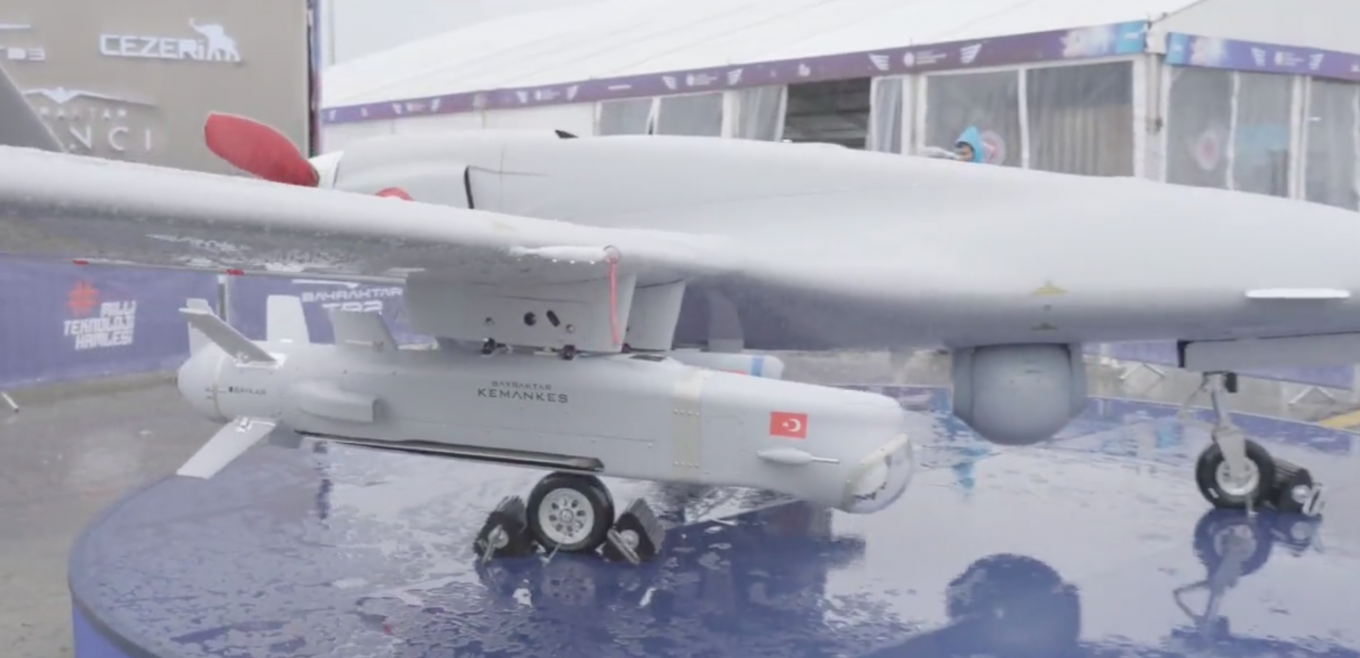
The maximum flight altitude is 5.5 km. Cruising speed is 367.5 km/h and 857.5 km/h in a dive. Given such a rather low speed, Kemankes 1 is capable of hitting, for example, drones and helicopters, but jet aircraft and cruise missiles will be an extremely difficult target for it.
Strikes on air targets do not seem to be its main profile, it is rather a "bonus" to the capabilities against ground targets, so one should not count on any very outstanding characteristics and capabilities in this regard.
As Defense Express reported earlier, Kemankes 1 was first shown in April 2023
.
Read more: Baykar's Bayraktar Drone Is Back, Ukraine Unleashes Iconic Drone on russian Boat (Video)